
The main building at Bridgeport Boatworks stretches seemingly without end. When I arrive at the guardhouse gate, owner Harry Boardsen welcomes me and guides me inside, where the scale of the operation immediately impresses. Two giant catamaran commuter fast ferries sit end to end, and a full-sized tugboat rises above us, all supported on blocks for maintenance and repairs. Welders are at work, shipwrights inspect hulls, and teams prepare for blasting and bottom painting—an industrious scene that hums with activity. At the far end of the building a towering door accommodates the yard’s 700-ton Travelift, a machine built to move vessels far larger than most yards can handle. That door opens onto a concrete apron the size of several football fields, where three more Travelifts of varying capacities stand ready.
We walk beneath a cluster of offices and up stairways to the other side of the building, where at least ten recreational craft rest on blocks. The selection ranges from family cruisers and sailboats to Downeasters and a classic early-1970s Mako center console undergoing restoration. Outside to the east, another expansive concrete pad holds even more boats: large motor yachts, sportfishers, bowriders and center consoles—many emerging from winter storage for spring commissioning. Some vessels are in for specialized work, including a refined 136-foot J-Class racing yacht that will receive a set of high-tech carbon/Kevlar sails, a complex project only a few yards worldwide can undertake. Rigging classic sailboats into fast, modern racers is one of several rare, high-skill services Bridgeport Boatworks now offers.
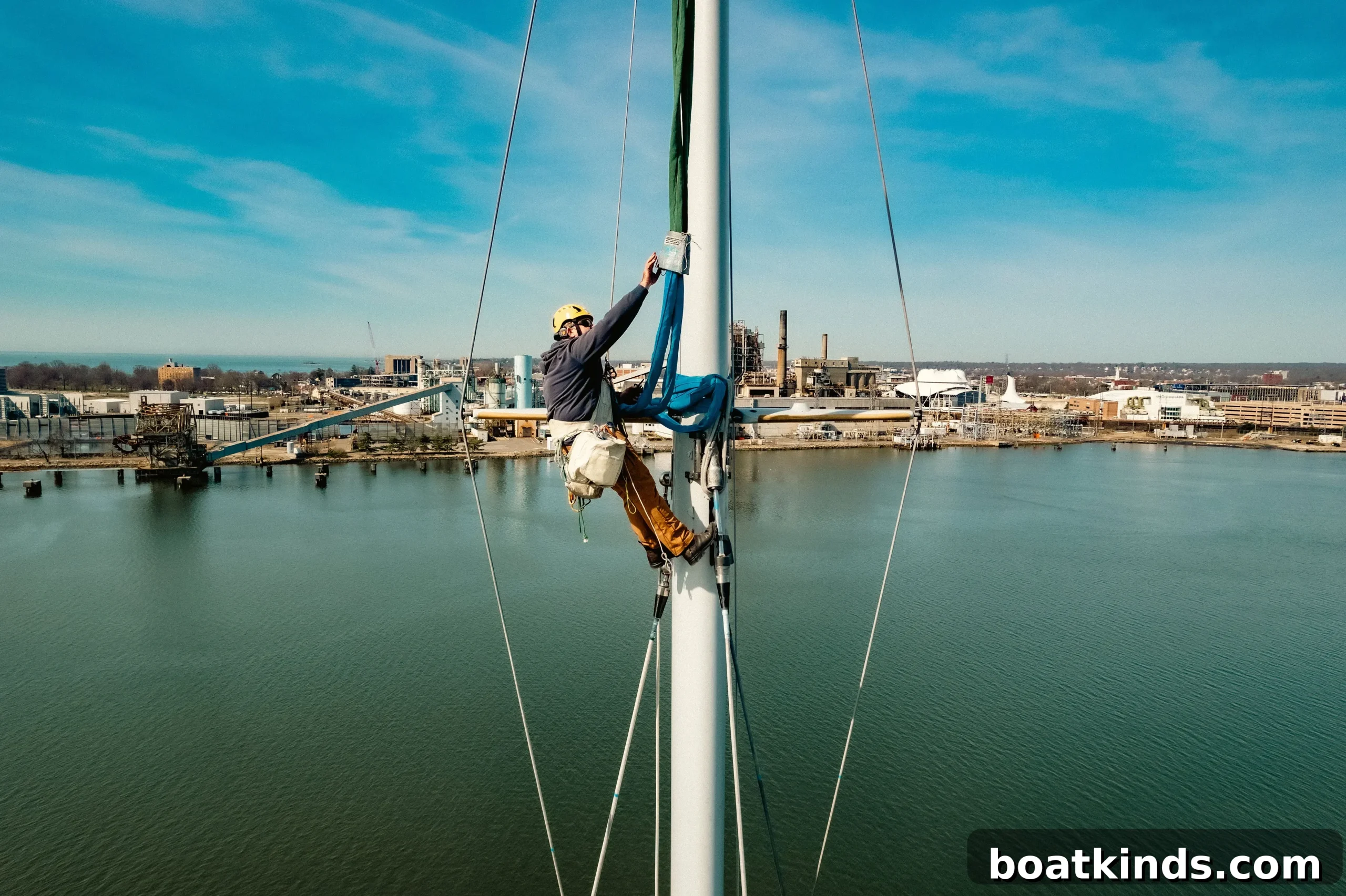
Bridgeport Boatworks is a family-owned and operated operation built from the former Derecktor Shipyard, which went bankrupt in 2008 and lay dormant for a decade. The evolution of this yard is tightly linked to the Holstein family’s long history in the marina business. Abbey Holstein’s family has run marinas and boatyards for more than 50 years. Her father, John Holstein, bought Noank Shipyard in Connecticut in 1980 to pursue offshore racing boat construction and turned it into a successful marina. Abbey grew up on the fuel dock and eventually ran that marina before the family expanded to operate Seaport Marine in Mystic, where Harry Boardsen first became involved.
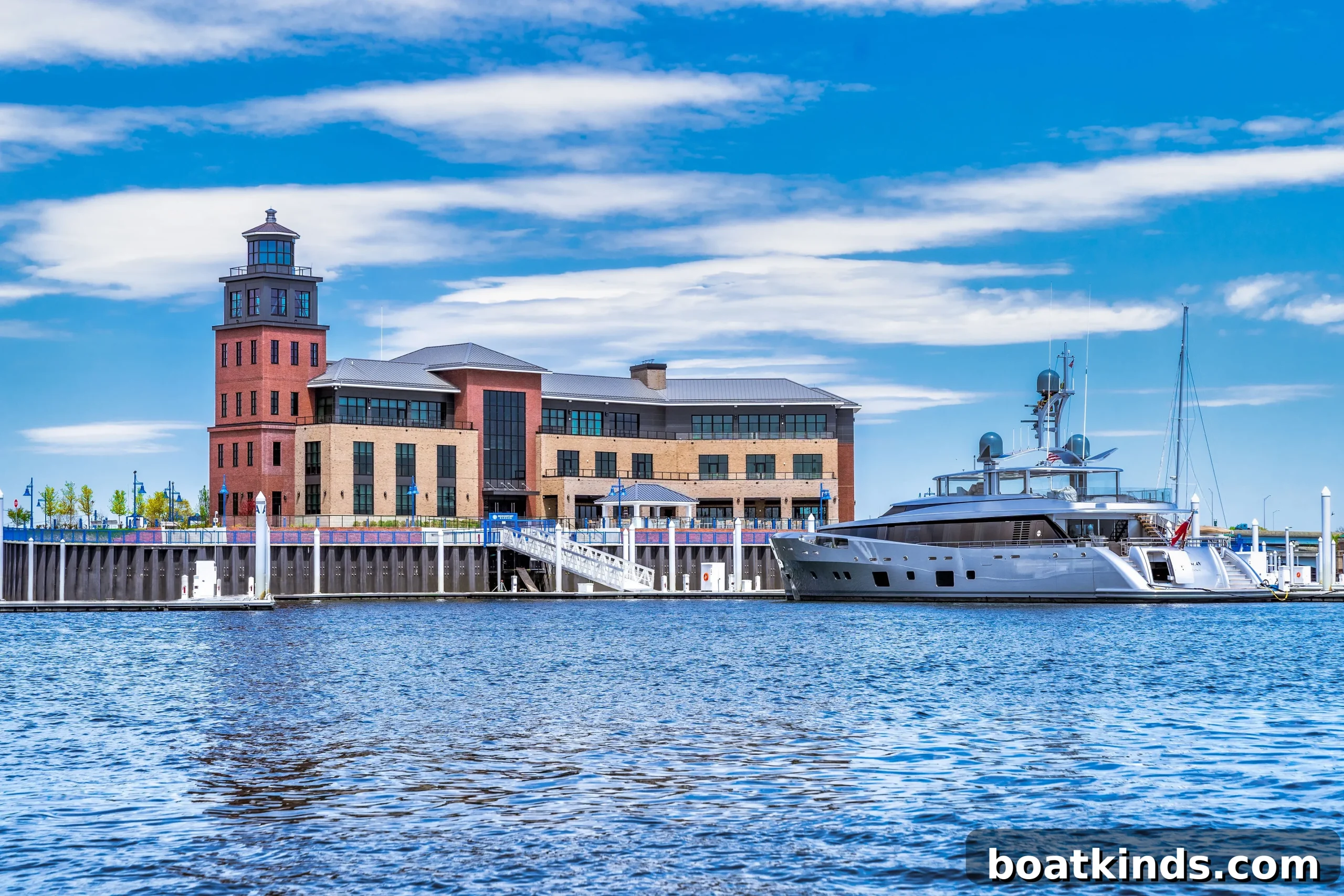
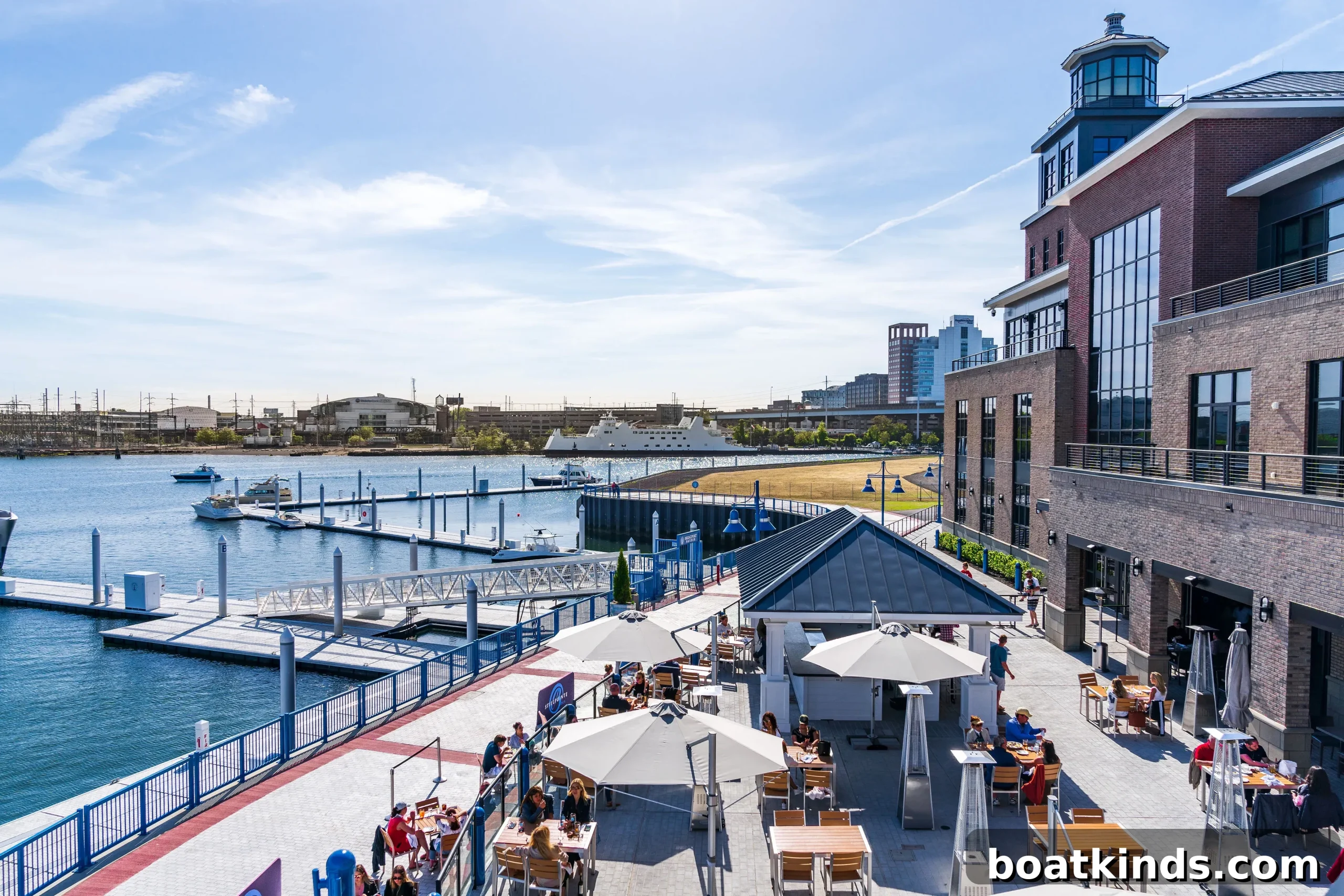
Boardsen, who brings a background in property development and a lifelong passion for boating, helped expand the Mystic property by opening Red 36 restaurant and growing marina operations. In 2016 he began exploring the vacant Derecktor site in Bridgeport, then owned by the city. At the same time RCI Marine Development was pursuing a redevelopment plan for Steelpointe Harbor: a mixed-use, waterfront community complete with a new 200-slip marina, harbormaster building, lighthouse, restaurants and office space. The location—a spit of land at the meeting point of the Pequannock and Yellow Mill Rivers, near I-95 and a short hop from Long Island Sound—aligned perfectly with Boardsen and Abbey’s ambition to build a full-service boatyard capable of servicing everything from local recreational boats to commercial vessels and megayachts.
“Our vision meshed with RCI’s,” Boardsen recalls. The couple invested in renovating the old shipyard buildings, which were little more than empty shells. Abbey remembers the early days vividly: clearing out raccoons from the offices, waiting nearly six months to get internet service, and sourcing equipment from disparate places. They located two Travelifts—a 75-ton and a 200-ton unit—to handle the recreational fleet, though larger commercial work would require greater capacity.
Bridgeport Boatworks opened to customers in 2018 with just nine clients. Growth stalled briefly when the COVID-19 pandemic hit in 2020, but the yard rebounded quickly. By the following year retail business had increased and the commercial side expanded sharply after Hornblower Marine—a major operator of commuter ferries—chosen Bridgeport Boatworks as a regional service hub. To support that contract the massive 700-ton Travelift was assembled on site, enabling haul-outs and service for substantially larger vessels.
Delivering high-quality work for diverse boat types requires skilled shipwrights and technicians. Boardsen and Abbey recruited experienced craftspeople from their other operations and tapped into local talent through training programs in partnership with the city of Bridgeport. “We were fortunate to find so many great people to join our team,” Boardsen says. One key hire was Jay Mulrooney, head of business development, who brought superyacht experience from Newport Shipyard and helped source specialized equipment and services needed to meet the demands of high-end clients.
The yard also hosts outside experts and partners who complement its in-house capabilities. North Sails, a leading sailmaker, joined the Steelpointe campus a few years ago. Specialists in composite fabrication, refinishing, hull and topside painting, gelcoat repair, varnishing and more operate on-site, making the yard a comprehensive service destination. Nearby amenities such as Bass Pro Shops and the newly opened Bridgeport Harbor Marina add to the area’s appeal.
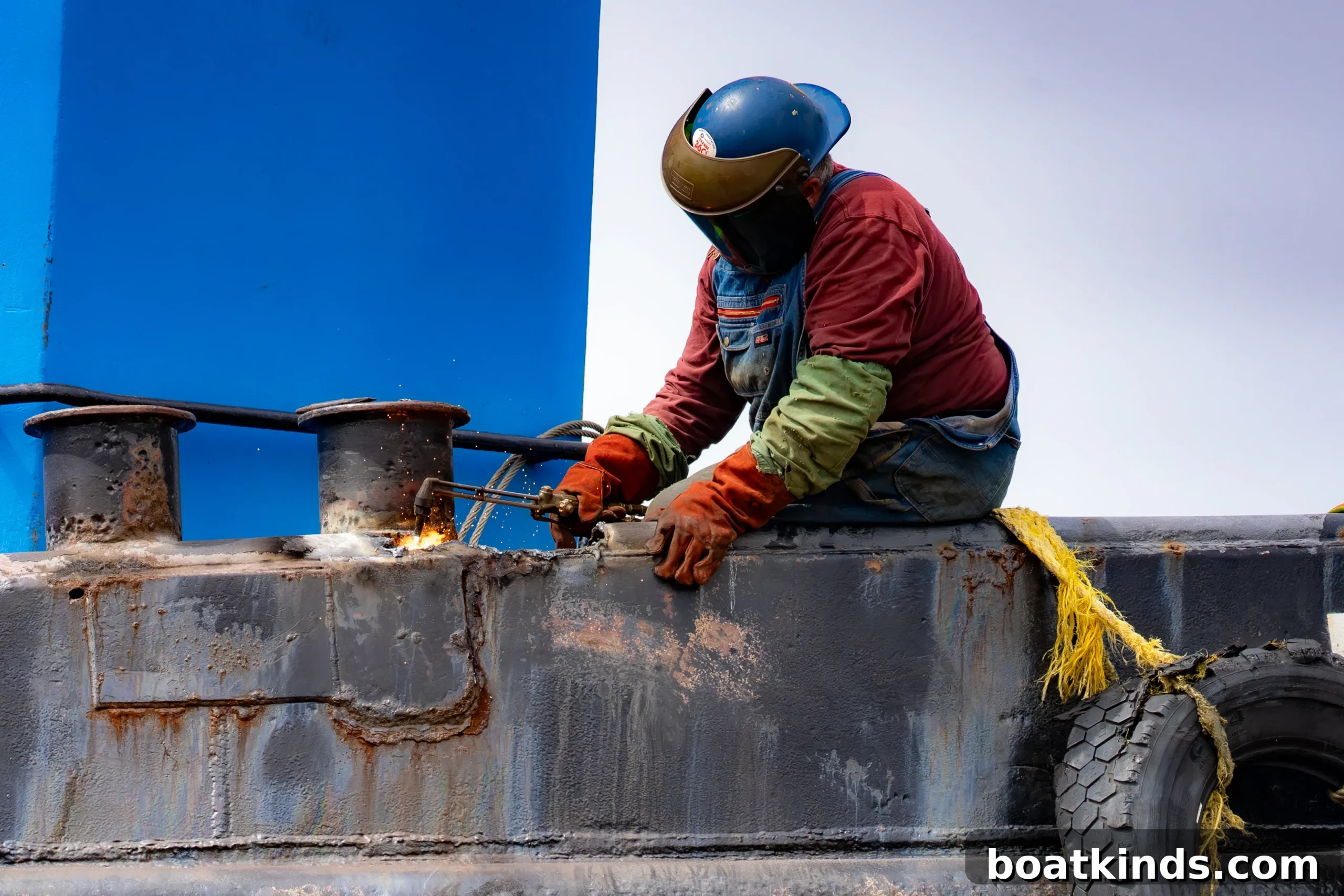
Today Bridgeport Boatworks provides haul-out services up to 700 tons, handles megayachts to about 250 feet and catamarans up to 50 feet in beam. The yard offers boat storage, repowering for outboard, inboard and diesel engines, marine electronics installation, and fuel dock services. More than a hundred people are typically on site on any given day, working across fields that include welding, composite fabrication, rigging and specialized sail work.
Boardsen stresses the yard’s openness to all types of boats: “We welcome vessels of every size and type. The mix of sail and power changes with the season, but owners can expect meticulous care here.” Bridgeport Boatworks has become a busy waypoint for private boats cruising the East Coast and remains one of the few Northeast yards equipped to service larger yachts. Harry and Abbey continue to study marina operations in other regions, bringing back ideas to improve efficiency and client service. For them, operating a major full-service boatyard is not only a business—it’s a way to be fully engaged in the boating community.
This article was originally published in the July 2024 issue.