
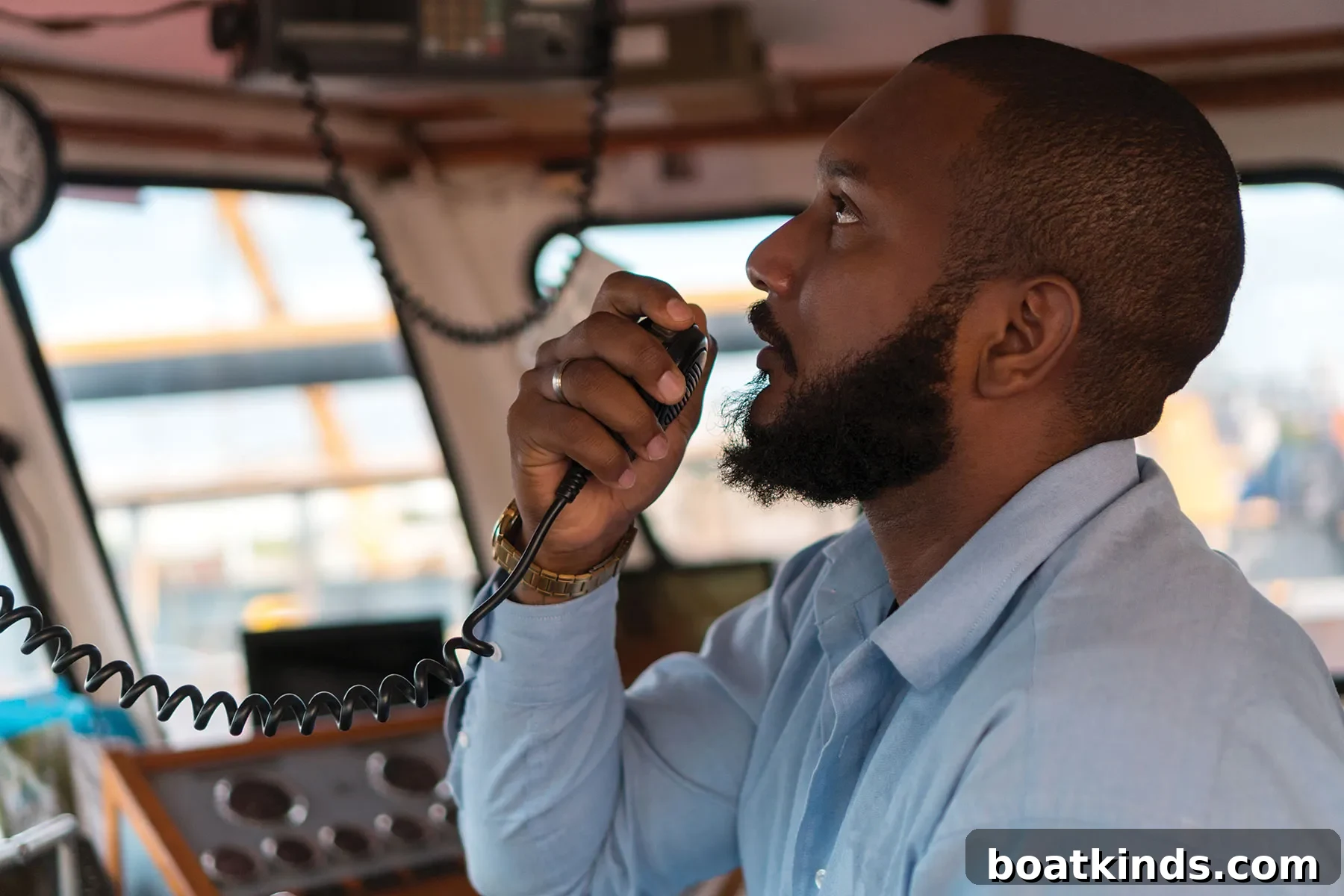
How to Use VHF Radio: Channel 16, Mayday, Pan-Pan and DSC Explained
Even with smartphones everywhere, the VHF radio remains a vital safety tool on the water. VHF radios are the quickest way to call for help and relay critical information to nearby vessels and rescue authorities. Understanding VHF procedures and the meaning of calls you hear can make the difference between a routine assist and a life-or-death outcome.
Why Channel 16 Matters
VHF channel 16 is reserved for calling and distress communications. It’s the universal marine “911” frequency: all boats and shore stations monitor it for distress, safety and initial hailing traffic. Because VHF signals are essentially line-of-sight, a nearby vessel hearing your call can relay information to the Coast Guard or come to your aid while official responders are en route. Keep channel 16 clear of non-essential chatter so the frequency remains available for urgent transmissions.
The Three Levels of Emergency Traffic
There are three primary categories of safety calls on VHF, listed here in order of increasing urgency: Sécurité, Pan-Pan and Mayday. Each has a specific purpose and phrasing.
Sécurité: Safety Information
Sécurité (pronounced “say-cur-i-tay”) is used to broadcast navigational safety information: significant weather warnings, hazards to navigation (like debris or an adrift object), or instructions about vessel movements that affect others. Think of a Sécurité call as a public safety announcement that helps other mariners avoid danger.
Pan-Pan: Urgency but Not Immediate Danger
Pan-Pan (pronounced “pahn-pahn”) signals an urgent situation that is not immediately life-threatening. The term comes from the French panne, meaning “breakdown.” Typical Pan-Pan scenarios include loss of propulsion, loss of steering, a controllable leak, or a request to look for a person overboard who is still in sight. When making a Pan-Pan call, clearly state your vessel name, position, nature of the problem, and the number of people onboard.
Example Pan-Pan call:
“Pan-Pan, Pan-Pan, Pan-Pan. This is the 30-foot fishing boat Josie, Josie, Josie. Located 8 miles due south of Montauk Point in position 40 degrees 56.4 minutes North and 71 degrees 51.3 minutes West. We are leaking slowly with four people onboard. Requesting standby assistance.”
Mayday: Immediate Distress
Mayday is reserved for situations where a vessel or person is in grave and imminent danger—sinking, fire, severe injury, or being driven onto a lee shore, for example. Mayday derives from the French phrase M’aidez, meaning “help me.” When you broadcast Mayday, repeat “Mayday” and your vessel name three times, then state your location, the nature of the emergency, and the number of people onboard. Continue to repeat the Mayday periodically until you receive a response or until the radio fails.
Example Mayday call:
“Mayday, Mayday, Mayday. This is the 30-foot fishing boat Josie, Josie, Josie. Located 8 miles due south of Montauk Point in position 40 degrees 56.4 minutes North and 71 degrees 51.3 minutes West. We are sinking with four people onboard and require immediate assistance.”
Practical Tips for Making Effective Calls
Always speak slowly, clearly and at high power to maximize range. Provide both GPS coordinates and a descriptive location (for example, “8 miles due south of Montauk Light”) so responders can quickly judge proximity. Prepare a written distress card or pro-forma Mayday template to reduce panic and speed up transmission. Train everyone who stands watch on your boat to use the VHF, follow radio etiquette, and produce GPS coordinates fast in an emergency.
What to Do When You Hear a Distress Call
If you hear a Mayday, listen closely and take notes. Acknowledge that you copy the call on channel 16, determine how close you are, and offer assistance if you can. Stop any transmissions that could interfere with the distress traffic and continue to monitor until you are satisfied help is being rendered. If you determine the caller has not received help, you may relay the distress call.
Digital Selective Calling (DSC) and MMSI
Most modern VHF radios include Digital Selective Calling (DSC), which provides an automated distress function. When properly configured, pressing the radio’s “distress” or Mayday DSC button sends a coded distress alert—including position and vessel identity—to nearby DSC-equipped vessels and to the Coast Guard. If your DSC radio isn’t integrated with GPS, a technician can connect it to a separate GPS receiver.
To use DSC you must register a Maritime Mobile Service Identity (MMSI), a unique nine-digit number assigned to your vessel. In the U.S., recreational boats operating domestically can obtain an MMSI through authorized providers; consult your DSC radio documentation for programming instructions. Note: after sending a DSC distress alert you must follow up with a voice call on channel 16 that includes your MMSI number.
Other Useful Channels
Commercial ships frequently use channel 13 for ship-to-ship working communications, including Sécurité announcements related to maneuvers, berthing or special navigation constraints. Monitoring channel 13 is helpful in narrow channels, near busy shipping lanes or approaching port entrances. Reporting your position or intentions on channel 13 when appropriate can help pilots and bridge teams maintain situational awareness.
Conclusion
VHF radio remains a cornerstone of maritime safety. Keep channel 16 monitored, know how to make Sécurité, Pan-Pan and Mayday calls, register and program your DSC and MMSI, and practice radio procedures with your crew. Responding to someone in distress is one of the most rewarding duties at sea—knowing how to communicate effectively could save a life.
This article was originally published in the June 2021 issue.