
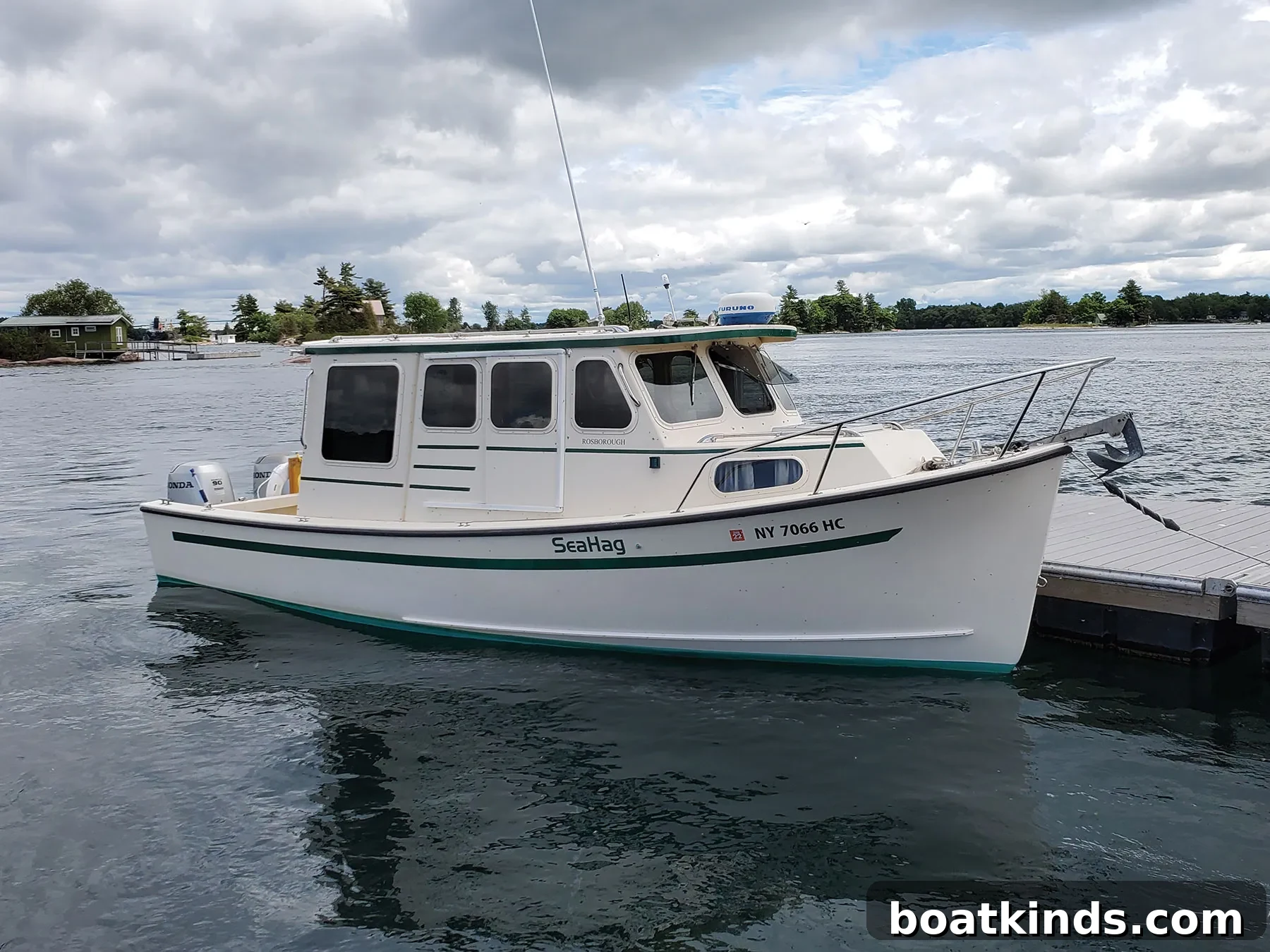
Beam: 8’6”
Draft: 2’0″
Power: (2) 90-hp outboards,
Fuel: 115 gals.
Rob Russell’s introduction to boating came later in life. A semi-retired forensic psychologist, Russell spent his youth in the air rather than on the water. At 16 his father taught him to fly in their 1941 Piper Cub J5, and he has been an aircraft owner and pilot ever since. After logging thousands of flight hours and owning several airplanes, he began to look for a new kind of adventure—one that would bring him closer to water.
Russell finds clear similarities between piloting and seamanship. Both demand careful handling during approaches—whether landing an aircraft or docking a boat—along with a solid understanding of weather and the humility to recognize personal and machine limitations. Above all, he values the sense of exploration each pursuit offers: “The quality of flying and boating that most appeals to me is the thrill of adventure when heading out on a long trip,” he says.
In September 2019, Rob and his wife Marian bought their first boat, a 1996 Rosborough RF246 trailerable trawler. Priced at $27,000, the Canadian-built pocket trawler caught his eye. He drove from his home in Binghamton, New York, to Connecticut to see the boat the next morning after spotting the ad, signed a purchase agreement that same day, and had a full-day survey done within the week. The survey showed a vessel in fundamentally sound condition with only minor items to address, and since then Russell has been steadily improving both cosmetics and systems.
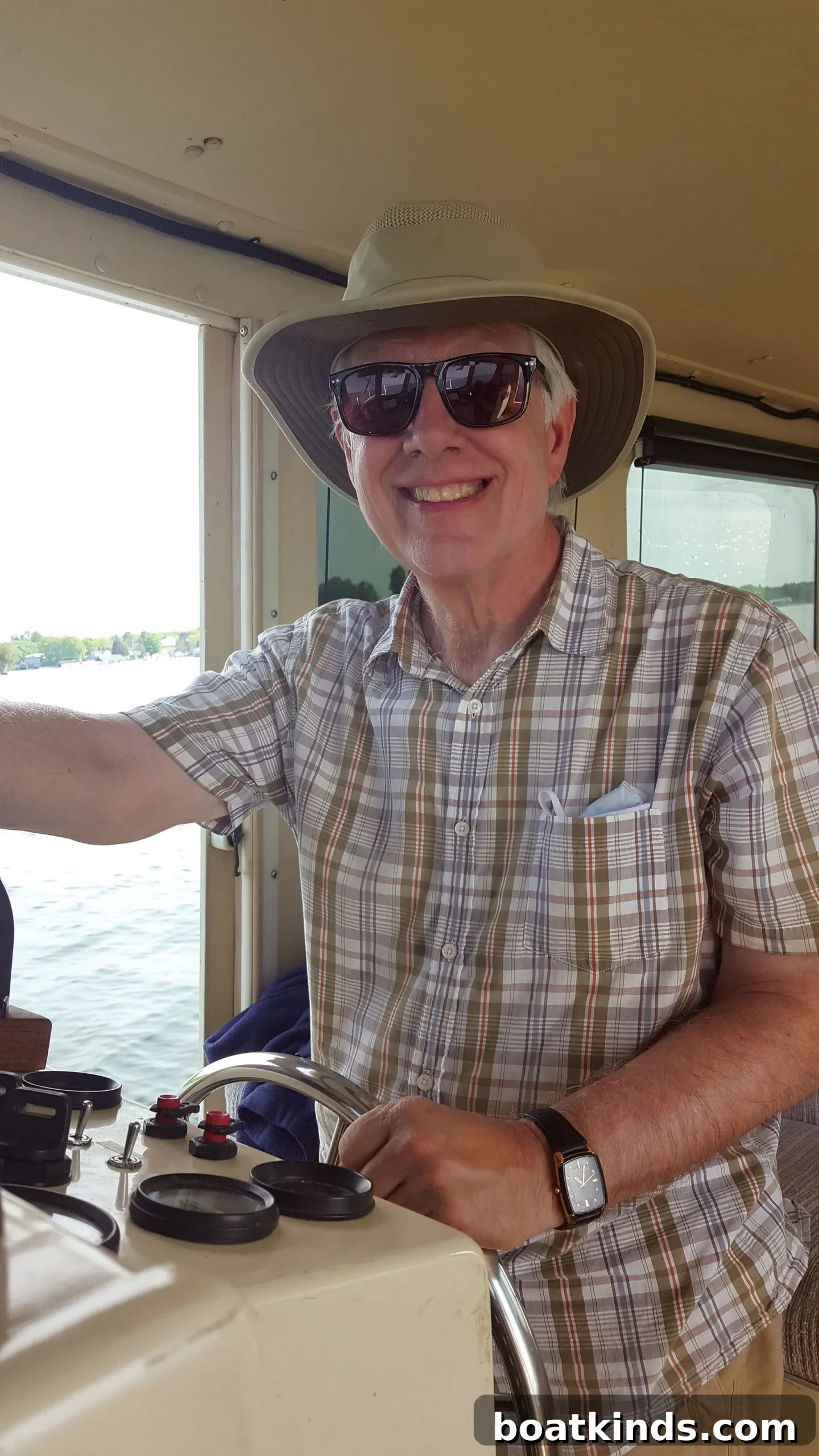 Rob Russell didn’t start boating until later in life, but with his RF246, he has ambitious cruising aspirations.
The RF246 fits Russell’s goals exceptionally well. It’s an approachable, compact trawler that provides an enclosed helm and cabin for comfortable cruising, yet remains small enough to learn boat handling and systems without feeling overwhelmed. The layout sleeps three comfortably, making it suitable for family outings with their son, Ryan. Practical features such as pilot doors to port and starboard make singlehanded docking more manageable—an important benefit for a new boat owner sharpening his skills.
The Russells have named their RF246 SeaHag, and it’s powered by twin Honda 90-hp outboards. The owner reports cruising speeds that range from a relaxed 10 knots to a brisk 19 knots, with a top end around 26 knots. The published specifications list the vessel’s fuel capacity at 115 gallons; Russell’s own boat is configured for extended local cruising.
Living in upstate New York places the couple amid varied and scenic cruising grounds well suited to the RF246. SeaHag is currently based at Cape Vincent where Lake Ontario meets the St. Lawrence River. From there the Russells enjoy exploring the Thousand Islands region, a landscape of countless anchorages, small ports, historic lighthouses and even a couple of castles. Russell also delights in open-water passages on Lake Ontario, where long horizons and distant destinations beckon.
The Rosborough Owners Association has been a valuable resource as the Russells have eased into boating. Rob attended an owners’ rendezvous in Florida before the pandemic and hopes association members will gather on the St. Lawrence in the future. He notes that participating in the group has helped him learn practical tips for maintenance and cruising while also making friendships with experienced owners.
Part of the RF246’s appeal is its trailerability. At 8 feet 6 inches wide, the boat can be transported overland without special permits in many jurisdictions, offering the potential to explore the New York and Canadian canal systems and to extend cruising plans beyond familiar waters. Russell looks forward to using that mobility to expand their cruising horizons.
He also dreams of retracing the RF246’s roots. The Rosborough was developed in Nova Scotia as a durable, practical workboat turned family cruiser. As Russell gains experience, his ultimate goal is a longer cruise into the Gulf of St. Lawrence and the maritime provinces where the design earned its reputation. For a lifelong pilot accustomed to charting unfamiliar skies, voyaging into the sea regions that shaped his boat represents a fitting and rewarding next chapter.
WALKTHROUGH
The Rosborough RF246 carries the visual cues of traditional pocket trawler design: a tall, slightly angled bow with modest flare and a graceful sheer that leads to a low cockpit and straight transom. The model line—often referenced by names such as Halifax, Digby and Yarmouth—shares a common enclosed pilothouse with three-panel windshield and pilot doors. Inside, the layout centers on a forward V-berth that converts to a dinette with insert and table. The enclosed head includes a marine toilet, sink and shower. The pilothouse places the steering station to starboard with a helm seat, destroyer wheel and instrument console, while the dinette sits just aft and also converts to a berth when needed. Opposite the dinette, the galley is laid out to take advantage of generous side windows. All RF246 models are built on an all-fiberglass modified-V hull designed with positive flotation.
BACKGROUND
James Rosborough founded Rosborough Boats near Halifax, Nova Scotia, in the mid-1950s, initially building wooden fishing vessels for the regional commercial fleet. Later, with family involvement, the company transitioned from wooden construction to fiberglass. Over time the RF246 emerged as a practical pocket cruiser for couples and small families. Today, Rosborough boats are produced in Milton, New Hampshire, carrying on the lineage of a design rooted in the working maritime traditions of eastern Canada.
This article was originally published in the November 2020 issue.