
Coming of Age
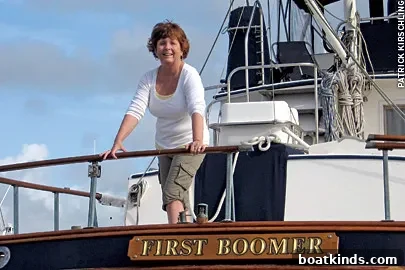
With her first Social Security deposit cleared, Kathleen Casey-Kirschling is ready to spend more time cruising aboard First Boomer, the restored Grand Banks 42 Classic she and her husband Patrick bought a decade ago as their retirement boat.
Casey-Kirschling, born one second after midnight on Jan. 1, 1946, has been celebrated as the first of America’s baby boomers — the huge generation born between 1946 and 1964. Boomers have repeatedly reshaped American culture and consumer markets as their priorities change with each life stage. Whether the subject is music, politics, fashion, cars or leisure, their influence is undeniable.
Futurist and strategist P.J. Wade prefers to avoid the word “retirement,” arguing it implies disengagement. With life expectancy rising — Americans who reached 65 in 2004 were expected to live into their early 80s — Wade recommends thinking instead about “what you are going to do with the rest of your life.” She calls this phase “unretirement”: a period when many remain active, healthy and financially capable of pursuing extended travel, volunteer work, second careers or new hobbies.
For the Kirschlings, unretirement means boat life. They split time between their home on Maryland’s Eastern Shore and a second home in Vero Beach, Florida, using First Boomer as a floating retreat. Patrick, a food-marketing professor, plans to retire soon, while Kathleen, who retired from teaching earlier, still volunteers and does pro bono work — a pattern common among boomers. She recently volunteered with the Red Cross after Hurricane Katrina and serves as an unpaid spokeswoman to educate prospective retirees about Social Security. Receiving that first benefit check marked a new chapter — for both her and the broader Social Security system, as tens of thousands of boomers become eligible every day.
The Kirschlings’ path into boating highlights how leisure choices evolve. Initially water-skiers, they discovered cruising on a charter in the British Virgin Islands in 1991 and were hooked. They progressed from a small Wellcraft to a 20-year-old Grand Banks 36 and ultimately to the Grand Banks 42 Classic they call First Boomer. Now snowbirds, they cruise south each fall and return in spring, planning to explore more of Florida by boat once Patrick fully retires. Kathleen sums it up simply: “Our boat doesn’t go fast, and that’s perfect — we don’t have to rush anymore.”
Boomers and their boats
The boating industry sees a potential tidal wave of demand as baby boomers age into their peak boat-ownership years. Yet observers warn there won’t be one uniform retirement story. Some boomers will continue full-time work, others will semiretire or pivot into volunteering or new careers. Still, the size of the generation and its discretionary spending power make it a key market: builders, outfitters and service providers will compete for boomer dollars.
Research shows boat ownership peaks in the 50s and 60s, meaning an older average age for owners in coming years. To capture this market, manufacturers must design boats that address changing needs: easier boarding, safer walk-through layouts, comfortable seating, good service and convenient storage. Builders who adapt will gain market share; those who don’t risk losing access to a substantial buyer segment.
Several manufacturers have already repositioned themselves with older buyers in mind. Some offer smaller, elegant, fuel-efficient powerboats with easy handling, single-engine options, bow thrusters and joystick control. Wider, side-opening cockpit doors, level walkways, plentiful handrails, and user-friendly systems reduce physical strain and enhance safety — attributes attractive to aging boaters who still want to cruise comfortably and socialize onboard.
Grady-White and other brands have answered customer requests for more “creature features” and family-friendly layouts, adding practical elements such as transom doors, generous cockpits and comfortable interiors while maintaining seaworthy hull designs and strong resale value. The trend is toward accessible, low-maintenance boats that can be enjoyed for years and passed down to younger family members.
Some work, some play
Retirement patterns are shifting. Many boomers expect to work longer than their parents did; surveys show a growing share anticipate working beyond age 65. Economic uncertainty and changing personal goals mean some will downscale their dream boats or delay full retirement. Others will buy yachts in their 50s to “throttle back” work commitments gradually, running businesses remotely while cruising thanks to satellite communications and Wi-Fi.
That reality influences boat design and propulsion choices: some buyers want faster hulls and larger engines to make reliable time between destinations, while others opt for fuel-efficient hulls and propulsion systems that strike a balance between speed and economy. Advanced technology — joystick controls, pod drives, electronic charts, AIS collision-avoidance, and integrated communications — makes boating easier, safer and more appealing to tech-savvy boomers.
Future in Flux
Green marketing, recycling
Sustainability is increasingly central to boating. Energy-efficient lighting, biodegradable cleaners, copper-free antifouling paints, solar panels, wind generators and electric outboards reduce environmental impact. Manufacturers and marinas promote green practices because clean water and air are fundamental to the business.
Service evolution
As boats grow more complex and owners value time, professional yard services are in demand. Modern boatyards are becoming larger, vertically integrated operations that offer specialized services and comply with stricter environmental and safety regulations. Higher labor and compliance costs are pushing consolidation in the industry, and quality technicians are increasingly scarce — forcing yards to invest in training and retention.
More power, more options
Fuel-price pressures and emissions rules have driven advances: cleaner direct-injection outboards, common-rail diesels and efficient pod-drive systems that improve performance and maneuverability are now mainstream. Diesel-electric hybrids, batteries and fuel-cell systems are under development but not yet dominant in recreational boating.
New-age fuel
Alternatives like biodiesel can reduce emissions, but availability is limited. The shift to ethanol in automotive fuels has introduced problems for older boats, including fuel-system contamination and phase separation. Boat owners must monitor fuel closely, carry spare filters and use quality separators to avoid engine issues.
Global manufacturing
Some builders have moved production to China to control costs. While that has expanded manufacturing capacity, concerns about supply-chain quality, labor practices and environmental issues remain. Buyers should evaluate builders carefully and prefer reputable firms with consistent quality control.
Lighter, faster, safer
Advances in materials, design software and construction techniques have produced lighter, stronger and more efficient boats. From resin infusion to vacuum-bagging and advanced composites, modern construction enhances speed, safety and fuel economy. Consumers should buy from builders who understand the materials and methods they use.
Extreme weather
Growing hurricane activity highlights the need for preparedness. Marinas and boat owners are investing in stronger infrastructure, dry storage and better insurance coverage. In high-risk regions, storing boats inland or in reinforced facilities is increasingly common to reduce storm exposure and long-term costs.
Going — and staying — green
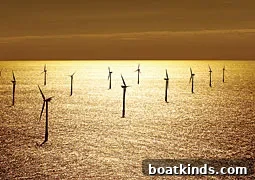
Regulatory trends such as no-discharge zones, speed limits to protect marine life and routing changes to reduce boat strikes will shape boating behavior. Resource conflicts and proposals for offshore installations can affect access and navigation, underscoring the need for stewardship and advocacy to preserve recreational waterways.
All-purpose marinas
Marinas are becoming mixed-use destinations, combining green building practices with hospitality amenities — hotels, restaurants, shops and condos with docks — to boost revenue and attract a broader clientele. Space for small-boat slips is shrinking, so alternatives like dry stacks, trailering and swing-mooring solutions are becoming more common.
Finding a way to the water
As boating participation grows, water access can lag due to lost slips, deteriorating ramps and competing waterfront development. Advocates are pursuing policy measures, funding and public-private partnerships to preserve launch ramps, dredging priorities, and waterfront working spaces. Federal funds and industry cooperation help, but ongoing public support is critical to maintaining access.
Best of Both Worlds
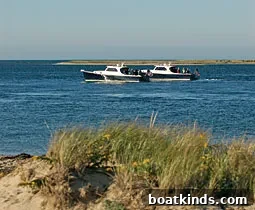
Rising costs — fuel, slip fees, maintenance and insurance — have made fractional yachting and club models attractive alternatives to full ownership. By sharing costs, scheduling and maintenance, fractional programs, yacht clubs and charter-lease models open boating to more people and reduce the hassles of upkeep.
Different models exist: shared ownership, club memberships, leaseback schemes and fractional partnerships. Programs provide training, online scheduling and concierge maintenance, and many require skippers to complete courses and follow checklists to protect boats and fellow owners. These systems can broaden participation, offering flexible, hassle-free access for people with busy lives or limited interest in full ownership.
Fractional programs also appeal to buyers who want boating experiences without the long-term commitment. By combining modern communications, training and professional management, these models create a practical, affordable route to enjoying time on the water.
In short, as baby boomers reshape retirement, boating is evolving — in design, technology, ownership and service — to meet changing expectations. For many, the sea will remain a place to relax, explore and stay engaged well into the years once called retirement.