
Why We Chose a 23-Foot Caribiana Sea Skiff: A Practical Powerboat for Trailerable Cruising
After years of sailing, my wife Jackie and I decided in 2013 to move from sail to power. We wanted something smaller, easier to handle and trailerable so we could spend more time enjoying the water and less time maintaining a larger sailboat. As an air charter pilot, my free time is limited, and the work involved with a big sailboat had become more of a burden as I got older. Selling our 1978 Hunter 30 provided funds to begin searching for a new, more convenient boat.
During the search Jackie suggested we consider the style of boat our cousins owned: a 23-foot Caribiana Sea Skiff. We were already familiar with this design from many outings with them in Boca Raton, Florida, so it didn’t take much convincing. Their experience showed us how quickly you can get out on the water with a boat like this, and how simple it is to put away at the end of the day — more time for cruising and exploration.
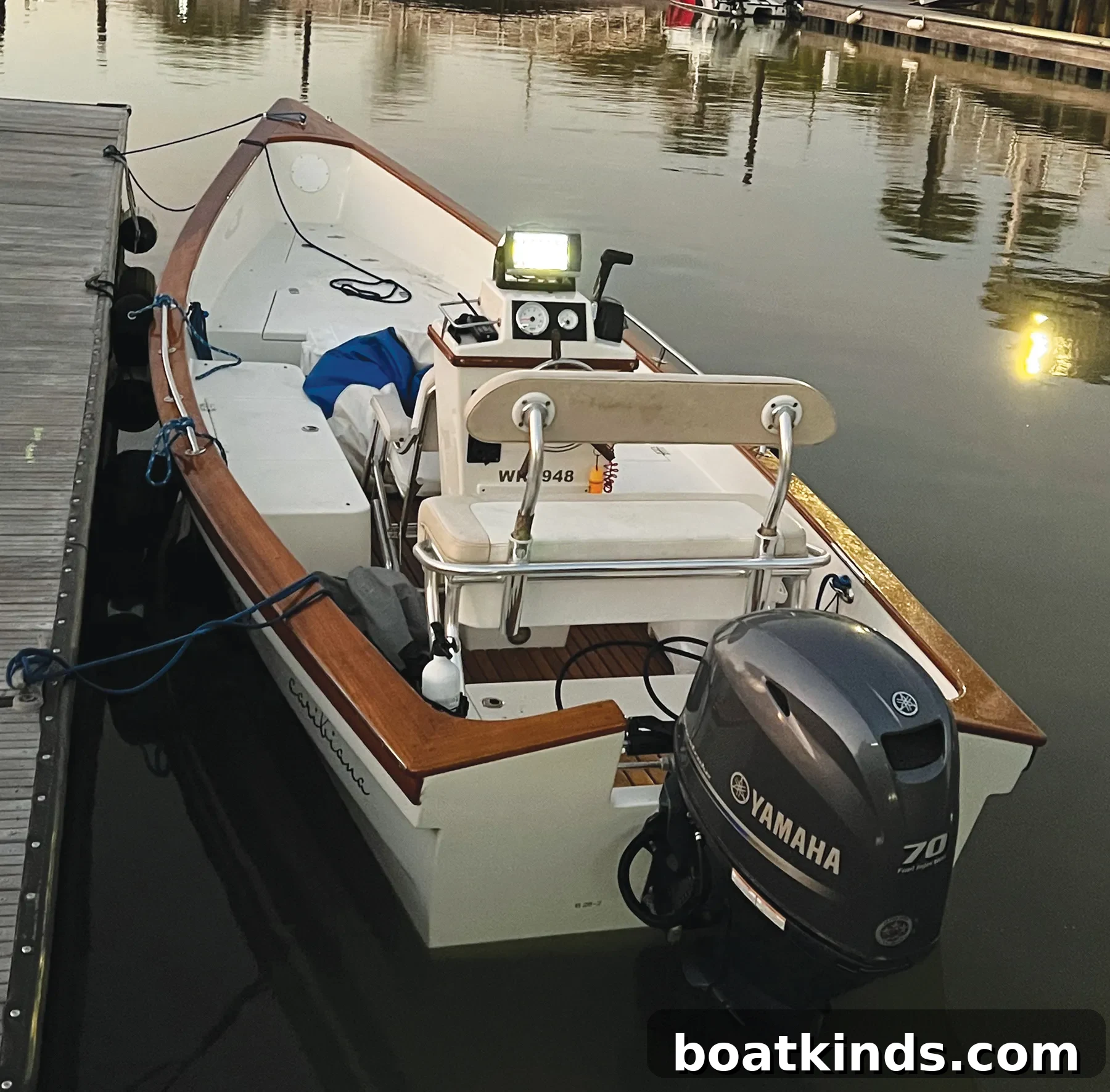
Caribianas are niche, hard-working boats inspired by Caribbean pangas but styled with a more refined, “yachty” appearance. They aren’t common, which appealed to us — we wanted a boat with good manners and attractive lines. The Caribiana met those expectations and often draws compliments from other boaters. When trailering, people stop to ask about her, which is something we enjoy.
We considered buying used but discovered how rare Caribianas are on the pre-owned market. After a frustrating search, I called Curt Morse in Pensacola, Florida, who had taken over the brand from designer Lynn Raybren. Curt mentioned he had a used model but also suggested he might have a deal on a new 23-foot hull. Two months later Jackie and I drove to Pensacola and came home with our new boat. The next day we were splashing her in our home waters in Texas.
We fitted the boat with details that suit our tastes and needs: cap rails of old-growth Burmese teak, Brazilian walnut (Ipe) deck grating, ice chests, a portable toilet, cushions and additional safety equipment. A bronze cutwater was added to protect the sharp bow. We’ve decided against a Bimini top to preserve the clean lines, accepting the summer sun in exchange for the boat’s appearance.
Safety and practicality are priorities. I store at least eight adult life jackets and four child jackets in the forward locker, plus a fire extinguisher, two horns, whistles, navigation lights and a selection of Orion 12- and 25-gauge flares including smoke pots. Jackie and I use inflatable, suspend-type personal flotation devices and the helmsman is always connected to the engine cut-off lanyard. Communications include an Icom handheld with mic-speaker and our cell phones in water-resistant cases; we usually operate within cell range.
Storage on the Caribiana is surprisingly generous. Port and starboard lazarettes, a large forward lazarette and a chain locker provide ample space, and a storage trough underneath the helm seat adds another compartment. Drainage is handled by 600-gph Johnson bilge pumps with float switches. Two 12-volt lead-acid batteries in secured boxes are managed by a Perko multifunction switch and power the running and courtesy lights, engine ignition and our Garmin 740s chartplotter. While one battery is often enough, the second battery provides reliable backup.
The boat’s 6-foot beam and V-shaped, faux-lapstrake hull give her a distinctive look and seakeeping character. She can feel a little twitchy in roll because of the narrow beam, and without trim tabs there’s noticeable prop-torque, but both are manageable. Powered by a 70-hp Yamaha outboard, she gets on plane quickly and uses her deep-V bow to slice through chop and wakes at an economical cruise. At 5,900 rpm she burns about 4.5 gallons per hour; with 26 gallons of fuel onboard we typically get around five hours at full throttle.
Although we most often cruise with just the two of us, the Caribiana comfortably carries four adults for casual outings and is USCG-rated for eight passengers, so it easily accommodates family runs with the grandkids. For boarding convenience, I added a removable stern ladder that stows in a side lazarette — a better solution for the narrow hull than a bulky, interior ladder. This summer I plan to recut the cushions to improve locker access and add a stowable bow tent supported by collapsible fiberglass poles to provide shade or light rain protection forward.
We’ve kept the boat on a floating dock in the past, but now she lives in a rack-and-stack boat barn where staff launch and return her for us. Inside storage is a welcome advantage during hot Texas summers and the cost is comparable to marina dockage, while valet service saves us time. The Caribiana is light enough to tow easily on a single-axle trailer; our diesel Ford F-250 barely notices the load, but she tows well behind a half-ton truck too, making long daylight drives to the Gulf Coast straightforward.
Meeting our cousins on the Mississippi Gulf Coast to run to Horn Island, Ship Island and nearby rivers and bayous has been a highlight. Docking at local restaurants is seldom a problem and the boat’s shallow-draft practicality makes these outings effortless.
In short, the Caribiana has met our expectations: good seakeeping, a soft ride in light chop, excellent fuel economy, low maintenance and adequate range for our cruising style. It’s a niche boat, certainly not for everyone, but for our needs we would choose it again without hesitation.
This article was originally published in the July 2023 issue.