
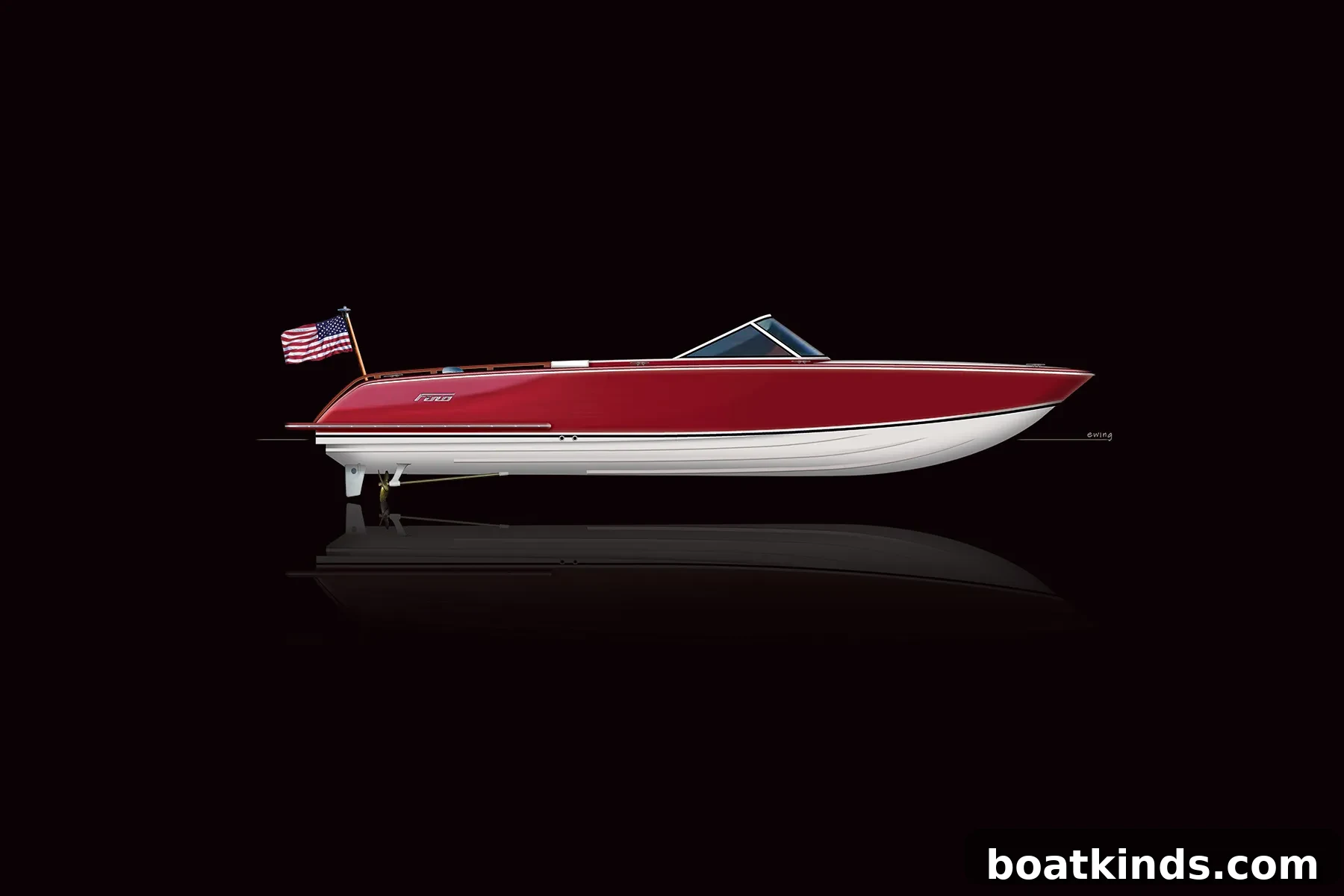
Fino 30: The Iconic American Sport Boat That Blended Race Performance with Italian Style
When offshore powerboat racer Bobby Rautbord launched the first Fino 30 in 1968 his goal was clear: build an American sport boat that delivered race-boat handling and high performance while wearing the refined fit and finish of a custom Italian runabout. The Fino 30 was an immediate hit. Between 1968 and 1970 nearly 30 hulls were delivered, and the model has since become recognized for its sharp styling, seaworthy deep-vee hull, and driver-focused layout.
Design Team and Vision
Rautbord approached the project like any seasoned racer—methodical and exacting. He assembled a small team of respected experts to translate his concept into a production boat. Walt Walters, an early designer for Donzi, was tasked with developing hull lines that married efficient hydrodynamics with striking above-water proportions. To make sure the hull would stand up to hard use and high-speed offshore running, Rautbord enlisted veteran builder Les Stratton, known for defining rugged construction and excellent fit and finish at Bertram. Together they produced a boat that balanced beauty, strength, and performance.
Hull and Underwater Features
Underneath, the Fino 30 features a well-raked stem with a sharp entry and a modest but effective flare to slice and deflect spray. The deep-vee hull rides on a 24-degree constant deadrise and is fitted with three pairs of lifting strakes to aid lift and tracking. Stem-to-stern spray rails create a hard chine at the transom, improving cornering stability and control. The hull’s measured proportions include a maximum beam of 9 feet 3 inches amidships, a draft of roughly 2 feet 9 inches, and a light-ship weight of approximately 8,500 pounds—numbers that support spirited offshore performance while keeping the boat manageable for a small crew.
Deck, Cabin and Cockpit Layout
Above the waterline the Fino 30 offers classic runabout lines with purposeful volume. A compact cuddy cabin sits beneath the foredeck, providing sheltered stowage or a small berth. The cockpit layout is driver-oriented: two forward-facing bucket seats for helmsman and companion, and an aft bench across the cockpit that seats three to four people comfortably. The after section is sculpted with tasteful tumblehome and a padded sundeck that rests over two long gull-wing engine hatches. Those hatches lift to reveal an engine bay sized to accept twin V-8 powerplants and to simplify service access.
Power and Performance
Standard propulsion originally consisted of twin 427-cubic-inch, 325-hp Kiekhaefer MerCruiser inboards, a combination that produced top speeds around 59 knots in test conditions. Owners could also specify more potent twin inboard packages, including 440-cubic-inch, 375-hp Chrysler engines or 482-cubic-inch Kiekhaefer MerCruisers rated at 390 hp; the latter installation was reported to reach as high as 69 knots. Rautbord equipped the Fino 30 with racing motor mounts, battery restraints, and tie-down brackets for twin 90-gallon fuel tanks as standard, reflecting the hull’s performance intent and serious offshore capability.
Features, Comfort and Craftsmanship
Rautbord insisted on refined appointments as part of the standard specification. Burmese teak decking was fitted in the cockpit and on the integrated swim platform, while heavily padded seating with drop-down bottoms allowed for comfortable driving while standing. Optional conveniences included a 2.5-kilowatt Onan generator to support cabin air conditioning and other onboard electrical needs, plus luxuries such as a built-in bar and icemaker—features that made the boat equally suited for high-speed days on the water and relaxed cruises with guests.
Legacy and Revival
The Fino 30’s combination of race-bred handling, elegant styling, and solid construction ensured its place in the history of American sport boats. That legacy continues today: Yachtfish Marine in Seattle has acquired the original molds and produced new tooling to preserve the classic lines of the Fino 30. The revived models will use modern Mercury outboard power, updating the propulsion approach while maintaining the visual and performance characteristics that made the original so desirable.
With its roots in offshore racing and its attention to finish and comfort, the Fino 30 remains an instructive example of purposeful design—an American sport boat that successfully absorbed performance cues from the race circuit and stylistic cues from Italian runabouts to create a timeless, usable classic.
This article was originally published in the September 2023 issue.