
If you want to know why “super RIBs” are appearing at boat shows and filling marinas across the country—boats with amenities a simple dinghy could never imagine—you have to look back about 40 years, to the era of big hair, VCRs and classic comedies. The transformation of rigid inflatable boats (RIBs) from pure utility craft to stylish, feature-rich dayboats is a story of design evolution, engine improvements and changing customer expectations.
The RIB concept began in the 1960s in the United Kingdom, when the Royal National Lifeboat Institution sought a solution to premature wear on fabric-bottomed inshore lifeboats. Early experiments with plywood proved fragile in rough water. Builders soon developed a successful combination: a rigid hull of fiberglass or aluminum wrapped with an inflatable collar. That mix delivered durability, buoyancy and impact resistance.
By the 1980s and 1990s, European recreational boaters embraced RIBs for their safety, light weight and handling. Designers in France, Italy and Spain began blending practical engineering with aesthetics, creating cleaner lines and more comfortable layouts. In the 2000s, that trend accelerated: manufacturers increased size, refined hulls and added creature comforts previously found only on center consoles and express cruisers.
Two key advances helped push RIBs into mainstream recreational use: improvements in outboard engines and innovations in boat packaging. Modern outboards are quieter, cleaner and more fuel-efficient than older designs, and many now feature joystick docking and advanced electronic controls. Combine those engine advances with larger RIB platforms furnished with sunbeds, refrigeration, heads, showers and integrated seating and you get a versatile, attractive dayboat suitable for families, yacht clubs and water-sports enthusiasts.
Manufacturers and dealers say younger buyers are especially drawn to RIBs. The inflatable collar acts like a built-in fender, making docking and rafting easier and less anxiety-inducing than docking a hard-sided, showy boat. That forgiving nature, along with modern styling that differs from the boats older generations owned, helps RIBs appeal to new boaters. At the same time, the boats’ lighter weight often translates to better fuel economy and lower acquisition costs, which are practical considerations in an era of higher fuel prices and inflation.
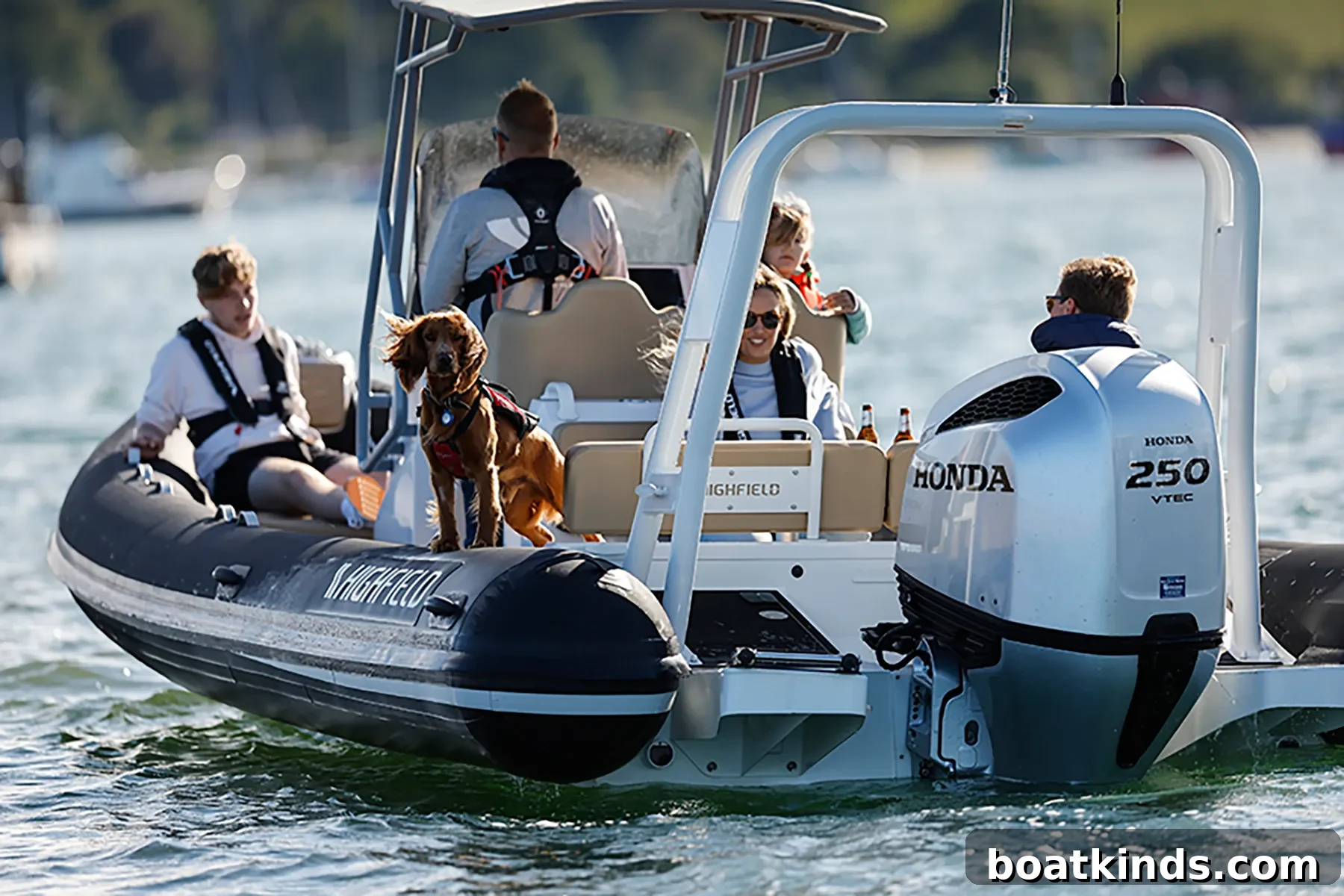
“When you combine modern outboards with a well-equipped RIB, you have a boat that looks great, is comfortable and is easy to operate,” says Christophe Lavigne, president of Highfield USA. Buyers appreciate the package: style, performance and amenities all together.
Dealers report rising demand in regions like Long Island Sound and New England, where families and waterfront homeowners use RIBs as daily runabouts for coffee rides, regatta support and shoreline cruising. Owners value trailerability—many RIBs are light enough to tow easily—so families can bring them to regattas or launch them from different locations. Yacht clubs are adopting RIBs as race committee boats and support craft because they’re maneuverable, secure and comfortable for passengers.
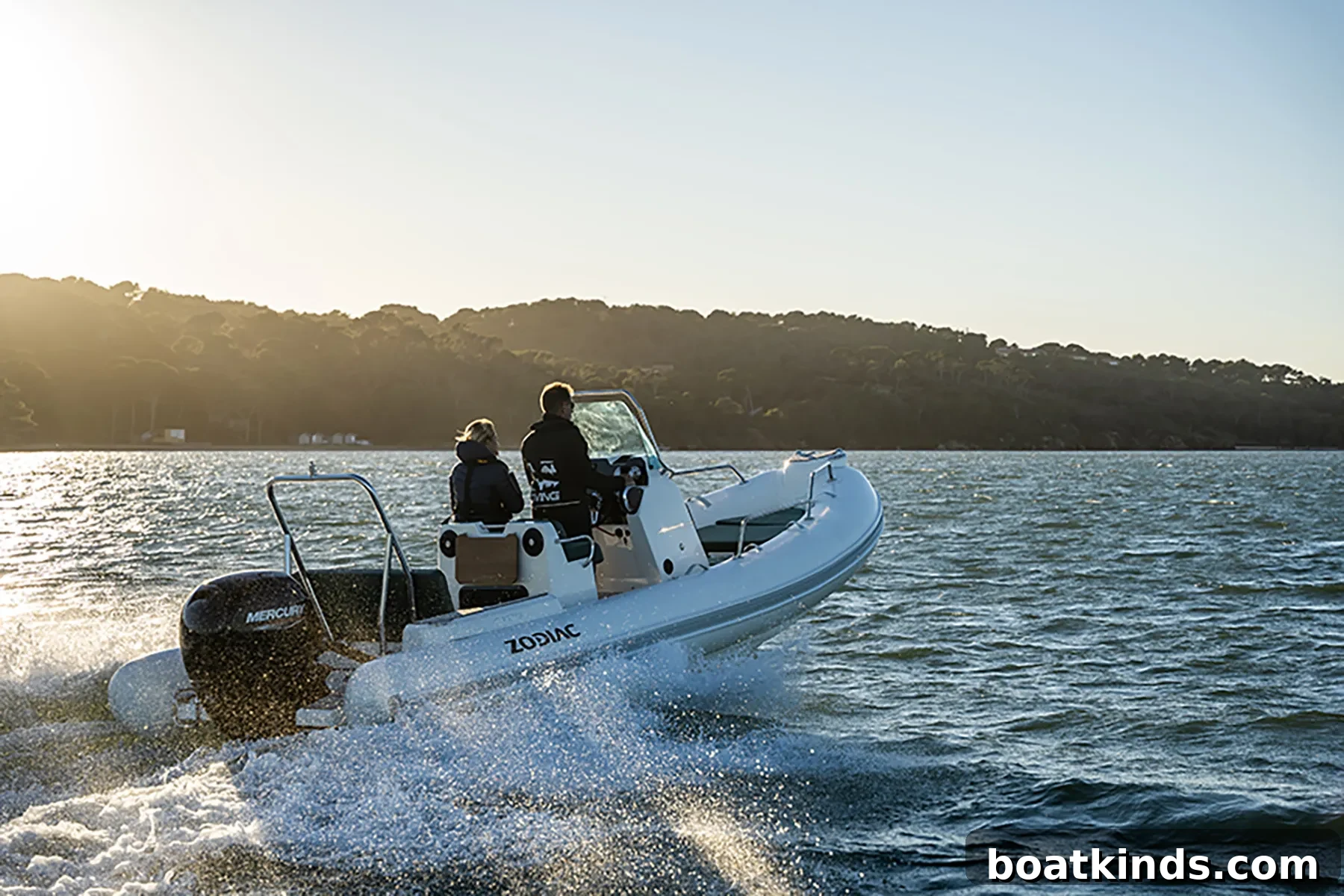
“Larger RIBs used to be primarily workboats—rescue, military and dive boats—but with the right features they make excellent family boats,” says Daniel Parker, U.S. marketing manager for Zodiac Nautic. “We’ve added convertible seating, decks with sunpads, integrated platforms with ladders and showers, plus joystick steering and electronics you’d expect on a fiberglass boat.”
Below are several notable manufacturers building large, well-equipped RIBs that can be outfitted with the comforts and technology making them more than a simple tender.
ZAR Formenti Italy’s ZAR Formenti has produced RIBs since 1979 and has been active in the U.S. market for more than a decade. Its flagship Imagine 130, introduced at boot Düsseldorf, is a 43-foot model with two staterooms, a tender garage and a full galley. ZAR’s unique design carries the inflatable tubes only partway forward, allowing a higher bow and an underdeck cabin layout that accommodates true sleeping cabins and a dry ride at speed, while still offering the protection and comfort of an inflatable collar.
Highfield Boats Miami-based Highfield builds six lines of aluminum-hulled RIBs. Its Sport series—featuring models such as the 650, 800 and flagship 900—targets day cruisers and families. The Sport 900 measures just under 30 feet, can reach high speeds, and comes with amenities like sunbeds, a removable table, refrigerator, freshwater shower, bow boarding step and either a Sunbrella or optional hardtop. Highfield emphasizes customization: fishing electronics, upgraded sound systems and layout changes are common dealer-installed options.
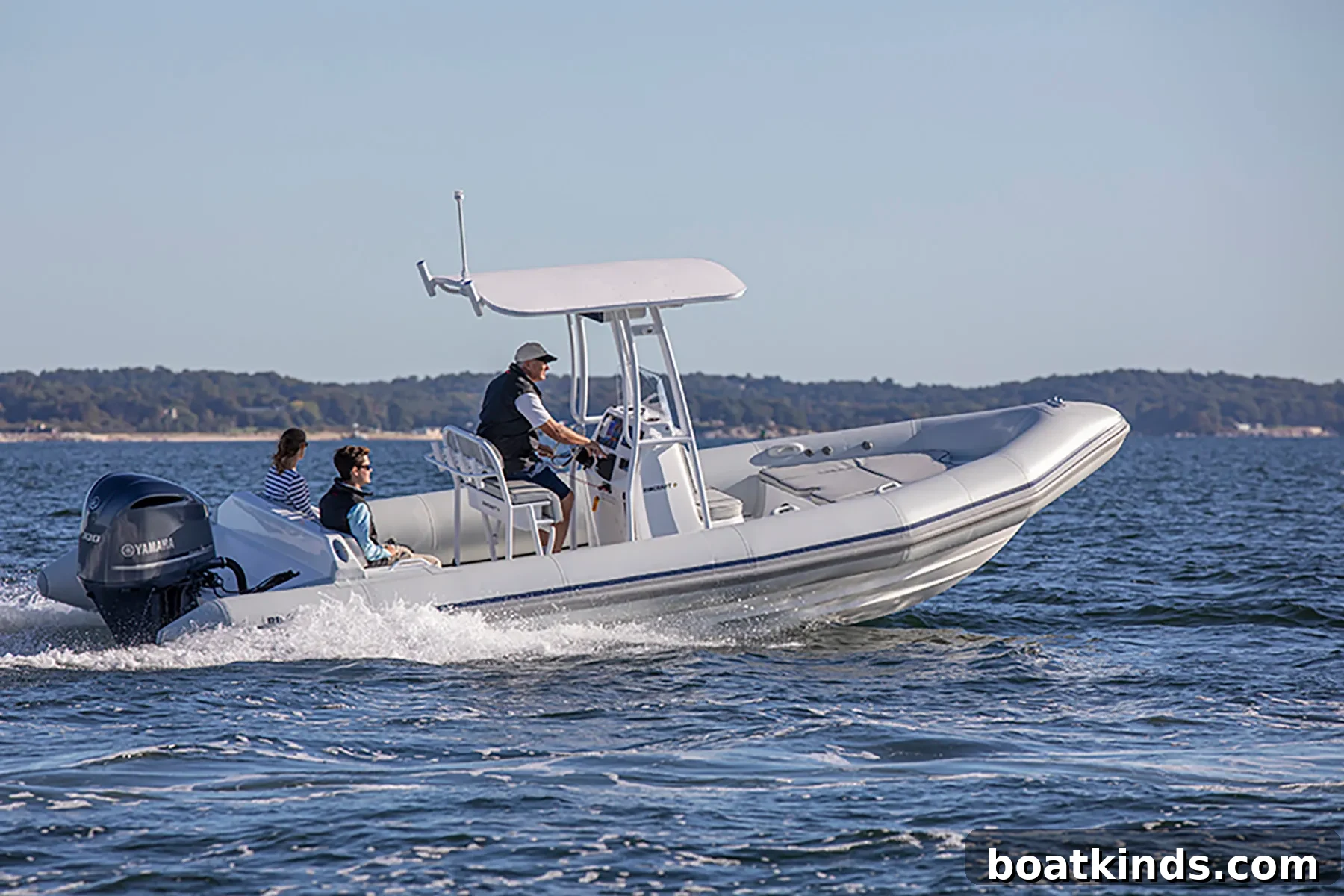
Ribcraft USA Ribcraft’s 7.8 and 9.0 models (roughly 25 and 30 feet respectively) now include expanded bow seating—horseshoe lounges with pop-up tables and extended lounging areas—making them ideal for group cruising. Across the Ribcraft range you’ll find integrated coolers, freshwater showers, stereo systems and optional refrigeration on larger models, reflecting the focus on comfort and family use.
Zodiac Nautic Zodiac’s Medline lineup is positioned as a family day-boat series. Models like the Medline 7.5 (about 24 feet) feature roomy aft access platforms with ladders and showers, cockpit lighting, joystick steering and convertible seating. Zodiac also offers bright hull and upholstery color options, moving away from the plain white dinghy aesthetic to bolder, contemporary palettes.
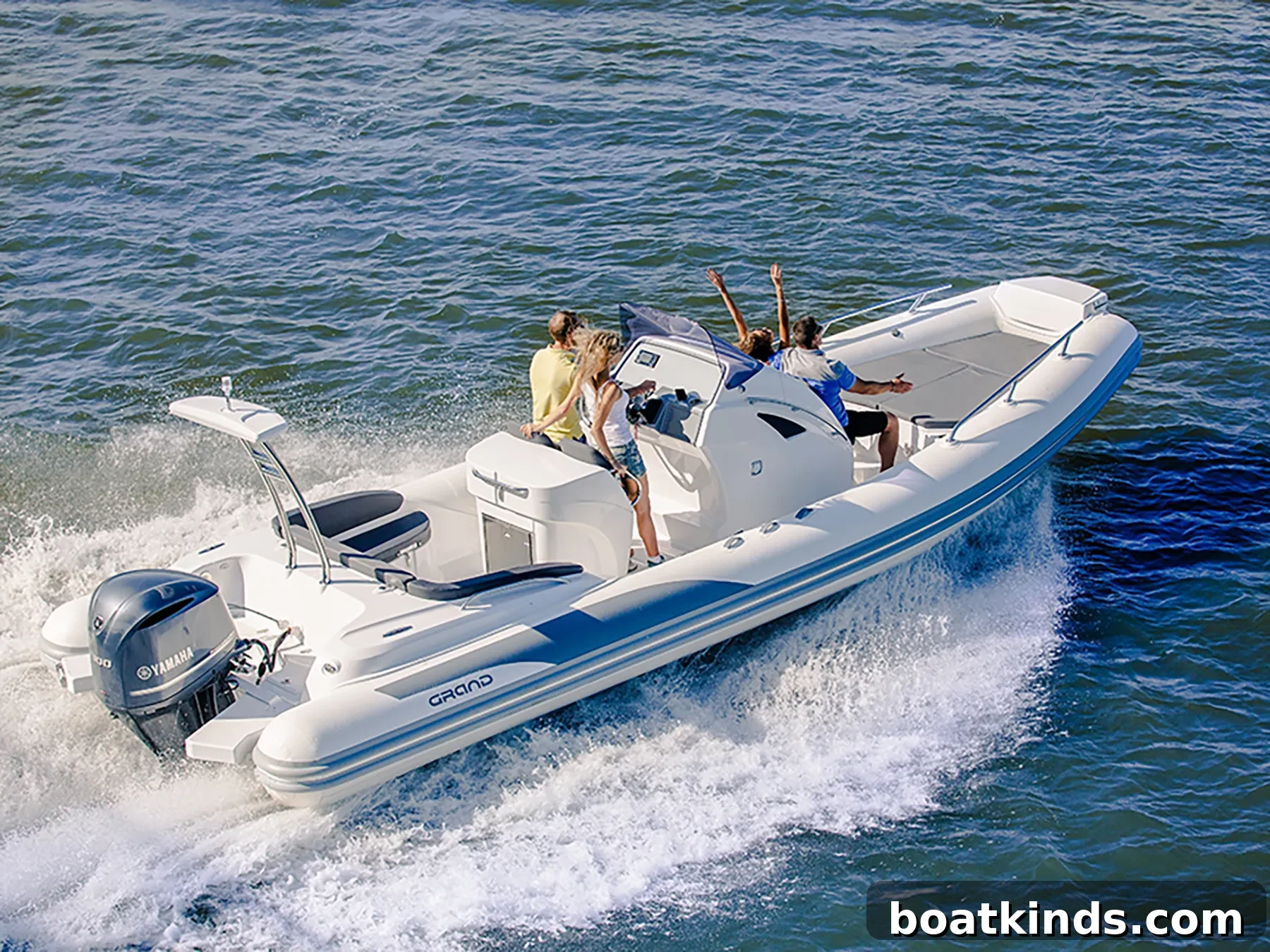
Grand Marine Built in Ukraine, Grand Boats are gaining U.S. dealer traction for their solid build quality and luxurious fittings. The Grand 850L, part of the Golden Line, measures just under 28 feet, offers a full head, refrigerator, optional electric grill and can accept twin engines. Dealers appreciate the blend of traditional styling and modern amenities that make these RIBs competitive with 26-foot center consoles.
RIBs have evolved from pragmatic rescue craft into versatile, attractive dayboats that suit a wide range of boating lifestyles—from family outings and regatta support to fishing and watersports. With improved hull designs, quieter, cleaner outboards and an emphasis on comfort and customization, RIBs now offer a compelling alternative to heavier, more expensive boats for many buyers.
This article was originally published in the April 2023 issue.