
Just after daybreak at Wells Cove Landing, an inlet off Kent Narrows on the Chesapeake Bay, the morning soundscape blends the slap of water against the bulkhead, the distant drone of Route 50, the whir of fishing reels, an osprey’s keening, bursts of laughter, and conversations in Spanish and Vietnamese. Mixed among those sounds is the intermittent rumble of wheeled coolers being rolled from the parking lot to a string of boats: Island Queen II, Shirley B III, Miss Violet, and Off Da’ Hook.
Anglers arrive from as far away as Philadelphia, New York City and Washington, D.C., to fish with a small group of Black captains whose collective knowledge spans generations of Chesapeake watermen. Much of that expertise comes from decades spent in the region’s traditional fisheries—crabbing, oystering and clamming. Beginning in the 1950s, many of these watermen diversified into head boats, offering affordable day trips that opened the bay to people from all backgrounds and established a distinctive cluster of boat businesses led by Black captains.
Now the question looms: can that tradition continue into future generations?
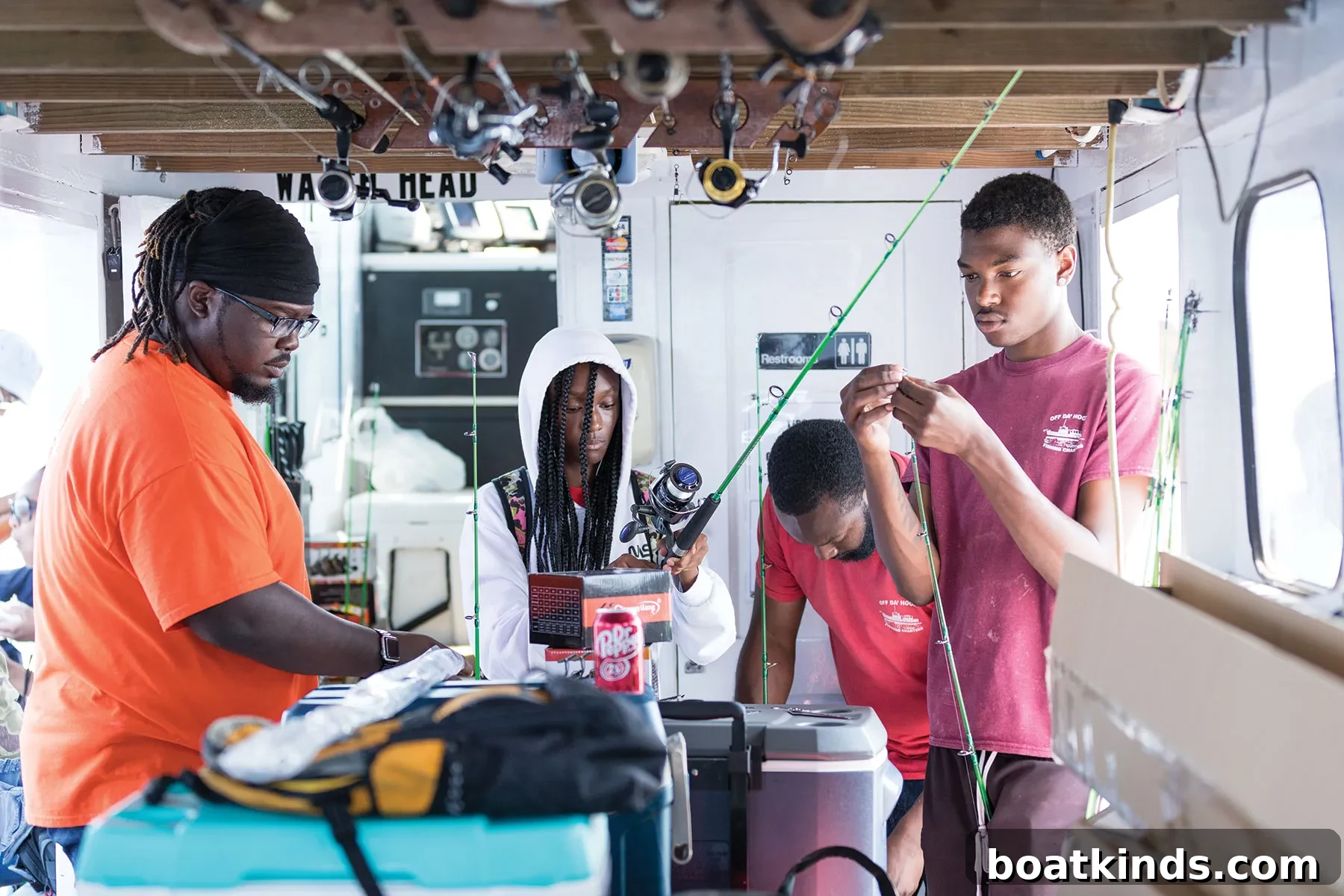
At 81, Montro Wright steps off the Shirley B III and moves along the dock with a steady purpose. He heads to Off Da’ Hook, run by his son Lamont, 62, to coordinate the day—checking bait stocks and confirming which passengers and crew have arrived. Lamont’s sons, Sedrick Cooper and Tomaz Davis, work alongside Shamar Austin, helping guests stow coolers and gear, settle into seats, and get ready for a day of bottom fishing.
Next week 27-year-old Sedrick will sit for his U.S. Coast Guard 50-ton license, a credential that will allow him to run his father’s boat. Lamont beams with pride but admits he’s more nervous than Sedrick about the test. The region has already lost at least six of the early-generation Black captains, including Warren Butler, who died at 92 this past July and was among the first to run head-boat charters here. “Now, my father is the oldest living captain,” Lamont says. Most current captains are second-generation and in their 50s, 60s and 70s. “We don’t have as many people coming up behind us as we have gone before. That’s why it’s important my vision comes true.”
Lamont’s vision is practical: help young men and women afford the Coast Guard licensing class—which costs roughly $1,200 to $1,500—provide the opportunities to log hundreds of hours of required sea time, and support newcomers as they follow in their fathers’ footsteps. “If we don’t get some youth in us, we’re going to die,” he says. “I just don’t want the Black captains of the Chesapeake to die.” If Sedrick earns his license, Lamont adds, it could mean three generations fishing at the same time, “if it’s God’s will.”
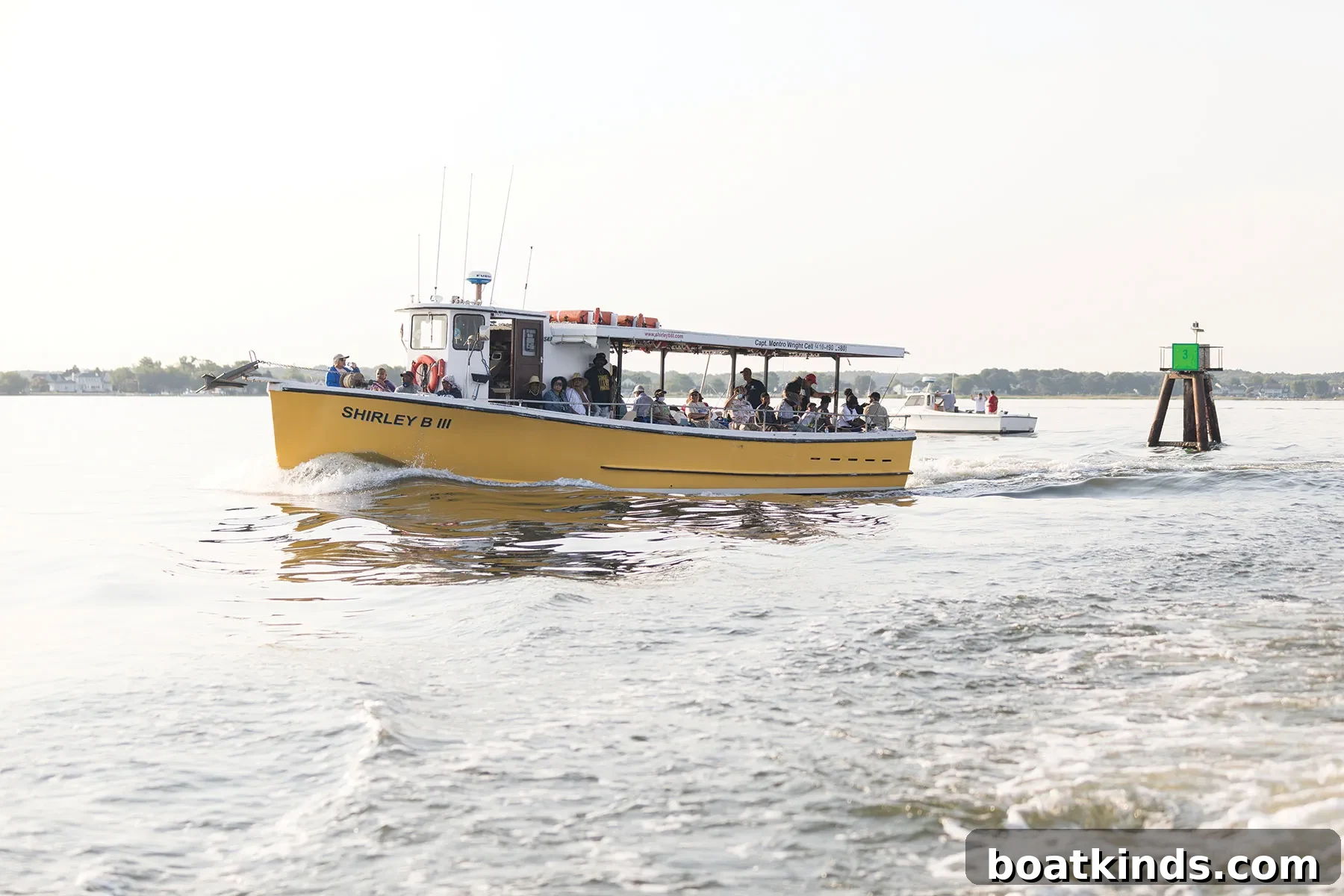
By 7:15 the boats are full and slip away from the dock one by one. Sedrick pilots Off Da’ Hook through the narrow passage under the Narrows’ two bridges and into the Chester River with Lamont offering quiet, steady guidance. Built in 1956 in Deltaville, Virginia, Off Da’ Hook measures 50 feet overall with a 14-foot beam and a 300-hp Cummins engine. Licensed for 30 passengers and three crew, head boats are priced per person—on Off Da’ Hook a day costs $60, not including rod rentals, bait, beverages and crew tips.
The boat’s cabinhouse stretches nearly to the stern, providing shelter, a head and a sink. Benches run across the transom and fore and aft between the cabin and the coaming—where customers set up for a day of fishing, stashing coolers beneath the seats and watching their lines trail in the water.
Each head boat has its own character. Montro’s 50-foot Shirley B III, licensed for 49 passengers, features a long open cockpit with a flat roof, bucket-style seats around the coaming and a forward cabin that houses the helm and restrooms. Originally built as a U.S. Navy launch, it was refitted in Crisfield, Maryland, for head-boat service. Montro added head-boat fishing to his repertoire after earning his captain’s license in 1970, a diversification that proved wise when clamming and oystering later declined.
Montro recalls growing up around the water—his parents worked in processing plants and he began oystering on Saturdays at 12 or 13. At 16 he and his brother Andrew worked the water full time. He told a Queen Anne’s County watermen’s storytelling event how he bought his first 34-foot boat for $650 and pawned his car to raise the down payment. “It was a hard, hard struggle to get your first boat. You just had to have somebody to help you,” he said. That reality remains: today, a vessel like the Shirley B III would cost at least $250,000, a major barrier for newcomers unless they grow up in the trade and fall in love with it.
Lamont didn’t always love the work—he spent years as a corrections officer and police officer, later as a building inspector and school bus contractor. In 2012 he bought Off Da’ Hook and ran weekend charters, and by 2017 he retired from county work to fish full time. “My father was my backbone,” he says. “I wouldn’t be what I am without him.”
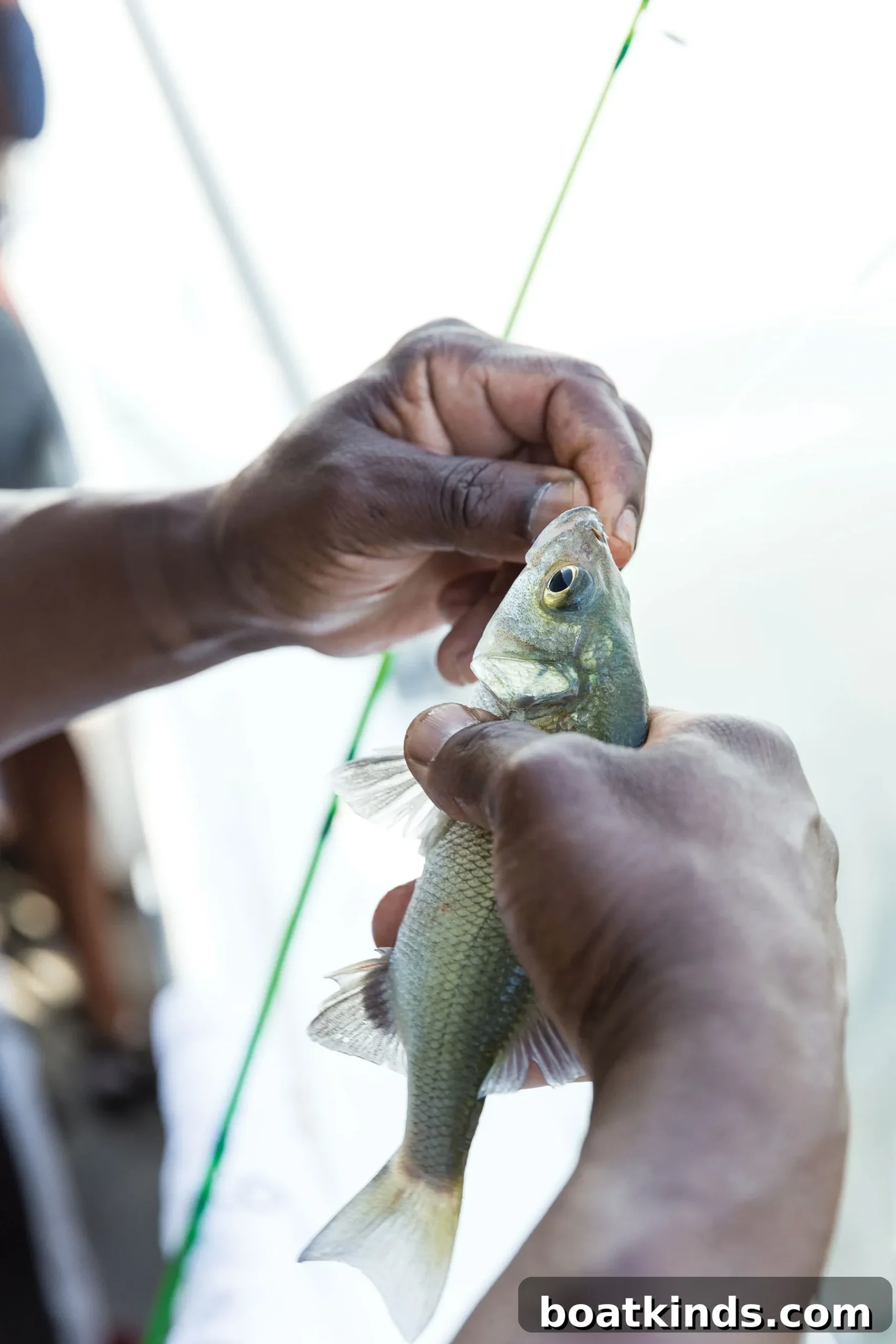
On this morning they head toward a spot near Eastern Neck Island when Montro checks in by VHF. After a quick phone call, Lamont tells Sedrick to run toward Love Point at the northern tip of Kent Island. They anchor in about 24 feet amid a small cluster of head boats with Shirley B III close by. As soon as the engines stop, rods fly out. Head-boat fishing focuses on bottom species like spot and perch; customers aren’t chasing trophies but rather a steady catch to bring home for the week. Bloodworms are common bait, and the old oyster beds—now shell and rock structure—remain reliable spots because fish gather there.
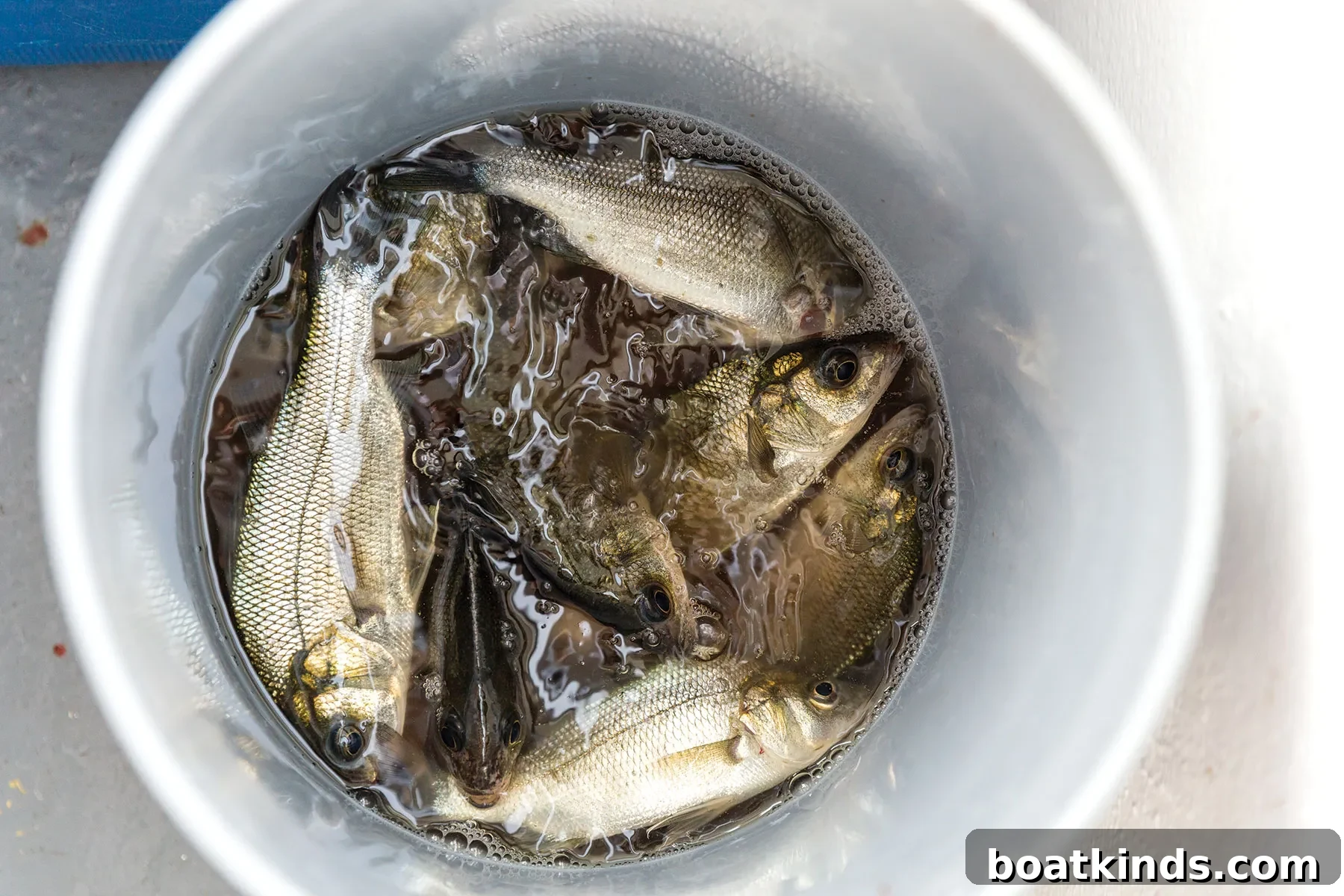
Years on the water give perspective on changes in the fishery. Montro notes that trout and croaker were once common, but now spot and perch dominate and are often smaller. State regulations limit spot to 50 fish per angler, but competition is intense—sportfishing boats that have limited out on rockfish will often fish for spot to use as bait.
By midmorning a comfortable rhythm has settled on Off Da’ Hook. A gentle southerly breeze keeps everyone cool while SiriusXM’s Heart & Soul plays in the background. Groups of Vietnamese anglers laugh together on the transom, Spanish-speaking fishers cluster at the port bow, and families, friends and individuals line up along the rails. That mixing of cultures, ages and genders is common on the head boats, although the large church groups that once filled boats before the pandemic have not fully returned. In 2020, after limits eased, the head boats were busier than ever; their layout made it easy to space out and enjoy a day on the water during a difficult time.
George O’Donnell, a former Kent Narrows waterman and county commissioner who now works with Maryland’s Department of Natural Resources, says the Black captains’ niche is unique. “I didn’t realize until I worked for the state that the largest group of minority seafood harvesters in the state, and perhaps even the East Coast, is right here in Queen Anne’s County,” he says. “They’ve filled a necessary void for that type of fishing, and we’re proud to have it in Kent Narrows.”
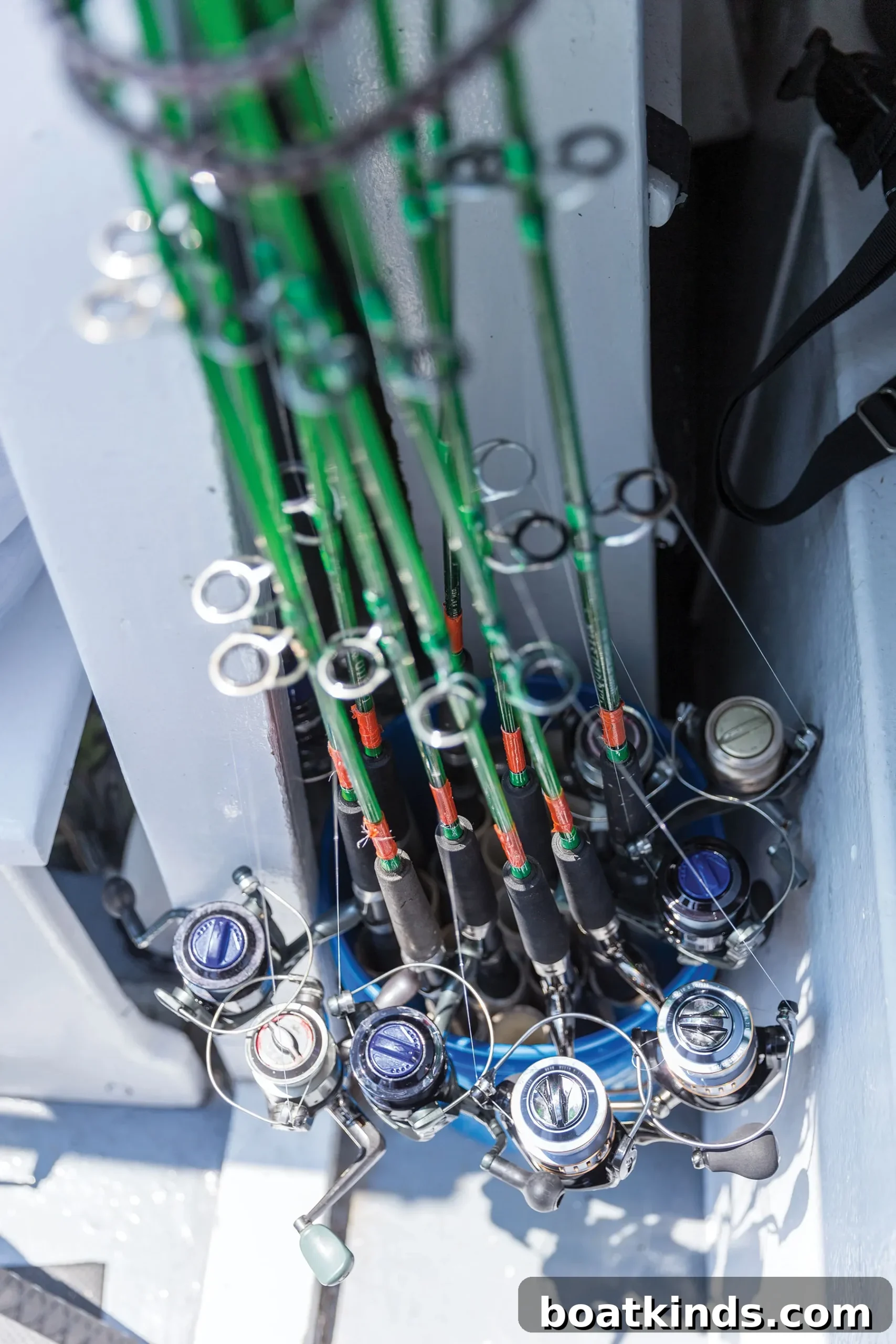
While anglers work their lines, the crew keeps busy. Lamont demands cleanliness and organization: heads cleaned regularly, bait bags counted, and rods and buckets stacked by color and type. Crew members troubleshoot rigs for anyone not getting bites and help keep the day running smoothly.
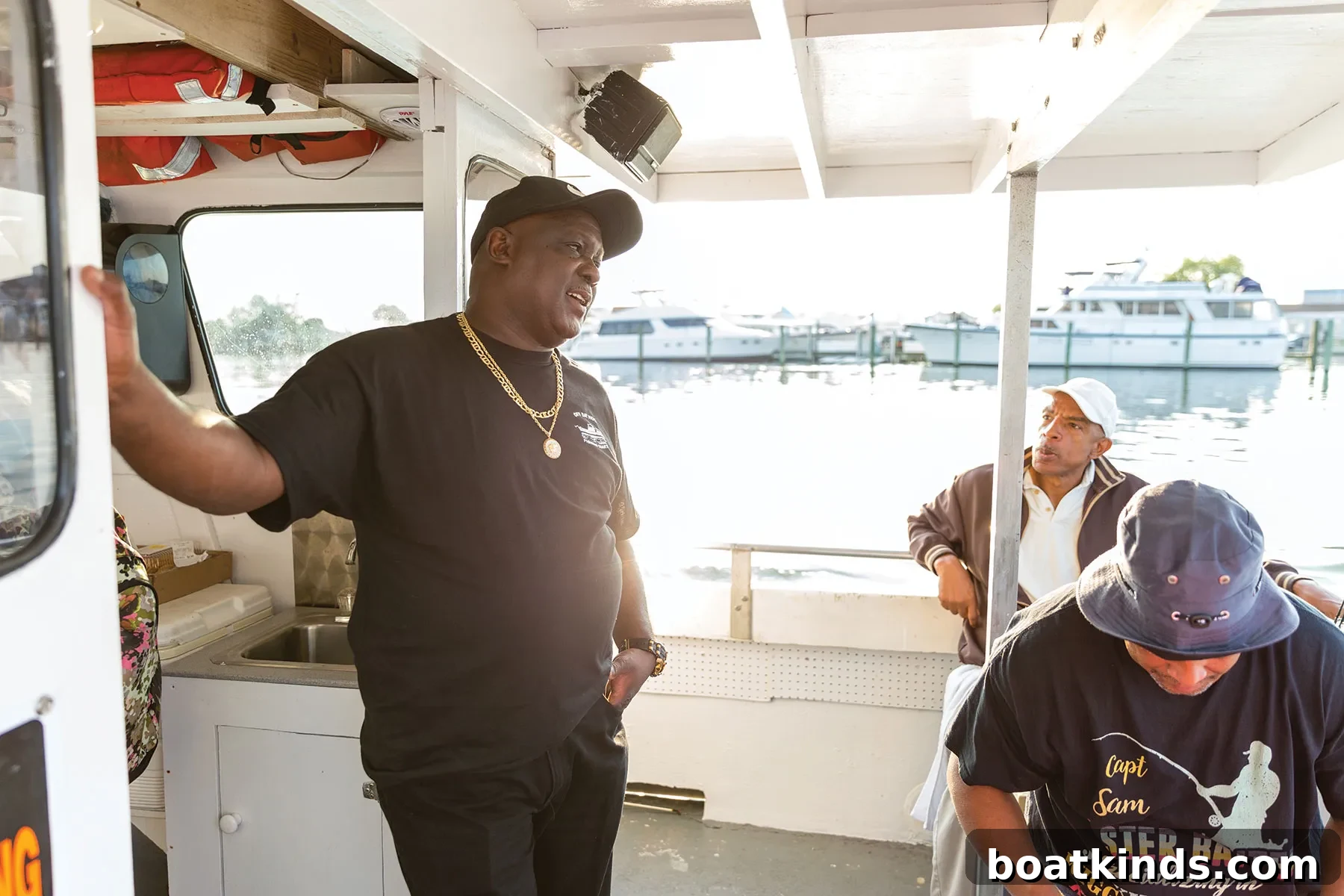
Sedrick studies a Coast Guard manual between trips, yellow highlighter in hand. Though he moved to Buffalo, N.Y., with his mother and earned a degree in early childhood education, then worked for Head Start, he returned to Queen Anne’s County to keep the family business alive. “I never thought I would be a captain,” he says. “But now that I’m here, it kind of feels inevitable. I felt like I had to do it. I get to learn from them every day.”
By early afternoon Lamont calls, “All right, y’all! Get your last one in, time to go!” The crew cleans, anglers reel up, and Lamont hauls anchor as Sedrick navigates back through the busy narrows, dodging sailboats, powerboats, kayaks and anchored anglers while managing a brisk four-knot flood tide. As they approach Wells Cove Landing, wind and current push in opposite directions, and Sedrick executes a tight, precise landing at a dock crowded with recreational boats. Lamont nods: “Perfect.”
This article was originally published in the October 2021 issue.