
SS Eastland Disaster on the Chicago River — July 24, 1915
On the cool, cloudy morning of July 24, 1915, a veteran Chicago newspaper reporter watched in stunned disbelief as a large passenger steamer tied to the Chicago River suddenly rolled onto its side and sank within sight of the wharf. The 275-foot SS Eastland, taking workers and families from the Western Electric Company to a company picnic in Michigan City, Indiana, capsized while still moored, and the calm was shattered by the screams of the dying. The catastrophe resulted in 841 confirmed deaths, marking the single deadliest ship disaster in Great Lakes history.
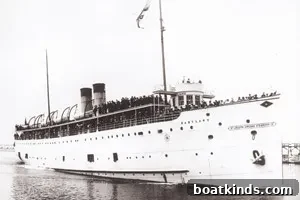
Jack Woodford, writing for the Herald and Examiner, captured the surreal nature of the scene: “A steamer as large as an ocean liner slowly turned over on its side, as though it were a whale, going to take a nap.” His account conveys the disbelief of witnesses who could not imagine such a modern vessel capsizing without explosion or fire. With many passengers aboard — contemporary reports indicate as many as 2,501 people were on the ship that day — the situation deteriorated rapidly once the list became severe.
What Happened on Deck
The Eastland had long been known for a tendency to roll, especially when crowds gathered on her upper decks. Operators managed that tendency using water ballast tanks. After the Titanic sank in 1912, federal regulations required passenger vessels to carry a full complement of lifeboats. On the Eastland, the addition of lifeboats hung from near deck level may have raised her center of gravity and increased her susceptibility to listing.
As passengers boarded that morning, many clustered on the starboard side nearest the wharf. The ship began to list toward the wharf. Crew members attempted to correct the angle by flooding the opposite (port) ballast tanks, which temporarily righted the vessel. But the ship then shifted the other way, and with over two thousand people aboard, the portside list worsened. Water started flowing through port gangways and scuppers. Contemporary accounts also describe crowds moving toward the port side to watch a canoe race on the river; whether this drew passengers to one side or simply exacerbated instability, it contributed to the deadly tilt.
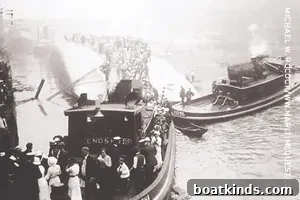
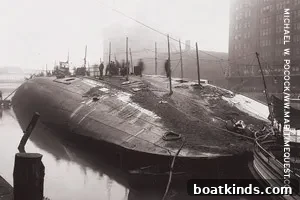
Unable to regain balance, the Eastland quietly rolled onto her port side and settled in about 20 feet of water, only roughly 20 feet from the pier. Many passengers trapped inside drowned or were crushed by shifting furniture and other debris. Survivors clung to the hull and were helped to safety by the nearby tug Kenosha, which served as an improvised bridge to the wharf for those fortunate enough to escape.
Rescue, Recovery and Aftermath
The suddenness of the sinking left little time for organized evacuation. Rescue efforts centered on the vessels and workers already present on the river and immediate shore, along with medical personnel who tended the injured. The Eastland was later raised and salvaged; she entered service with the U.S. Navy before eventually being scrapped in 1947. For the families and the city, the disaster prompted grief, inquiries, and debate about vessel safety and passenger loading practices.
Legacy and Historical Significance
The Eastland disaster remains a somber and important chapter in American maritime history. With 841 lives lost, it stands as the deadliest single-ship accident on the Great Lakes. The event highlighted risks tied to passenger vessel stability, crowding on decks, and the unintended consequences of safety retrofits that alter a ship’s center of gravity. It also underscored the need for rigorous inspection, operational discipline during boarding, and design considerations that account for added equipment and changing passenger loads.
Eyewitness descriptions, newspaper coverage and the subsequent salvage of the vessel preserved the memory of what happened that morning on the Chicago River. Survivors and witnesses recounted scenes of sudden chaos and brave efforts by rescuers; contemporaneous journalists, like Woodford, recorded a sense of disbelief that a modern steamer could capsize without dramatic external force. The Eastland tragedy continues to be studied by historians and maritime safety experts as a cautionary tale about vessel stability and passenger safety.
This article originally appeared in the October 2009 issue.