
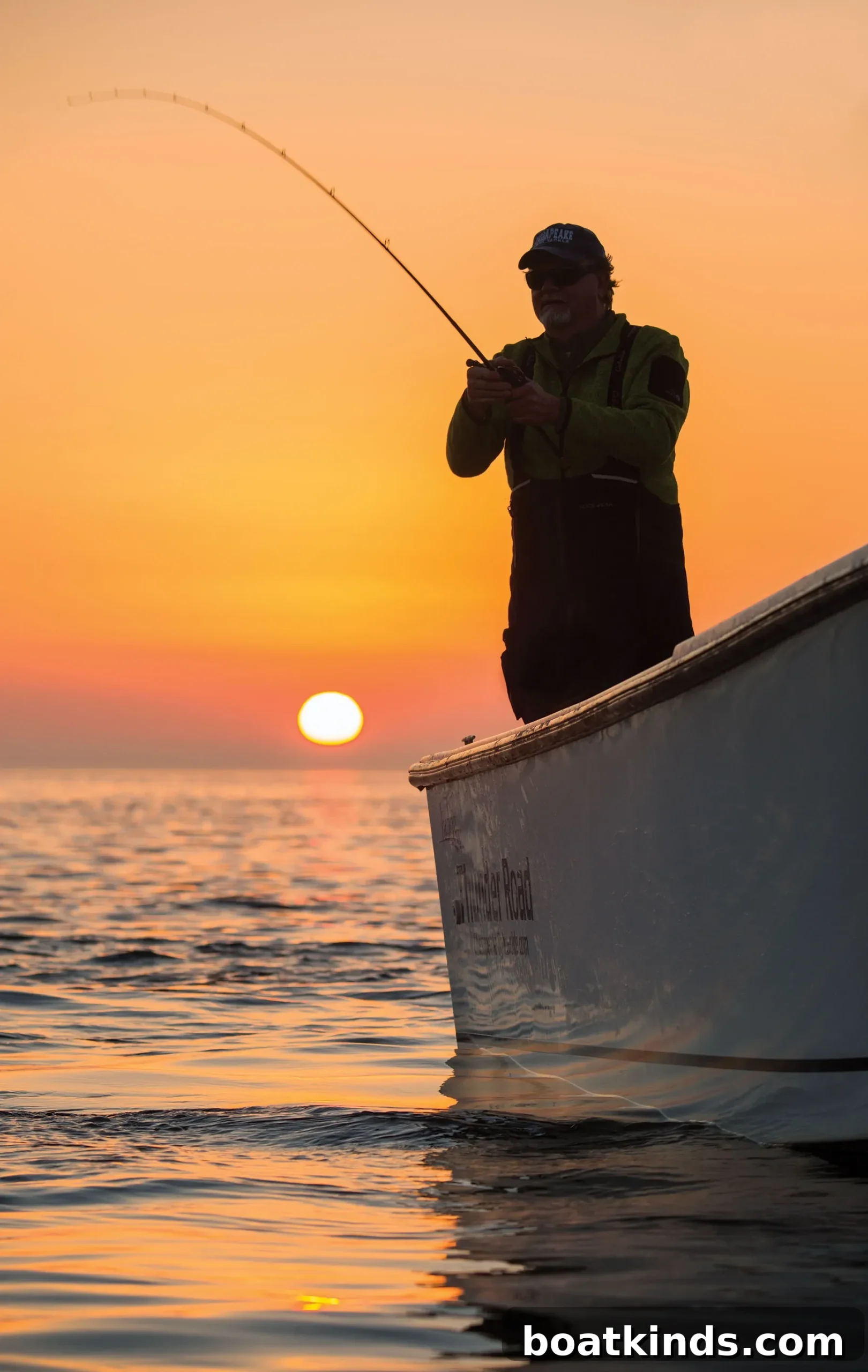
Spring Striped Bass Migration and Fishing on the East Coast
Before dawn, a pale light rose above Elk Neck State Park and revealed the Susquehanna Flats: a wide, shallow expanse of grass-filled water at the top of Chesapeake Bay. With no wind to disturb the surface, the flats lay like a sheet of glass. The only sounds were migrating warblers, a distant gull, and the hum of our 18-foot center-console as we moved across the water.
We had the place to ourselves—no other boats in sight. After a 3 a.m. wake-up and a 90-minute drive from Annapolis to Havre de Grace, I was fighting to stay awake, gripping the console handrail and nodding off. Then the flats erupted: splashing and popping as feeding striped bass tore through the surface.
My fishing partner and I snapped awake and began casting poppers into the frenzy. The drags screamed, rods bent deep, and we fought explosive takes from 40-plus-inch stripers. Adrenaline surged as we hooked, fought, and released fish—probably two dozen by the time we stopped counting. It remains one of the most memorable fishing days I’ve had.
Why Striped Bass Are the East Coast Favorite
On the East Coast, few species inspire anglers like Morone saxatilis, the striped bass. Anadromous by nature, stripers can live in both salt and fresh water. They migrate long distances each year between spawning grounds and summer feeding areas, grow slowly, and can live for decades. The all-tackle world record—caught in Long Island Sound—highlights the species’ potential size and allure.
Each late winter and early spring, hundreds of thousands of stripers gather at the head of Chesapeake Bay and in large brackish tributaries, and in major rivers such as the Delaware and Hudson, for spawning. Other regional spawning populations exist farther south, with smaller runs in the Carolinas. The species’ range extends from Maine to northern Florida, but the mid-Atlantic and Northeast support the greatest numbers.
Spring Fishing: Chesapeake Bay Trophy Runs
As the Chesapeake Bay’s trophy run begins, anglers prepare boats and gear to target large female stripers moving through the bay. Maryland’s “trophy season,” which allows the harvest of larger fish, is controversial—some argue that protecting breeding females during migration would better support population recovery. Still, for many Chesapeake anglers it’s the best opportunity all year to catch fish in the 35- to 45-inch range.
The most common spring tactics in the bay include trolling umbrella rigs and tandem setups tipped with lead-headed jigs, soft-plastic tails, and parachute skirts. Chumming with ground menhaden and fishing circle hooks baited with menhaden chunks has also become more popular. Because regulations vary by state and change frequently, anglers should confirm current rules before heading out.
Northeast and New Jersey Spring Runs
When the Chesapeake trophy run occurs, anglers in New Jersey and New York target spring migration in Raritan Bay, New York Harbor, and the Hudson River. Capt. Gene Quigley of Shore Catch Guide Service in New Jersey focuses on these fish in late March. He fishes back bays and staging areas near the harbor and also targets surf runs along New Jersey beaches, using light-tackle jigs and flies.
Quigley explains what makes stripers special: “They’re aggressive, hard-fighting, and exciting on light tackle and fly. Some anglers prefer trolling, but I enjoy the hunt—watching birds and surface breaks, and finding fish tied to structure or current. Years of experience give us the clues to hook up with a striper.”
Summer Resident Stripers and Techniques
By late May most of the spawning migration has concluded and breeding-age stripers head north to spend the summer along Rhode Island, Massachusetts, New Hampshire, and Maine waters. Younger fish—typically under 4 or 5 years old—often remain closer to their hatch areas, within roughly 100 miles, with many holding in Chesapeake Bay.
Capt. Chris Newsome of Bay Fly Fishing guides anglers on these resident summer stripers. Fishing Virginia’s marsh-lined rivers and bays from a Triton 240 LTS Pro, he scouts with live bait and relies on a mix of fly and light-tackle presentations. Typical summer fish range from about 18 to 30 inches. “Watching the take is just the best,” Newsome says. “Low-light periods at dawn and dusk usually produce the best bites, but you can catch them all day. They’re pound-for-pound very athletic and fun to fight.”
Guides use a variety of flies and lures: Clouser-style deep minnows, Lefty-Deceiver patterns, popper-like topwater flies, metal jig heads with soft-plastic tails, and surface poppers for spinning tackle are all effective depending on conditions.
Cape Cod, Martha’s Vineyard and Fall Blitzes
Roughly 400 miles north of Chesapeake Bay, Cape Cod, Martha’s Vineyard, Nantucket, and Buzzards Bay are seasonal hot spots from late spring through fall. Capt. Jaime Boyle, who fishes around Martha’s Vineyard and Nantucket, notes the season often begins in mid-May and centers on tide rips, flats, and rocky structure. Strong squid runs in good years make these fisheries especially productive.
As summer moves into fall, striped bass feed voraciously to fatten up for winter, herding baitfish such as bay anchovies, silversides, and menhaden into dense schools. The “fall blitz” is an adrenaline-fueled period when stripers break the surface while feeding, often under diving birds. Anglers chasing blitzes favor topwater gear to cast into the pods of breaking fish; a spectacular blitz can last an hour or more before the bass move into deeper, warmer water for winter.
Conservation and Responsible Fishing
Despite their resilience, striped bass face heavy pressure from recreational and commercial fishing. Tony Friedrich, vice president and policy director for the American Saltwater Guides Association, warns that the 2018 stock assessment indicates the species is overfished in some regions. Recovering populations requires coordinated management across states and thoughtful angler behavior.
Friedrich recommends safe catch-and-release practices and avoiding targeting summer stripers when water temperatures reach the 80s, since released fish are less likely to survive in hot water. He also urges anglers to move away from a “get your limit” mentality and to keep only a few fish as an occasional table treat. “This fish is rugged and adaptable,” Friedrich says. “If we reduce pressure, stripers will rebound. They’re an iconic species worth saving.”
With spring approaching, I’m already thinking about a favorite spot I’ve fished for decades: a lighted pier where dock lights attract bait and bring stripers into the glow. On an outgoing tide the water erupts as bass chase bait into the light—one well-placed crease fly often produces a hookup on nearly every cast. I can’t wait to be back out there.
This article was originally published in the May 2021 issue.