
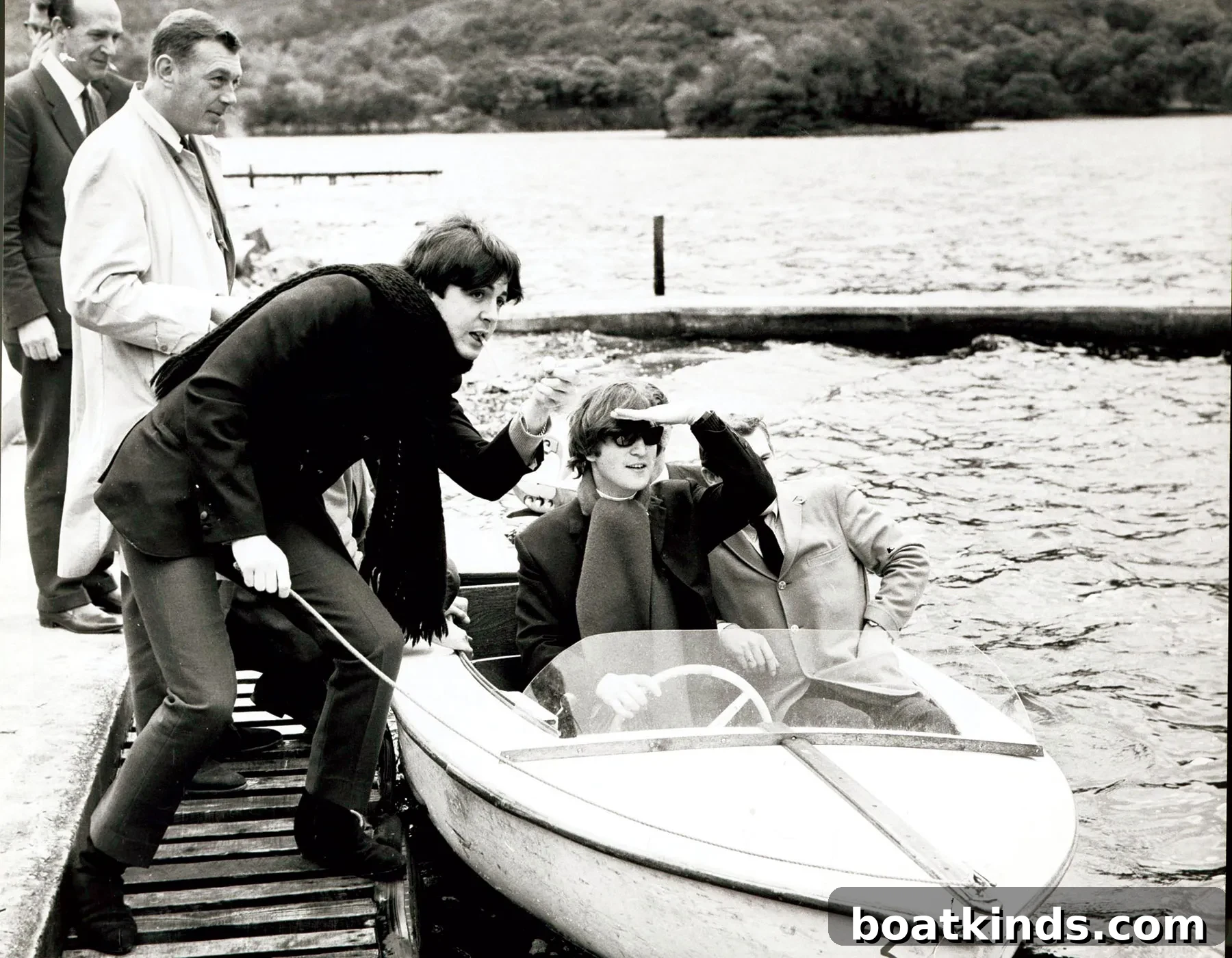
John Lennon Found Creative Renewal at Sea
Creative block affects artists of every stripe, and John Lennon was no exception. In 1980, after nearly five years of struggling to complete a single song, Lennon turned to a surprising source for inspiration: a sailing voyage. That trip across open water proved pivotal, breaking his long dry spell and sparking a prolific period of songwriting that fed into his final solo work.
The Decision to Sail and the Journey Begins
Reportedly captivated by the idea of crossing the Atlantic, Lennon made that ambition real on June 4, 1980. He boarded the 43-foot Hinckley centerboard sloop Megan Jaye in Newport, Rhode Island, accompanied by Captain Hank Halstead and a small crew. Their planned 600-mile passage to Bermuda would take them through challenging conditions, including the notoriously rough waters off Cape Hatteras and the region commonly referred to as the Bermuda Triangle.
The voyage quickly turned treacherous. Rough weather struck approximately 30 hours after departure, bringing extreme conditions — fierce winds and towering seas. Accounts from the trip describe winds up to 120 mph and waves reaching 20 feet. The severe conditions sickened most of the crew; ultimately the captain himself was overcome by exhaustion and had to relinquish the helm. Lennon, who had limited sailing experience, found himself in command at the worst possible moment.
On the Helm: A Test of Endurance and Joy
Far from succumbing to panic, Lennon later described those hours of storm as intense and exhilarating. He recalled being hit by waves for hours while steering through the squall, at times forced to his knees and clinging to the wheel as the boat pitched and rolled. Rather than fear, Lennon found a fierce exhilaration in the struggle: “It’s like being on stage,” he said. “Once you’re on there’s no gettin’ off.” He remembered shouting and singing through the ordeal, a visceral release that contrasted sharply with the stagnation he had been experiencing as a songwriter.
Arrival in Bermuda and a Creative Breakthrough
When calmer seas finally returned, the crew reached Bermuda safely on June 11, 1980. Lennon marked the moment with a note in the ship’s log: “Dear Megan, There is no place like nowhere,” accompanied by a sketch of himself and the boat at sunset. That simple, reflective entry captures the sense of escape and solitude he had sought—and found—at sea.
The voyage and the weeks he spent on Bermuda appear to have reignited Lennon’s creative instincts. During an extended stay on the island, he experienced a remarkable burst of productivity, composing approximately 25 songs. Among these were notable tracks such as “Watching the Wheels,” “Woman,” and “(Just Like) Starting Over.” These songs became central pieces of Double Fantasy, the album that would stand as Lennon’s final solo release.
How the Sea Helped Break Writer’s Block
Lennon’s experience offers a clear example of how a change of environment and a physical, immersive challenge can dislodge creative stagnation. The demands of navigating through a storm forced him into a present-minded state—focused, alert, and responsive—in which habitual anxieties and overthinking diminished. The upheaval of the voyage, combined with the solitude and perspective found on the open ocean, seems to have opened channels for new ideas and songs.
For artists and creators facing similar blocks, Lennon’s story is a reminder that inspiration sometimes arrives from stepping away from familiar routines and placing oneself in circumstances that demand full engagement. Whether through travel, physical challenge, or simply a different setting, such changes can catalyze fresh thinking and renewed productivity.
This article was originally published in the April 2022 issue.