
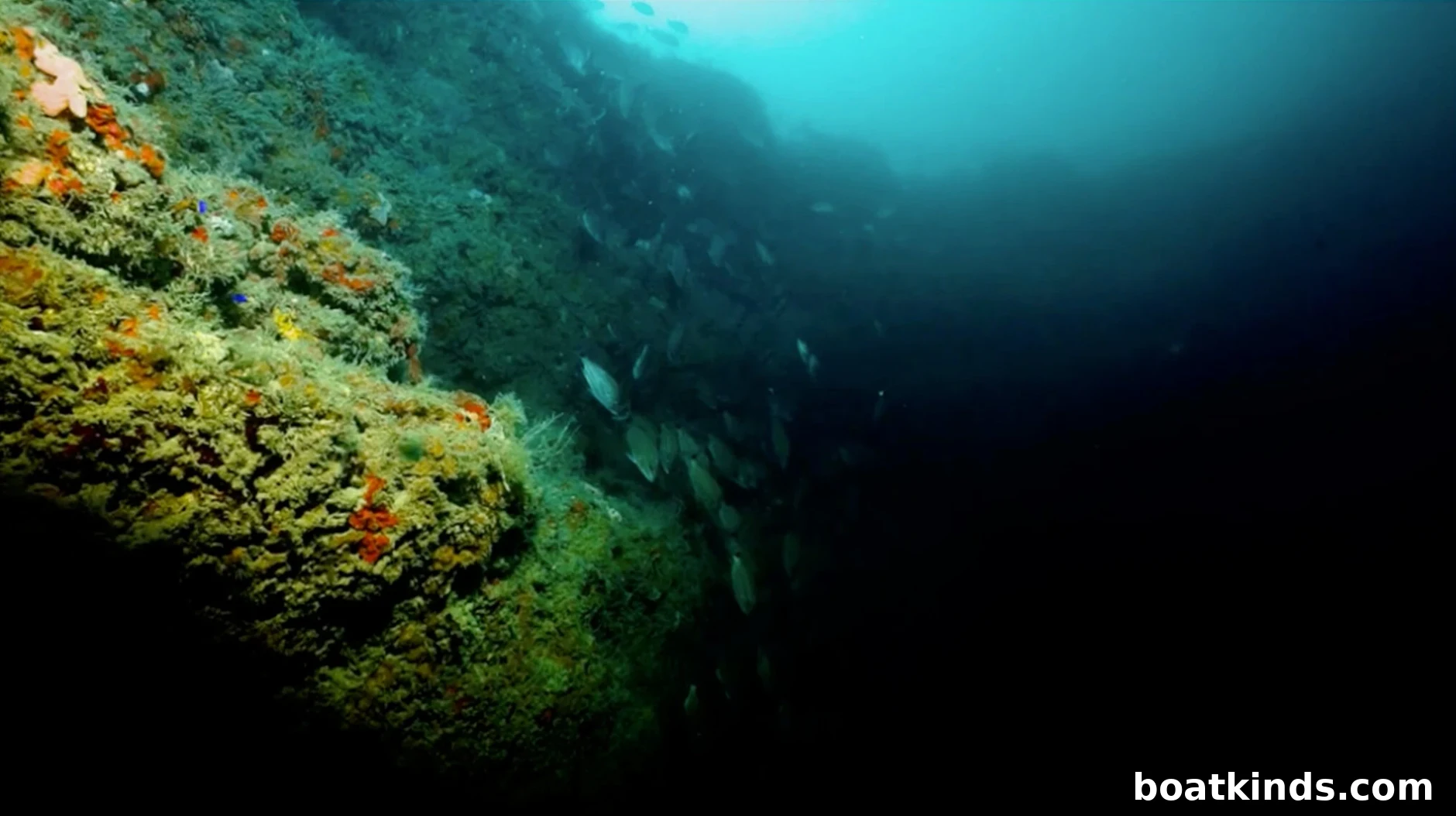
Exploring the Green Banana: One of Florida’s Deepest Blue Holes
Blue holes — the deep, often circular sinkholes that punctuate the ocean floor — are scattered across the world’s seas. Among them, a sinkhole nicknamed the Green Banana has drawn particular scientific interest. Located off the coast of St. Petersburg, Florida, this blue hole sits about 155 feet below the ocean’s surface and extends roughly 275 feet into the seabed. Its unusual depth and structure make it an intriguing natural feature for researchers studying marine geology, underwater ecosystems, and the movement of groundwater beneath the continental shelf.
How the Green Banana Got Its Name
The Green Banana earned its name in the 1970s when a boat captain noticed a green banana peel floating nearby. That informal name has stuck among local divers and scientists ever since. While the name is playful, the feature itself is a serious subject of study: its size and depth place it among the deeper known blue holes, and it may hold clues about past environmental conditions and present-day ecological processes.
Why Blue Holes Matter
Blue holes are important for multiple reasons. Their water often appears unusually clear, which can make them attractive sites for diving and observation. That clarity, along with distinct chemical layering inside some holes, can create conditions that support unique communities of plants, sponges, and fish. Because these environments are relatively isolated and can differ chemically from surrounding waters, they sometimes host species assemblages that are rare or poorly understood.
Beyond biological interest, blue holes may play a role in groundwater connectivity. Some blue holes are connected to inland aquifers or to other sinkholes beneath the seafloor; others are isolated. Determining whether the Green Banana connects to other sinkholes or contains pockets of freshwater is one of the questions scientists hope to answer. Understanding these connections has implications for regional hydrology, water quality, and even the fossil and sedimentary records preserved in these depressions.
Challenges of Studying Blue Holes
From above the water, blue holes can be difficult to spot, and many likely remain undiscovered. Scientists have verified about 20 sinkholes along Florida’s west coast, but estimates suggest there could be twice that number. At depth, blue holes often narrow at the surface before expanding internally, a shape that can prevent manned submersibles from entering safely. That geometry makes direct observation and sampling more complex, requiring specialized equipment that can be deployed from a ship without sending humans into confined spaces.
The Upcoming NOAA-Led Mission
A mission funded by NOAA is scheduled to investigate the Green Banana. For safety and practicality, researchers will deploy a 600-pound lander into the hole rather than attempting a manned descent. The lander will be used to collect water and sediment samples and to conduct a biological survey. Lander-based sampling allows scientists to measure physical and chemical parameters, document organisms that live in and around the sinkhole, and retrieve material that may record environmental changes over time.
Using a lander avoids many of the risks associated with piloted dives while still enabling detailed scientific work. Lander missions often include instruments such as cameras, environmental sensors, and collectors for sediment and biological specimens; these tools help researchers build a comprehensive picture of conditions inside a blue hole, from water chemistry and oxygen levels to the diversity and abundance of life forms present.
What Researchers Hope to Learn
The Green Banana expedition aims to clarify several open questions: whether the sinkhole connects to other subsurface features, whether it contains freshwater or brackish layers, and what kinds of organisms thrive in its waters and sediments. The data gathered will contribute to broader efforts to map and understand blue holes along Florida’s coastline and beyond. Findings could inform conservation priorities and help scientists better interpret geological and ecological records preserved in these unique underwater environments.
As the mission unfolds, researchers will analyze collected samples and imagery to build a clearer understanding of the Green Banana’s structure and ecology. Continued exploration of blue holes like this one is expanding knowledge about how these intriguing features form, how they function as habitats, and what they reveal about the marine and freshwater systems they intersect.