
Brooklin, Maine: Preserving Wooden Boatbuilding Through a New Maritime Research Center
Brooklin, Maine, is synonymous with wooden boatbuilding. Home to the WoodenBoat School—operating since 1981 and having taught more than 20,000 students—the town sustains a deep tradition of craftsmanship. Local builders such as Brooklin Boat Yard and several smaller yards keep hands-on boatbuilding knowledge alive in a community of roughly 800 year-round residents. While residents sometimes call Brooklin the “boatbuilding capital of the world,” the town’s central role in the world of wooden boats is clear: it is a living archive of traditional maritime skills, design and seamanship in an age dominated by fiberglass and carbon-fiber construction.
Friend Memorial Public Library: A Small Library with Big Ambitions
At the heart of this maritime community stands the Friend Memorial Public Library, founded in the late 19th century and renovated in the 1990s. The library serves both locals and seasonal visitors and has become a focal point for preserving the culture and history of wooden boatbuilding. Now the library is expanding its mission with an ambitious capital campaign: it has raised $2 million toward a $3 million goal to build an addition that will become the Anne and Maynard Bray Maritime Research Center.
Creating a World-Class Collection of Wooden Boat Resources
The planned research center will provide public access—both in person and online—to one of the most comprehensive collections of wooden-boat publications, photographs, drawings and design materials assembled in one place. Robert Baird, chairman of the capital campaign, expects the addition to be built by 2026 and emphasizes the collection’s global importance. “I never really fully comprehended how important these materials are to people who are interested in wooden boats all over the world,” he says. Baird adds that the fundraising has attracted generous local support as well as contributions from wooden-boat enthusiasts living farther afield.
Major Donations Form the Core of the Archive
The research center project began when Jon Wilson, founder of WoodenBoat magazine, pledged one of the largest private collections related to wooden-boat and yacht history, design and construction. Wilson’s materials include historical books—some rare and irreplaceable—periodicals and technical documentation that dates back to the 1880s. Complementing that donation, longtime maritime photographer Benjamin Mendlowitz has committed his personal archive of roughly 155,000 slides taken between 1979 and 2005.
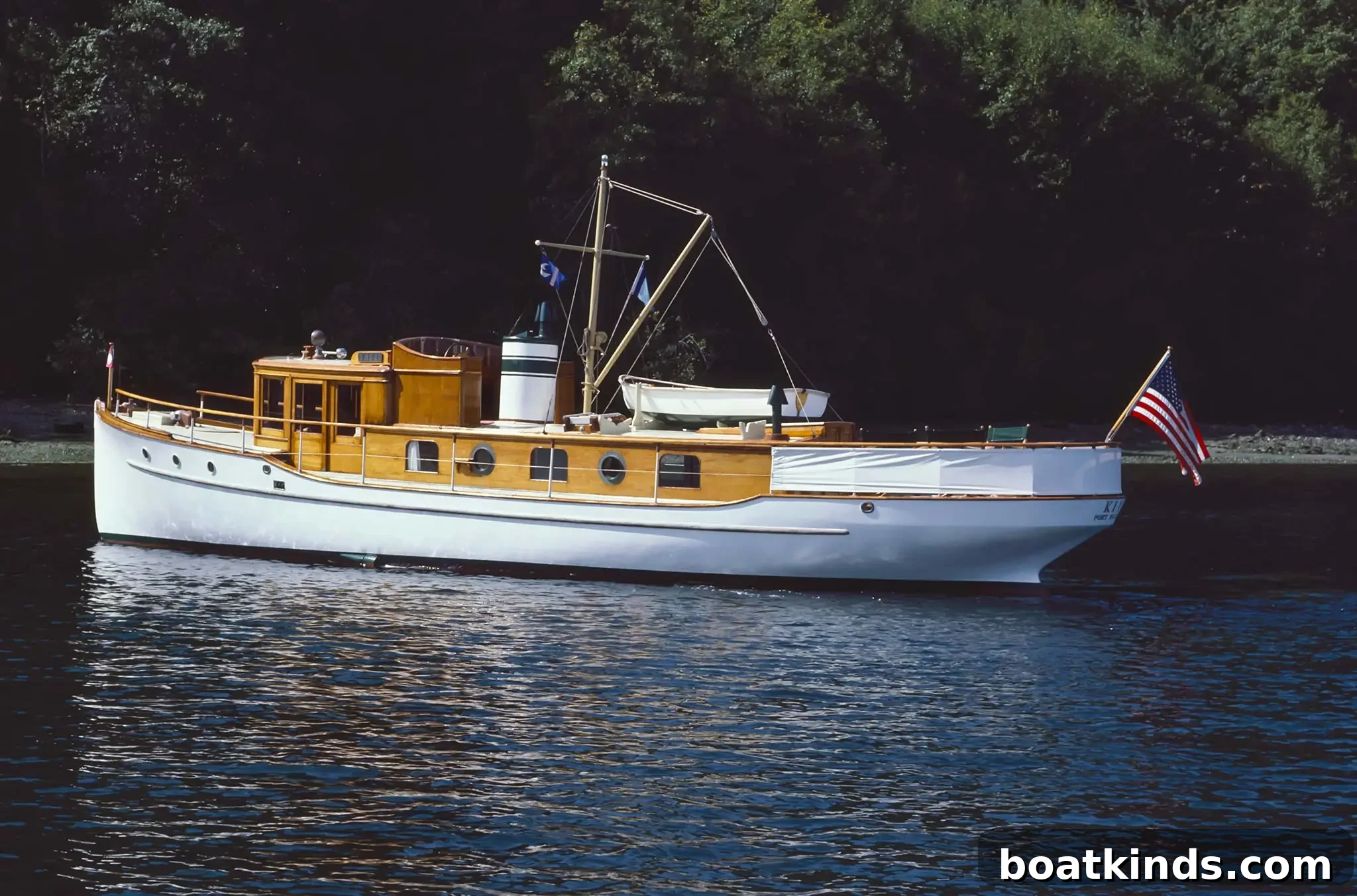
These collections will serve as the foundation for the new research center’s holdings. Mendlowitz explains that while he began digitizing images in 2005, many of his slides have not yet been scanned. “There are certainly quite a few scans that already exist,” he says, “but there are lots of images that haven’t been scanned. We’re hoping that with the help of volunteers, we can scan the collection and make it available for research online.” Making the slide archive searchable and accessible will amplify its usefulness to boat owners, historians, designers and restorers around the world.
Practical Uses for Historical Records
The combined collections will be invaluable for research into traditional construction methods and historical designs. Baird points to examples of how period articles and drawings can illuminate the history of a single vessel. He shares a personal connection: he owns a 28-foot boat designed by C.C. Hanley and built in 1927. “I could go to the library, find articles from Yachting magazine in 1928 about the building of that boat, and then the next year about the cruising of that boat,” he says. “Those are the things that are really incredible.”
Mendlowitz stresses the practical value of the photographic archive for restorers and new owners. “It’s mostly a record, a visual record of wooden boats,” he says. Because many wooden boats are unique rather than produced in multiple identical copies, historical photographs can show an individual vessel’s original details. A person restoring a wooden yacht can consult the archive to see how the boat appeared decades earlier—information that is often crucial during restoration projects.
Honoring Dedicated Stewards of Wooden-Boat Culture
The research center is named in tribute to Anne and Maynard Bray. Anne Bray devoted more than 30 years to building up the library’s collection and services, and Maynard Bray served as technical editor at WoodenBoat magazine for 40 years. According to Baird, a friend from the wooden-boat community pledged $500,000 to secure naming rights and recognize the Brays’ long contributions to preserving traditional boatcraft.
Beyond the archival value, the project has energized both the Brooklin community and the international network of wooden-boat enthusiasts. “This is a fun, positive project in a world today with so many things that can be so discouraging,” Baird says. “It’s great to be able to focus on good things.” The Anne and Maynard Bray Maritime Research Center promises to be a lasting resource for maritime research, boat restoration, historical scholarship and the ongoing celebration of wooden boatbuilding.
March 2025