
However this ends, I thought, I will be worthy of our nation’s highest award for class trip chaperone. Even if it is posthumous.
Night falls fast in the tropics. A rain squall passed, the stars reappeared, and the sea grew restless — about three feet of swell that makes a pontoon feel like a trampoline and keeps anyone in the water gripping hard. Nausea spread quickly. Vomiting is bad at the best of times; it is worse when it comes within minutes of starting a 13-hour survival exercise and you have no fresh water, no way to tell the time, no means to control the environment and, sadly, no Nutella.
I had taken ocean survival courses before, the sort that happen in a pool with a PowerPoint and a sandwich afterward. This was different: a full week at the Costa Rica Coast Guard Academy that concluded with a 2½-mile open-water swim, followed immediately by an all-night stay in the ocean. Yes — in the ocean, through the night.
I was at the University of Costa Rica’s Caribbean campus on a Fulbright scholarship, teaching navigation and seamanship for the university’s new nautical training program. Before I arrived, I’d wanted to see the Caribbean sunrise and Pacific sunset on the same day without flying, and when the chance came to take 11 students to Quepos on Costa Rica’s Pacific coast for their ocean survival training, I signed on.
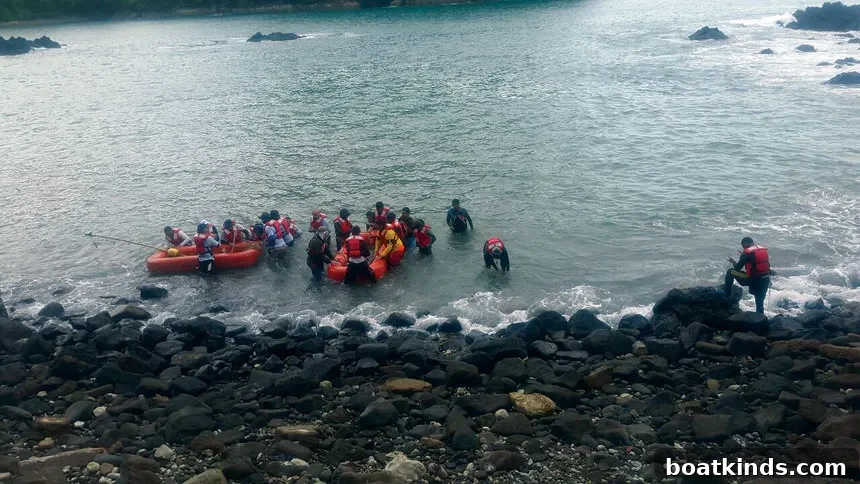
We were assigned a life float, not a life raft. A life raft typically has a floor that keeps you out of the water and a canopy that helps retain body heat. A life float is simpler: a rectangular inflatable perimeter with netting in the center and handles around the edges. It gives buoyancy, but little else. You can straddle the pontoon to get your torso out of the water, relax partially submerged in the netting, or hang onto the handles and bob. Each option trades warmth for comfort in different ways.
Ours was a tired, patched unit with torn netting and loose handles. It was rated for eight people; we were twelve.
Even in Costa Rica’s warm seas — around 84°F — prolonged immersion gradually reduces core body temperature. In that situation, the air of palm-fringed shorelines only heightens the irony: you can see safety while the ocean slowly claims you.
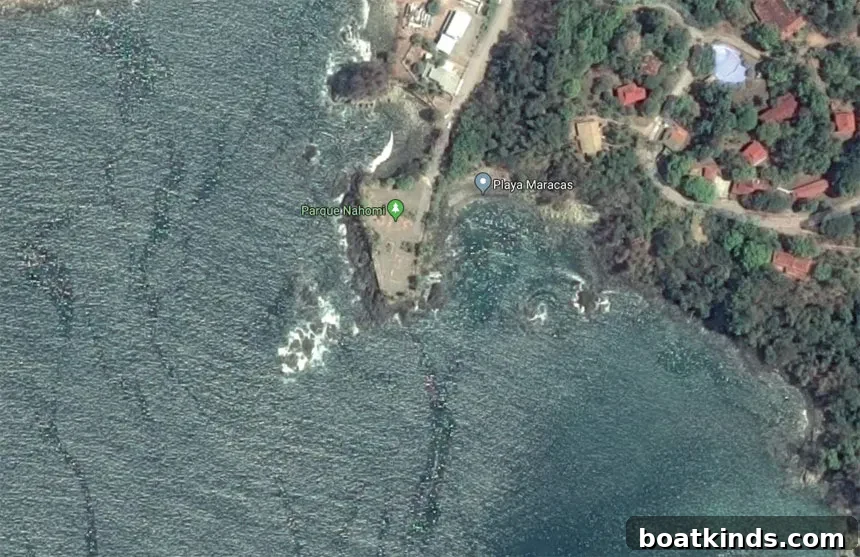
I wasn’t running the exercise; the Costa Rican Coast Guard was in charge. My role was moral support and practical help where I could. We were anchored off jagged cliffs and volcanic rock where the surf sucked and pushed. Someone on the bluff above was supposed to be monitoring us from a car. Other than whistles on our personal flotation devices, we had no radio, no rescue tender, no comforting presence beyond our own.
The history of survival training traces back to lessons learned in warfare: the Battle of the Atlantic showed that youth and fitness alone did not guarantee survival in a lifeboat. Mental resilience mattered, and organizations like Outward Bound grew from that idea. I kept its motto in mind — “To Serve, To Strive and Not To Yield” — as the hours lengthened.
Bioluminescence lit the water in shimmering streaks. It was magical when it sparkled along fingertips, almost playful, but it also reminded me there was life below that glowed in the dark. Faced with the long night ahead, I rehearsed my absurd bit of gallows humor about earning the nation’s highest award for class trip chaperone — perhaps posthumously — and then focused on the practical problem at hand.
After the swim, exhaustion had settled over many of the students like a blanket. The most worrying sign was their silence and lack of initiative. They lay in the swell as if sleep and inaction could save them. It was both startling and unsettling to watch people actually doze in the water, unaware that their core temperatures were drifting downward.
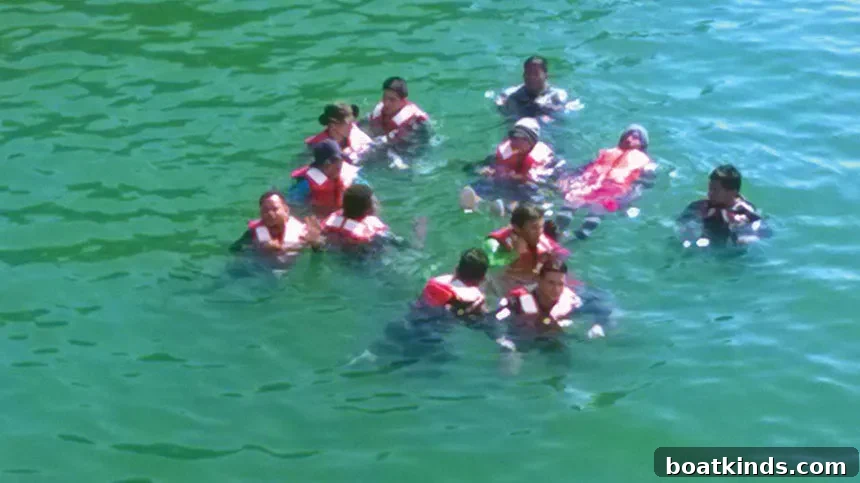
Two older students remained alert enough to listen when I asked whether they thought they were warmer in the water or out of it. They initially felt warmer in the water, but when we compared normal body temperature to sea temperature, the answer became obvious. They agreed to try rotating on and off the pontoon. Soon we had a rough schedule: weaker students spent more time on the float, stronger students spent more time in the water, and everyone communicated. Conversation became our most effective survival tool — an exchange of observations, discomforts and small plans that kept everyone engaged.
At one point we drifted within about 10 feet of foaming, jagged rock. For a frantic moment we asked ourselves whether the anchor had dragged and whether we should abandon the float and swim for shore. We stayed put and drifted clear; I still don’t know if that was smart or luck. The line between courage and recklessness is thin, and indecision can masquerade as bravery.
The Big Dipper turned around Polaris while distant thunder and offshore lightning kept score of the night. Strange southern stars, which I at first could not name, finally resolved into the Southern Cross — a reminder I was far from my usual northern-night bearings.
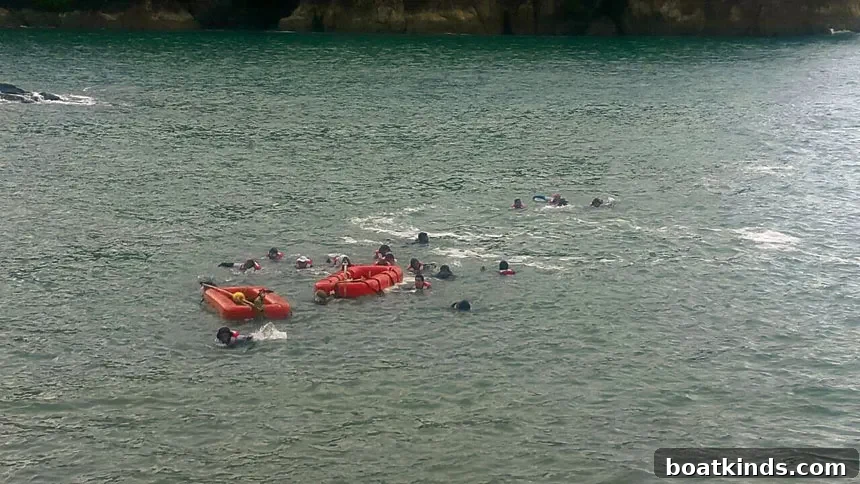
By dawn the moon had risen and the heaving and sickness subsided. When a rooster crowed and a blue-gray light edged the cliff-top palms, two students were shivering uncontrollably — early-stage hypothermia. We clambered ashore, dragged the floats up a stony beach, and warmed with coffee and breakfast before a slow, necessary debrief and a nap.
A friend of mine survived far worse — four and a half days in a deflating six-person raft after a schooner sank — and would have called our night easy. Yet ease is relative. It’s simple to feel strong when conditions are favorable; true strength is tested when you are cold, tired and inconveniently human. We all finished the night not because a few carried the rest, but because the weakest among us refused to give up when giving up felt like the easier option. An overnight in the ocean gives you time to reckon with that truth.
This article originally appeared in the February 2018 issue.