
Marine propulsion has changed dramatically over the past 60 years. In the early 1960s the sterndrive was a fresh innovation, a 100-hp Kiekhaefer Mercury was the top outboard, and diesel inboards commonly belched soot. Today’s marine engines are cleaner, quieter, more fuel-efficient and far more powerful than anything a boater of that era could have imagined.
Two forces shaped this evolution: fierce competition among manufacturers and government emissions regulations. Automotive exhaust-control technologies and electronic engine controls migrated to marine use, enabling cleaner-burning gasoline and diesel engines. More recently, investments by automakers in hybrid and electric powertrains point to the next wave of marine propulsion. Before that next step, it’s worth tracing six decades of innovations that have transformed the boating experience.
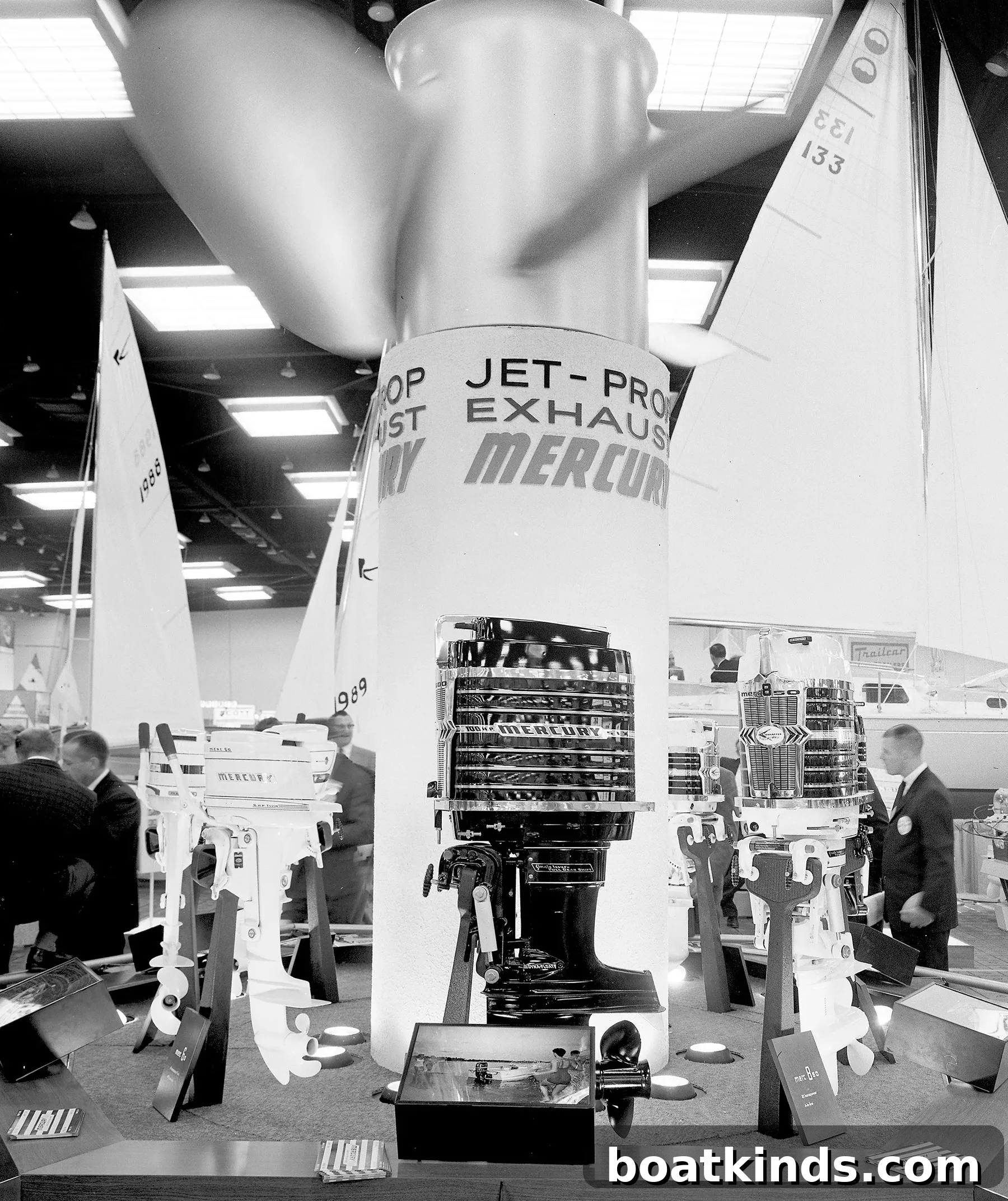
1964 Kiekhaefer MerCruiser II
The modern sterndrive began when Volvo Penta introduced the Aquamatic 100 in 1959, combining an inboard engine with a steerable, tilt-capable transom-mounted outdrive to deliver inboard efficiency with outboard flexibility. Kiekhaefer Mercury answered in 1961 with the MerCruiser sterndrive, using marinized Chevrolet engines. In 1964 the more durable MerCruiser II was offered directly to boat builders with familiar American V8s producing up to 310 hp—about three times the power of contemporary outboards.
1982 Volvo Penta Duoprop
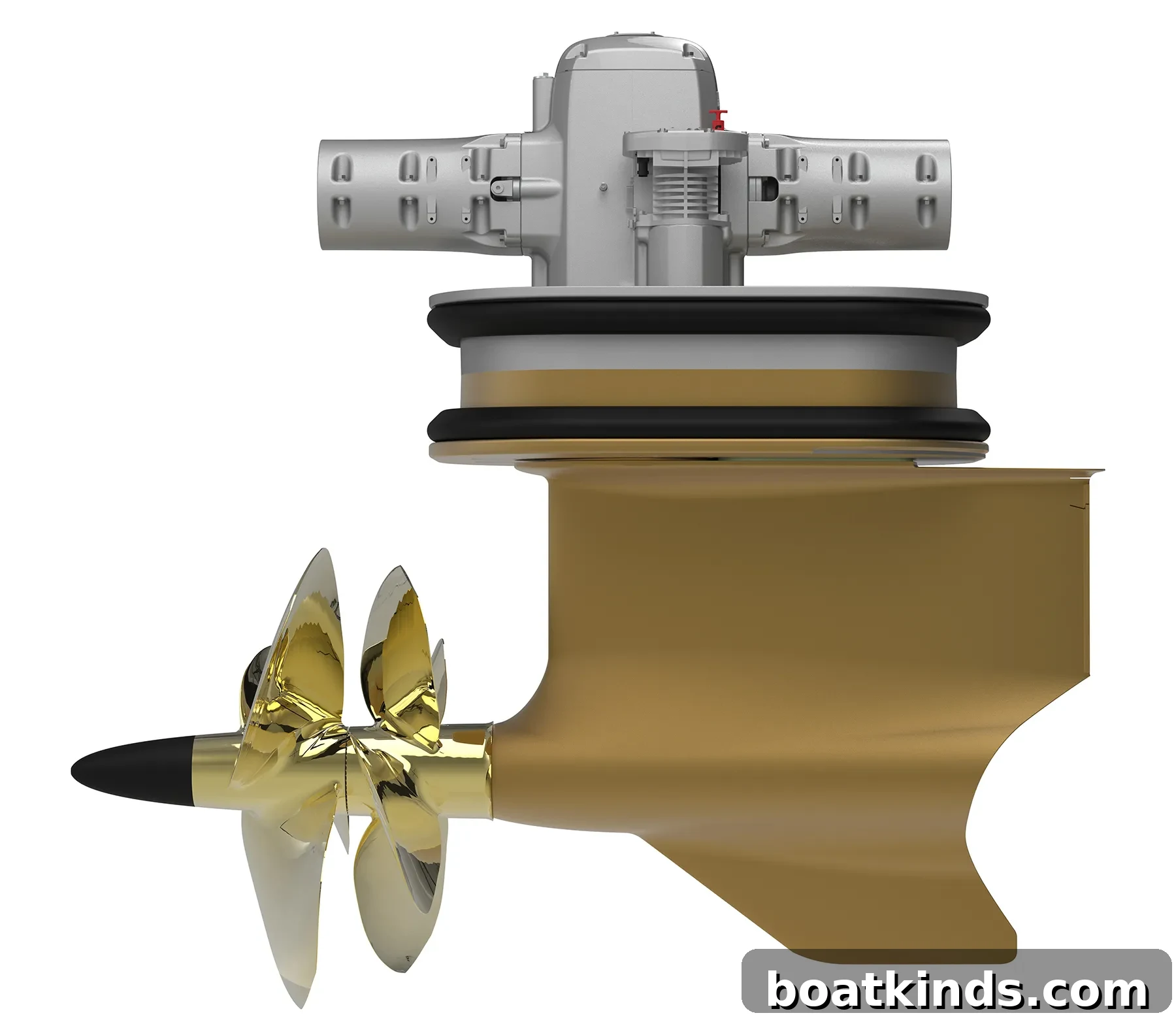
Inspired by torpedo design, Volvo Penta introduced contra-rotating propellers on a common shaft with the Duoprop sterndrive. Twin props provide more blade area and thrust, better low-speed control and superior reverse handling—advantages that suit larger cruising boats. MerCruiser’s Bravo Three followed in 1995, and contra-rotating props remain offered today on the most powerful outboards from manufacturers such as Suzuki and Mercury.
1990 Mercury HP525SC
After Brunswick acquired Kiekhaefer Aeromarine, Mercury leveraged racing experience to build high-performance pleasure-boat engines. The MerCruiser HP525SC was the first mass-produced, supercharged, warrantied marine engine. Its 7.4-liter V8 produced 490 hp on pump gasoline. By 1992 Mercury expanded the Hi-Performance line with 600- and 750-hp supercharged engines that powered a generation of performance boats.
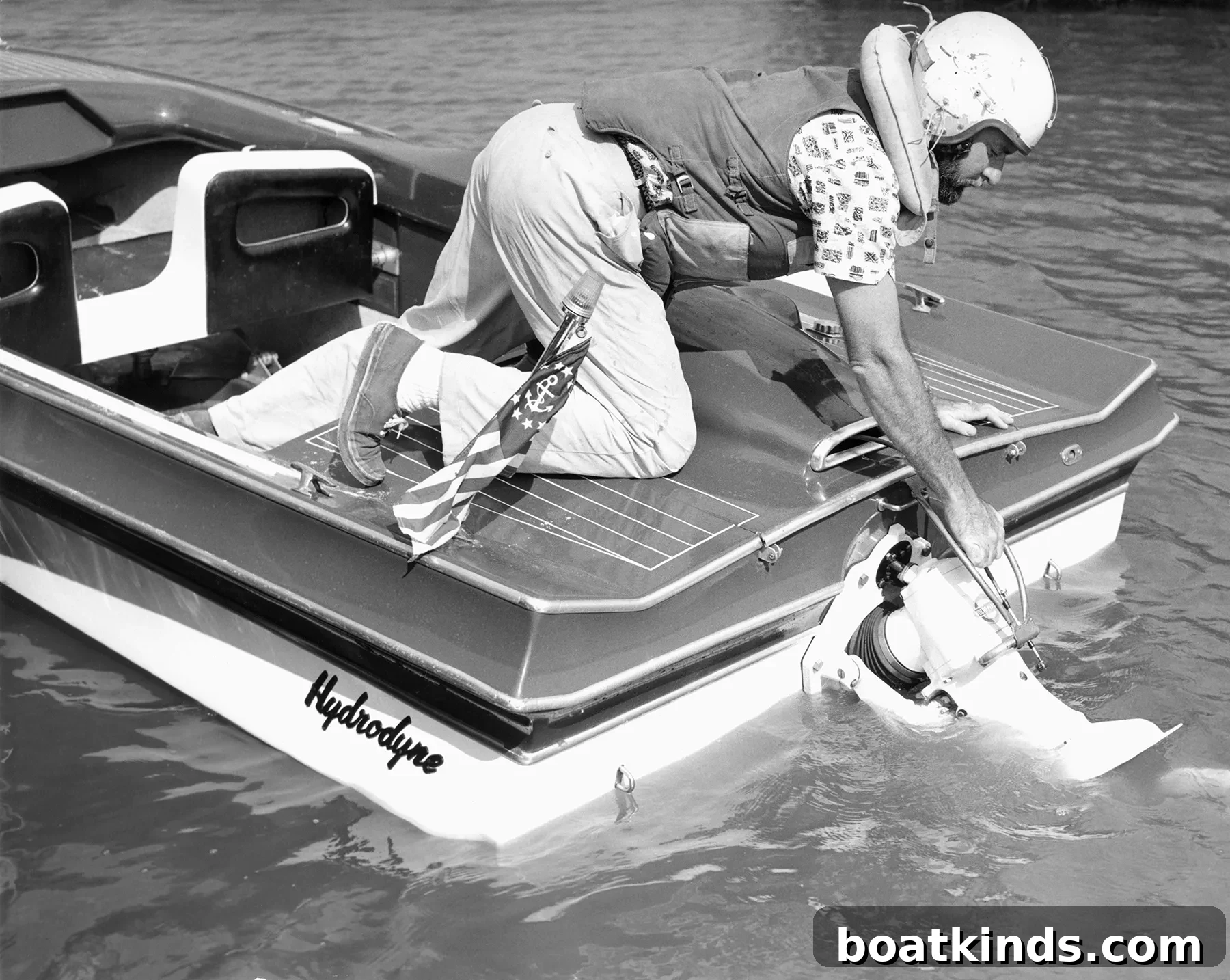
1991 Honda BF45
Through the 1980s most outboards were two-stroke engines burning a gas-and-oil mix, which produced high hydrocarbon emissions. With emissions rules on the horizon, manufacturers began exploring alternatives. Honda surprised the industry in 1991 with the BF45, an 808cc, three-cylinder four-stroke outboard weighing about 200 pounds. It was smoother, quieter and more fuel-efficient than two-strokes, and it signaled the viability of four-stroke outboards for recreational boating. Honda continued to expand the line, pitching four-strokes as a cleaner alternative and earning popularity among freshwater anglers and other boaters.
1995 Common Rail Diesel Fuel Injection
Efforts to curb diesel emissions in road vehicles revived the common rail injection concept. Modern electronics made it possible to supply very high-pressure fuel to a rail feeding electronically controlled injectors, optimizing fuel delivery across engine speed and load. This produced finer atomization, more complete combustion and much lower emissions compared with mechanical injectors. Nippondenso introduced a truck application in 1995, and common rail soon appeared on marine diesels from Volvo Penta, Caterpillar, Cummins and others. Later refinements added pulse injectors that deliver fuel in multiple bursts per cycle for better control and efficiency.
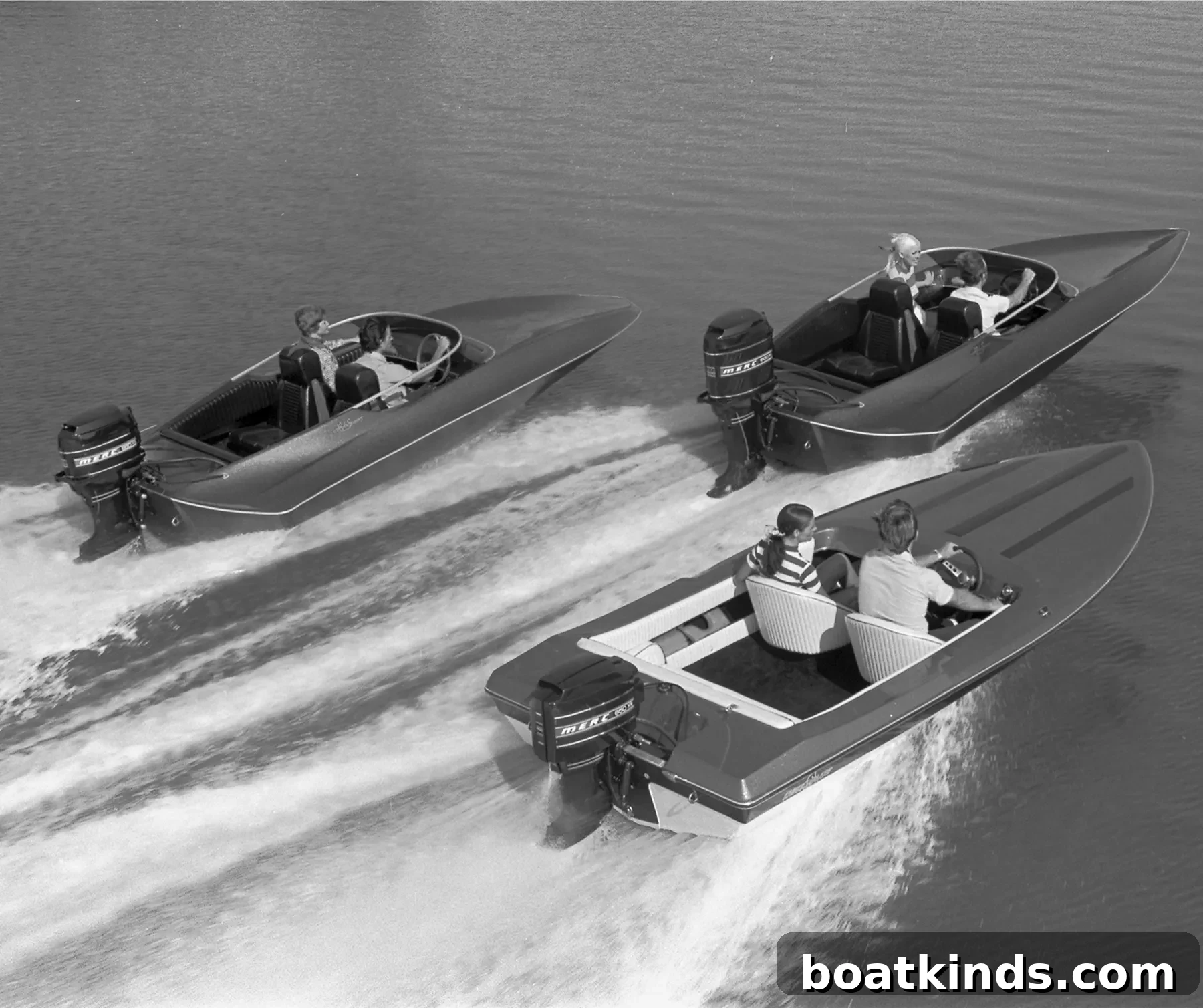
1996 Two-Stroke Direct Fuel Injection
Rather than abandon the two-stroke tradition, some manufacturers pursued direct fuel injection (DFI) to cut emissions. By injecting fuel directly into the combustion chamber and timing it to avoid loss through the exhaust port, DFI reduced unburned hydrocarbons. Mercury’s OptiMax DFI debuted in 1996, followed by OMC’s and later Yamaha’s HPDI systems. These DFI two-strokes reduced emissions and improved fuel economy by roughly 30 percent, meeting EPA standards for 2006. Technical issues affected some early systems; OMC’s problems contributed to its 2000 bankruptcy. BRP acquired Evinrude and reworked its DFI into the E-TEC system. Over time most of the market shifted to four-stroke outboards, Yamaha discontinued HPDI in 2015, Mercury phased out OptiMax two-strokes by 2018, and BRP ended Evinrude production in 2020.
1998 Joystick Control
The joystick transformed boat handling. Hinckley Yachts introduced the Jetstick in 1998, integrating jetdrive control with thrusters to allow tight rotations and lateral moves. Digital controls followed: Volvo Penta’s IPS in 2005 and Cummins MerCruiser’s Zeus pod in 2007 brought fully digital joystick docking systems without the need for thrusters. Advances in digital steering, throttle and shift control—combined with GPS—enabled station-holding and autopilot features and paved the way toward autonomous docking and collision-avoidance systems by allowing independent control of multiple engines.
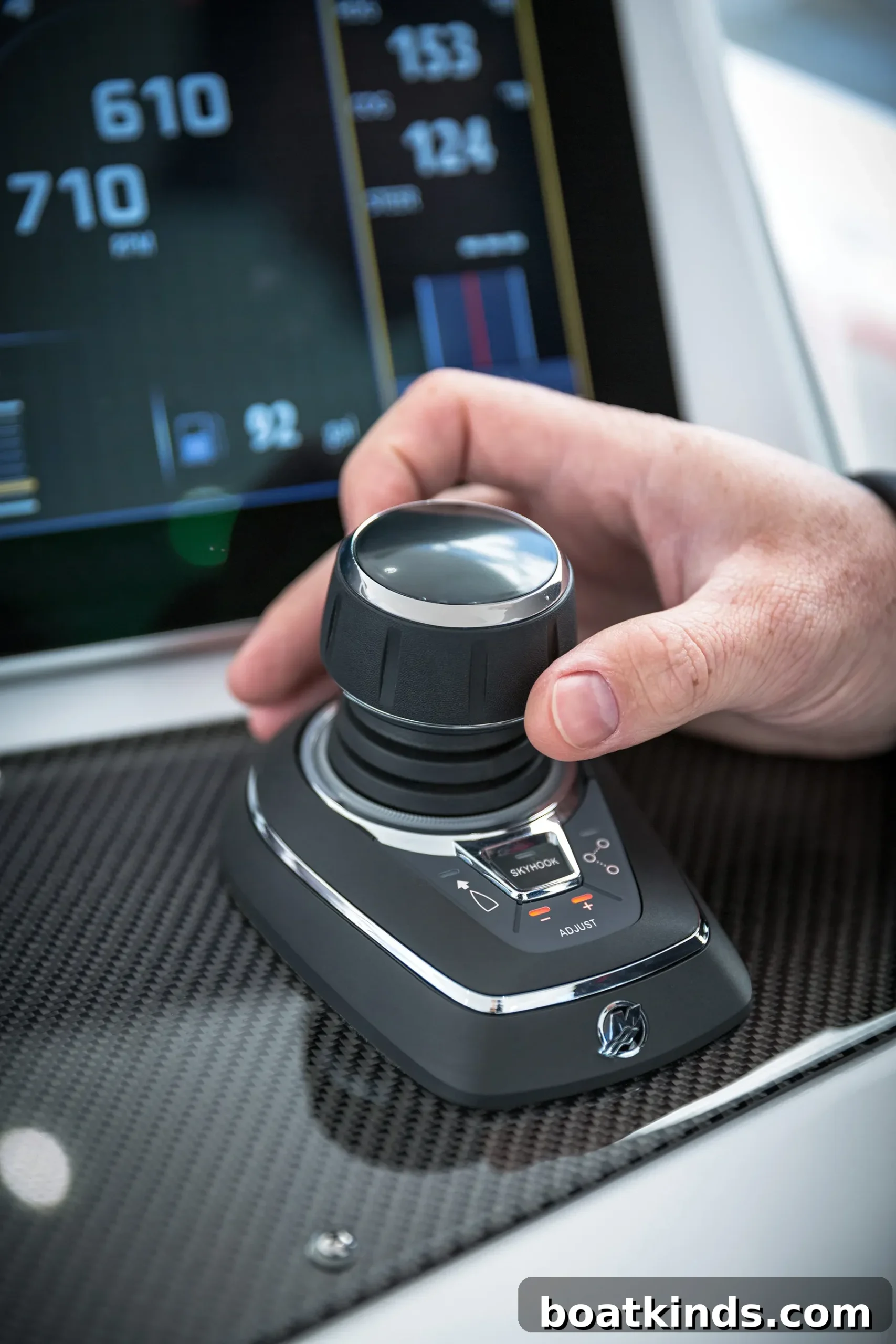
Refinement of digital interfaces by Volvo Penta, Mercury and Dometic Seastar Solutions has made joystick control available for virtually every steerable propulsion type, improving close-quarters maneuverability and simplifying docking for many boaters.
1999 Yamaha F115
Yamaha pushed four-stroke outboards forward with the F115, using casting technology from their motocross engines to reduce weight. At 401 pounds it was slightly heavier than two-stroke DFI rivals but considerably lighter than competing four-strokes, offering smooth, quiet operation. As four-stroke outboards grew more powerful and were fitted to larger boats, the weight penalty became less important; Yamaha introduced a compact V6 F225 in 2001 that matched two-stroke dimensions and weight.
2004 Mercury Verado
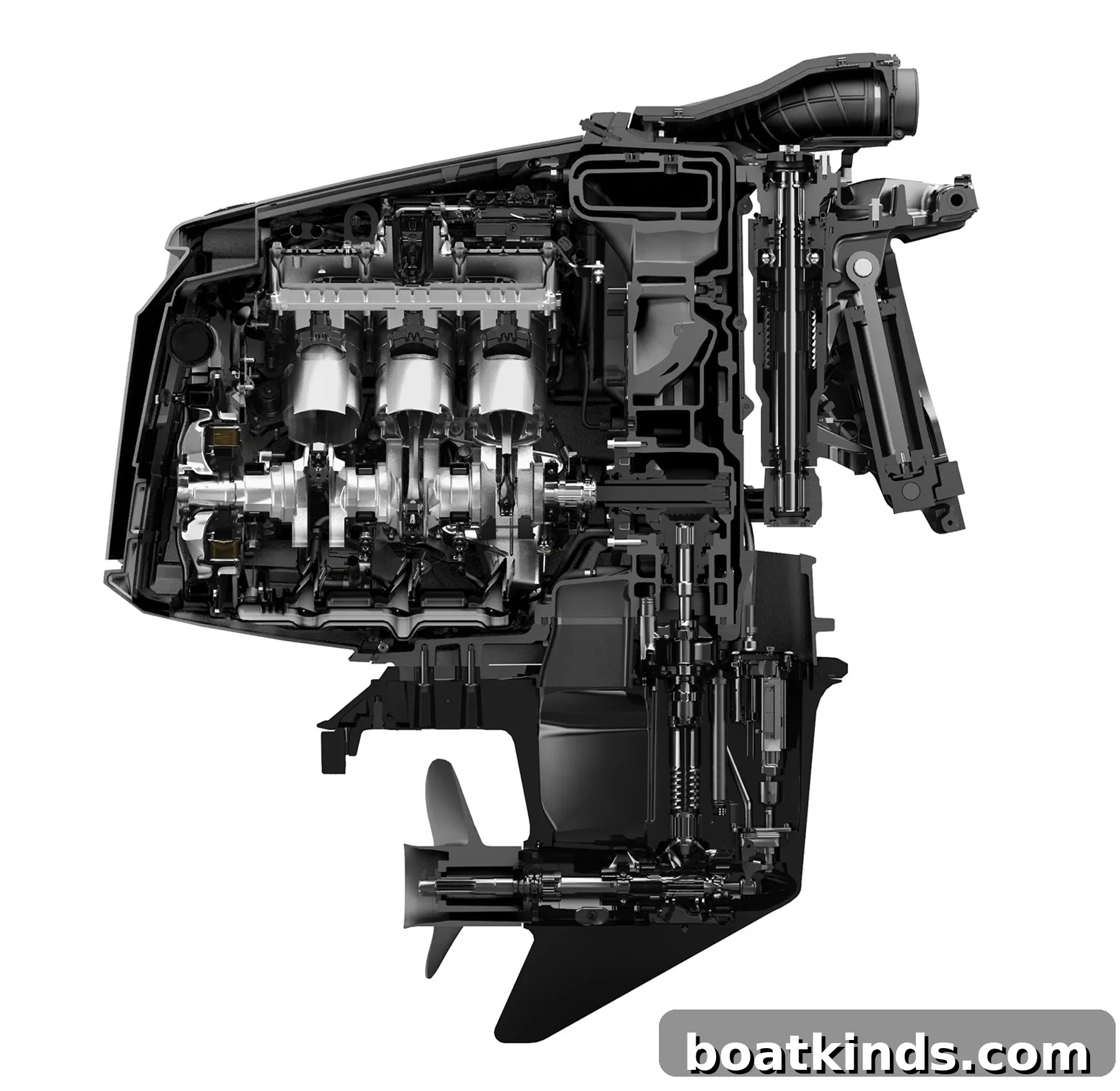
Mercury’s Verado was a decisive four-stroke entry featuring a supercharged 2.6-liter inline-six, electro-hydraulic power steering and digital controls. Designed initially for 275 hp, the Verado evolved through five generations to 400 hp and earned a reputation for durability. Its narrow profile allowed multi-engine installations with tight center spacing, and the supercharger delivered strong low-end thrust and smooth, quiet operation.
2005 Volvo Penta IPS
Volvo Penta’s Inboard Performance System (IPS) redefined inboard propulsion for twin-engine boats. Introduced as a bundled package with the D6 diesel, the pod drive used forward-facing contra-rotating props, drive-by-wire steering and integrated controls. IPS reduced drag, improved efficiency and provided precise low-speed control by steering each pod independently—advantages that made it attractive to manufacturers and boat owners alike.
2007 Yamaha F350
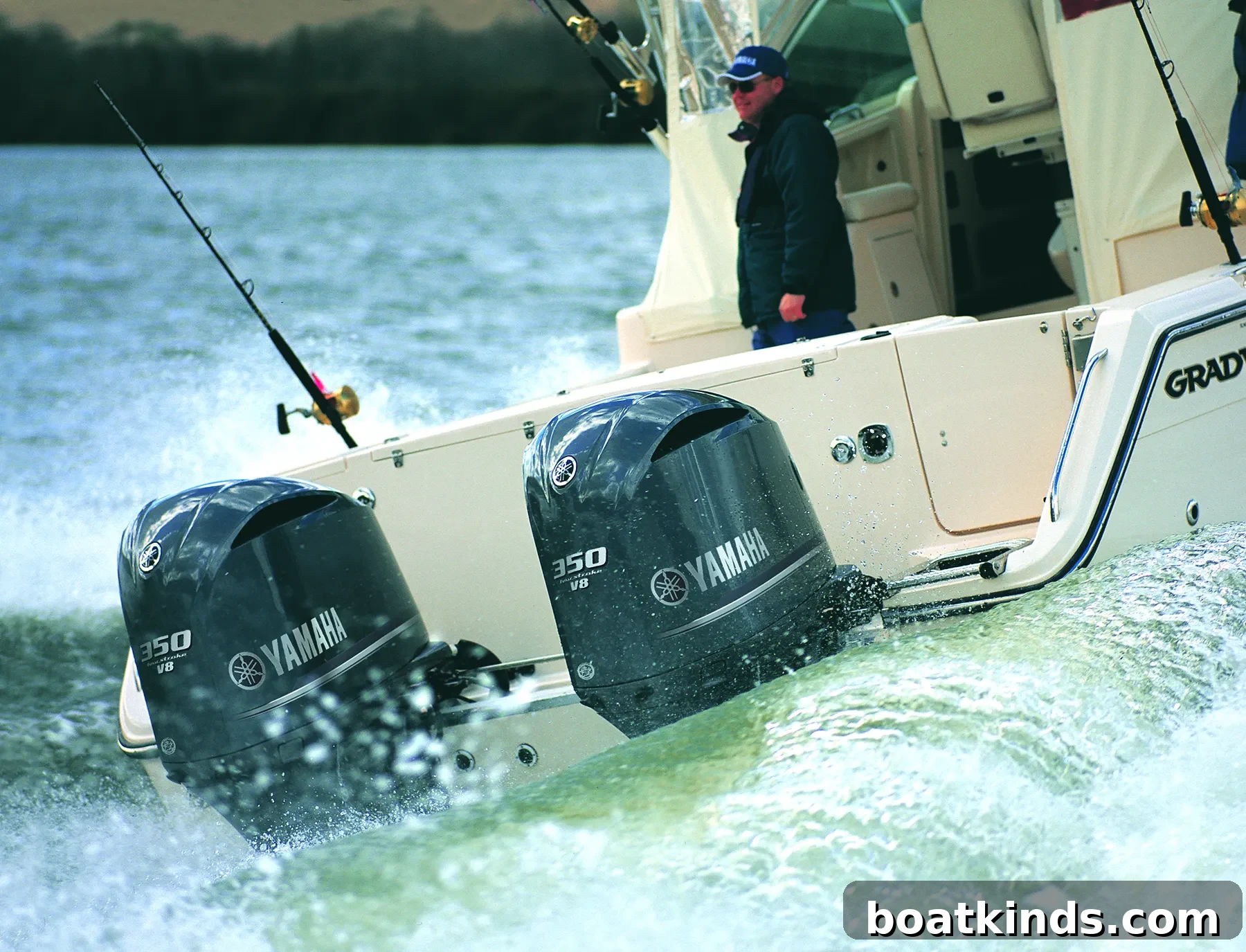
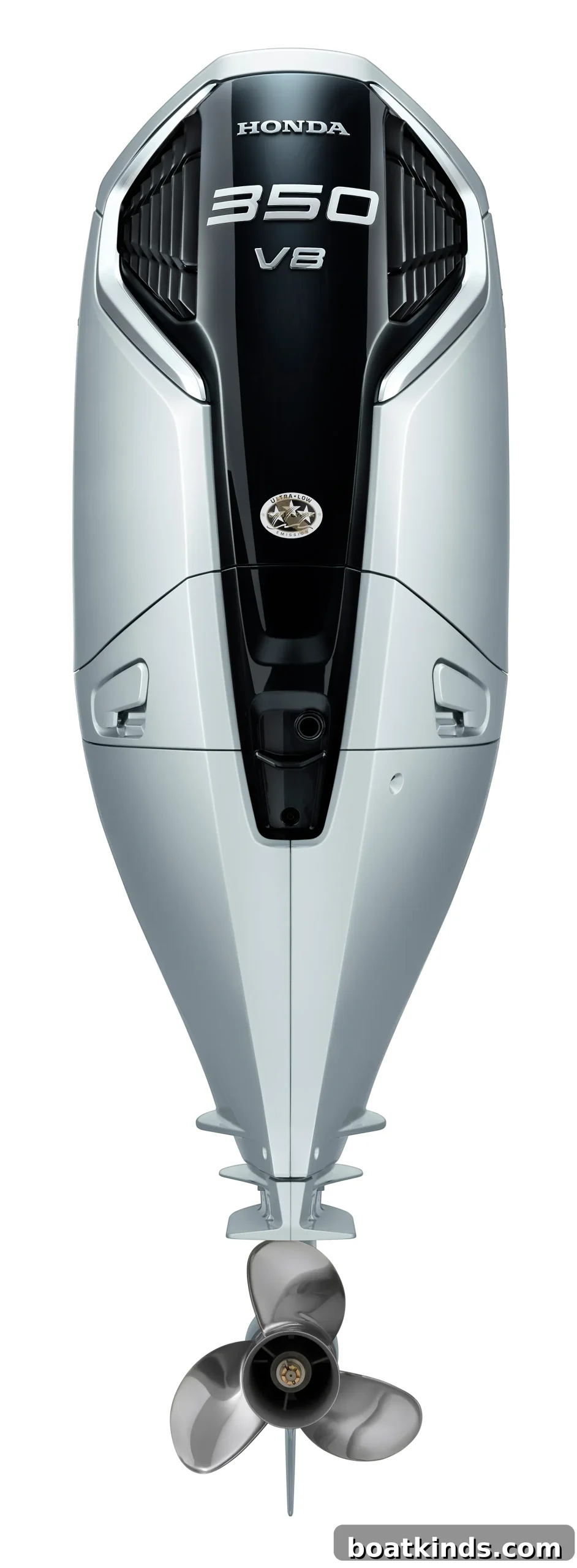
The Yamaha F350 V8 was the most powerful production outboard at its introduction. Tuned for massive low-end torque rather than top-end rush, the 5.3-liter unit delivered far greater thrust than smaller motors. Yamaha demonstrated its potential by replacing three F250s with two F350s on a Grady-White Express 360, illustrating how large outboards can replace inboard power on heavy offshore boats while saving weight, simplifying installation and freeing internal space for cabins or storage.
2007 Indmar ETX/CAT
Bringing automotive catalytic exhaust technology to marine inboards required new approaches to avoid water contact and ensure reliable oxygen sensing. Indmar Products developed a patented dry exhaust manifold that kept the catalyst out of contact with cooling water, enabling compliance with stringent emissions rules such as the CARB Four Star-Super Ultra Low standard in 2008. Today, catalyzers are standard on gasoline inboard and sterndrive engines.
2010 Mercury Racing QC4
Mercury Racing raised the performance bar with the QC4 1350, a purpose-built 9.0-liter twin-turbo V8 featuring a custom aluminum block, double-overhead-cam heads and high-strength internal components. Paired with a robust M8 drive and electro-hydraulic transmission, the QC4 delivers race-grade reliability and power with factory backing. The QC4 family now ranges from 860 hp up to 1,350/1,550 hp in dual-calibration models.
2011 Seven Marine 557
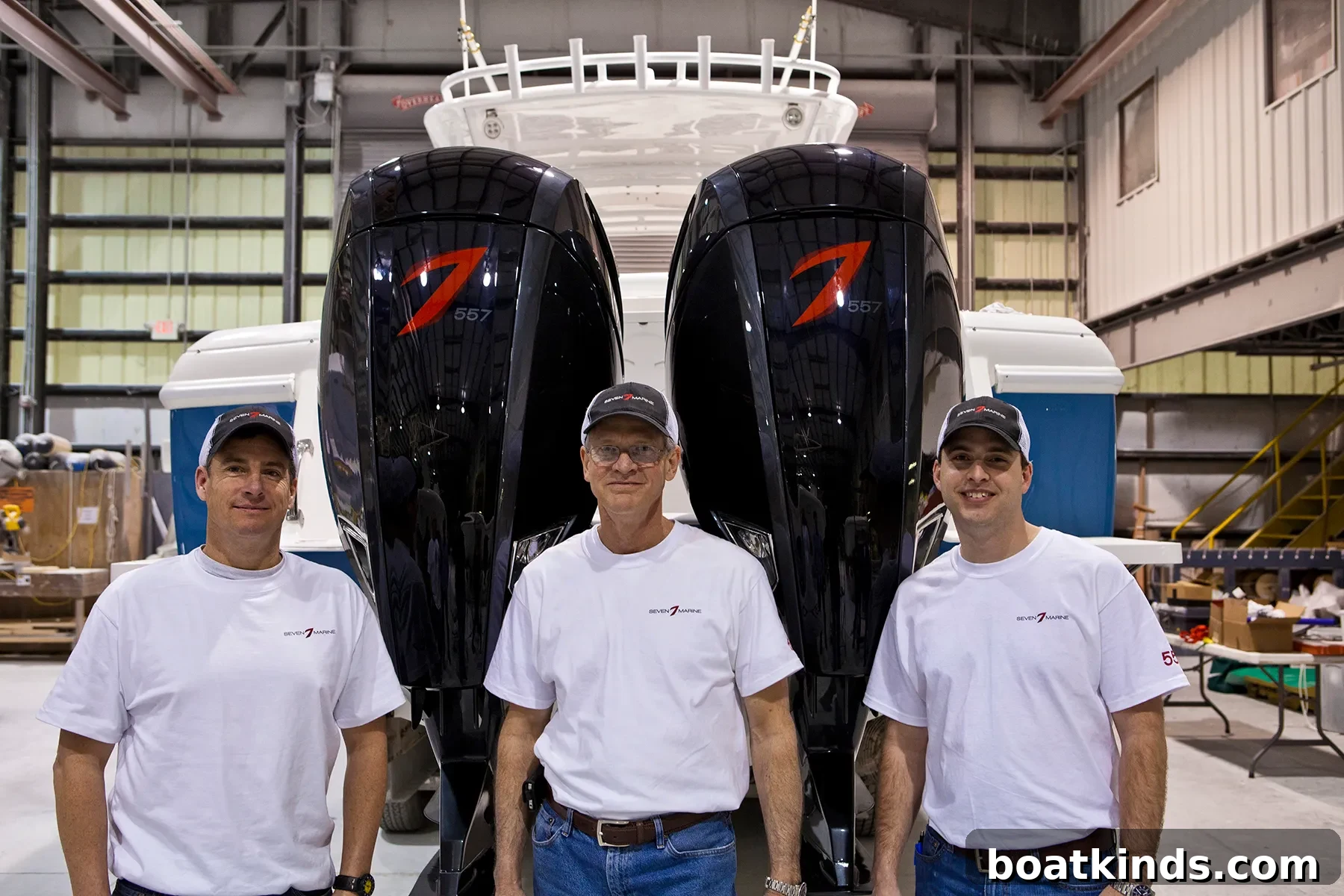
Seven Marine pushed the large-outboard concept with a 557-hp supercharged GM 6.2-liter V8 outboard introduced in 2011. Installing one or more of these units on large center-consoles and express boats showed how high-displacement outboards could replace multiple smaller engines, reduce weight and lower drag. After introducing even larger models, Seven Marine was acquired by Volvo Penta in 2017 and later discontinued in 2020, but the trend toward ever-more-powerful outboards reshaped the North American market, often replacing sterndrives on large day boats and cruisers.
2014 Volvo Penta Forward Drive
Volvo Penta’s Forward Drive was developed for safe wake surfing behind sterndrive-style boats. With forward-facing contra-rotating props positioned under the hull, the design keeps propellers away from a fallen surfer while providing the torque and control needed for towing sports. Mercury soon introduced a comparable Bravo Four S drive for similar applications.
2021 Mercury V12 Verado 600
Mercury expanded the high-displacement outboard category with the V12 Verado 600, a 7.6-liter V12 producing 600 hp through a two-speed automatic transmission. The Verado emphasizes low-range acceleration for fast hole shots and a high range for efficiency at speed. Only the gearcase steers—allowing tight center-to-center engine spacing and wide steering angles—improving low-speed control in joystick mode for multi-engine installations.
2022 Rotax S Series
After ending Evinrude production, BRP introduced the Rotax S outboard—a compact 115/150-hp unit with a horizontal powerhead designed to fit beneath a swim platform. The design encloses the two-stroke E-TEC DFI powerhead in a watertight casing, addressing concerns about swim-platform clutter and opening the door to more versatile installations on pontoons and other boats.
Nanni Industries & Repowering
Not every owner wants digitally controlled engines. Nanni Industries, a Franco-Italian marinizer founded in 1952 and distributed in the U.S. by Kraft Power, offers a range of emissions-compliant diesels from 10 to 1,150 hp based on Kubota, Toyota, Scania and John Deere platforms. Many of the smaller Kubota-based models use mechanical injection, which appeals to sailors and owners who prefer straightforward, serviceable engines they can maintain without factory diagnostic tools. Brook Streit of Kraft Power notes that these engines are popular for repowers because they are compact, lightweight and resilient. Nanni powerplants are also used as original equipment by builders such as Fortier, Hinckley, Beneteau, Swan, Lagoon, Ball, Fontaine Pajot and Hanse. —CR
This article was originally published in the February 2024 issue.