
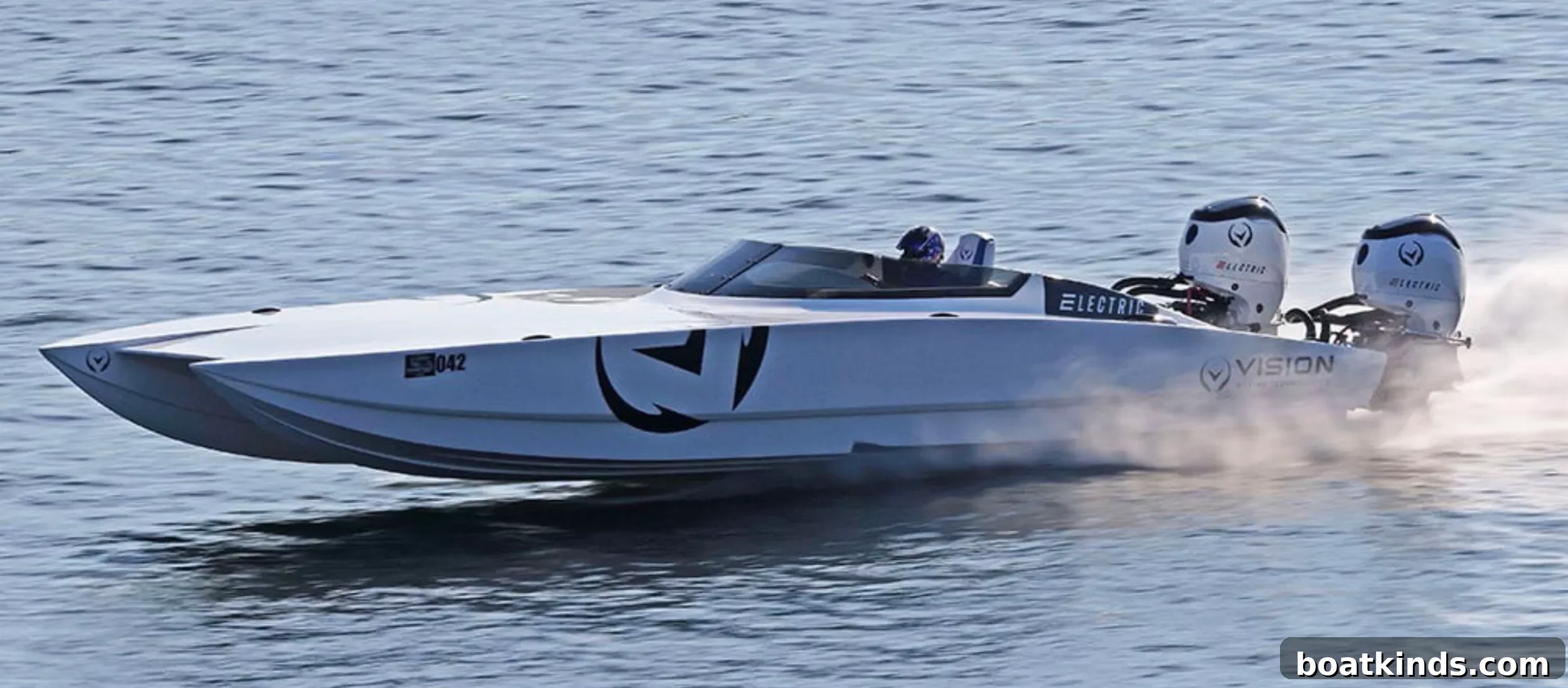
Electric Boat Breaks 100-MPH Barrier, Sets New Record of 109 mph
An electric-powered boat has surpassed the 100-mph mark for the first time, establishing a new benchmark for electric maritime performance. Vision Marine Technologies announced the achievement after a run at the Lake of the Ozarks Shootout, where a purpose-built craft reached a top speed of 109 miles per hour.
How the Record Was Achieved
The record-setting boat is the result of a collaboration between Vision Marine Technologies and Hellkat Powerboats of Miami, Florida. Engineers fitted a 32-foot catamaran hull with twin E-Motion electric outboards, each rated at 180 horsepower. The hull was specifically designed to house the substantial battery banks required to deliver the power and energy needed for sustained high-speed operation.
Using twin electric 180-hp outboards on a lightweight catamaran platform helped balance high power output with the hydrodynamic efficiency needed to push an electric boat through the water at competitive speeds. The boat’s battery architecture, thermal management, and weight distribution were key design considerations that allowed the team to safely and reliably reach 109 mph.
Why This Matters for Electric Boating
Breaking the 100-mph barrier is a milestone for the electric boating industry. It demonstrates that electric propulsion can deliver not only quiet, low-emission cruising but also extreme performance in powerboat disciplines historically dominated by internal combustion engines. The achievement highlights progress in several critical areas: battery energy density, electric motor efficiency, power electronics, and marine hull design optimized for electric drivetrains.
Beyond headline speed, the milestone helps validate the viability of electric outboards for a wider range of boating applications, from recreational performance boats to high-speed workboats and specialized marine vessels. Reaching high speeds under electric power also provides valuable data for engineers working to improve battery life, charging strategies, and safety systems tailored to marine environments.
Technical Challenges and Innovations
High-speed electric boating poses unique engineering challenges. Batteries add significant weight, and managing that weight while maintaining hull performance is critical. Thermal management of batteries and motors during sustained high-power runs is another major challenge; overheating can limit performance and reduce component life. The record attempt required careful integration of power delivery systems, cooling solutions, and robust mounting of heavy battery banks within the catamaran hull.
Another key innovation is the use of matched electric outboards designed to work together efficiently. Synchronizing the twin motors and optimizing propeller selection helped the team extract maximum speed while keeping energy consumption and vibration under control. These technical steps are essential for translating high-power electric systems into reliable, repeatable performance on the water.
Implications for the Market and Future Development
This record run signals growing confidence among manufacturers and consumers in electric propulsion for boats. As battery technology continues to improve and charging infrastructure expands, electric boats will become practical for an increasingly broad set of boating activities. Manufacturers can leverage lessons learned from performance runs to improve range, charging speed, and safety for everyday users.
Performance achievements also raise public awareness and interest in electric boating. High-profile milestones help shift perceptions, showing that electric boats can be exciting and capable, not just economical and environmentally friendly. Over time, this can accelerate investment in design innovations and supply-chain developments that benefit all segments of the marine industry.
Conclusion
The 109-mph run at the Lake of the Ozarks Shootout marks a notable advance for electric marine propulsion. By combining Vision Marine Technologies’ electric outboard expertise with Hellkat Powerboats’ high-performance hull design, the team demonstrated that electric boats can compete at the upper end of speed performance. While technical hurdles remain, this milestone is a clear indicator of rapid progress and growing potential for electric boats across recreational and commercial markets.