
Rare Beaked Whale Washes Ashore in Wellington, New Zealand
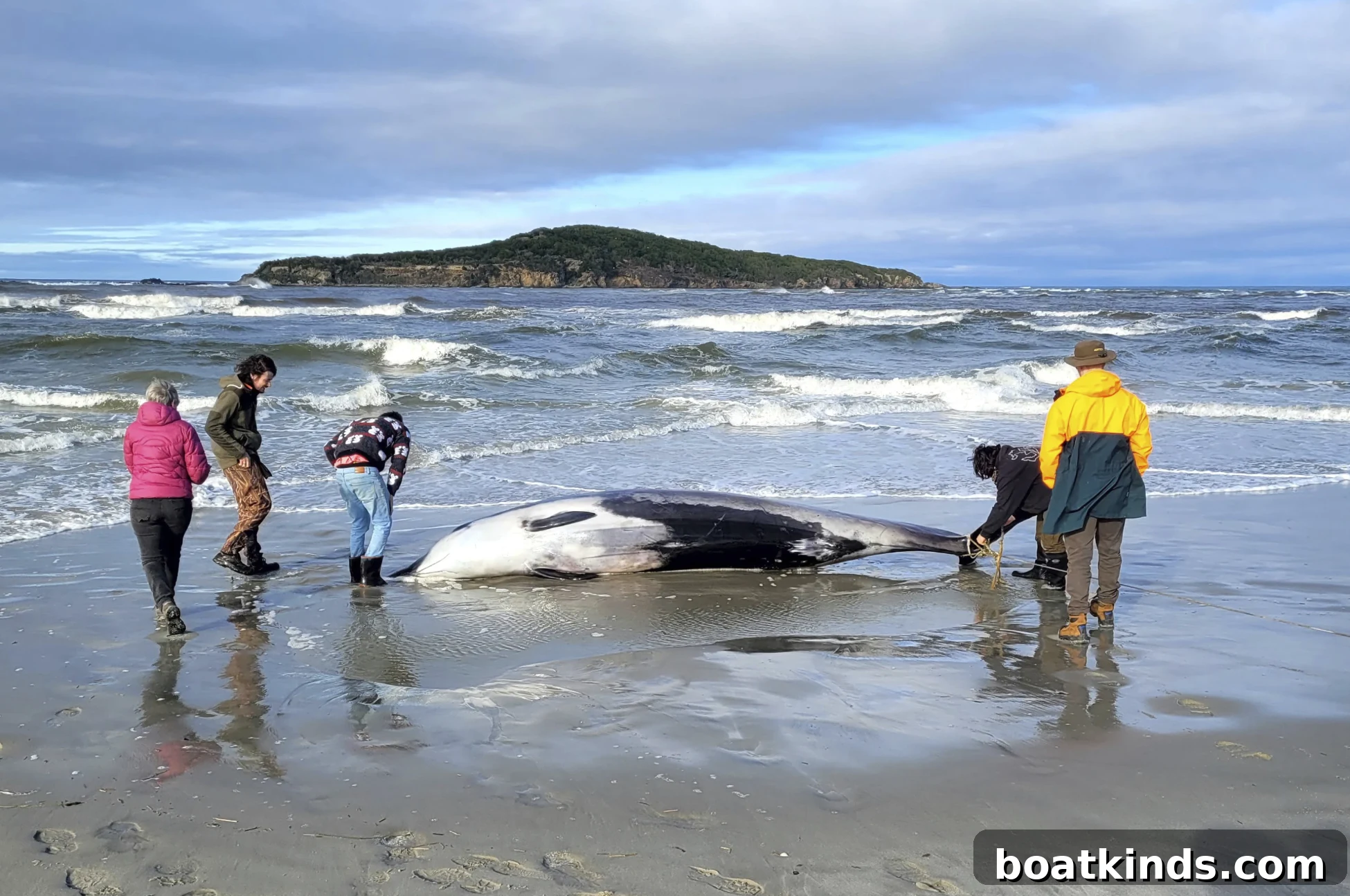
A large, unusual whale carcass has washed ashore on the coast near Wellington, New Zealand. Experts believe the animal may be a Spade-toothed whale, a little-known type of beaked whale for which there are no confirmed live sightings and for which population numbers remain unknown. The discovery has generated significant scientific interest because the specimen could offer new information about the species’ diet, habitat, and distribution in the southern Pacific Ocean.
Initial Examination and Identification
New Zealand’s conservation agency measured the animal at approximately five metres in length. Field biologists identified several features that point toward a Spade-toothed whale: a pronounced beak-shaped head, distinctive color patterns, and the arrangement of visible teeth. These morphological clues are consistent with descriptions of spade-toothed beaked whales, but scientists emphasize that confirmation requires careful laboratory analysis.
“We know very little, practically nothing,” said Hannah Hendriks, marine technical adviser for the Department of Conservation. “This is going to lead to some amazing science and world-first information.” Her comment underscores both the rarity of the find and the potential for new scientific insights.
Why This Specimen Matters
Beaked whales are among the least understood of marine mammals. Many species spend most of their lives offshore in deep water and are seldom seen alive, which makes it difficult to assess their numbers, lifecycles, and behaviors. Because there are no recorded live sightings of the Spade-toothed whale and its population status is unknown, any well-preserved specimen is exceptionally valuable to researchers.
If the Wellington animal is confirmed to be a Spade-toothed whale, it may be the first specimen found within a jurisdiction where a full scientific necropsy and detailed laboratory studies can be carried out under standard research protocols. Such work can reveal critical data, including stomach contents that suggest diet, tissue samples that indicate trophic position and health status, and isotopic signatures that help map likely habitat use and migratory patterns.
Planned Scientific Analyses
Authorities and marine researchers are planning a careful, methodical approach to study the specimen. That typically includes photographic and morphological documentation, collection of tissue and teeth for laboratory testing, and genetic analysis to confirm species identity. Scientists may also examine internal organs and stomach contents to look for evidence of recent feeding, parasites, or disease processes. Any data gathered will be used cautiously and compared with existing records from other beaked whales and any available museum specimens.
Because Spade-toothed whales are so poorly known, researchers will likely collaborate with regional and international specialists in beaked whale taxonomy and ecology. The goal is to ensure that any conclusions about identity, diet, and habitat are robust and reproducible.
Conservation and Research Implications
Discoveries like this can have broader implications for marine conservation. Understanding where elusive species live and what they eat can inform where to focus habitat protection efforts and how to mitigate human impacts such as shipping noise, fishing interactions, and marine pollution. Even a single well-studied specimen can provide baseline information that helps shape future monitoring and research priorities in the southern Pacific.
Officials say they will release more detailed findings as laboratory results become available. In the meantime, the specimen remains under the care of conservation authorities and scientific teams conducting the initial examinations.
Authorities encourage the public to avoid disturbing the area while scientists work and to report any additional strandings or unusual marine observations to local conservation offices.