
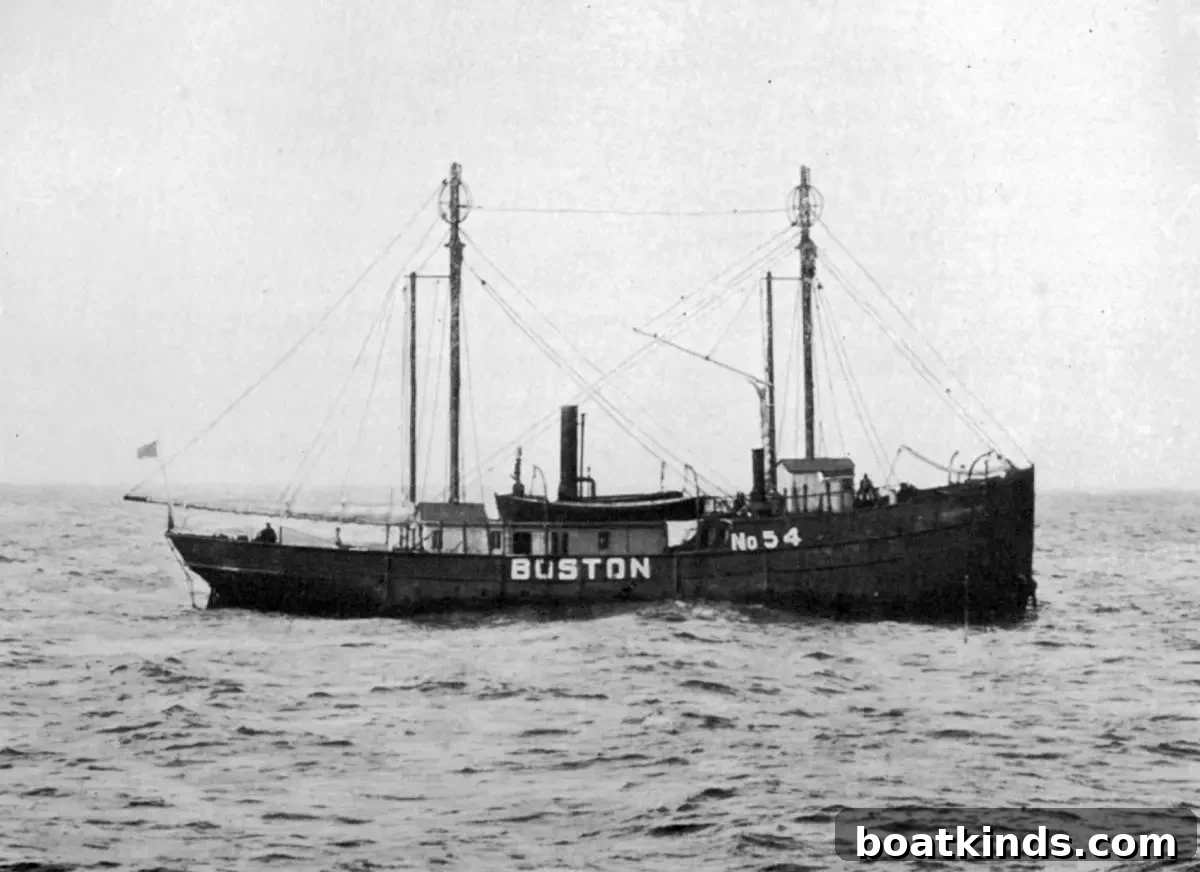
Lightships: Floating Lighthouses That Guided Mariners
When coastline conditions made building a permanent lighthouse impossible, maritime authorities turned to an ingenious solution: the lightship. These sturdy vessels, outfitted with powerful lights and anchored in precise locations, served as floating lighthouses where shoals, deep water, or dangerous currents prevented the construction of fixed beacons. For more than a century and a half—about 165 years—lightships played a critical role in keeping shipping lanes safe and guiding mariners into harbors and through treacherous channels.
Lightships were intentionally designed to be rugged and highly visible. Early examples were wooden-hulled and lacked their own propulsion, relying on being towed into position and then held steady by massive anchors. A distinctive component of many lightships was the “mushroom” anchor: heavy, mushroom-shaped anchors that could grip seabeds of varying types and help keep the vessel fixed on station in rough weather. Over time, designs evolved. Later lightships were constructed of steel and equipped with inboard engines, giving crews the ability to relocate when necessary and improving safety and logistical flexibility.
Because they often had to remain on station in exposed, remote locations, lightships needed robust systems for lights, fog signals, and daymarks so vessels could identify them in poor visibility and at night. The light atop the mast, combined with foghorns or bells, provided a reliable navigational reference where no fixed structure could stand. Lightship crews maintained these systems around the clock and handled routine maintenance, supplies, and communication with shore stations under demanding conditions.
Life aboard a lightship could be difficult and isolated. Crews lived on board for extended periods, enduring storms, salt spray, and the constant motion of the sea. Despite these hardships, the service they provided was essential—lightships reduced groundings and collisions by clearly marking hazards and guiding inbound vessels. The presence of a lightship often meant the difference between a safe passage and a maritime disaster.
One of the most famous lightships was the Ambrose, which was stationed in the Ambrose Channel, the principal deep-water approach to New York Harbor. The lightship Ambrose served in that vital location from 1908 until 1932 and became an iconic symbol for incoming trans-Atlantic vessels. For many immigrants arriving by sea, Ambrose was the first visible sign that they had reached the New World; estimates place the number of arrivals who first spotted the lightship as high as six million. Today the Ambrose is preserved and moored at the South Street Seaport Museum, where visitors can learn more about its service and the broader history of lightships. A detailed history of the Ambrose appeared in the January 2018 issue of Soundings magazine.
Over the 20th century, advances in technology gradually reduced the need for manned lightships. Automated lighted buoys, fixed offshore structures, radio navigation aids, and later satellite positioning systems offered more cost-effective and lower-maintenance solutions. Many lightships were retired, scrapped, or converted to other uses. A number were preserved as museum ships to commemorate their unique contribution to maritime safety and to honor the crews who served on them.
Today, the legacy of lightships remains important for maritime history and for understanding how navigational aids evolved. Museums and restored vessels allow the public to explore these floating beacons and the lives of those who maintained them. Photographs, artifacts, and first-hand accounts help convey the challenges of keeping the lights burning on the open water and remind us of a time when human presence on station was the principal method of marking danger at sea.
Lightships represent a practical and resourceful response to difficult coastal conditions: movable, visible, and dependable marks that filled a vital gap where land-based lighthouses could not be built. Their history is a chapter in the broader story of maritime navigation, highlighting how technology and human dedication combined to make sea travel safer for generations of sailors and passengers.