
When most people picture an electric boat, they imagine a catamaran plastered with solar panels or a high-tech hydrofoil. The Sialia 57 Deep Silence defies those expectations. Visually it reads like a refined Northern European weekend yacht, yet under the skin it is driven by electric motors, a substantial battery pack and a dedicated range extender. The design brief was simple: build an electric boat with no compromises and have it judged alongside any conventional yacht, not merely against other electric vessels.
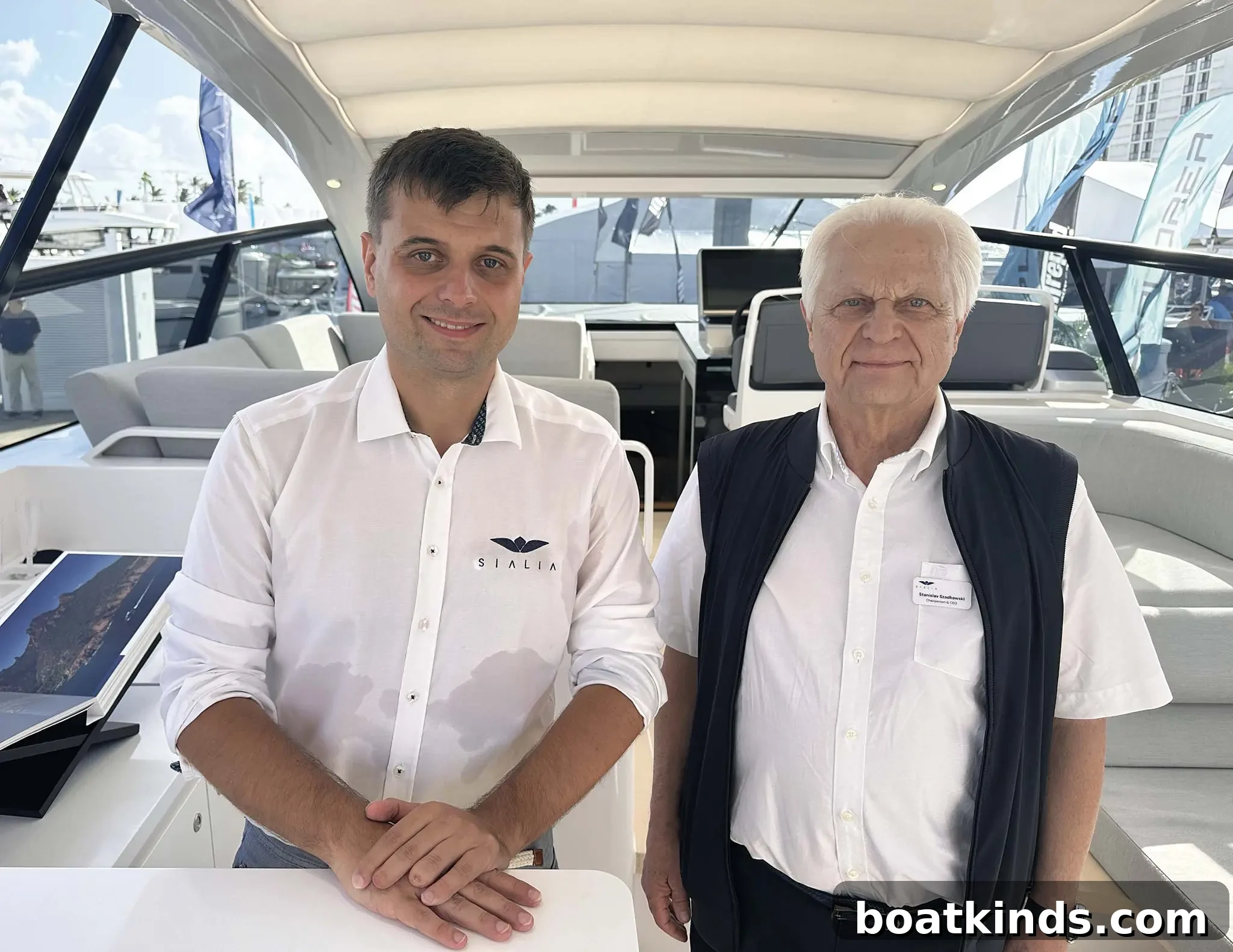
Conceived by Polish entrepreneur Stanislav Szadkowski and brought to life by co-founder Tomasz Gackoski, an aerospace engineer, the two-stateroom Sialia 57 blends luxury finishes with advanced naval engineering. The team collaborated with lightweight specialist Denis Popov and Dutch naval architect Vripack to create a boat that pairs superyacht-quality interiors with a hull and systems engineered specifically for efficient electric propulsion.
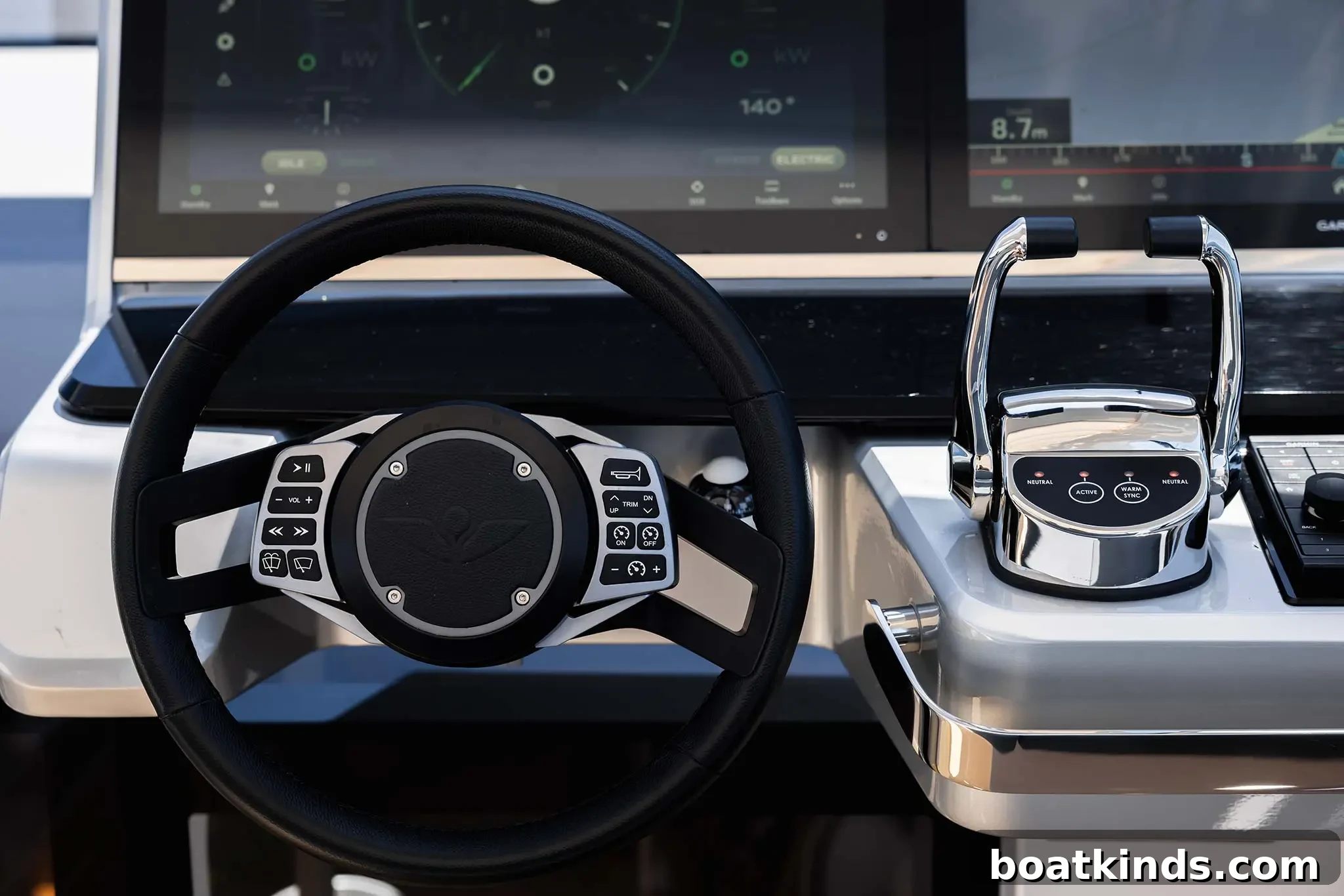
Efficiency begins with structure. The Sialia 57 is built almost entirely from carbon fiber, producing a lightweight hull that is long, narrow and low-resistance in the water. That dramatic weight reduction—compared with traditional fiberglass construction—helps compensate for the mass of the battery system and reduces the horsepower required to achieve planing and cruising speeds. As Gackoski noted during a walkthrough, only a handful of components are steel; even small fittings were reconsidered to keep weight to a minimum.
Propulsion and energy management are handled by Ampros, the electric propulsion company founded by Szadkowski and Gackoski to supply systems for Sialia and other builders. Ampros delivers an integrated hardware-and-software package: a 256-kWh battery bank using lithium nickel manganese cobalt oxide chemistry for high energy density and voltage, arranged in three strings for redundancy; twin 400-kW electric motors with a peak combined output of around 500 kW (nearly 1,350 hp equivalent); and direct-drive shafts for propulsion.
At low speeds the Sialia 57 is notably efficient—about 100 nautical miles of range at a steady 6 knots on battery power alone. For longer passages the boat employs a purpose-built diesel range extender based on a lightweight FPT block and capable of running on biodiesel. The range extender is not mechanically linked to the props: it serves exclusively as an onboard charger, restoring battery state-of-charge. In a demonstration of rapid replenishment, the range extender can top up the batteries in roughly 30 minutes while consuming about 13 gallons from the boat’s 396-gallon fuel tank. Once sufficient energy is restored, the boat returns to fully electric propulsion and silent cruising.
Systems are coordinated by a proprietary ship management interface, which consolidates monitoring and control on the helm’s twin large Garmin multifunction displays. The Sialia 57 cruises comfortably between 15 and 17 knots and reaches a top speed near 25 knots. With both a full battery and a full fuel tank the vessel can achieve approximately 300 miles of range at an economical 16-knot cruise.
Beyond range and speed figures, Sialia’s founders emphasize the operational advantages of electric propulsion: instant torque, quicker acceleration to plane, lower maintenance, quieter operation and fewer mechanical systems to service. Electric motors are rated for tens of thousands of hours and require far less routine work than internal combustion engines—one reason the company feels confident offering a comprehensive five-year warranty on the electric systems (the diesel range extender is excluded).
To validate performance, the Sialia 57 completed a single-run passage from Barcelona to Monaco, covering 264 nautical miles. The boat averaged roughly 14 knots for the trip despite being forced to slow temporarily in heavy swell, demonstrating both range capability and seakeeping for longer coastal hops.
Although some observers label designs like this as hybrids, Sialia distinguishes the 57 by the way the diesel unit is used: the FPT-based engine never directly drives the propellers. Instead, propulsion is purely electric—batteries power the motors, and the range extender or shore power replenishes battery energy. The boat supports multiple charging options, from standard marina 50-amp pedestals and 100-amp supplies to fast DC charging via a CCS inlet for rapid replenishment where shore infrastructure allows.
The 57 is a one-off proof of concept intended to demonstrate that an uncompromised electric yacht is practical now. The chosen 256-kWh battery reflects a pragmatic balance: it is large enough to deliver meaningful electric range yet small enough to be recharged overnight on the 50-amp connections commonly available at marinas. Future versions will expand the line: the hull will be lengthened by two feet to create the Sialia 59, offering optional larger battery capacities and faster charging for owners with substantial shore power. At the high end the company envisions packages with much greater storage—Gackoski cited the possibility of 700-kWh systems for owners with dedicated shore infrastructure.
Additional models are already in development. An all-carbon Sialia 45 Sport is under construction in Poland and is scheduled for world and U.S. debuts at upcoming boat shows. The longer-term aim for Sialia’s founders is to eliminate the range extender entirely as battery energy density and charging networks improve, but they acknowledge that over the next decade the extender will remain a practical accessory for longer passages.
“For a majority of owners who cruise slowly—say 6 knots in protected waters—this boat delivers over 100 miles on batteries,” Gackoski said. “When you need to cover distance quickly, the range extender is effectively one of the fastest chargers available at sea and can bring you back to electric-only operation in minutes.”
Sialia’s approach couples lightweight carbon construction, high-performance electric motors and intelligent energy systems to create a luxury yacht that performs like its fossil-fueled peers while delivering the immediate benefits of electric propulsion: silence, responsiveness and reduced maintenance. February 2025