Summer flounder, commonly called fluke, combine mystery, adaptability and aggression—qualities that make them a favorite target for anglers up and down the East Coast. Although they don’t always get the same spotlight as striped bass or tuna, fluke are among the most pursued saltwater species in the region. Frequent changes to minimum sizes and bag limits underline how important careful management is to keeping the fishery healthy.
Most recreationally caught fluke measure between 15 and 22 inches and weigh roughly 1 to 4 pounds, but hooked on light spinning gear they deliver a lively fight: quick head shakes and sudden runs that bend rods and thrill anglers. Fluke are challenging to locate, fun to catch, and yield delicate, flaky fillets that make them a summertime dinner-table favorite. From beach to boat or kayak, in tidal rivers, bays and offshore waters, fluke dominate many anglers’ seasonal plans.

The Fluke Doctor
Dr. Ken Able has spent his career studying fluke and their estuarine habitats. Based at the Rutgers University Marine Field Station on Great Bay in southeastern New Jersey, Able works in a facility that dates back to 1937 and sits on pilings over the marsh, where fish literally swim beneath his office at high tide. He holds a Ph.D. in biological oceanography and, though formally retired, continues active research with graduate students at the station.
Able’s work includes decades of larval fish surveys and long-term monitoring that have clarified many aspects of fluke life history. His datasets include nearly four decades of weekly larval collections and tracking studies that use surgically implanted RFID tags to monitor individual fish movements. Underwater receivers throughout the bay complex, inlets and along the shelf record tagged fish as they pass, revealing migration patterns and habitat use over time.
Fluke follow a different path than many estuarine species: mature fish move offshore in autumn to spawn on the continental shelf, often beginning in September. Spawning starts relatively close to shore in shallower shelf areas, then progresses toward deeper water as the season continues. Eggs hatch into tiny larvae that quickly transform—eyes migrate to one side and the body flattens—before the juveniles ride tidal currents back into protected bays and estuaries.
In the estuaries, juvenile and adult fluke feed on a wide range of prey—grass shrimp, small crabs, killifish and other small fishes. Despite their flattened profile, fluke are aggressive predators with sharp teeth and a talent for blending with the bottom. Their color-changing ability and ambush tactics make them efficient hunters, but they will also actively pursue prey when conditions favor a chase.
On the Hunt
Early-season fluke fishing peaks in estuaries, where shallower water warms faster and supports abundant forage. Adults begin returning in March and April, and by the recreational season opener—typically early May—fluke are actively feeding. For anglers who search diligently, the back bays are a reliable place to find willing fish for several weeks before many large fluke migrate offshore for the summer.
One of the anglers who spends the most time hunting these fish is Tom Zambetoglou, a New Jersey native who runs a finely equipped 24-foot Yellowfin bay boat. He uses modern electronics, a remote-controlled trolling motor and shallow-water anchors to fish skinny channels and tight creeks that hold fish early in the season. Controlling drift speed with an electric motor has revolutionized how many anglers approach estuary fluke fishing.
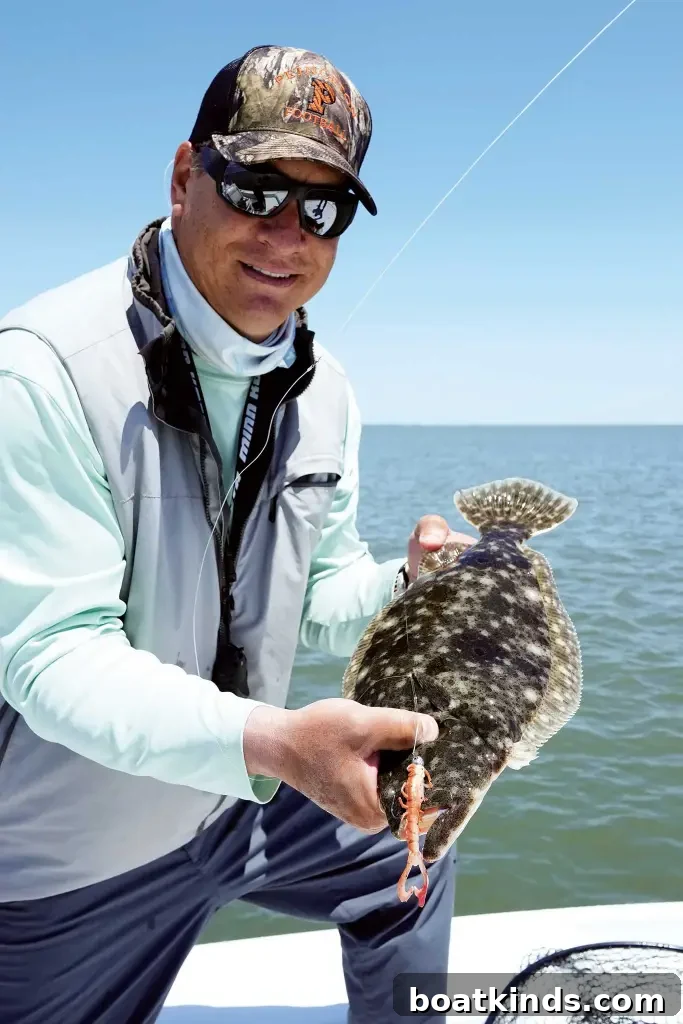
Zambetoglou fishes with a short spinning rod—under 6 feet—with a fast tip to detect subtle bites and a stout midsection for solid hookups. He typically works a two-hook high-low rig: a bucktail jig as the sinker and attractor, and a Gulp Grub or mullet trailer on the bottom hook, with a live killie or a smaller bucktail on the dropper. He keeps his drift very slow, around 0.5 to 1 mph, and constantly twitches the rod tip to impart action to the jigs and soft plastics. Scented Gulp baits, he says, have become a go-to option for enticing reluctant fish.
This precise, controlled-drift approach translates well to estuaries along the mid-Atlantic and beyond. In deeper ocean water, anglers simply scale up jig size and adapt the same high-low drift method to target larger, offshore fluke.
The Fluke Gangsta
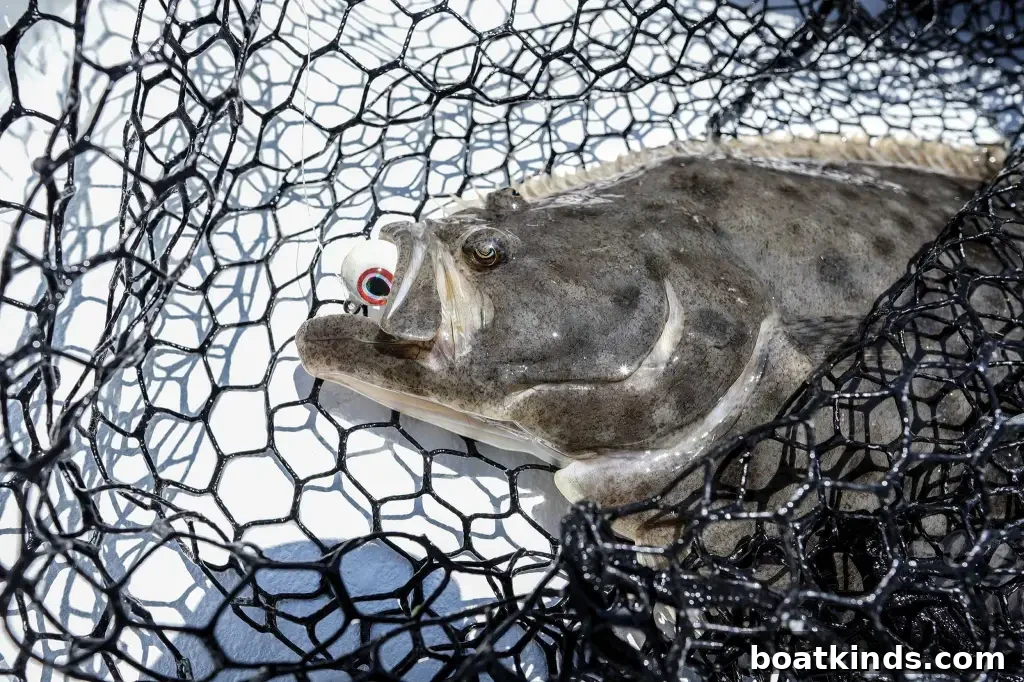
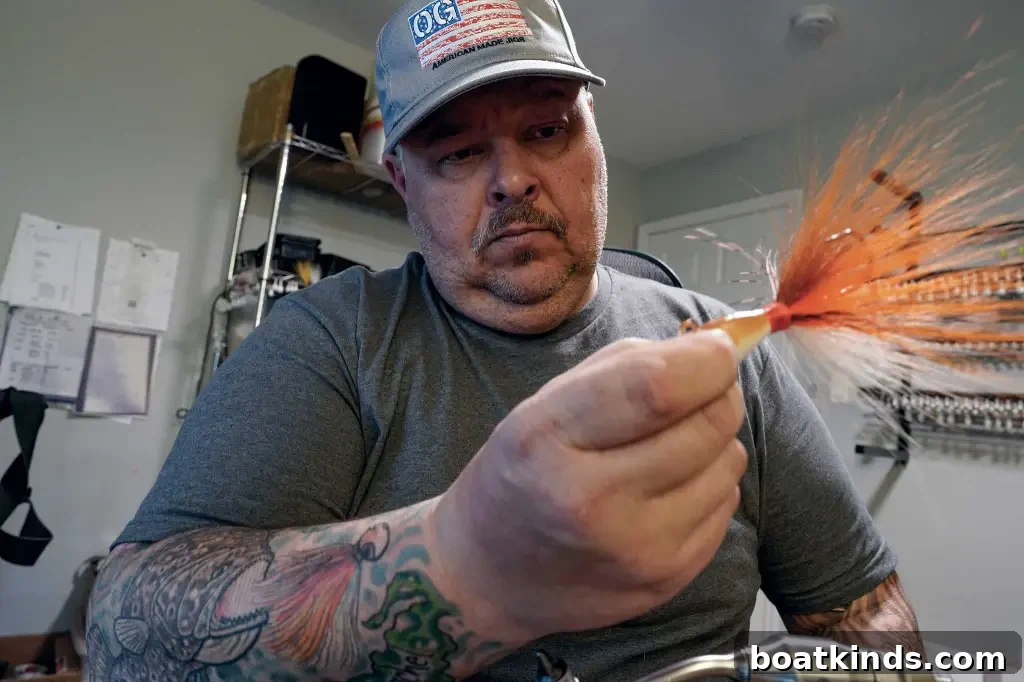
Stan Gola is a devoted fluke angler and tournament veteran who designs jigs specifically for fluke fishing. Founder of S&S Bucktails and creator of O.G. Jigs, he builds outfit tailored to mimic forage and trigger strikes. Gola fishes competitively from May through August and credits careful structure fishing—reefs, rubble and wrecks—for producing larger summer fluke.
Gola emphasizes adapting technique to drift conditions. When the drift is slow, he favors lighter jigs and an aggressive snap-jigging motion—fast, high lifts to make the jig dart. With a faster drift he uses heavier jigs and a subtler, slower up-and-down action so the presentation appears natural. He prefers bucktails and Gulp tails but will employ fresh strip baits from mackerel or bluefish when available; he avoids squid strips, noting that fluke can remove them too easily.
His typical ocean setup uses a high-low rig with a bucktail on the bottom and a long dropline behind it carrying a strip bait on a PinGrip-style hook. This trailing presentation gives a second, tempting option to a following fluke. Color choices vary with conditions—white glow and pink are staples, and browns or oranges work well when crabs are the dominant prey, such as around full moons. Some of his jigs even include small rattle chambers to mimic bottom-foraging sounds and provoke strikes.
Fluking the Surf
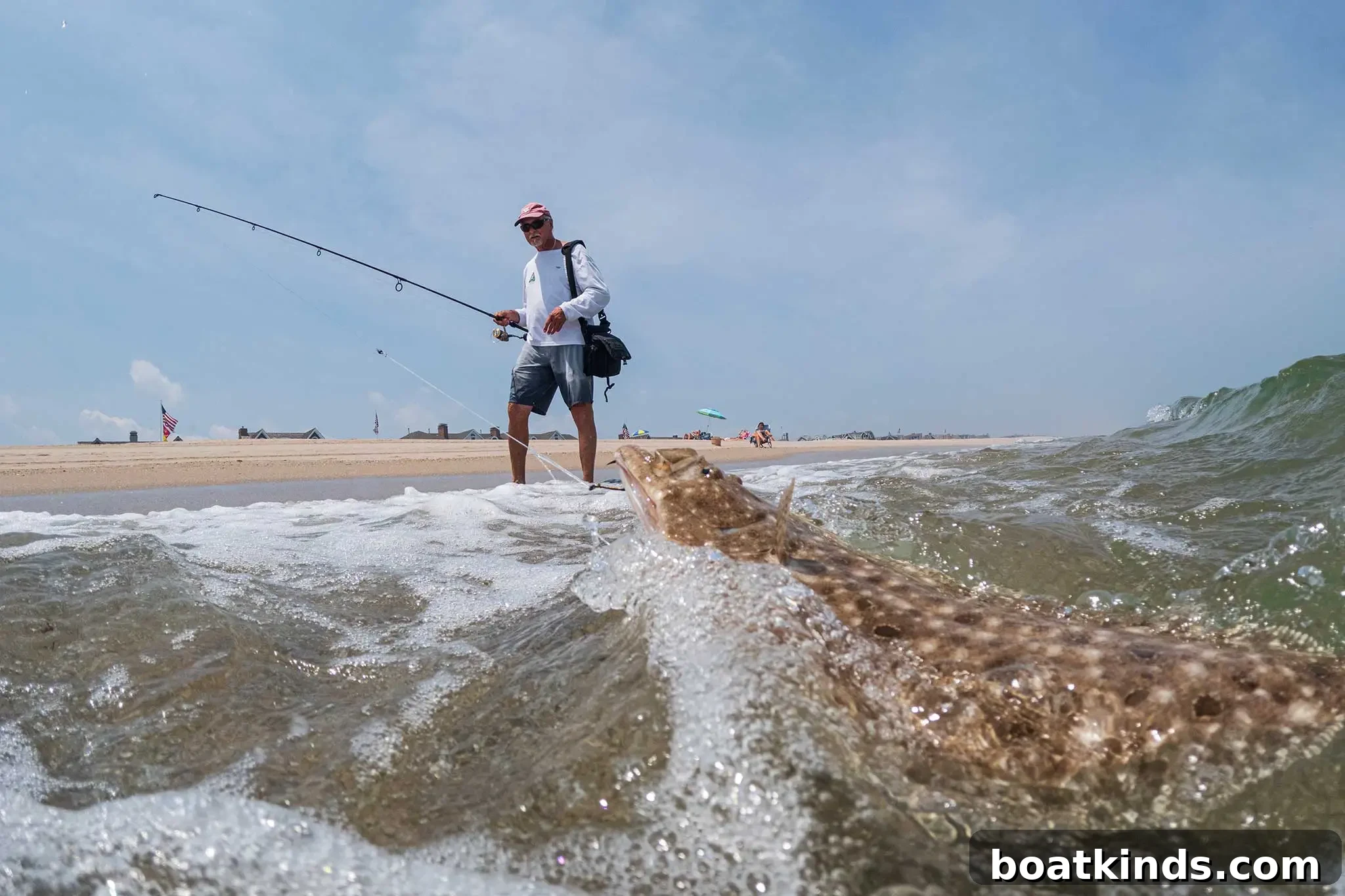
Surf anglers can find excellent fluke fishing close to shore, and the approach differs from casting for larger species like striped bass. Surf tackle is typically lighter, presentations are gentler, and long, powerful casts are less important than precise placement and timing. Jerry Fabiano, a retired NYPD detective turned dedicated surf angler, has refined surf fluke techniques from the sand.
Fabiano spends time scouting beaches at low tide to identify bars, breaks and troughs where fluke can ambush forage. He targets openings in the bar where bait gets funneled into sloughs on the incoming tide. From the beach he fishes slowly, working a rig that combines a flat 1-ounce sinker with two droppers—one near the bottom and a second trailing farther back—using free-floating or scented soft-plastic grubs on strong hooks. He prefers a sensitive 8-foot rod and braided line to detect light takes and works each break methodically until he moves on.
Whether fishing bays, ocean structure or sandy surf, fluke reward anglers who match presentation to conditions, pay attention to tide and structure, and experiment with jigs, bait and drift technique. The chase is part of the appeal—finding fish, tuning your approach and bringing home fine-eating fillets make fluke one of the most satisfying summer targets.
This article was originally published in the September 2026 issue.