
There are many compelling reasons to visit Cape May, New Jersey. This historic seaside town at the southern tip of the state has been a celebrated summer resort for more than two centuries. Renowned for its fishing heritage, Cape May hosts major offshore tournaments and features top-rated marinas that attract boaters and anglers from across the globe. The town comes alive in the high summer season, but after Labor Day it becomes calmer and easier to explore, with plenty of sightseeing, dining and outdoor activities available well into the shoulder season.
Colonial Roots
Cape May occupies a peninsula and barrier-island system that was first charted by Sir Henry Hudson in 1609, although Hudson never went ashore. The first recorded landing was by Dutch captain Cornelius Jacobsen Mey in 1621. Within a decade settlers had established a thriving fishing and whaling community—an enterprise that predated New England whaling by nearly a century. By the mid-1700s, English colonists from Connecticut and Massachusetts supplemented the region’s maritime economy with agriculture, capitalizing on the plentiful marine resources.
The area developed gradually as nearby cities such as New York, Baltimore and Philadelphia grew. City dwellers long sought coastal retreats, and Cape May became a favored escape. Visitors arrived by wagon and stagecoach, and by sloop and schooner, staying in inns, taverns and private homes to enjoy fresh ocean air, abundant fishing and rich oyster and crab beds. Over time, the town evolved into a sophisticated resort for urban elites, with luxury hotels, music pavilions and ballrooms lining its streets. That reputation earned Cape May the enduring title “Queen of Seaside Resorts.”
BIG FISH
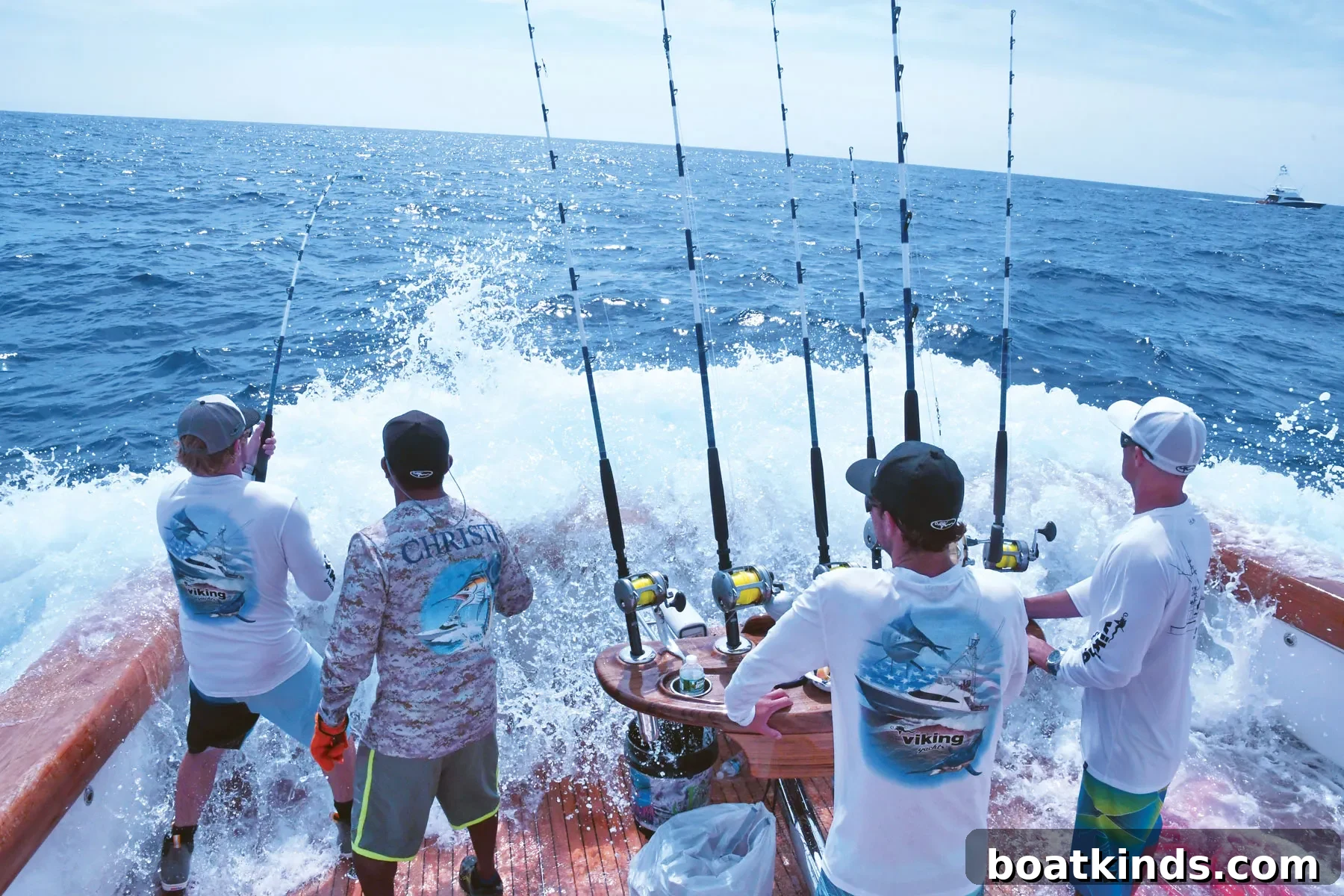
Cape May ranks among the East Coast’s premier angling destinations. Local captains say some of the best bluewater fishing comes after the major summer tournaments when the fleet thins and the bite intensifies. White marlin—the billfish for which the region is celebrated—congregate in the nearby canyons each September to feed heavily before migrating south, producing dramatic action for experienced sportfishermen. Yellowfin, bigeye and bluefin tuna are also prevalent, often staying in the area well into the fall months.
“Most people don’t realize just how good the fishing can be here,” says Capt. Ryan Higgins, a company captain for Viking Yachts. “I used to run boats in Venezuela, which supposedly had the best white marlin fishery in the world. My best day there, we released 22 whites and a blue, but I’ve beaten that on numerous occasions in Cape May.”
Dick Weber, founder of the popular MidAtlantic billfish tournament, first came to Cape May as a boy in the early 1950s. His father worked for the railroad, and the town was the family’s annual vacation spot. “It was mostly a commercial fishing port back then, with a fleet of maybe 30 charter boats that sailed for small bluefish near the inlet,” Weber recalls. Fishing eventually became Weber’s profession and passion. He and his wife, Bobbi, opened the South Jersey Fishing and Hunting Center, drawing a devoted angling clientele. In 1985 Weber bought the rundown Portofino Marina and transformed it into a premier boating and fishing resort; the Canyon Club Resort Marina helped establish Cape May as one of the East Coast’s top sportfishing destinations.
VINTAGE VICTORIAN
Cape May is one of the nation’s few National Historic Landmark cities, celebrated for its dense collection of preserved Victorian architecture. Numerous hotels and bed-and-breakfasts date back to the late 19th and early 20th centuries, and a stroll along Ocean Avenue’s promenade reveals elegant, well-maintained historic buildings. Horse-drawn carriage rides provide a leisurely way to take in the town’s architecture and seaside atmosphere.
The Cape May Lighthouse, completed in 1859, remains one of the country’s older continuously operating navigational aids. It stands in a landscaped park at the southernmost point of the state, and the original Fresnel lens—installed more than a century and a half ago—is displayed in the Museum of Cape May County.
Downtown, the Washington Street Mall is a pedestrian-only promenade filled with boutique shops, ice cream parlors and restaurants. For a local touch, visit the Ugly Mug, where the ceiling is famously adorned with—what else—mugs.
Food lovers will find a wide range of dining options, from casual breakfasts to classic dock-and-dine seafood. The Lobster House, one of Cape May’s longest-established restaurants, sits on a working wharf where commercial boats offload fresh catches. Moored alongside is the historic 130-foot Grand Banks twin-masted schooner American, which offers outdoor dining and a bar on her decks. A short cruise to the Lower Thorofare brings you to the Crab House at Two Mile Landing, another popular waterfront dining spot.
Cape May is also home to Training Center Cape May, the U.S. Coast Guard’s enlisted accession point. The center’s docks display a fleet of training vessels, from motor lifeboats to cutters, and you’ll pass the facility on the way to major marinas after transiting the all-weather inlet.
Outdoor and nature enthusiasts will appreciate the local birding opportunities, with two Audubon centers and several conservancies protecting marshes that attract songbirds, raptors and seabirds. Golfers can play nearby at the Cape May National Golf Club. With so many activities—fishing, historic tours, dining and wildlife watching—plan your visit to make the most of Cape May’s seasonal events and attractions.
This article was originally published in the September 2023 issue.