
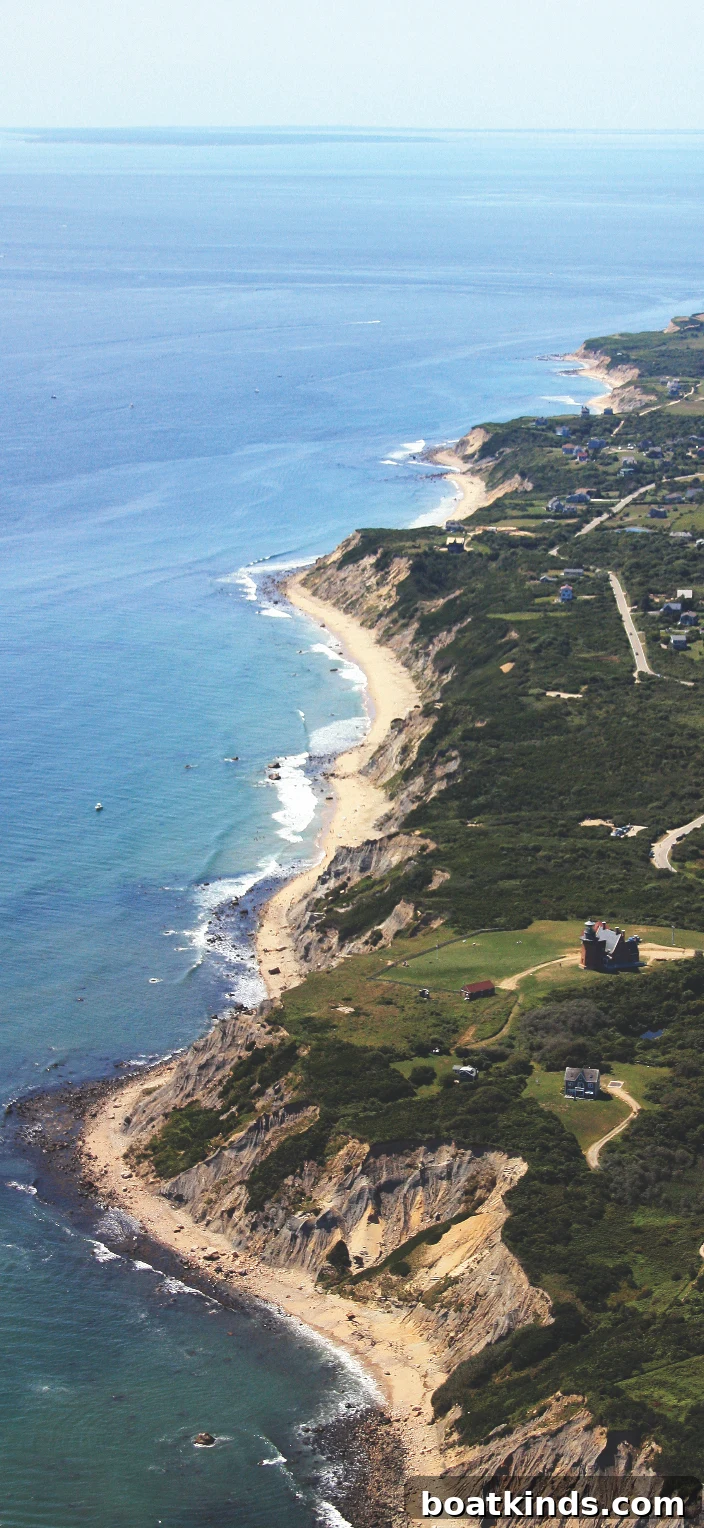
The glory days of surfcasting for giant striped bass on Block Island still live large in the memories of those who were there. Between 1982 and 1987 the island’s rocky shores produced an extraordinary run of big stripers that few anglers have ever seen since. Veteran surfcaster Dennis Zambrotta, who chronicled those years in his book Surfcasting Around the Block, calls the era “phenomenal,” though he’s quick to point out that big fish weren’t guaranteed every night. “You’d go out and maybe get one fish a night, but it was a monster fish. We got skunked some nights, too,” he says.
I recently visited Zambrotta at his Newport home to talk about the Block Island phenomenon. A retired Navy man who worked in the Naval War College library, Zambrotta still fishes Newport’s rocky points and returns to Block Island at least once a year, often fishing the same locations that produced so many memories in the 1980s.
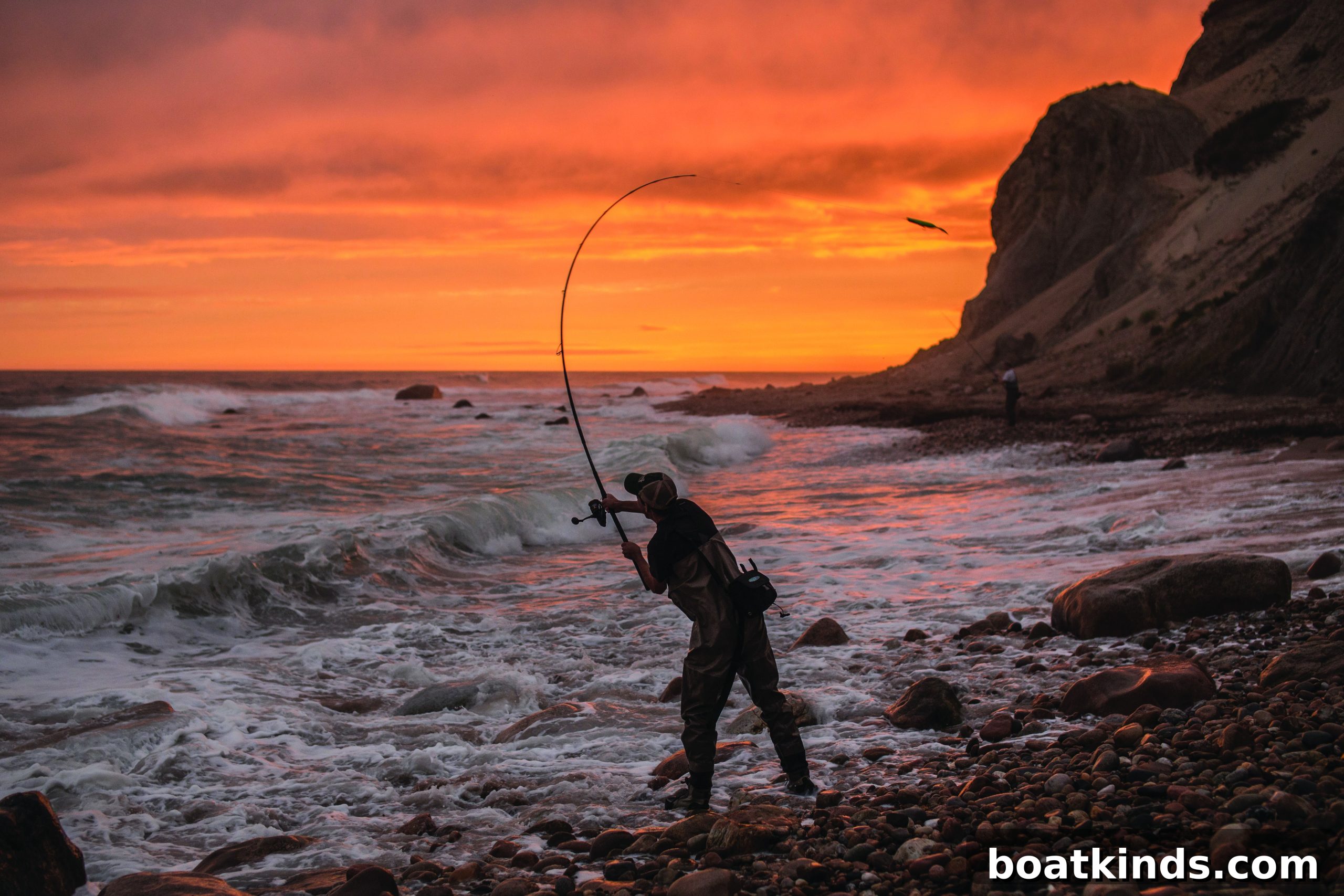
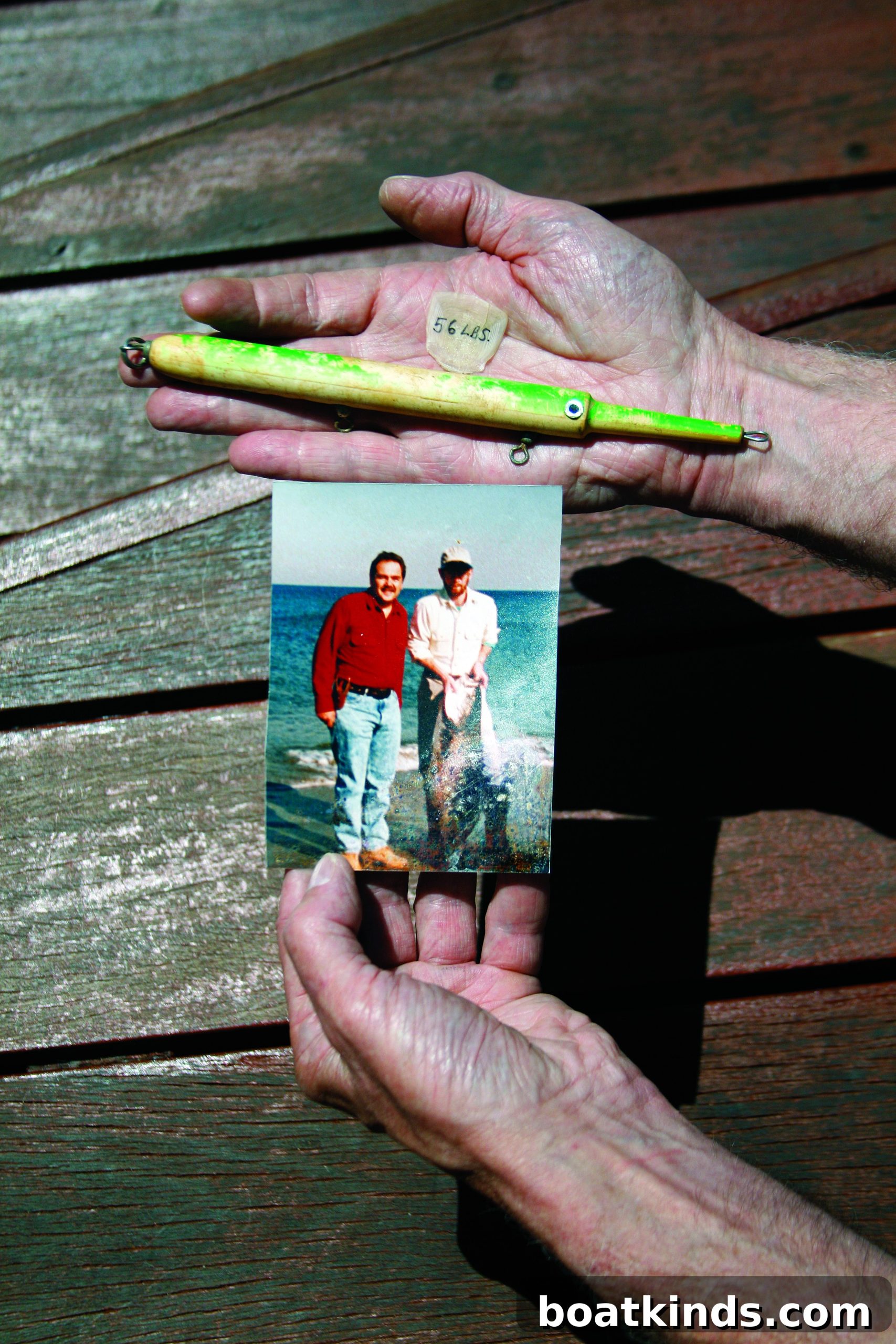
To make sure the story was accurate, Zambrotta relied not only on memory but on fishing logs and interviews with dozens of anglers. He sought out anglers who kept detailed notes—times, dates, conditions, lures—because, as he notes, memory can be unreliable. He still keeps a memento of those years: a fish scale from the 56-pound Block Island striper, his largest, tucked in his wallet as proof of the island’s extraordinary fishing.
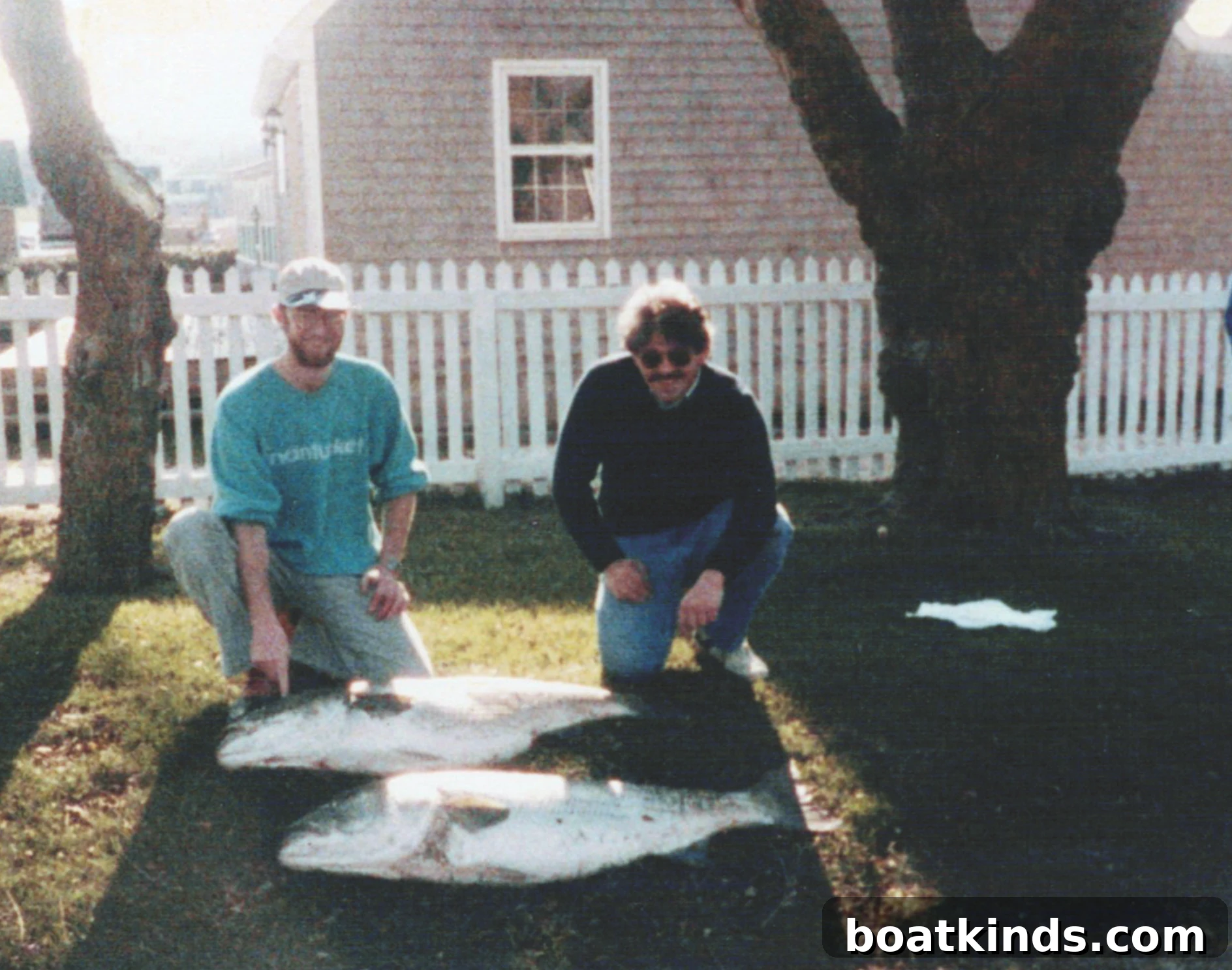
During those late-fall runs, it was routine to see 30-pound stripers landed; anglers routinely chased fish in the 40- and 50-pound range and dreamed of 60s and even the elusive 70-pounder taken from shore. Zambrotta has verified at least five surf-caught bass over 60 pounds and one 70-pounder from that period. “And you know there were more,” he says. Zambrotta himself landed two bass over 50 pounds while fishing Block Island.
The early 1980s saw the world record for striped bass broken twice—first in 1981 off Montauk and then in 1982 from a New Jersey jetty—so it wasn’t outlandish to imagine a record might fall again amid the dense concentrations of large stripers feeding off Block from November into mid-December. Many anglers believed at least one 80-plus-pound fish was likely hooked and lost during those years. Reports of fish so large they couldn’t be turned—or that nearly spooled an angler—were common the morning after a big night.
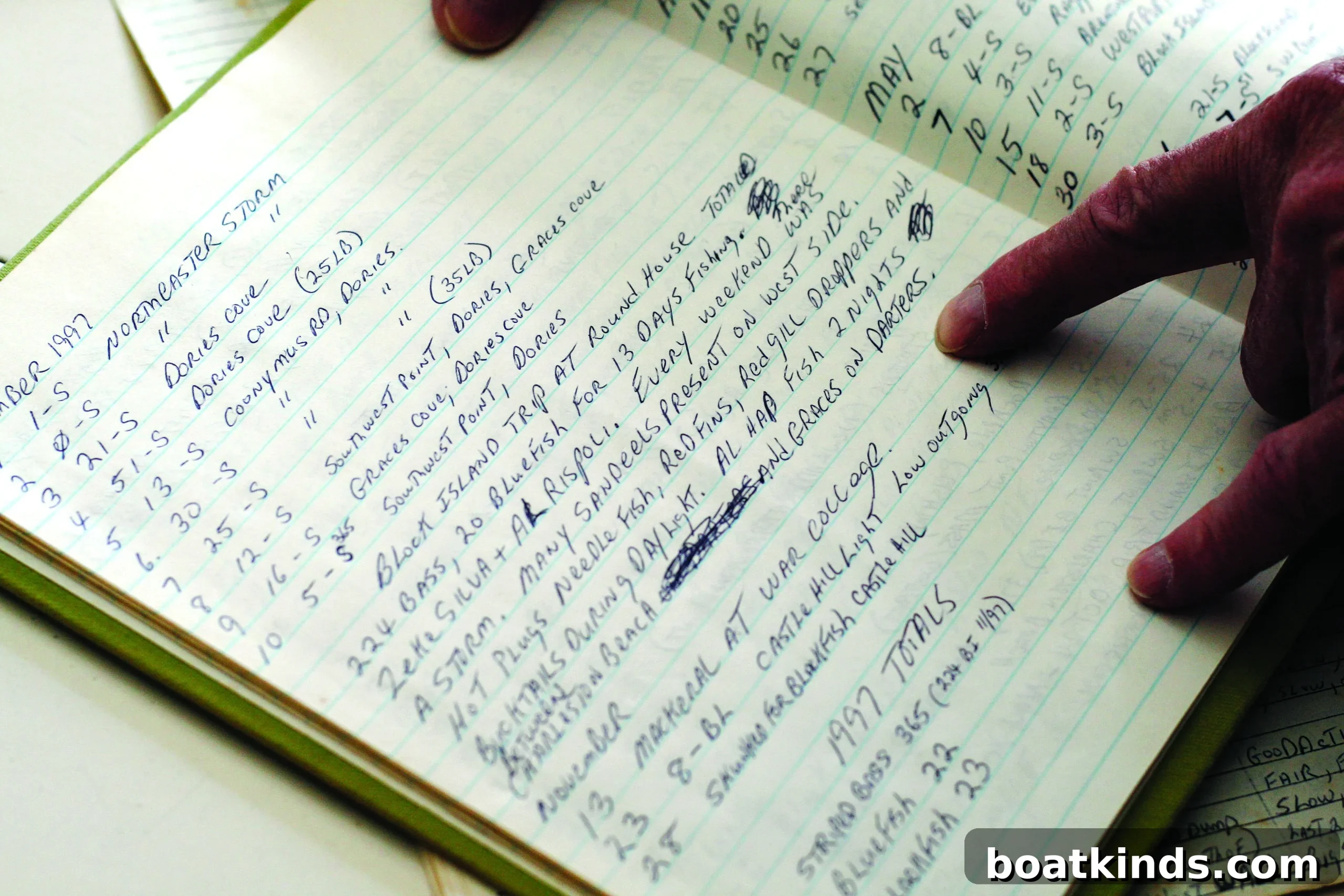
Equipment in the mid-1980s was primitive compared with today. These were prebraid days; graphite rods were just arriving. Zambrotta fished a 10-foot honey-colored Lamiglas fiberglass rod with a Penn 704 and 15- or 20-pound Ande line, backed by 50- or 60-pound mono leaders. Turning a 40- or 50-pound fish on 20-pound test, especially when a fish ran toward the rocks, was often impossible.
Countless monsters were lost to Block Island’s boulder fields—sharp-edged rocks, barnacles, mussels and tough wrack weed could chafe a line and end a trophy’s run. Anglers called that “getting rocked.” Crowded lineups added another hazard: crossed lines and the chaos of following a trophy down a picket line in darkness. If a fish ran into heavy cover or a fellow caster crossed your line, the consequences could be heartbreaking.
Offseason rentals were inexpensive then, and dedicated surf crews often stayed on the island for extended stretches. Fall storms that kept boats from crossing the Sound meant the surfcasters had the island to themselves. “When the weather got snotty, it was the surfcasters’ turn,” Zambrotta remembers. “We had the whole island to ourselves.”
Those Block Island runs unfolded before cellphones and social media, when secrecy among surf fishermen was the rule. Anglers guarded locations, sharing details only with trusted friends. Eventually, however, word leaked through regular fishing reports in regional publications, and the island’s reputation spread. That attention brought crowds and sometimes conflict. Popular spots that once held 10 anglers swelled to upward of 40 on big nights, leading to crossed lines, heated arguments and even occasional fist fights—tensions fueled in part by the fact that many were selling the fish to help make ends meet through the winter.
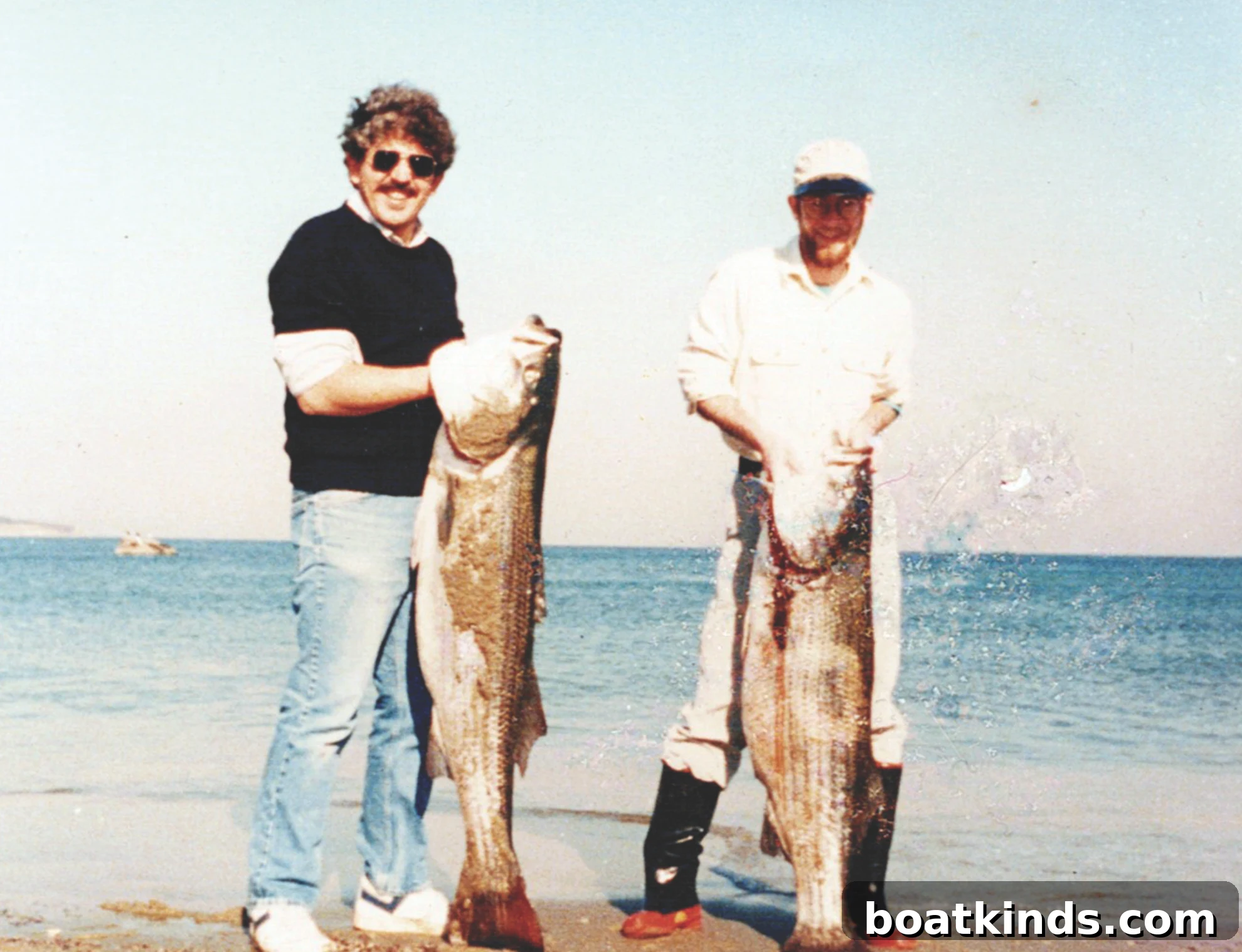
Anger at the publicity sometimes escalated into prankish retaliation—Zambrotta recalls lug nuts removed from a fellow angler’s car and a mock “wanted dead” poster aimed at editors who had written about the runs. Those were tense times for some, but for others like Tim Coleman—one of Zambrotta’s fishing companions—the attention was fleeting and the memories enduring. Coleman, a skilled angler and Vietnam veteran, landed a 67-pounder and two 50s on back-to-back casts one night.
Losing a big cow could happen in many ways: a novice casting over your line, a bass chafing through a nicked leader, or the sheer leverage of the fish bending or straightening hooks. Tackle failure was common. Anglers learned to maintain fresh line, check leaders, smooth drag systems, use strong snaps and swivels, and replace any nicked gear. “Every connection is a point of failure,” Zambrotta says. “You had to make sure everything was in good working order.”
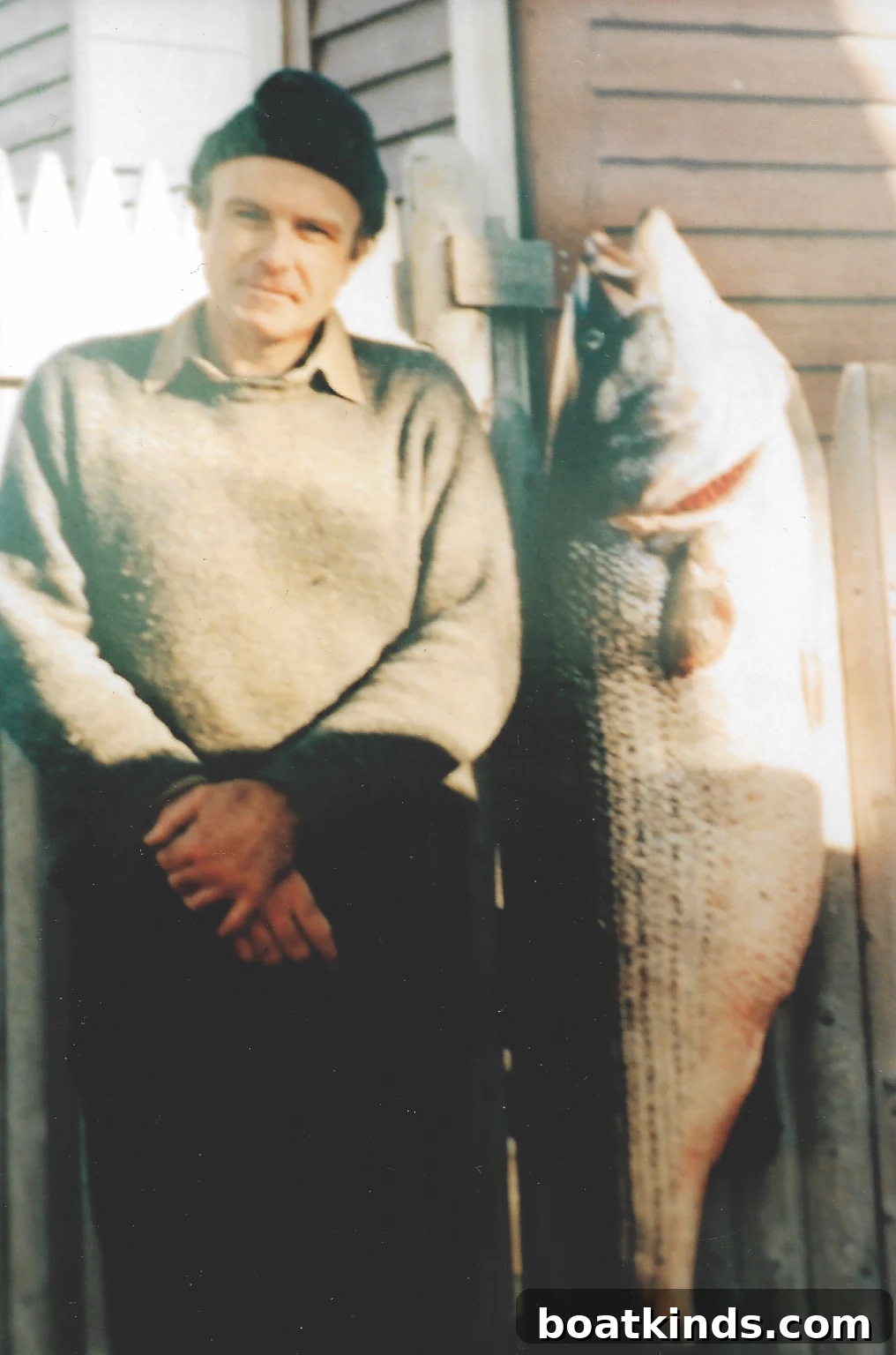
Patience and composure were essential. Early on, Zambrotta recalls, he’d be a nervous wreck when a big fish took—today he’s calm, the product of years of experience and many hard-won lessons. His friend Bob Andrade once named his trembling right leg “Thumper” because it shook so badly when he hooked large fish. On one November night in 1985, with a gale forecast, Andrade and Thumper finally landed a 47-pounder that Zambrotta brought ashore; the anglers shook hands and celebrated the hard-fought catch.
Needlefish plugs that imitated the abundant 7-inch sand eels were the lure of choice. The trebles often bore the brunt of the bass’s power; bent hooks collected in a jar became a badge of honor for many. Anglers like former tackle-shop owner Pat Abate and his crew would go through hundreds of hooks a season, saving the twisted hooks in what they called “The Jar of Broken Dreams.” Many hooks ended up flattened or contorted by the tremendous leverage of a hooked cow bass that had the plug resting against the outside of its jaw or gill plates rather than deep in the mouth.
Even as those big fish fed, the striped bass population faced trouble. School-sized fish were scarce, a warning sign that the stock was strained. Overfishing in the 1970s and early 1980s pushed the Chesapeake Bay-dominant population toward collapse, prompting a five-year moratorium beginning in 1985. It took until 1995 for fisheries managers to declare the stock recovered.
Could another Block Island-style bonanza happen? Zambrotta believes it’s possible but expects any repeat would play out differently in the age of social media. “I suspect it will happen again, but I don’t think it will be that quiet,” he says. The Block Island run lasted for a span of years and left an outsized impression on a generation of surfcasters.
This article was published in the October 2024 issue of Soundings. It originally appeared in a 2024 issue of Anglers Journal.