
I have owned a RIB for nearly a decade. I’ve taken it across the Great Lakes, through Chesapeake and Penobscot bays, and even ran it from the Jersey Shore across Raritan Bay to Manhattan on one of the roughest days I can remember—flying off ocean swells, safely landing in the troughs and arriving in the city faster than by car. Despite its modest size—15 feet, 5 inches—Bob remains one of the most seaworthy boats I’ve used.
Visiting Ribcraft’s Marblehead, Massachusetts, facility made me realize I may have been babying Bob. “Eighty percent of our customers use our RIBs a lot harder than you and I would,” Matthew Velluto, director of business development at Ribcraft, told me as we toured the plant. Ribcraft builds a majority of its boats for commercial use, including models for the U.S. Navy, and Velluto says, “If it’s good enough for them, it’s good enough for my family.”
RIBs have evolved significantly since their origin at Atlantic College in the United Kingdom in 1964, where students and the headmaster fitted an inflatable chase boat with a plywood bottom to prevent abrasion. A flat plywood bottom proved punishing, so they built a shallow-V prototype and displayed a V-bottom inflatable at the London Boat Show. The Royal National Lifeboat Institution (RNLI) trialed the design, leading to the Atlantic 21, which served the RNLI until 2007 and influenced lifesaving fleets worldwide.
The first commercially available RIB, the 13-foot Avon Searider, appeared at the London Boat Show in the late 1960s, and within a decade RIBs spread to Canada, New Zealand, South Africa and mainland Europe. They were slower to gain traction in the United States, but that has changed as recreational builders and commercial manufacturers have broadened their lineups.
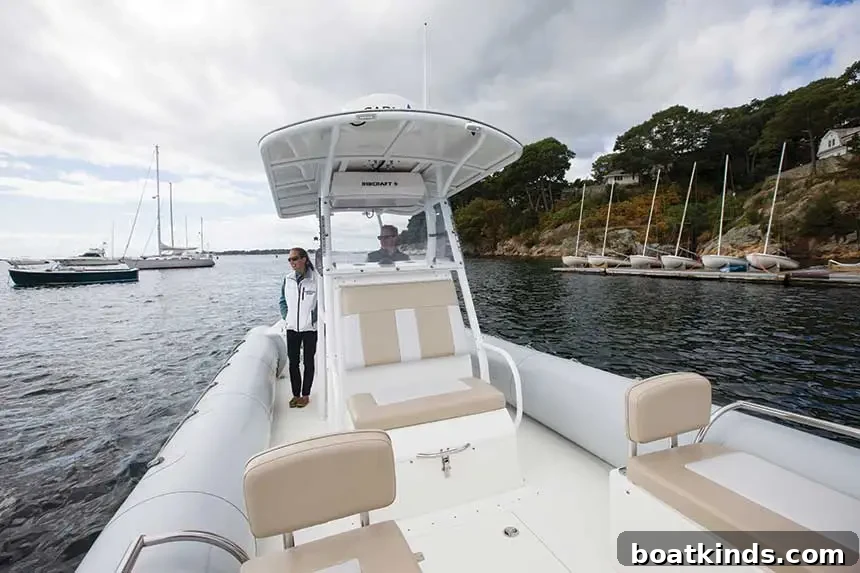
Ribcraft now builds everything from work-focused 23-foot craft for government and commercial use to recreational RIBs ranging from 16 to 41 feet. One standout on the tour was the Ribcraft 9.0, which we tested from the Marblehead harbormaster’s dock.
At 29 feet, 7 inches, the 9.0 looks and feels like a luxury dayboat while retaining the rugged construction of a commercial RIB. It offers comfortable seating throughout, an enclosed head in the console, and a powder-coated aluminum T-top with a fiberglass hardtop. Electronics include a 16-inch Garmin MFD, radar and Mercury Joystick Piloting, while the stern carries twin 350-hp Mercury Verados.
Velluto explained that the owner uses the RIB as a primary boat: easy to take out with grandkids, tow a tube, run to the Vineyard for lunch, or just enjoy a day cruise. Many Ribcraft owners fish off their boats and, despite inflatable tubes, will use gaffs without hesitation. “If you use the same common sense you use to not hook yourself, you’re fine,” he said, noting that Ribcraft builds tubes from heavy-duty 1670 Hypalon and fits multiple air chambers—seven on the 9.0—so even multiple punctures won’t sink the craft thanks to the fiberglass hull.
The inflatable tubes deliver high load capacity and many benefits—reduced weight and draft, higher speed, a drier ride, improved stability, and outstanding seaworthiness. Tubes do consume interior space and age faster than a fiberglass hull; Hypalon can last a couple of decades, while PVC is more susceptible to UV and typically lasts around a decade. Still, the trade-offs are often worth it for boaters who value performance and safety.
We piloted the 9.0 through Marblehead’s busy harbor and out into open water. Intermittent swells from the Atlantic rolled through as Velluto opened the throttles, demonstrating the boat’s offshore capability. In 3- to 4-foot seas the 9.0’s sharp bow sliced through wave tops while its tubes and full-length lifting strakes kept the ride flat and dry. RIBs are relatively light for their length—the 9.0 weighs about 4,000 pounds without engines—so they come off the water more easily than hard-sided boats. Even when the hull lifted on bigger runs at 35 knots, landings were predictable and comfortable; the tubes prevent the boat from digging in and keep speed steady.
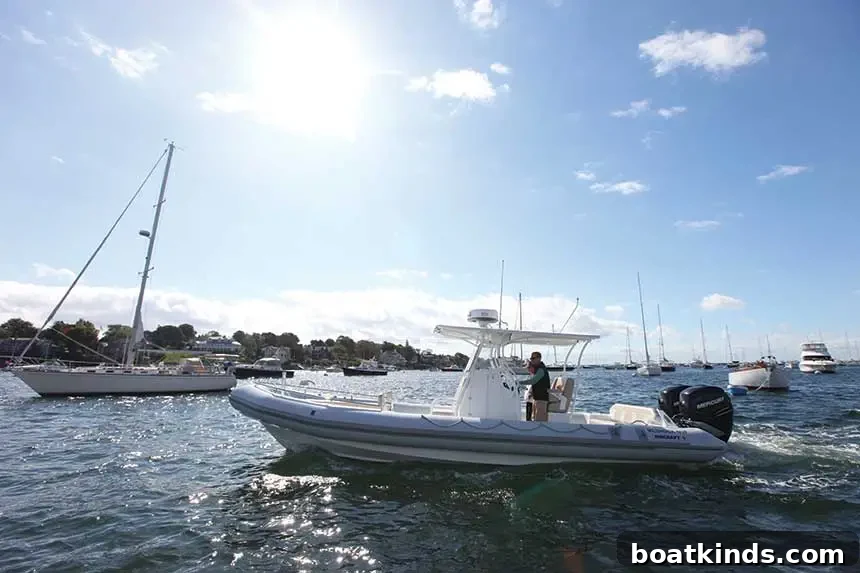
“RIBs are incredibly forgiving,” Velluto said. “They’re predictable. You can hit a wave funny and it’s going to land the same way every time.” Performance is a major draw: the 9.0 with twin 350-hp engines can reach about 53 knots, and builders like Technohull are pushing the envelope with RIBs claimed to approach or exceed 100 knots.
For sheer seaworthiness, RIBs are hard to beat—capable of long passages and offshore conditions that would challenge many other small craft. While I’m not planning transatlantic voyages, on this day we headed across the bay at 30 knots toward Manchester-by-the-Sea, encountering 3- to 4-foot waves without drama. At the harbor Velluto used the joystick to ease the 9.0 alongside the dock—a feature that underscores how modern RIBs blend utility with refinement.
Over lunch we talked about how RIBs have transformed from purpose-built commercial and rescue craft into versatile recreational boats. Velluto, a Ribcraft team member since 2001, described today’s RIBs as “an SUV married to a sports car”: maneuverable, stable, high-performing, and more fuel-efficient for a given speed. Modern RIBs sport teak decks, premium seating, heads, sound systems and sophisticated lighting—offering everything many boaters expect from a hard-sided boat, plus advantages unique to the inflatable design.
I took the helm for the trip home, running high-speed turns and heading back to Marblehead under a brightening sky. It was a sweet ride that had me thinking seriously about upgrading Bob.
MODERN RIBS
RIBs are more versatile than ever. Below are six modern, cruise-capable models over 20 feet that illustrate how builders blend performance, comfort and utility.
BRIG Eagle 6.7
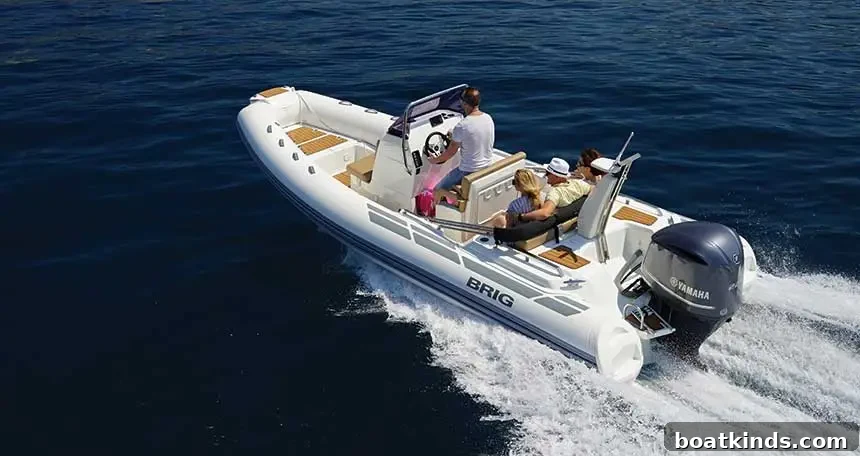
BRIG produces 21 models from 9 to 33 feet. The Eagle 6.7 replaces the Eagle 650 with a redesigned deep-V hull, SeaDek flooring, an optional Bimini, a foldable swim ladder, built-in cooler, glass console dashboard sized for two 9-inch displays and a foldable table. At 21 feet, 9 inches, it can carry up to 11 people and is recommended for a 150-hp Honda 4-stroke, with an optional 225-hp Honda available. The 6.7 debuted in the U.S. at the 2019 Fort Lauderdale International Boat Show.
Zar 95 SL
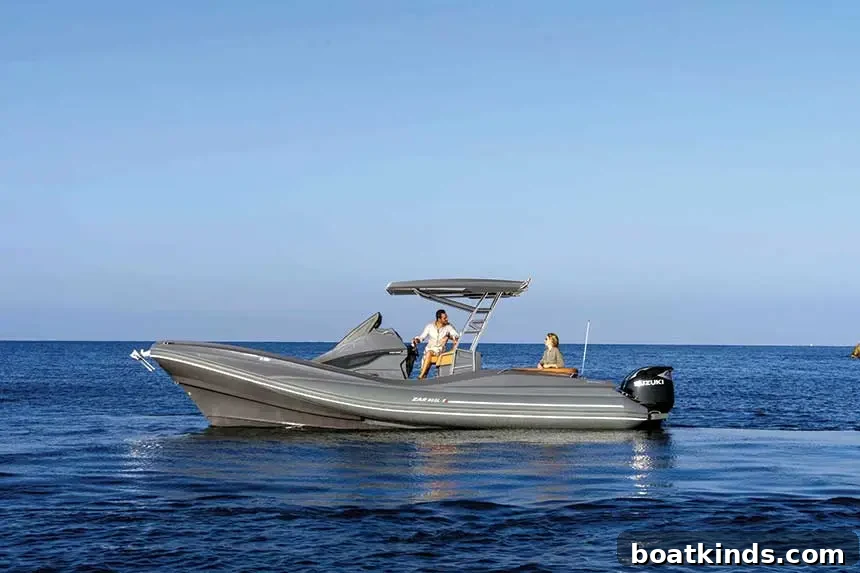
Italian builder Zar Formenti’s Zar 95 SL is 31 feet, 6 inches long and typically powered by twin 350-hp Suzuki 4-stroke outboards. It features a cabin with a full-size berth, air conditioning and a separate head and shower. Bow and stern seating convert to sun pads, and the aft galley area offers a gas grill, sink and two-drawer refrigerator. Options include a T-top, teak decking and underwater lights. Top speed is listed at 60 knots with a cruising speed around 42 knots.
Technohull 38 Grand Sport
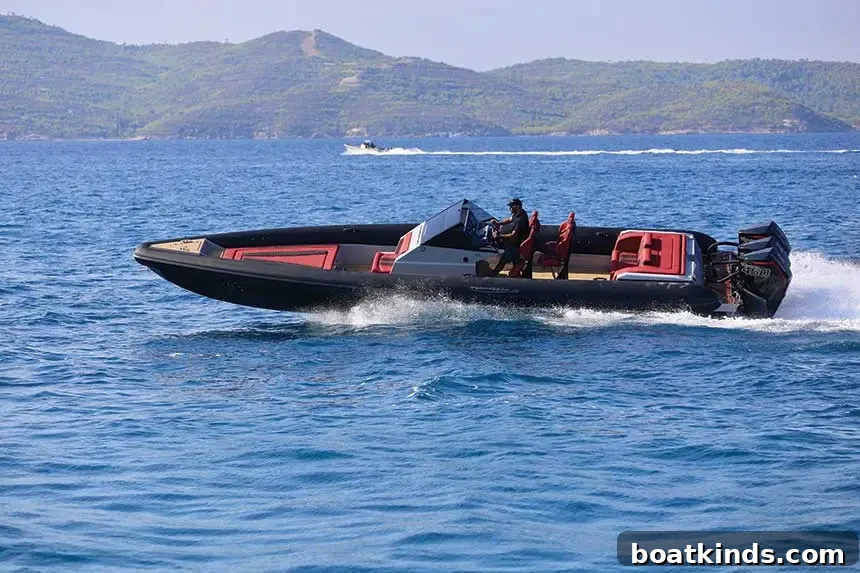
Greek builder Technohull markets the 38 Grand Sport as a high-speed offshore performer, with a 38-foot, 4-inch hull designed for twin Mercury Verados from 300 to 450 hp or three 450-hp outboards in the super sport version. The deep-V hull and sharp bow prioritize stability at speed. Features include solid teak decking, an electric toilet, external shower, optional bow cabin, LED lighting and an adjustable swim ladder. Early hulls launched in October.
Zodiac Open 6.5
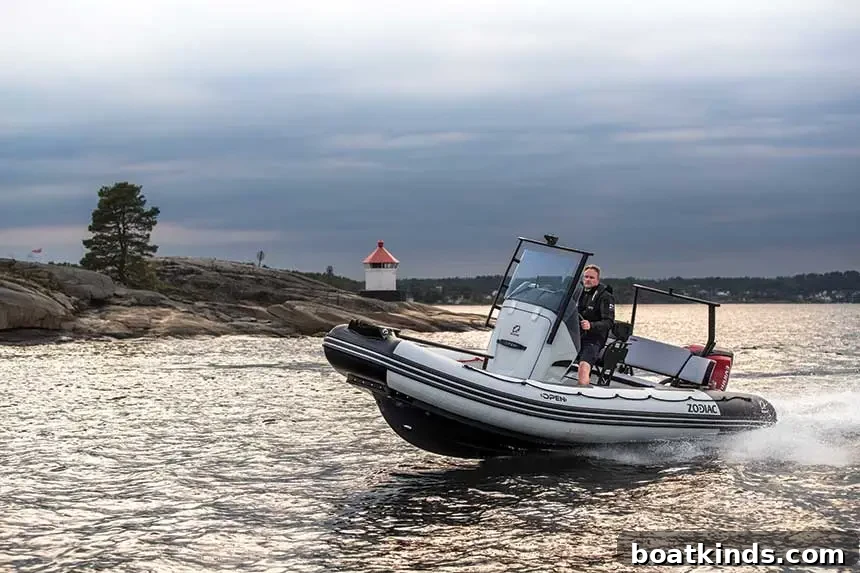
Zodiac Nautic, long associated with inflatables, builds the Open 6.5 with a self-bailing deep-V hull measuring 21 feet, 6 inches. Intended for fishing, watersports and diving, it offers a tilting console for belowdecks stowage, a bolster with integrated storage and a three-person aft bench with a cooler beneath. Options include T-tops, bait boxes, hand showers and rod holders.
Williams Evojet 70
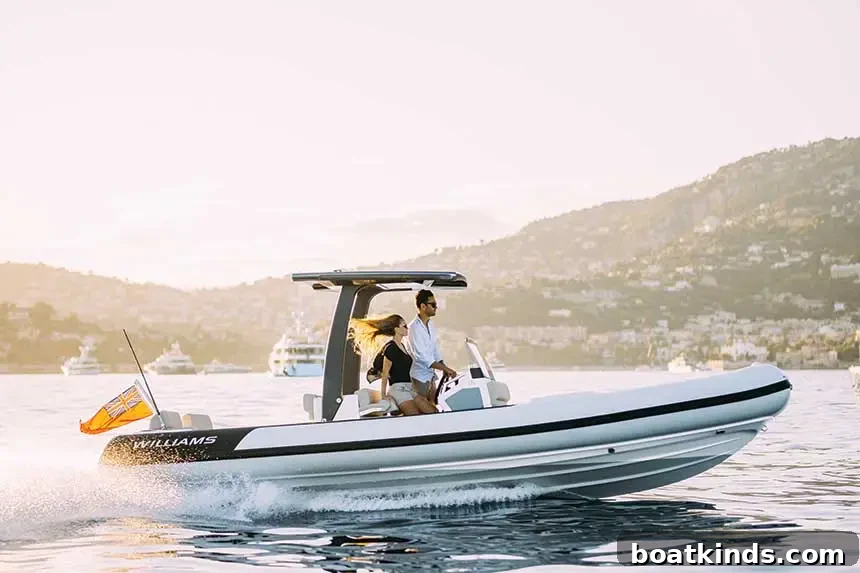
British builder Williams, known for jet-powered RIB tenders, introduced the Evojet 70 at 22 feet, 9 inches—the largest in its lineup. It can carry up to 13 people and features a folding carbon fiber hardtop to reduce airdraft for garage stowage. Powered by a 230-hp Yanmar 4LV diesel with jet propulsion (an optional 250-hp diesel is available), the Evojet 70 is highly customizable and debuted at the 2019 Monaco Yacht Show.
Airship 340
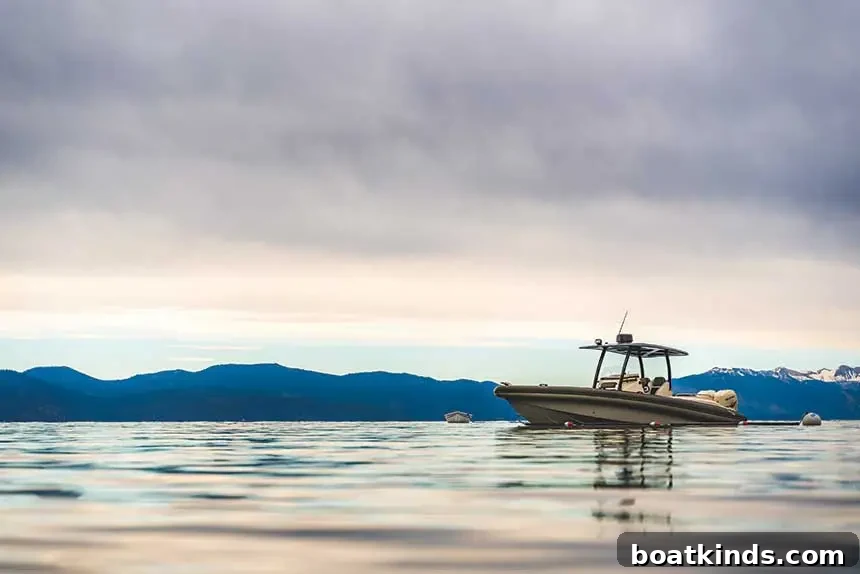
Ohio-based Airship RIBS revised its 330 model into the 340, featuring a twin-step hull and redesigned transom. The 34-foot platform offers a self-draining cockpit, bow sun pad, LED navigation and courtesy lights, a cooler beneath the bow console seat and a porta-potty in the center console. Additional features include pop-up stainless cleats, a transom shower and a stainless tow bracket. Options range from SeaDek flooring and fish lockers to underwater lights and a hardtop T-top, with power from twin 400-hp Mercury Verado outboards.
This article originally appeared in the December 2019 issue.