
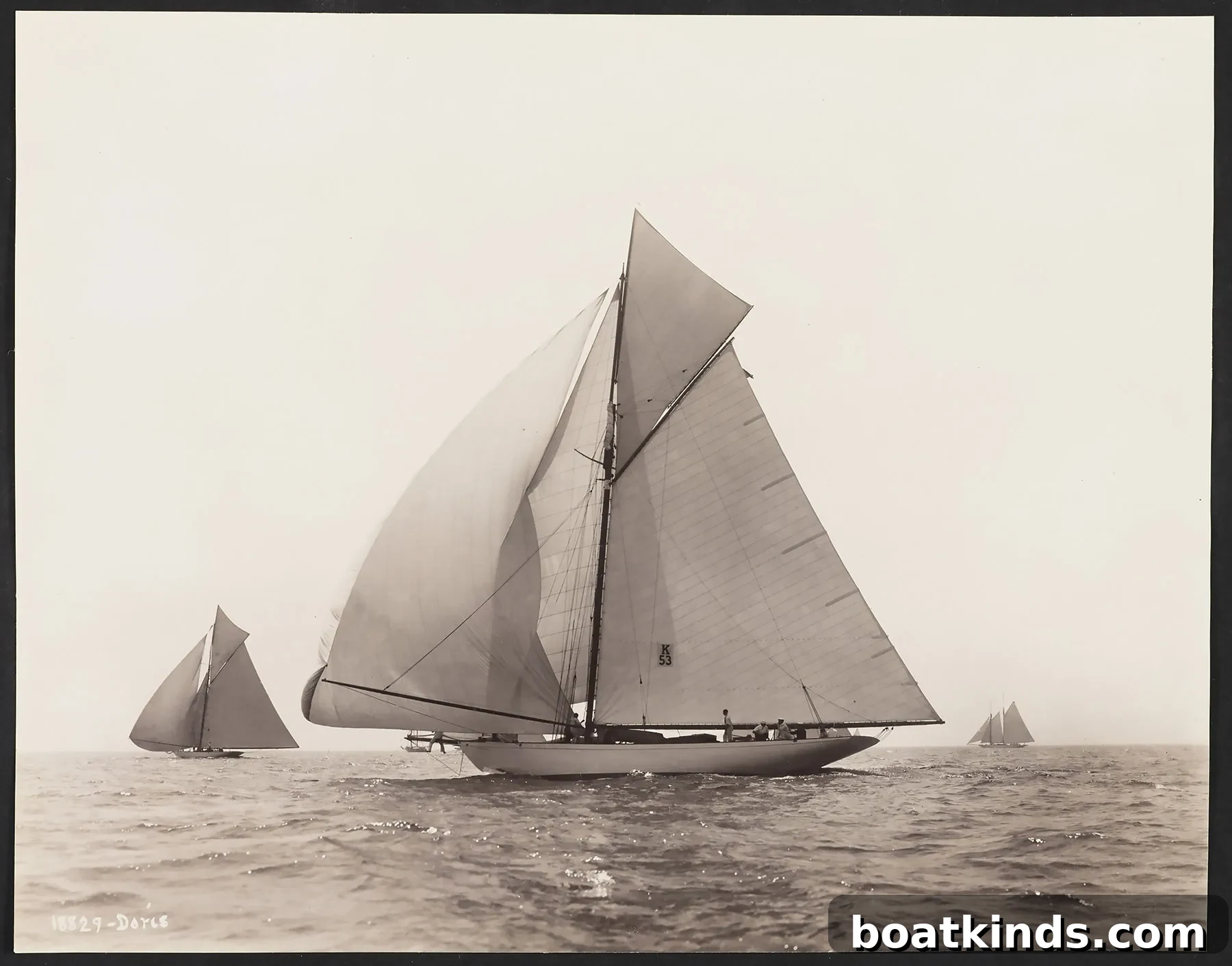
Restoring a Herreshoff Classic: The Resurrection of the 1904 Yacht Doris
For decades the once-elegant Herreshoff racing yacht Doris, built in 1904, sat in decline—hogged, peeling and forgotten—tucked into a secluded cove along the lower Connecticut River. Even in its deteriorated state the yacht still suggested the grandeur of an era when craftsmanship mattered, when wind powered international trade and wealthy enthusiasts commissioned finely made craft for both racing and pleasure. Later, the classic boat rotted away in a New London shipyard and looked, for a time, like it might meet a chainsaw instead of a new lease on life.
At 78 feet, Doris holds the distinction of being the largest all-wooden sailboat ever built by Nathanael Herreshoff. She was also the first vessel constructed to the Universal Rule for Yachts, the measurement system that determined America’s Cup eligibility from 1914 to 1937. Despite that storied lineage, for many years Doris was a rotting hulk—seemingly beyond sensible restoration.
The Decision to Save Doris
What might have been a final trip to a landfill instead turned into a patient, meticulous restoration funded and overseen by Joe Robillard of Oxford, Maryland. Rescued at the last possible moment, Doris has been undergoing a careful rebuild at Snediker Yacht Restoration in Old Mystic, Connecticut, under the direction of owner and restorer Dave Snediker. Snediker notes that the job is the sort contractors avoid: “It’s the kind of job you’d never touch with a 10-foot pole if you ran a business.”
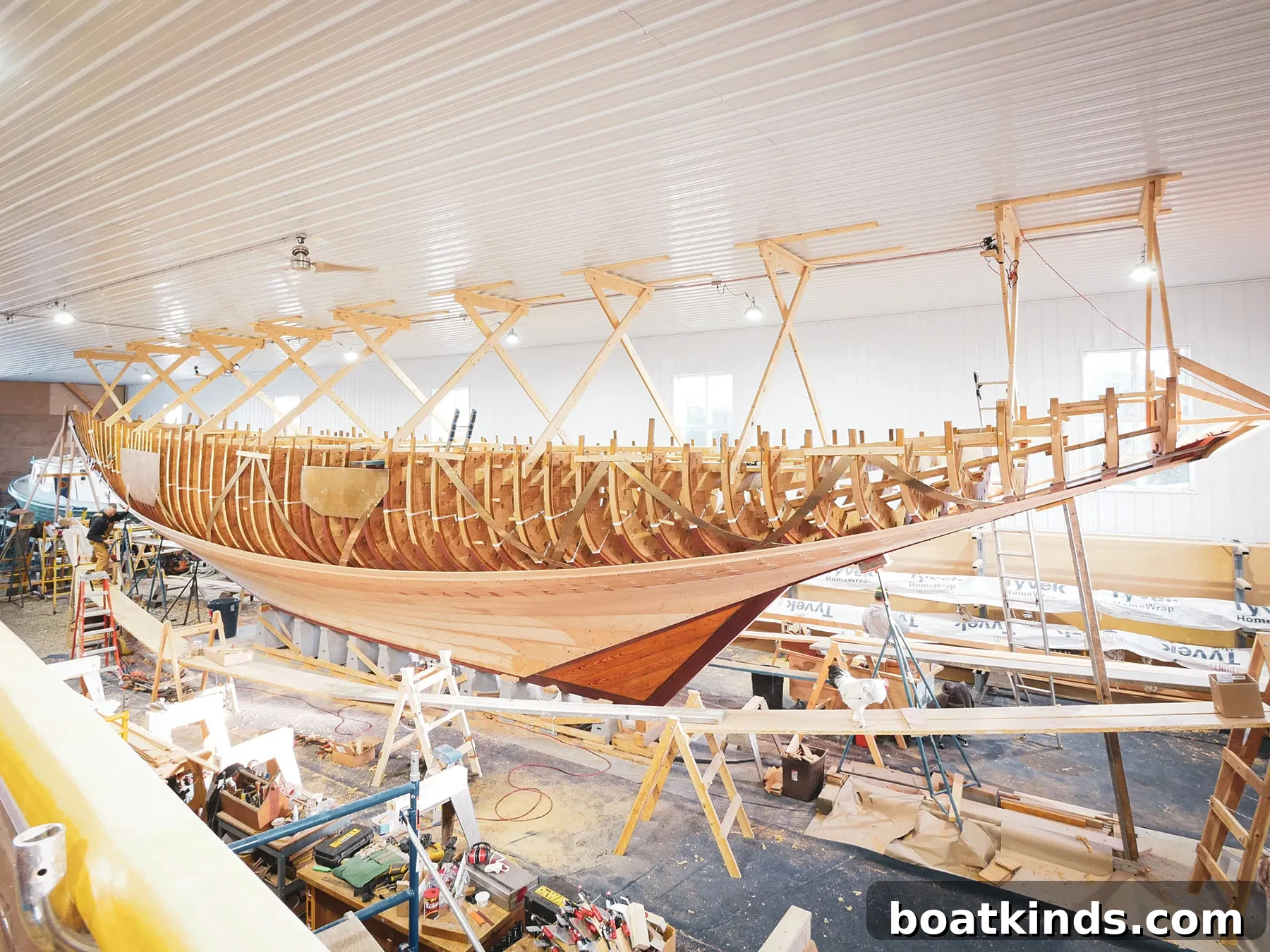
Work began in earnest in 2017 and has proceeded deliberately, honoring both original design and the materials and methods that defined the Herreshoff approach. The hull reconstruction has progressed to the point where the skin is nearly finished and the molds are expected to be removed by Thanksgiving. After that milestone the focus will shift to the interior rebuild, deck systems and the rig—bringing the yacht back not only to seaworthiness but to the standards of a true period restoration.
Between Restoration and Replacement: The Ship of Theseus
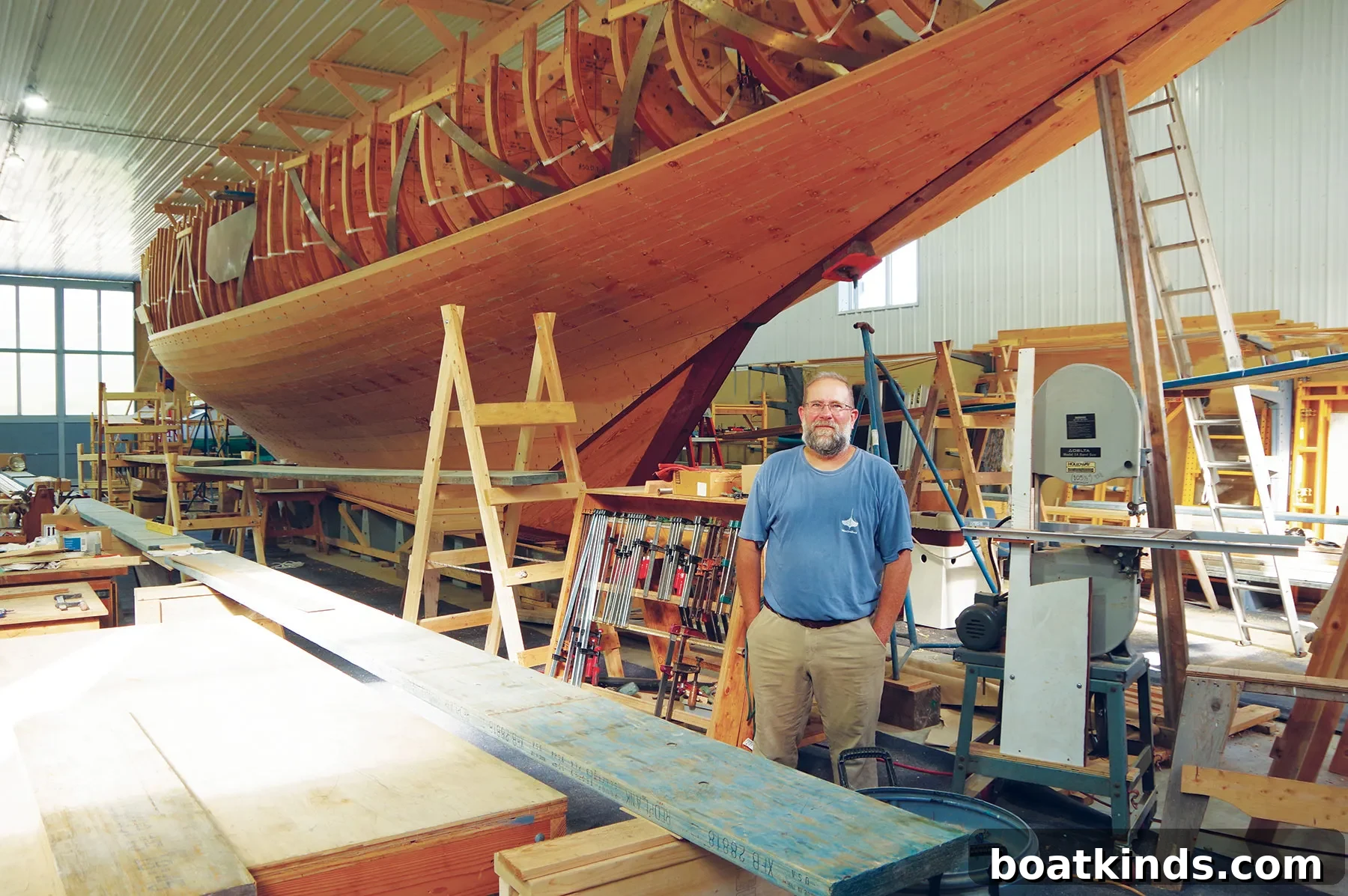
Visiting Doris in the shop is like stepping into the sights, smells and sounds of new boat construction. The project raises the classic philosophical question of the ship of Theseus: if every original component is replaced, is the vessel still the same? Snediker answers with a craftsman’s pragmatism. “In restoration, the rule among the cognoscenti is there can never be no boat, and there can never be two boats. You have to do it within the envelope of the old boat. We have the photographs to prove it!”
Practically speaking, with the exception of a few bilge stringers and a bronze knee where the horn timber meets the keel, almost all of the wood on Doris has been replaced. Yet many original elements have returned to the yard in surprising ways. Years ago much of the interior had been discarded at a Mystic shipyard; a local who used to scavenge parts—and who is now a lawyer—recovered numerous interior pieces and ultimately brought them back. Locals have continued to contribute, and the restoration team now has an estimated 80 to 90 percent of the drawers, bunk faces and settees from the original boat.
Authenticity Driven by Original Plans
The restoration has been guided by Herreshoff’s original offset books and specifications, held in the MIT Hart Nautical Collection archives. Those documents have driven not only the hull reconstruction but the recreation of interior appointments—right down to original hardware and cabinet catches. The Universal Rule produced yachts that combined racing capability with comfortable cruising accommodations, and restoring both aspects of Doris has been a priority.
Plans for the Future
The restoration remains on schedule for completion in 2025. When that work is finished, owner Joe Robillard intends to use Doris as she was originally intended: both as a racer and as a cruising yacht. Robillard plans to campaign her in New England’s Classic Yacht Series and to cruise the boat in New England, with potential voyages to Europe and possibly the Caribbean. A hedge-fund manager and self-described nautical history enthusiast, Robillard already owns a number of antique vessels, including a 1902 Crowninshield named Kidd, and he traces his passion for classic boats back to an early sailing experience on a Howard Chapelle sloop.
For Robillard, the project is about more than personal enjoyment. “The Doris project provided an opportunity to save an important piece of maritime history and preserve it for the future,” he says. “There are not that many boats like that around anymore. These boats are for everybody.”
Meticulous archival research, community-sourced salvage, and skilled traditional craftsmanship are converging at Snediker Yacht Restoration to give Doris a renewed life—one that honors her origins while ensuring she can be sailed and raced for generations to come.
This article was originally published in the November 2021 issue.