
Historic British Naval Logbooks Unlock Centuries of Weather Data to Improve Climate Understanding
Researchers are turning to centuries-old logbooks held in British archives to recover systematic weather observations recorded by Royal Navy captains during the age of exploration. These handwritten records, many uploaded and digitized by climate projects, provide direct measurements of air and sea-surface temperature, barometric pressure, wind and sea-ice conditions from the 18th and early 19th centuries—data that help scientists reconstruct past climates and better understand modern climate change and variability.
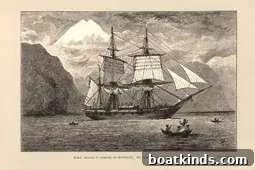
The U.K. Colonial Registers and Royal Navy Logbooks project (CORRAL) has photographed entries from 300 logbooks in the British National Archives covering roughly 1750–1850 and is digitizing the weather readings and qualitative observations they contain. “It’s pretty good stuff,” says Dennis Wheeler, a climate scientist at the University of Sunderland and leader of the project. The team has already extracted millions of individual data points and continues to expand the record.
These records matter because they extend weather observations back a century or more before the industrial era’s large-scale emissions. Having reliable measurements from 150 to 250 years ago sharpens scientists’ ability to place recent warming and variability in historical context. Wheeler estimates the Admiralty’s archives hold some 250,000 logbooks, with volumes dating as far back as the 1680s—an unparalleled repository of marine and polar weather data.
The logs include entries made by some of history’s best-known navigators: Robert FitzRoy, captain of HMS Beagle during Charles Darwin’s 1831–36 voyage; Capt. James Cook, who circumnavigated the globe in the 1770s; William Bligh of HMS Bounty and HMS Providence; and polar explorers such as W.E. Parry and Capt. James Ross. Many voyages were scientific in purpose as well as political, carrying one or more specialists tasked with observing and recording environmental conditions.
Shipboard instruments of the era—thermometers for air and sea temperatures, barometers for pressure, and instruments to estimate wind speed and direction—were used alongside written notes on weather and ice. Officers often logged observations daily and sometimes hourly. Typical entries describe sea-ice extent and distribution: “Ice closely packed,” wrote Lt. A. Morrell during the 1818 expedition to the North Pole aboard HMS Dorothea. “Ice seen from the mast extending from the south to north by northwest,” reads another entry.
Besides Royal Navy logs, the CORRAL project is mining other 18th- and 19th-century records held in the U.K. Meteorological Archive, including Bahamian lighthouse logs (Abaco, Cay Lobos, Cay Sal, Inagua, Sombrero and Watling Island), St. Helena in the South Atlantic, and Malden Island in the Pacific. These shore-based observations complement ship logs and strengthen regional reconstructions.
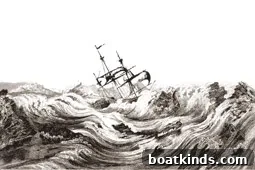
Early CORRAL efforts have prioritized Arctic voyages because of urgent interest in polar ice changes. Initial results are nuanced: different logbooks sometimes give conflicting indications about past conditions. For example, analysis of the Dorothea’s 1818 voyage, which halted near Svalbard because of sea ice, suggests summer temperatures that year were “not markedly colder” than late-20th-century summer averages and that sea-ice extent, while greater than in recent years, fell within the 1961–1990 range. By contrast, temperature readings from the Isabella in Baffin Bay that same season indicate a summer slightly colder than late-20th-century norms, though its ice conditions were also similar to the 1961–1990 baseline.
Wheeler emphasizes caution in interpretation: the early 19th century was influenced by major natural events such as the 1815 eruption of Mount Tambora—one of the largest volcanic eruptions on record—and a period of low sunspot activity. Both would have affected climate and weather during the period under study, so researchers must account for these factors when using the logbooks as a baseline.
CORRAL is one component of a larger international effort called ACRE (Atmospheric Circulation Reconstructions over the Earth). ACRE gathers historical weather observations from archives worldwide to reconstruct daily global weather and atmospheric circulation over the past 200–250 years. Principal partners include the U.S. National Oceanic and Atmospheric Administration (NOAA), the University of Colorado, the United Kingdom’s Met Office and the Australian Bureau of Meteorology, alongside roughly 30 international collaborators.
“We can reconstruct the weather right up through the atmosphere from surface observations,” says Rob Allan of the Met Office, noting that the reconstructions rely primarily on air and sea-surface temperatures, wind speed and direction, precipitation, barometric pressure and sea-ice records. These hindcasts—using modern forecasting models run backward on historical observations—yield high-value insights for climate scientists and practical users such as agriculture planners and the reinsurance industry.
New data sources continually emerge. Wheeler notes significant holdings in other national archives—at least 8,000 ships’ logs in Dutch repositories and roughly 20,000 in French collections. CORRAL and ACRE teams are also pursuing an estimated 2,000 ships’ logs from the British East India Company covering voyages to India and China between the 1790s and the 1830s, as well as records from weather offices, Jesuit missionaries, pilot stations, harbormasters, consular offices and institutional archives.
Allan sums up the scientific value: beyond producing long-term reconstructions of atmospheric circulation, these historical records help define how climate has varied naturally over centuries and identify which changes today are attributable to human-caused global warming. The careful, persistent observations made by sailors, lighthouse keepers and other recorders centuries ago are proving indispensable in building a clearer, longer view of Earth’s climate.
This article originally appeared in the January 2010 issue.