
Key Factors to Consider When Negotiating an Inlet
Negotiating an inlet safely requires planning, observation, and respect for changing conditions. Many boaters find it easier to leave a harbor through an inlet than to return because, when exiting, the bow faces the open water and you can choose favorable conditions. Before you go out—or before you plan to come back in—evaluate the elements that will affect your transit: weather, current direction, tide level, visibility, sun position and glare, and sea state. These factors influence not only how you handle the boat, but also when you should attempt the passage.
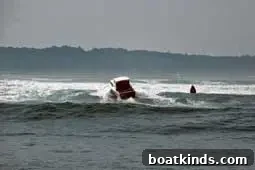
Always take time to watch the inlet from a safe vantage point before committing. Use binoculars if available and observe for patterns in wave sets, the presence of breaking waves, and any unusual water movement. Inlets often look deceptively calm from offshore because you are seeing the backs of waves; from closer range or from shore you may notice steep faces or breaking rollers. Also be aware that swells generated by distant weather can arrive even when local skies are clear, causing occasional breaking waves across an otherwise calm channel.
Tide and current are critical considerations. An outgoing tidal current meeting onshore wind or waves can create hazardous conditions, including standing waves or a turbulent “rip” across the inlet. Conversely, incoming tides can compress wave energy against shoals or jetties. Study updated charts and local boating guides to identify channel markers, submerged jetties, and shallow areas that may extend beyond the visible channel. These features can focus or reflect wave energy and change how waves break within the inlet.
Depth awareness is essential. If conditions look rough and you are tempted to steer out of a rip into what appears to be calmer water near the edge of the channel, do not do so unless you are confident about the depth. Shoals and sandbars can be hidden beneath the surface and shift over time. If you must alter course to find calmer water, do it with caution and only when you have verified safe depths and clearances.
Visibility and light conditions influence how well you can pick out buoys, markers, and hazards. Consider the direction of the sun and potential glare when planning your transit, especially during low-angle light at dawn or dusk. Poor light can hide floating debris, make markers harder to see, or create confusing reflections on the water. Maintain a lookout all around and reduce speed if visibility is reduced.
When conditions are challenging, match your boat handling to the behavior of your vessel. Powerboats and sailboats respond differently to following seas, cross seas, and breaking waves. For sailboats, keeping sail up can provide power and stability, but it is also prudent to have the engine ready to start for immediate maneuvering if conditions change. In powerboats, reduce speed to maintain a controlled approach, avoid broaching, and be prepared to take seas on the bow whenever possible.
Local knowledge is invaluable. If you are unfamiliar with a particular inlet, talk to local mariners, harbor authorities, or other experienced boaters to learn about typical conditions, hazards, and preferred transit procedures. Keep your charts and navigation tools up to date and consult tide and current tables before you leave. Electronic aids can help, but do not rely on them exclusively—visual observation and situational awareness remain the best tools for safe inlet navigation.
Finally, always ensure your safety gear is readily accessible: life jackets for everyone aboard, a working VHF radio, signaling devices, and a reliable engine and steering system. If weather forecasts or observed conditions indicate the inlet is rough or unpredictable, delay your passage until conditions improve. Patience and preparation will reduce risk and make negotiating an inlet a controlled, manageable maneuver rather than an unpredictable challenge.
Originally published in the May 2011 issue.