
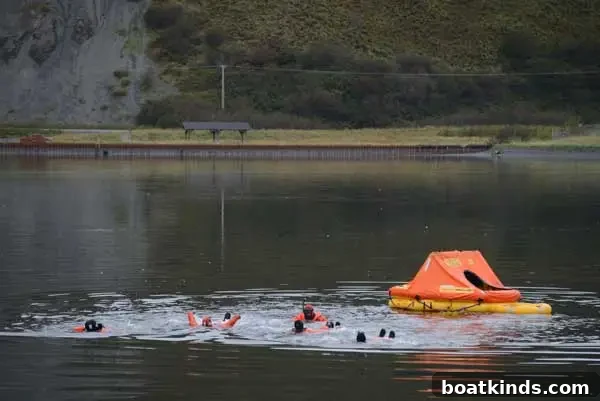
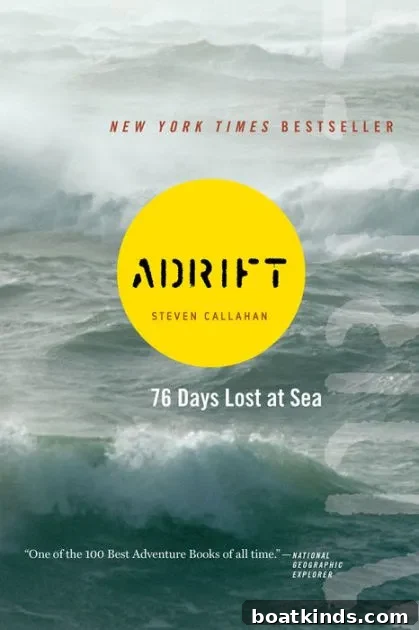
People frequently ask me about survival at sea. After a boating-safety talk, someone almost always wants to discuss life rafts, rationing, or whether I’ve read the famous survival books about being lost on the ocean—most commonly Steve Callahan’s Adrift: 76 Days Lost at Sea. After I explain the best practices for staying safe and for summoning help if things go wrong, the questions shift to the acute details:
“How do you survive in a life raft? When do you start rationing water? Should you drink seawater in any circumstance? Have you read Adrift?”
Although I have military survival training that includes offshore techniques, I rarely focus on long-term open-ocean survival tactics. There are two main reasons. First, for those truly interested in extreme survival, there are many excellent firsthand accounts and books that offer detailed, practical advice—Callahan’s book being a notable example. Second, long-term survival at sea is almost always the result of a chain of preventable mistakes. In other words, finding yourself alone in a life raft with no certainty of rescue generally means multiple aspects of basic boating safety were ignored.
To be blunt: if you end up alone in a life raft with no expected rescue, a lot went wrong. Survival in such cases is often the aftermath of several missed opportunities to prevent the emergency in the first place.
Despite the dramatic stories we see in the news, lengthy survival episodes at sea are uncommon. They are the exception, not the rule. Survival narratives usually begin after safety measures have failed or been overlooked. When someone asks about water rationing or how to behave in a life raft, I usually reframe the question: “What would you do if you ignored every safety lesson, made a string of rookie mistakes, and wound up in a life raft with an uncertain rescue?” The short, practical answer is this: regret the errors that led you there, hope you have the resilience and judgement of experienced survivors like Callahan, and be thankful you packed good gear—especially a working emergency radio, signaling devices, and a watermaker if you had the foresight to bring one.
It’s worth noting that Steve Callahan’s case was exceptional for reasons beyond individual error. Callahan was a competent and cautious sailor; his ordeal was shaped by the technology and circumstances of the time. He entered his raft in February 1982—before global search-and-rescue satellite systems like COSPAS-SARSAT were fully operational. Had his distress beacon been monitored by today’s satellite network, his ordeal would likely have been much shorter. Technology has dramatically improved the speed and reliability of locating vessels and people in distress, which is one of the reasons modern offshore safety gear matters so much.
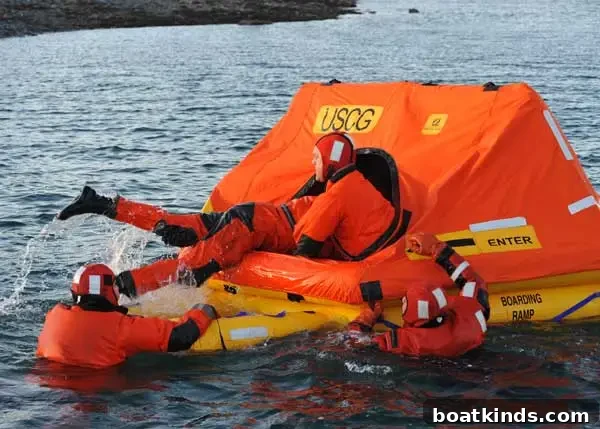
Because long rescues are rare, much of practical offshore safety centers on prevention and efficient signaling: maintaining watertight systems, carrying and knowing how to operate an EPIRB or PLB, practicing radio and visual signaling, and having a well-served plan for abandoning ship if necessary. In my training sessions I have students enter covered life rafts so they can experience how uncomfortable and psychologically challenging being in one can be. That exposure is purposeful: it reinforces the message that being in a life raft is better than not being in one, but it is unpleasant enough that you should do everything possible to avoid getting there.
Reading vivid survival accounts—Callahan’s Adrift, Laurence Gonzales’ Deep Survival, or long endurance stories—has the same effect: they teach respect for the ocean and for the many small decisions that keep you safe. These books can also highlight the mental and emotional skills that matter in extreme situations. Still, the most valuable lesson is often practical and humbling: most of us are fortunate to spend our boating lives without enduring true hardship at sea.
Based on earlier search-and-rescue data I tracked, the average time to rescue after a distress call that includes accurate location data is around 4.5 hours. That figure illustrates why most offshore incidents are resolved far faster than dramatized survival stories suggest. If help is alerted with reliable coordinates, long-term rationing and improvised survival tactics are rarely necessary.
That said, if you plan to go offshore you should absolutely carry and know how to use a life raft, understand how to store and deploy it, and practice the correct behavior once you are inside. I’m planning further posts and training sessions on life rafts and may even spend a night in one to evaluate recent improvements in raft design. Sea survival training is not useless—it builds useful skills and mindset—but it should be framed correctly: the priority is to prevent an abandonment scenario in the first place by following proven safety practices and ensuring your emergency equipment is current and effective.
In short: learn and practice boating safety, carry the right gear, know how to signal and communicate, and treat life-raft training as a last-resort skill. The best survival strategy is simply to avoid needing one.