
Huckins Yachts: Heritage, Design and Offshore Performance
Frank Huckins’ granddaughter, Cindy Purcell, began working in the Huckins Yachts stockroom in the 1970s. Today she and her husband, Buddy Purcell, own and operate the company that first made its reputation building PT boats. That lineage still shapes the brand: Huckins now produces semicustom yachts that appeal to owners who value both the company’s pedigree and its distinctive appearance.
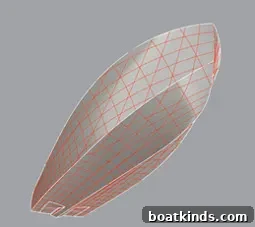
Modern Huckins models retain the visual and hydrodynamic DNA of earlier designs while incorporating refinements for contemporary use. The hull form, marketed by the company as “Quadraconic,” references the hull’s concave bottom sections. The shape is recognizable at a glance: a fine, slicing entry up front and flatter, concave sections aft and amidships. Huckins has refined the original lines by increasing the aft deadrise slightly, which helps the boat hold course and improves handling at speed.
In practical terms, Huckins hulls show moderate displacement and bottom loading with a relatively narrow length-to-beam ratio at the waterline. These factors combine to produce manageable resistance through the hump and make the boats reasonably easy to bring onto plane. Low-deadrise sections amidships and aft contribute to efficient straight-line performance and economical cruising at moderate speeds, which many owners prefer for long-range passages or comfortable coastal runs.
How the Quadraconic Hull Affects Ride and Handling
Every hull form brings trade-offs. The Quadraconic hull’s fine forefoot does an excellent job slicing through chop when the boat is semi-planing and the bow remains relatively low. At those speeds, the sharp entry allows the hull to part waves cleanly, reducing vertical acceleration forward.
As speed increases and the boat rises onto plane, more of the hull is exposed to wave impact, shifting the primary contact aft. The deadrise where those waves meet the hull — generally at stations three through six — determines how smoothly the boat handles larger, faster seas. While the Huckins hull retains useful deadrise forward, it flattens relatively quickly amidships and aft. That reduced deadrise in wave-impact zones means that at higher speeds the ride can be firmer than boats with deeper deadrise in those same areas.
Another distinctive feature is the concave bottom sections. Those concavities help keep the boat drier in many conditions by deflecting spray, and they support efficient running when the hull is on an even keel in relatively light chop. However, concave sections can trap and compress water when the boat meets a wave at an angle or is heeled, which can increase slamming and pounding. In other words, the hull’s geometry favors a particular style of operation and sea state: efficient and dry in calm to moderate conditions, but firmer in heavier, mixed seas.
Suitability and Comparative Strengths
Compared with many large, voluminous cruising boats that populate marinas, a Huckins tends to be more seaworthy and better suited for offshore work. Its classic profile and hull balance make it more capable in open water than some full-bowed, wide-beamed production convertibles and express boats. Owners who appreciate traditional lines, efficient cruising characteristics and a responsive feel often find that Huckins boats deliver a pleasing combination of style and function.
That said, buyers should understand the trade-offs inherent in the Quadraconic hull. If the primary mission includes frequent high-speed runs in rough offshore conditions, boats with greater deadrise amidships and aft will usually offer a softer ride at speed. For cruising, fishing and coastal passages where economy, dryness and classic lines matter, a Huckins remains an attractive and capable choice.
Related Reading
Related articles and features include early looks at Huckins sportfisher designs and retrospectives on the company’s PT-boat heritage. Titles of interest:
- An early look at the new Huckins Sportfisherman
- The legendary Huckins PT boats
March 2014 issue