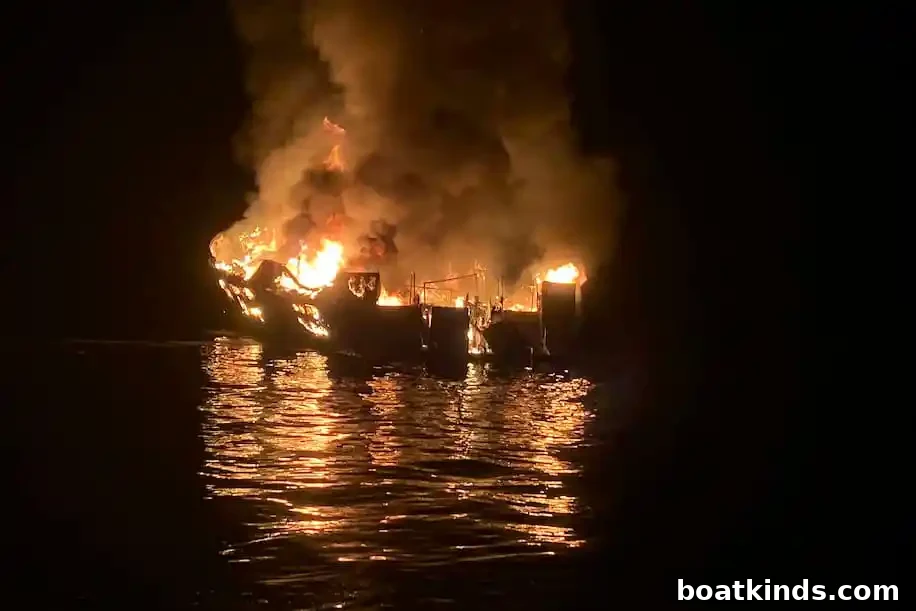
Investigation into 2019 Conception Dive Boat Fire Fails to Identify Definitive Cause
A 13-month investigation into the devastating fire aboard the 75-foot dive boat Conception, which occurred off the coast of California in 2019 and resulted in the deaths of 34 people, concluded that investigators could not definitively determine where or how the blaze began. Although the probe examined many leads and potential ignition sources, the intensity of the fire left the vessel too badly damaged to locate a precise point of origin.
Authorities investigating the tragedy considered multiple possible causes. Among the items suspected of sparking the nighttime blaze were small personal electronic devices such as cell phone chargers, which were commonly in use and often left charging in the area above the sleeping berths. Because the sleeping quarters were located below a deck where the fire likely started, passengers were particularly vulnerable while asleep. Ultimately, investigators could not isolate a single confirmed source due to the extent of the destruction.
The fire was discovered by the captain and other crewmembers, who immediately attempted to respond. Unfortunately, the routes from the deck to the compartment where passengers were sleeping were soon blocked by flame and smoke, preventing rescue efforts and contributing to the high death toll. Of the 34 people who died, 33 were passengers and one was a crew member who was in proximity to the sleeping area.
Investigators found that certain safety practices and regulatory requirements were not consistently followed on the vessel. In particular, the absence of a documented nighttime roving patrol—a safety procedure designed to detect and address fires or hazards during sleeping hours—was cited as a potentially critical omission. The Conception did have smoke detectors installed within the passenger sleeping compartment, but detectors were not installed in the common areas above those berths where the fire likely originated, reducing the chance of early detection of a fire that began outside the sleeping space.
The vessel’s operator, Truth Aquatics, had maintained a generally strong safety record prior to the accident, which made the scale of the incident all the more shocking. Investigators commented that complacency and a limited imagination about how a disaster might occur—both among the boat’s crew and within oversight bodies—played a role in the loss of life. Those observations highlight the importance of continuous vigilance and review of safety procedures, even when an operator appears to have an otherwise good safety history.
Forensic fire investigation on maritime vessels presents special challenges, particularly when a fire consumes large portions of a vessel’s structure and systems. Intense heat, structural collapse, and the destruction of potential ignition sources can erase the physical evidence needed to pinpoint an origin and sequence of events. In this case, the severity of the conflagration prevented investigators from producing a conclusive determination identifying the first ignition point or a single initiating event.
Although a definitive cause was not established, the findings from the investigation underline several practical safety considerations for passenger vessels and those who operate or travel on them. These include maintaining robust fire detection systems throughout a vessel—including common areas and passageways—conducting regular nighttime patrols when passengers are sleeping, limiting the charging of personal electronic devices in sleeping compartments, ensuring clear and accessible escape routes, and reinforcing crew training for rapid emergency response. Regular, critical assessment of existing safety practices can help reduce the likelihood that small oversights or routine habits will lead to catastrophe.
The Conception tragedy remains a stark reminder of how quickly a fire can spread on a boat and how vulnerable sleeping passengers can be if early detection and unobstructed evacuation paths are lacking. While the investigation could not name a single cause, its conclusions call for renewed attention to preventative measures, vigilance, and the enforcement of safety protocols so that similar incidents can be prevented in the future.