Snow Goose Refit: New Windlass, Mantus Anchor, and Cabin Restoration
The original Vetus windlass on Snow Goose, Onne van der Wal’s 1986 Grand Banks 32, had seen better days. Although the boat still carried a 35-pound CQR anchor, Onne chose to replace it with a Mantus anchor, a brand he’d used and trusted on a previous boat. He also selected a new Lofrans windlass, an Italian unit imported by Imtra, to improve anchoring reliability.
Removing the Old Windlass and Installing a Lofrans Unit
Removing the old Vetus windlass proved easier than expected. The windlass was mounted on a stand with access ports on both sides, which made the bolt removal straightforward. “I was lucky that all the old bolts came off easily,” Onne says.
To fit the new Lofrans windlass, Onne drilled fresh bolt holes in the stand and used a hole saw to enlarge openings so the anchor chain could pass cleanly into the chain locker. He drilled two chain access holes: one through the top of the windlass stand and another through the deck into the locker.
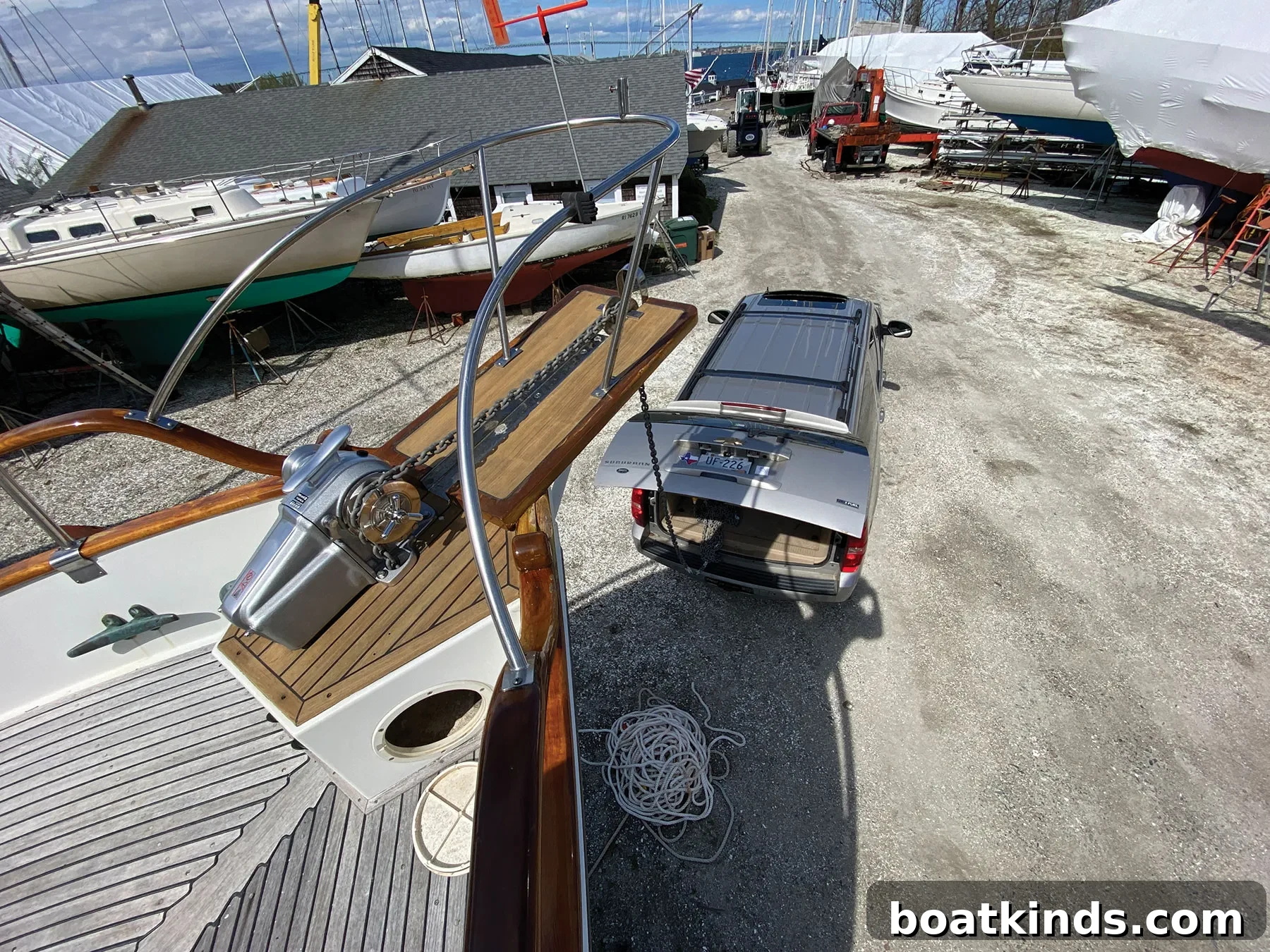
Before completing the windlass installation, Onne sanded the teak on the stand and applied a coat of Semco natural teak sealer for protection and a clean finish.
Wiring and Controls
The boat’s old wiring and solenoid were worn, so Onne removed them and installed new components following the Lofrans wiring diagrams. To avoid mistakes, he made sketches, labeled a replacement solenoid with blue tape, and marked each terminal location in his workshop. He prepared new wires by crimping terminals and heat-shrinking them, and for the larger cables he also soldered connections for added security.
The new solenoid and wiring were installed under the deck in the bow. Onne drilled holes at the base of the windlass stand to mount the foot switches and connected them to the system. After verifying the windlass operation, he turned his attention to the new anchor and rode.
Anchor, Chain, and Rode Preparation
Onne prepped a 5/16-inch, 100-foot chain by spray-painting marks every 20 feet to aid in depth awareness when anchoring. He attached the 100-foot rode to one end and the new Mantus anchor to the other. Imtra had provided a pre-spliced 5/8-inch rode, which simplified the process.
Between the anchor and chain, Onne fitted a Mantus stainless swivel to prevent kinks, a fitting he’d used successfully on his previous boat, Snoek. He secured the swivel with stainless wire and covered the wire ends with tape to protect hands from sharp ends. The rode, chain, and anchor were transported from his driveway to the boatyard in a Chevy Suburban and then hauled aboard using the windlass.
Refinishing the Master Cabin
The paint in Snow Goose’s master cabin was cracking and peeling, so Onne sanded the walls and bulkheads with a Festool orbital sander using 180-grit paper while the sander was connected to a vacuum to cut down on dust. He followed up by vacuuming the corners with a small battery vacuum and cleaning surfaces with TotalBoat Dewaxer & Surface Prep Solvent Wash to ensure proper adhesion.
He researched paint options thoroughly, testing products in his workshop and consulting the staff at a longtime local building supply center. They recommended the Whizz roller system and a premium sponge roller for an ultrasmooth finish. After testing a section without primer and finding it unsatisfactory, Onne applied Zinsser B-I-N primer, which produced the desired result.
For the topcoat he used Interlux Brightside polyurethane paint, a product he’d used on other boats. He was pleased with the finish and drying time, saying the result was superb and produced the smooth look he wanted for the cabin.
Teak Decks, Electronics, and the Varnished Sole
Along with smaller updates around the boat, three major projects stood out: installing Raymarine electronics, sanding the teak decks, and restoring the sole. The sole refinishing was the most time-consuming.
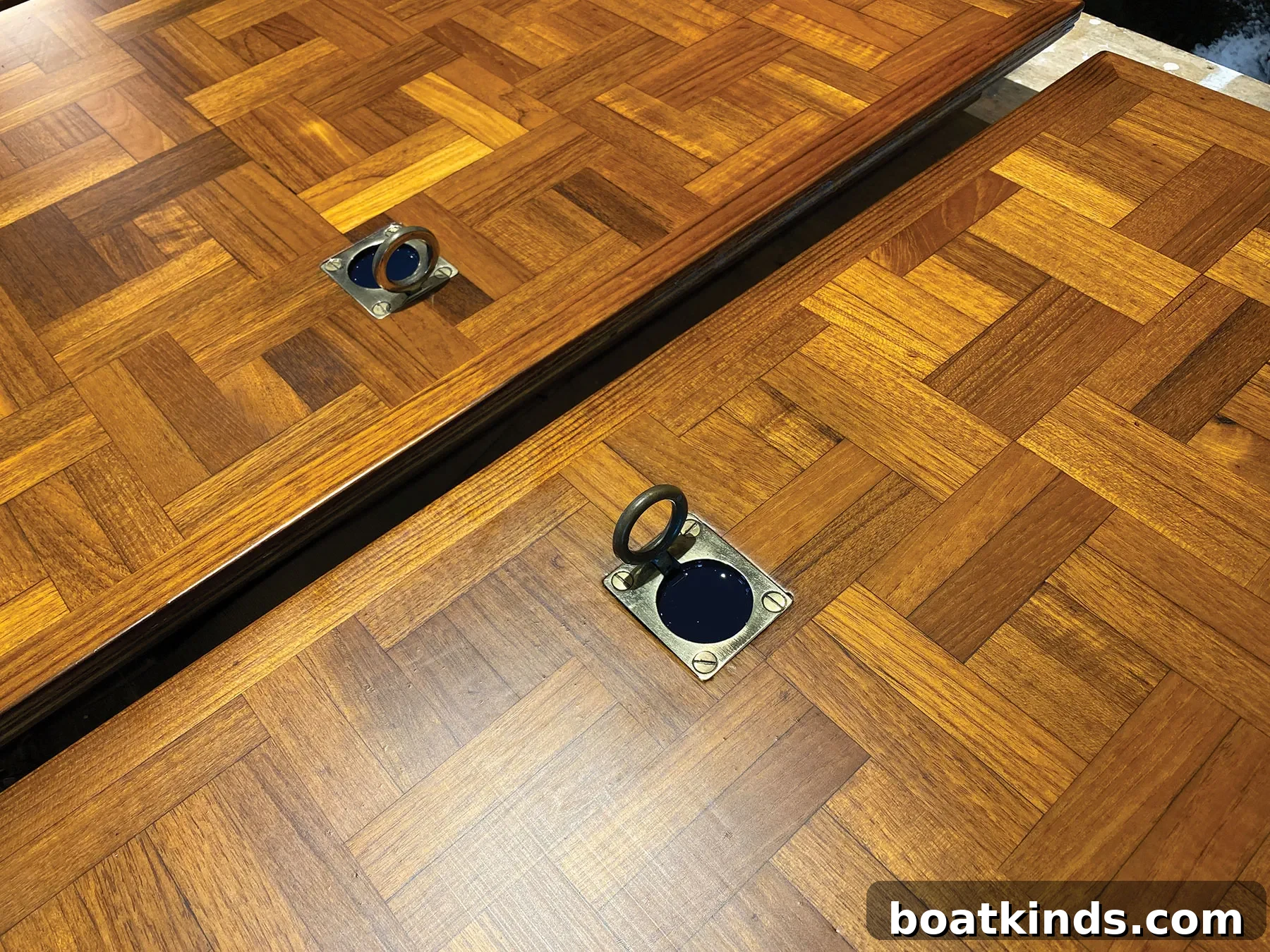
Onne stripped old varnish using TotalBoat Strip, a gel-like product he applied about an eighth of an inch thick with a foam brush and left overnight. The next day he removed most of the degraded varnish with a scraper and a kitchen spatula, then sanded remaining residue away. After cleaning with TotalBoat Dewaxer and Surface Prep, he applied two coats of TotalBoat Varnish Sealer with light sanding between coats, followed by two coats of TotalBoat Lust Gloss and one coat of TotalBoat Lust Matte. In total he applied five coats to ensure a durable, show-quality finish.
“When you go through the trouble of stripping something down, why skimp,” Onne says. After the work was complete, the sole’s appearance made the effort worthwhile: “Now you walk in, and it goes, ‘Baboom.’ It jumps right out at you.”
Final Thoughts
The refit involved a mix of mechanical upgrades, electrical work, and cosmetic restoration. Removing the old windlass, installing the Lofrans unit, fitting the Mantus anchor and swivel, refinishing the cabin and sole, and addressing electronics and deck work brought Snow Goose back to a much-improved condition. For Onne, the transformation was both satisfying and visually dramatic: the combination of reliable hardware and careful finishing made the project worth the time and effort.
This article was originally published in the August 2021 issue.