Snow Goose: Grand Banks 32 Refit and Launch in Jamestown, Rhode Island
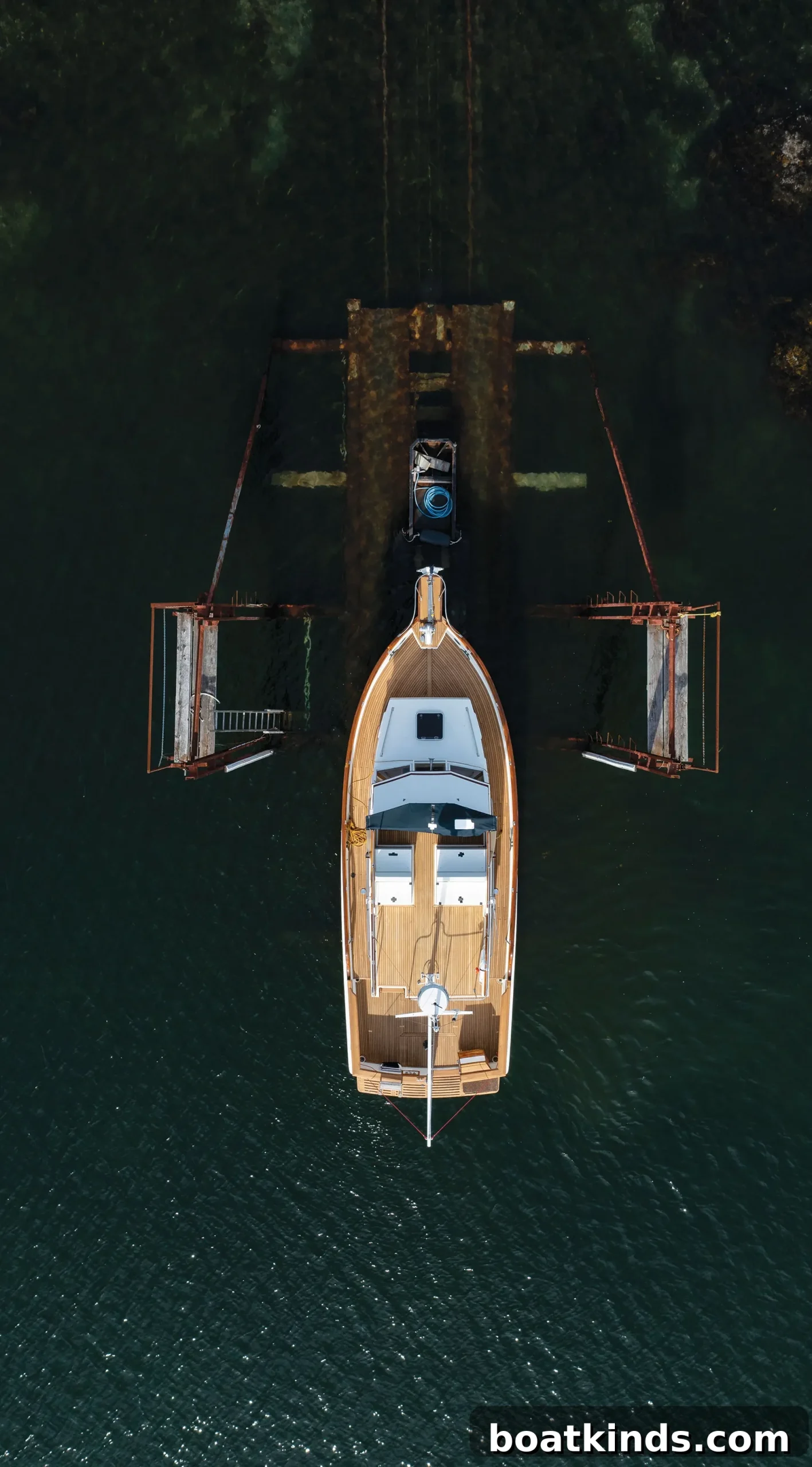
After a six-month refit, Onne and Tenley van der Wal’s 1986 Grand Banks 32, Snow Goose, returned to the water on June 2 at Clark Boat Yard & Marine Works in Jamestown, Rhode Island. The launch marked the culmination of months of careful work and planning on the classic trawler-style cruiser.
The Launch
Onne describes the moment the boat slid off the railway as “awesome.” Bringing a refit boat to the water is equal parts relief and anticipation: you want to confirm that the systems you spent months repairing and improving perform reliably when the hull first meets saltwater. Before launch, Onne ran the naturally aspirated six-cylinder 135-hp Ford Lehman diesel on the hard for brief tests, but this was the engine’s first extended run in the water since he bought the boat in late 2020. He checked the seacock, confirmed cooling water flow and stood ready to verify that piping, valves and thru-hulls were watertight.
Refit and Upgrades
The refit was ambitious. Over the winter Onne sanded and refinished all the teak decks and the interior sole, repainted forward cabin walls and completed a long list of systems and cosmetic projects. Working roughly four days a week for six months and doing about 98 percent of the work himself, he estimates significant savings on labor. One of the major upgrades was installing a substantial electronics suite — a project where he relied on guidance from Adam Hobgood, lead service technician at Cay Electronics.
Thru-hull work received particular attention. Onne replaced and sealed multiple fittings, added sounder and transducer thru-hulls, plugged an obsolete one-inch hole with epoxy, and enlarged an existing fitting to accept a new transducer. For Raymarine sidescan sonar transducers he created two new holes, one on each side of the boat, and took care to seal everything properly to avoid leaks.
Engine, Performance and Systems
The original Ford Lehman diesel has about 3,000 hours on it. Onne hasn’t pushed the rpm hard yet, preferring to consult mechanic Phil Allen at Corliss Diesel before increasing speed. For now he’s pleased: the boat moves comfortably at about 8 knots and handles well in wind and sea. The full skeg and protected propeller give confidence for light-grounding situations and make Snow Goose a capable platform for gunkholing in shallow areas.
Other systems work included installing a new head with updated piping and a fresh seacock and valve, plus routine plumbing and wiring improvements. Onne enjoys boatwork and appreciates the high-quality materials and cabinetry typical of a Grand Banks; he cites that workmanship as one of the rewarding aspects of the refit process.
Life Aboard and First Cruises
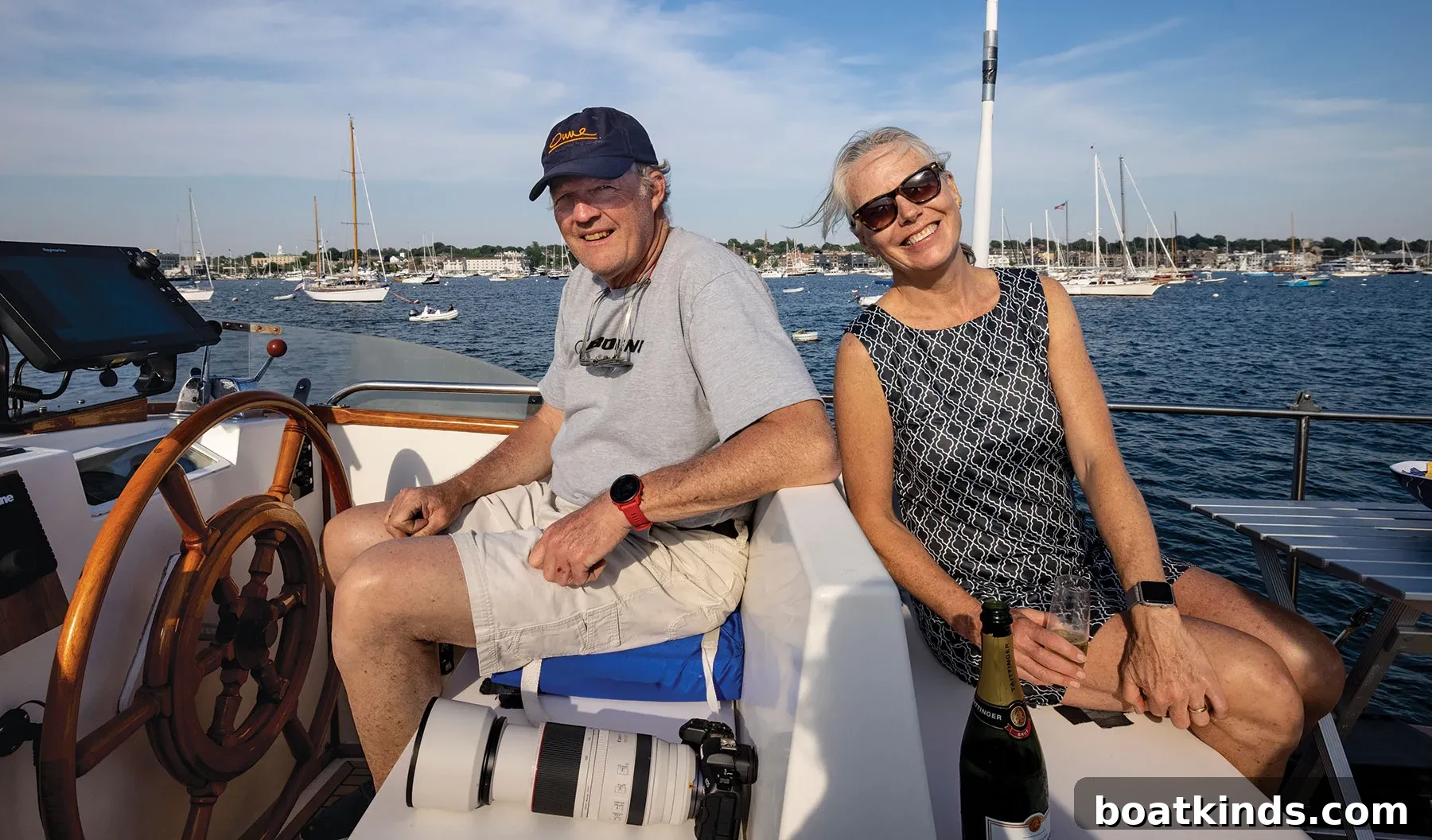
Once in the water, Onne and Tenley wasted no time exploring Narragansett Bay. They joined a memorial parade with Sail Newport, watched their son race in a New York Yacht Club regatta, and took a short cruise to Gooseberry Beach on Newport’s Ocean Drive. Onne particularly likes the visibility from the Grand Banks flybridge and having the chartplotter directly ahead, which makes navigating narrow, shallow cuts much easier.
The boat’s 3.5-foot draft is a significant advantage over their previous sailboat, Snoek, which drew about 6 feet. The shallower draft opens up more anchorages and creeks without always waiting for high tide. The flybridge’s elevation is also valuable for photography; Onne has used a fast RIB for shoots in the past but appreciates the extra vantage point for stills and video work.
Switching from Sail to Power
Onne and Tenley previously owned the 1972 Pearson 36 Snoek, their first leisure boat together. While they enjoyed sailing, their business and family life required greater speed and flexibility. Snow Goose isn’t fast—about 8–9 knots cruising—but it holds a steady course in varied conditions and cuts transit times dramatically compared with tacking sails at 4 knots. That reliability better suits the couple’s schedule and allows them to be more productive ashore at their Newport photo gallery while still getting valuable time on the water.
Tenley appreciates the layout and livability of the Grand Banks design: multiple levels, a centrally located galley and comfortable social spaces make the boat easier to live aboard for short cruises. They enjoy cooking and entertaining, and Snow Goose provides a more sociable platform than the smaller cockpit of their former sailboat.
Plans and Future Projects
There’s still work to do. Prior to launch they postponed refinishing varnished railings and decided to leave the teak au naturel for now, sealing it with Semco natural teak sealer. Onne plans additional upgrades after a family trip to South Africa: a new stern graphic, an electronics demo, canvas highlights from Tenley and curated cruising videos documenting their outings.
They plan short cruises to nearby destinations like Cuttyhunk, Quicks Hole, the Elizabeth Islands and Nantucket. Onne intends to use their 10-foot North Atlantic inflatable with a Tohatsu 9.9-hp four-stroke outboard to go ashore, shoot early-morning photos and fish at sunrise. The boat will serve as a floating base for photography, storytelling and small expedition cruising along the Northeast and beyond.
For now Onne and Tenley are enjoying the rewards of the refit and the new freedoms that come with a dependable, comfortable Grand Banks 32. Whether poking into shallow coves, running day trips to nearby islands, or using the boat as a mobile studio, Snow Goose has become both a practical platform and a beloved home afloat.
This article was originally published in the September 2021 issue.