
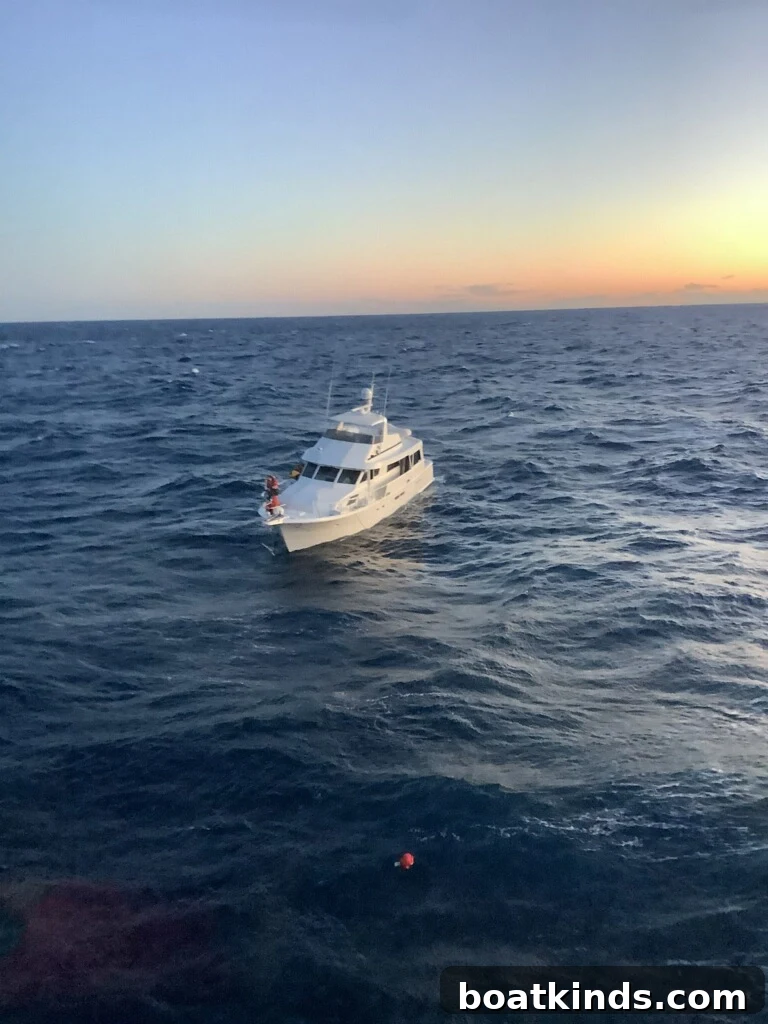
Coast Guard Aircrew Rescues Crew of Motor Vessel “Just Lookin” Off South Carolina Coast
Early Monday morning, Coast Guard Sector Charleston in South Carolina received an urgent distress call at 4:22 a.m. from the motor vessel Just Lookin. The vessel’s crew reported that their boat was taking on water and that radio communications had failed. In response, the U.S. Coast Guard dispatched an MH-65 Dolphin helicopter from Air Station Savannah to locate and assist the distressed vessel.
Rapid Response and On-Scene Assistance
The helicopter crew located the Just Lookin approximately 46 miles east of Winyah Bay. To stabilize the situation and keep the vessel afloat, the aircrew lowered a rescue swimmer along with an emergency radio and a dewatering pump. Once the immediate danger was mitigated, the Coast Guard hoisted the vessel’s crew members into the helicopter and transported them to safety.
Air Station Savannah aircraft commander Lt. Sam Ingham noted that the boat’s crew had essential safety gear on board—working flares, an Emergency Position Indicating Radio Beacon (EPIRB), life jackets, and damage control equipment. That preparedness, Lt. Ingham said, contributed directly to a faster, safer rescue.
No Injuries Reported
Thanks to the coordinated response and the crew’s safety equipment, there were no reported injuries. The combination of quick notification to the Coast Guard, an effective air rescue deployment, and the crew’s readiness helped avoid a worse outcome and ensured everyone was brought ashore safely.
Why This Rescue Matters: Safety and Preparedness at Sea
This incident highlights several critical lessons for recreational and professional mariners alike. Mechanical failures and hull breaches can happen suddenly; effective safety gear and training are often the difference between a manageable emergency and a tragedy. An EPIRB provides a reliable, automated distress signal to rescue authorities. Flares and a working radio increase visibility and improve chances of timely assistance. Life jackets protect individuals if abandoning ship becomes necessary, and damage control tools—such as portable dewatering pumps, patches, and bilge equipment—help slow or stop flooding long enough for help to arrive.
Rescue operations at sea rely not only on the skill and equipment of responding units but also on the actions taken by the vessel’s crew before and during an emergency. Promptly reporting the situation, having clearly communicated whereabouts, and maintaining basic emergency systems can shorten response time and reduce risk to both the people in distress and the rescuers.
How the Coast Guard Responded
The MH-65 Dolphin helicopter, operated by Air Station Savannah, is a versatile search-and-rescue aircraft designed for rapid deployment in coastal operations. In this case, the aircrew’s ability to reach the scene, deploy a rescue swimmer with specialized equipment, and perform a hoist extraction were decisive factors in the safe outcome. The coordinated effort between Coast Guard Sector Charleston and Air Station Savannah underscores the regional search-and-rescue framework that protects mariners along the U.S. coastline.
Takeaways for Boaters
- Keep communication devices well maintained and carry backup signaling methods.
- Carry an EPIRB and ensure it is registered and batteries are current.
- Have personal flotation devices accessible for every person on board.
- Maintain basic damage control supplies, such as portable pumps and patching materials.
- Report emergencies promptly and provide as much accurate location information as possible.
A video accompanied the original report of this rescue. The visual footage documented the aircrew’s actions and the hoist operation, illustrating how preparedness and a swift Coast Guard response brought the crew to safety without injuries.
This successful rescue serves as a reminder that being prepared, carrying essential safety equipment, and notifying authorities as soon as trouble begins can save lives on the water.