
Inside Doyle Sails Newport: Reviving Traditional Sailmaking in a Modern Loft
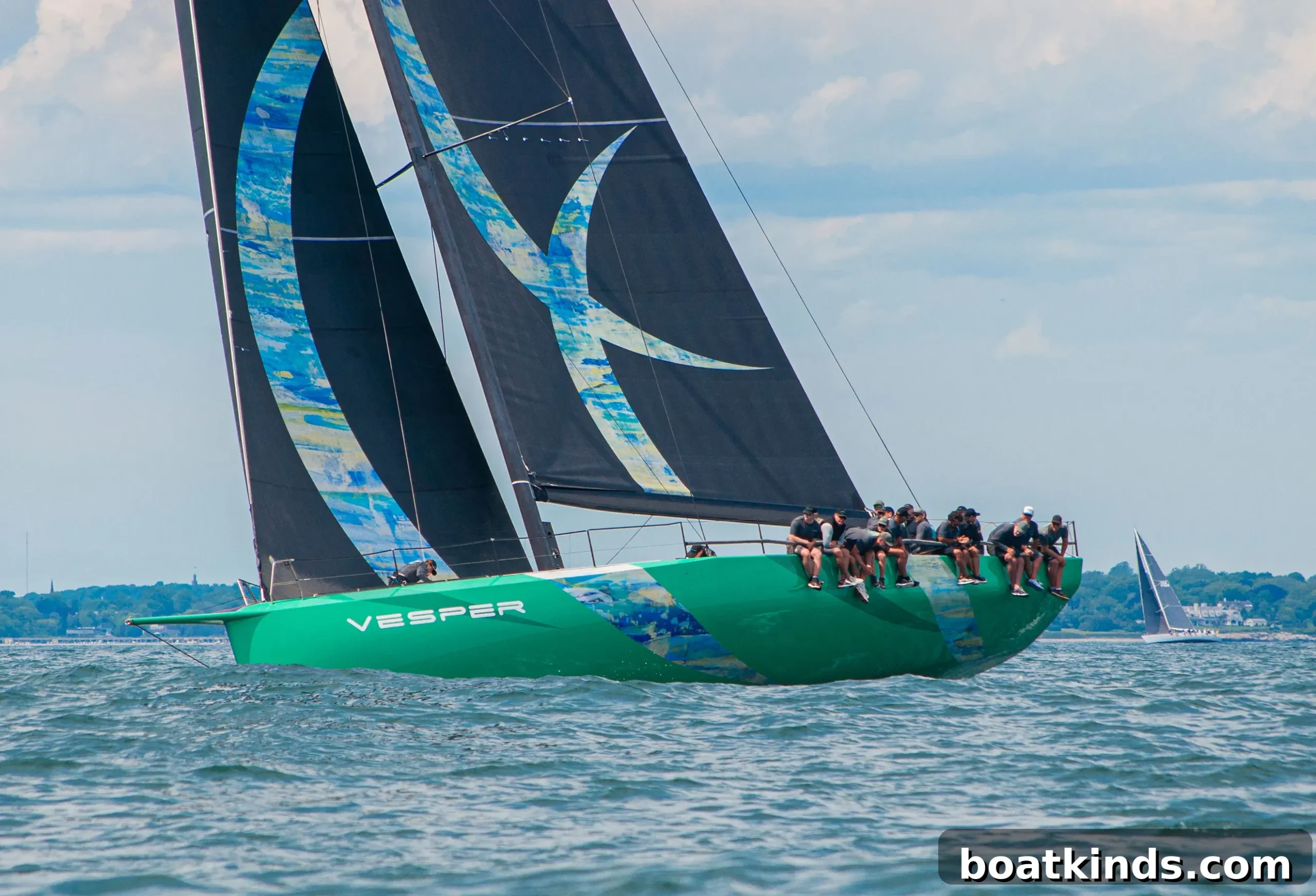
Walk along the harbor of any historic East Coast port—from Baltimore, Maryland, to Rockland, Maine—and it’s not hard to imagine a time when sail dominated the seas. Two centuries ago, harbors teemed with vessels at the docks and in the inner harbor, while thousands of workers labored in sail lofts, repairing and crafting the canvases that powered global commerce and coastal life. While that era has passed, skilled sailmakers still keep the craft alive today, blending traditional techniques with modern technology.
One notable example is Doyle Sails Newport, whose renovated sail loft in Middletown, Rhode Island, has become a hub for high-end sail manufacture and repair. In 2018 the loft joined a global revitalization of the Doyle brand, combining a renewed physical workspace with a commitment to craftsmanship, service, and contemporary sail design. Owners Dave and Rob MacMillan invested in the facility with the explicit goal of preserving and expanding skilled jobs in Newport. “I was glad to put in the capital to renovate the loft because we need to keep and add skilled jobs in Newport,” Dave says. “I knew with Tony and the team we would succeed in having boat owners want our sails and services.”
At the center of operations is Tony Rey, a sailmaker whose resume spans one-design fleets, America’s Cup campaigns, round-the-world offshore racing and superyacht captaining. Rey remains active on the water and continues to campaign sailboats across a broad spectrum of events—from J/70 Worlds-class regattas to prestigious superyacht competitions. His hands-on experience informs the loft’s sail design and customer service, ensuring production aligns with real-world performance needs.
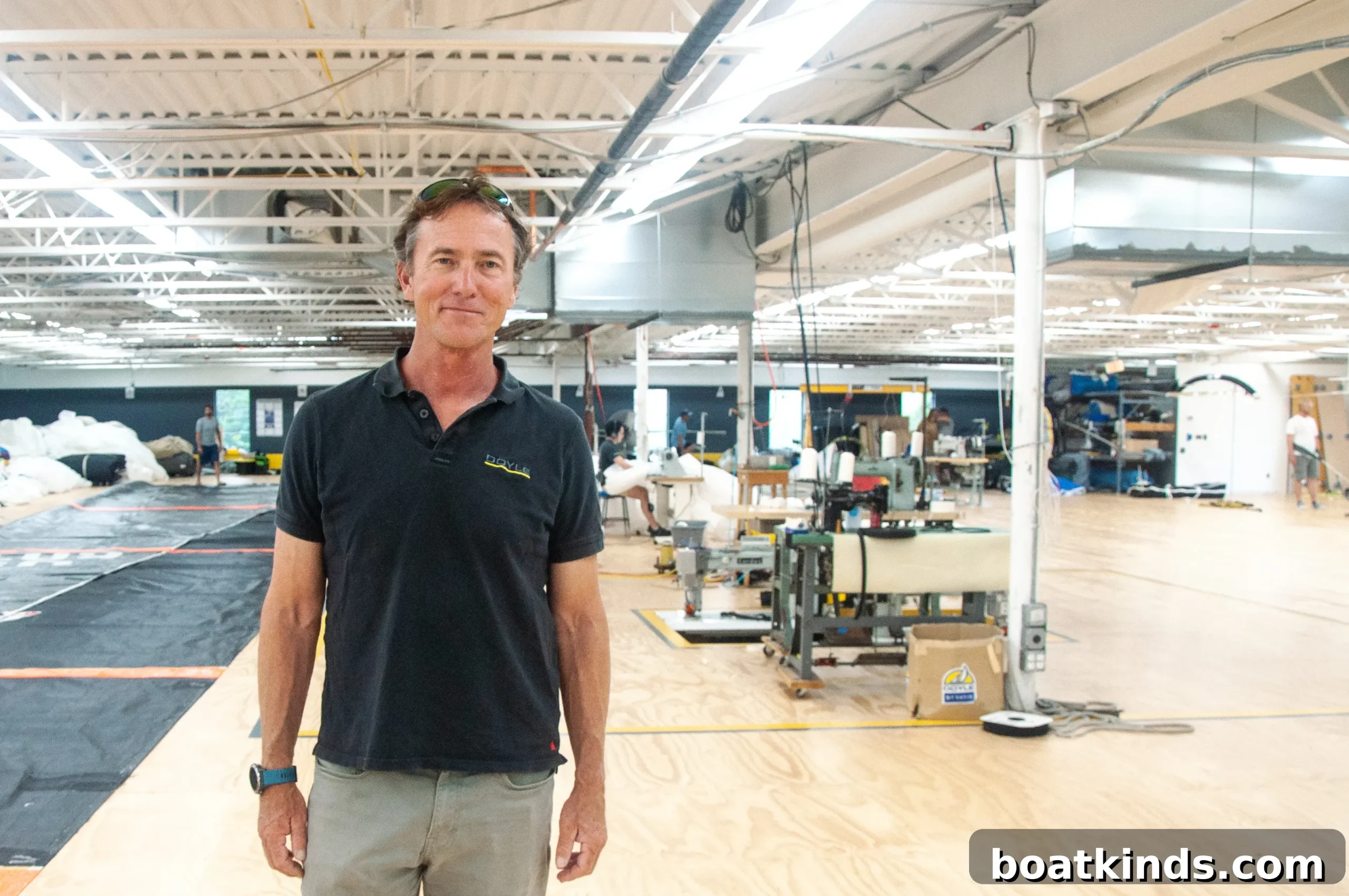
Rey describes the goal clearly: “We wanted to create the most modern facility in New England, where we could make and service sails for everything from family cruising boats to superyachts. We are now able to build a sail with a 55-meter luff length right here.” That capability reflects both upgraded physical space and integrated production workflows that combine computer-cut membranes with expert hand finishing.
The loft follows a hybrid production model. High-precision membranes—manufactured by Doyle’s global network, often with materials ranging from conventional polyester to ultra-high-modulus carbon—are cut by computer in facilities such as those in New Zealand, then shipped to Newport for final assembly. At the loft the team builds reinforced corners at the head, tack and clew; sews luff, leech and foot tapes; installs reef points and cunningham grommets; and finishes all structural and load-bearing elements to precise tolerances. For downwind sails, where membranes are not always used, the loft engineers and constructs those sails from the ground up. Recent large projects have included superyacht spinnakers overseen by downwind manager Irina Beloborodova, while Damon Burton focuses on upwind sail expertise.
Visitors to the loft often expect an elegant customer lounge, but Rey and his team found something else is more valuable: visibility. Prospective clients want to see an active sail loft where cutters, sewers and technicians are engaged in the process. The workspace is deliberately open and busy: roughly 15 employees work across multiple stations—some standing in recessed pits to access a sail’s underside, others at benches following complex computer-generated panel diagrams. The scene is both a demonstration of craft and a reassurance of quality.
Doyle Sails Newport serves a broad customer base, from owners of 30-foot production cruisers to 100-foot custom superyachts and grand-prix racers. “Sailmaking is a very people-oriented business,” Rey says. “There is a tremendous amount of interaction with owners, during which we learn what they want to improve, how they plan on using the new sails, and their expectations for performance. After all, regardless of whether it’s a 30-foot production boat or a 100-foot custom superyacht, it all comes down to the sails. They determine how fast you go.”
On larger yachts the procurement process can involve multiple stakeholders—designers, captains and owners—so effective communication and project management are essential. Rey’s continued racing and time at sea give him a practical perspective that helps reconcile competing priorities and set realistic performance expectations.
Newport remains a premier summer sailing destination on the East Coast, drawing racers, cruisers and owners who rely on local shipyards and sail lofts. Doyle Sails Newport supports campaigns and cruising programs alike, working with serious campaigners and cruising families to deliver sails tailored for speed, durability and ease of handling.
Much traditional sailmaking work has migrated offshore over recent decades, and with that shift some specialized skills were at risk of being lost. The restored Doyle loft in Newport—and its sister lofts in Salem, Massachusetts; City Island, New York; and East Greenwich, Rhode Island—represents a modern revival of the craft: a place where historical know-how meets contemporary materials science and computer-driven precision. For anyone curious about authentic sailmaking in the 21st century, a visit to the Doyle loft provides a clear view of how the art and science of sails continue to evolve while honoring a long maritime heritage. —Jonathan Russo
This article was originally published in the September 2022 issue.