
Sperm Whale Washed Ashore in La Palma Yields Rare Ambergris “Floating Gold”
On a beach on La Palma in the Canary Islands, rescuers and scientists found a large sperm whale washed up and dead. Despite rough seas and strong tides that repeatedly rushed over the carcass, the postmortem was carried out by Antonio Fernández Rodríguez, who heads the Institute of Animal Health and Food Security at the University of Las Palmas. What Fernández uncovered inside the whale was unexpected and extraordinary.
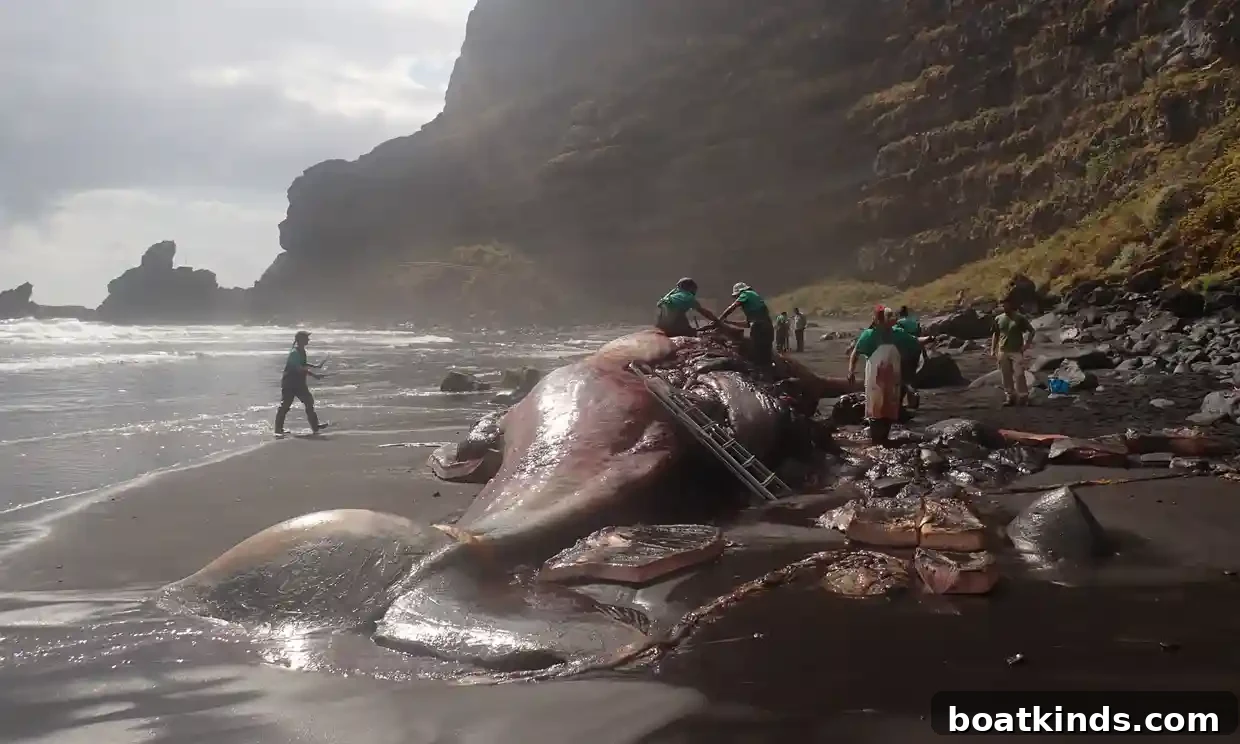
Fernández told reporters he initially suspected the whale had died from a digestive obstruction. During the internal examination he inspected the animal’s colon and found a large, unusually hard mass adherent to the intestinal wall. That mass was not an ordinary stone.
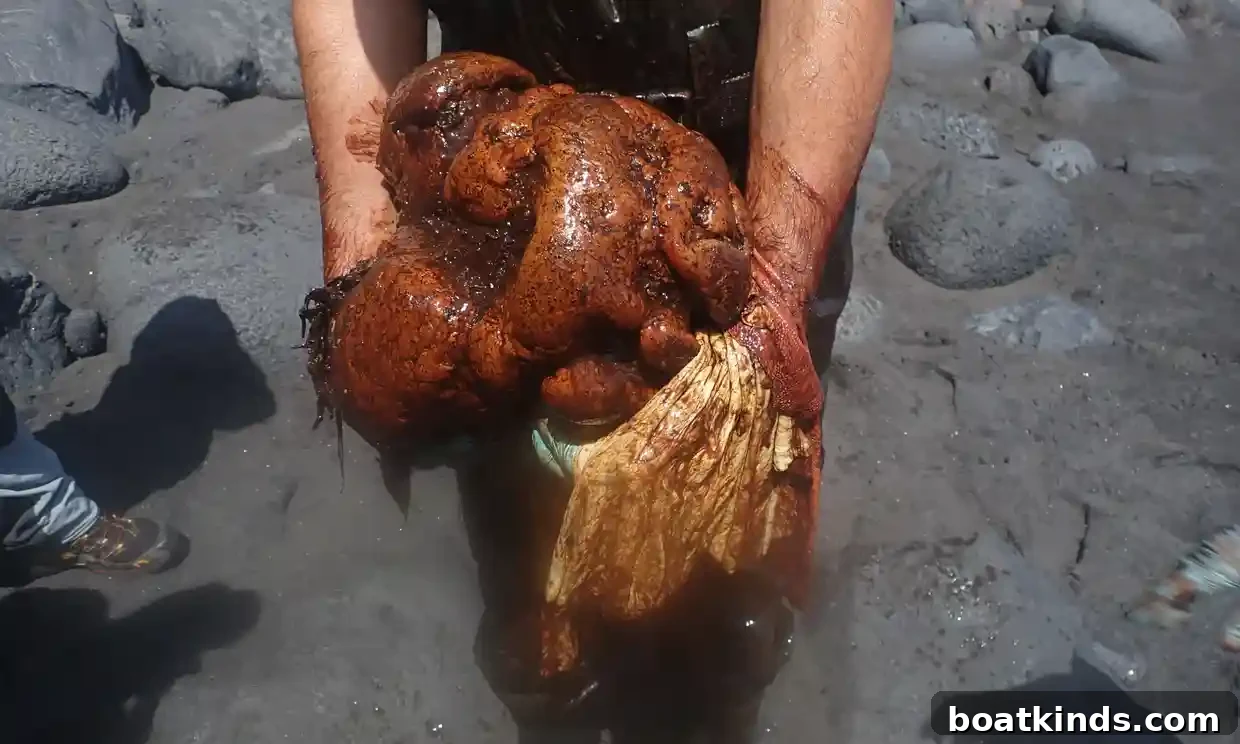
“What I took out was a stone about 50–60cm [almost 2 feet] in diameter weighing 9.5 kilogram [about 21 pounds],” Fernández said. Laboratory and visual assessment identified the material as ambergris — a rare, waxy substance produced by some sperm whales.
Ambergris, sometimes called “floating gold,” is highly prized by the fragrance industry because it contains chemicals that help stabilize and prolong the scent of perfumes. Natural ambergris forms in the digestive tract of certain sperm whales, apparently as a protective response when indigestible items such as squid beaks irritate or threaten to perforate the intestines. In some animals the substance is expelled into the ocean and can harden and drift for years before washing ashore; in other cases a large accumulation remains inside the whale and can block or damage the gut.
In this instance Fernández concluded that the ambergris triggered a severe infection. The university’s examination found that sepsis, arising from the intestinal damage associated with the ambergris mass, was the likely cause of death for the whale on La Palma.
The piece recovered from the carcass is unusually large and valuable. Estimates placed the ambergris at roughly 500,000 euros (over $550,000), reflecting its rarity and demand in perfumery. While the trade in ambergris is regulated or prohibited in some countries — including the United States, Australia and India — regulations vary internationally. The University of Las Palmas has said it will seek a legal buyer for the material.
University officials also stated their intention to use any proceeds to benefit people affected by the 2021 volcanic eruption on La Palma. “The law is different in every country,” Fernández said. “In our case, I hope the money will go to the island of La Palma, where the whale ran aground and died.”
Ambergris discoveries like this one attract public attention because of their rarity and high market value, but the find also highlights a harsh reality for marine life. When indigestible debris or sharp material accumulates in a whale’s gut, it can lead to infection, perforation or obstruction that threatens the animal’s survival. Marine biologists and veterinarians use postmortem findings to better understand such risks and to document causes of mortality among large cetaceans.
Fernández’s postmortem adds a documented case to scientific records connecting ambergris formation to fatal intestinal complications in sperm whales. The university’s decision to pursue a sale within legal constraints and to direct funds toward local disaster relief reflects an effort to balance scientific reporting, legal compliance and community benefit in the wake of this unusual recovery.
Local authorities and marine researchers continue to monitor the coastline and investigate any additional strandings. The La Palma case serves as a reminder of both the ecological pressures facing ocean life and the unexpected ways natural processes can intersect with human economies, law and conservation priorities.