
Winter often gives boaters time to reflect on the season just ended. Boats sit on trailers, in dry dock or snug under covers while owners replay the highs and the mistakes. For me, last summer’s experiences left more than a few red flags about safety, seamanship and the risks that come with modern, high-speed boats and crowded waterways.
One clear example came from a longtime boating friend who decided to head south for the winter aboard his new 50-plus-foot convertible. He’d spent decades on a well-loved 40-footer and felt confident making the roughly 1,000-mile trip to Pompano Beach with his wife as mate. The new boat gave him a 35-knot cruise, much faster than his previous boat, and he planned to cover the distance in under a week. On the second afternoon, while running 33 knots in Bogue Sound south of Morehead City, North Carolina, he drifted out of the marked channel and struck a sandbar. A rock in the sand destroyed the starboard propeller and bent the prop shaft. The result was a four-day delay, the shipping of a replacement prop and a costly haul-out to verify there was no further damage.
That incident underscores a basic truth: speed changes everything. On inland routes and narrow channels like the ICW, higher speed reduces your reaction window. In my friend’s case, his reaction time at cruise speed was simply too short to correct course before impact. Had he been on his older, slower boat, the outcome likely would have been different.
My own experience driving a 32-foot convertible at 18 knots taught me a similar lesson. Approaching Napeague Bay from Three Mile Harbor, I turned to stay in the channel and found the boat held straight on. I managed to stop, investigate and discovered a disconnected tie bar. Repairs took about 30 minutes, but had I been traveling faster the situation could have escalated into a serious accident. These kinds of mechanical or steering failures are less forgiving at speed.
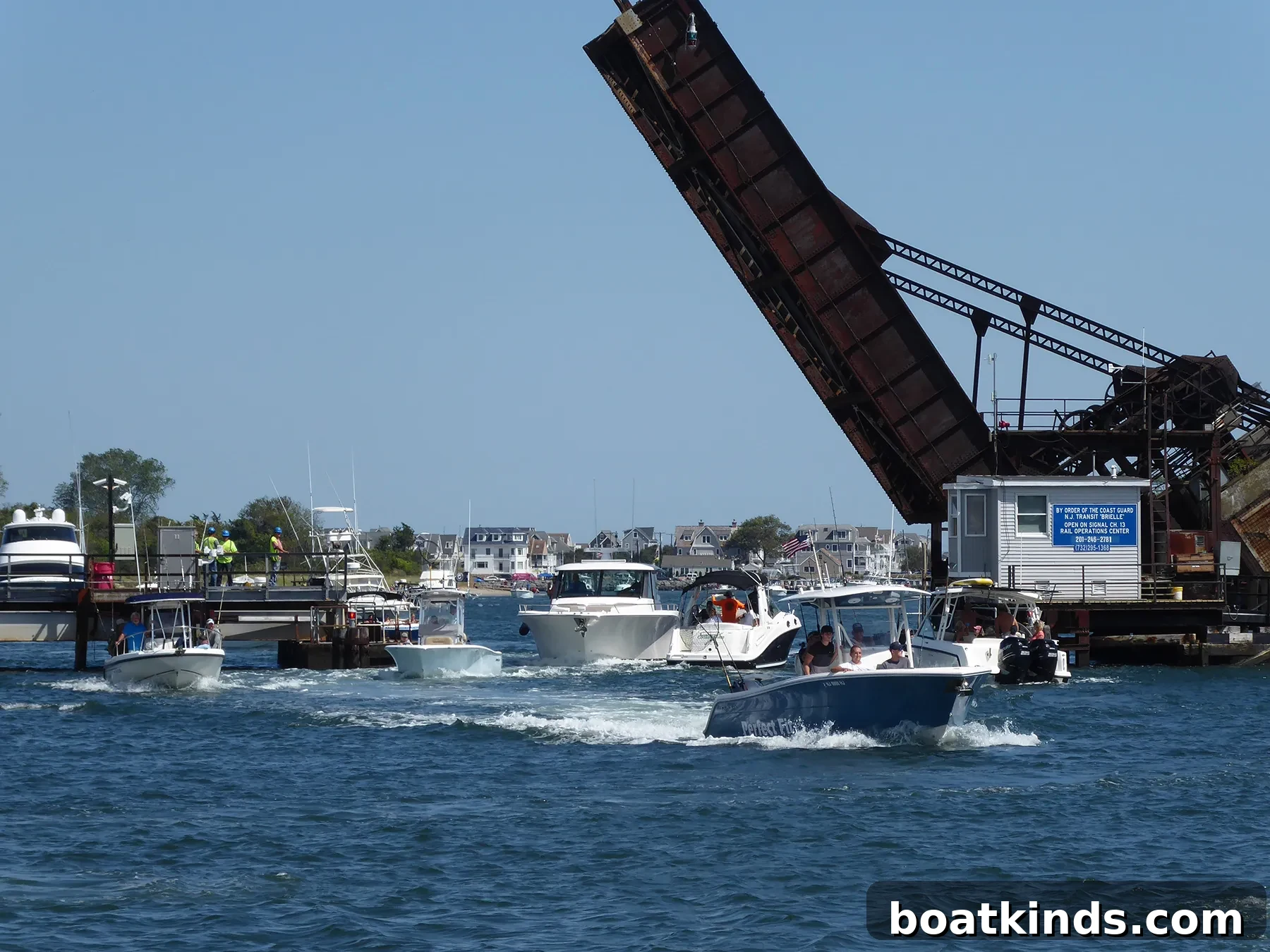
Modern sportboats with three, four or five outboards create additional concerns. Do every operator’s skills match the available power? Are kill-switch lanyards attached? Too often I see fast boats tearing through my home waters near the Manasquan Inlet as if they’re on a highway, passing slower craft without signaling and choosing whatever side is most convenient. That behavior produces dangerous wakes, surprises other boaters and raises stress for everyone on the water. In crowded regions like Florida, these risks are amplified. My routine advice to other mariners is simple: look astern frequently, stay aware of who’s approaching and be prepared to be waked—sooner or later it will happen.
Passenger loading and poor judgment about where a boat belongs are another persistent hazard. Pontoon boats are immensely popular for family outings, but they are not designed for rough, open water. Their flat-pontoon hull form lacks the seakeeping abilities of deep-V, modified-V or catamaran hulls, so pontoon operators who push into large wakes, steep head seas or following seas are risking life and limb. The midship helm on many pontoons also means people can gather forward of the driver, obstructing sightlines and making safe operation harder. Bowrider-style boats can suffer similar problems when passengers crowd the bow.
Loading the bow changes a boat’s buoyancy and longitudinal center of gravity. In calm water it may seem harmless, but in a head sea a bow-heavy boat can bury with each wave, allowing water to come aboard and creating panic. When passengers suddenly move aft to escape waves, the sudden shift in weight can create a new set of buoyancy and handling problems.
Perhaps the most upsetting behavior I see is allowing children to ride forward with legs hanging over the side while the boat is underway. Even with a bow rail, a playful gesture from a passing boater or a sudden wave can cause a child to lose their grip and go overboard. Too often those young passengers are not wearing personal flotation devices. Years ago, active Coast Guard and state marine patrols would enforce basic safety rules; today limited enforcement often leaves those decisions to boat operators.
Regulations vary by state, so every boater should know the PFD rules where they operate. In New Jersey children 13 and under must wear an approved PFD while the boat is underway; in Florida children 6 and under must wear one; in Maine the requirement is for children 10 and under. At minimum, make sure children who meet your state’s requirement have correctly fitted, approved life jackets.
Winter is a great time to sharpen skills. Enrolling in a boating safety course—through a local Coast Guard Auxiliary chapter, BoatUS, BoatersUniversity or other reputable providers—helps refresh basic seamanship, rules of the road and onboard safety procedures. Even experienced boaters can learn something new, and a winter class provides a head start for next season. Resolve now to improve safety where you can: reduce excessive speed in narrow or crowded waterways, avoid overloading and keep children in proper PFDs. Being proactive helps protect your passengers and makes boating more enjoyable for everyone.
This article was originally published in the December 2023 issue.