18-Year-Old British Sailor Attempts First Circumnavigation of Britain in an Electric Boat
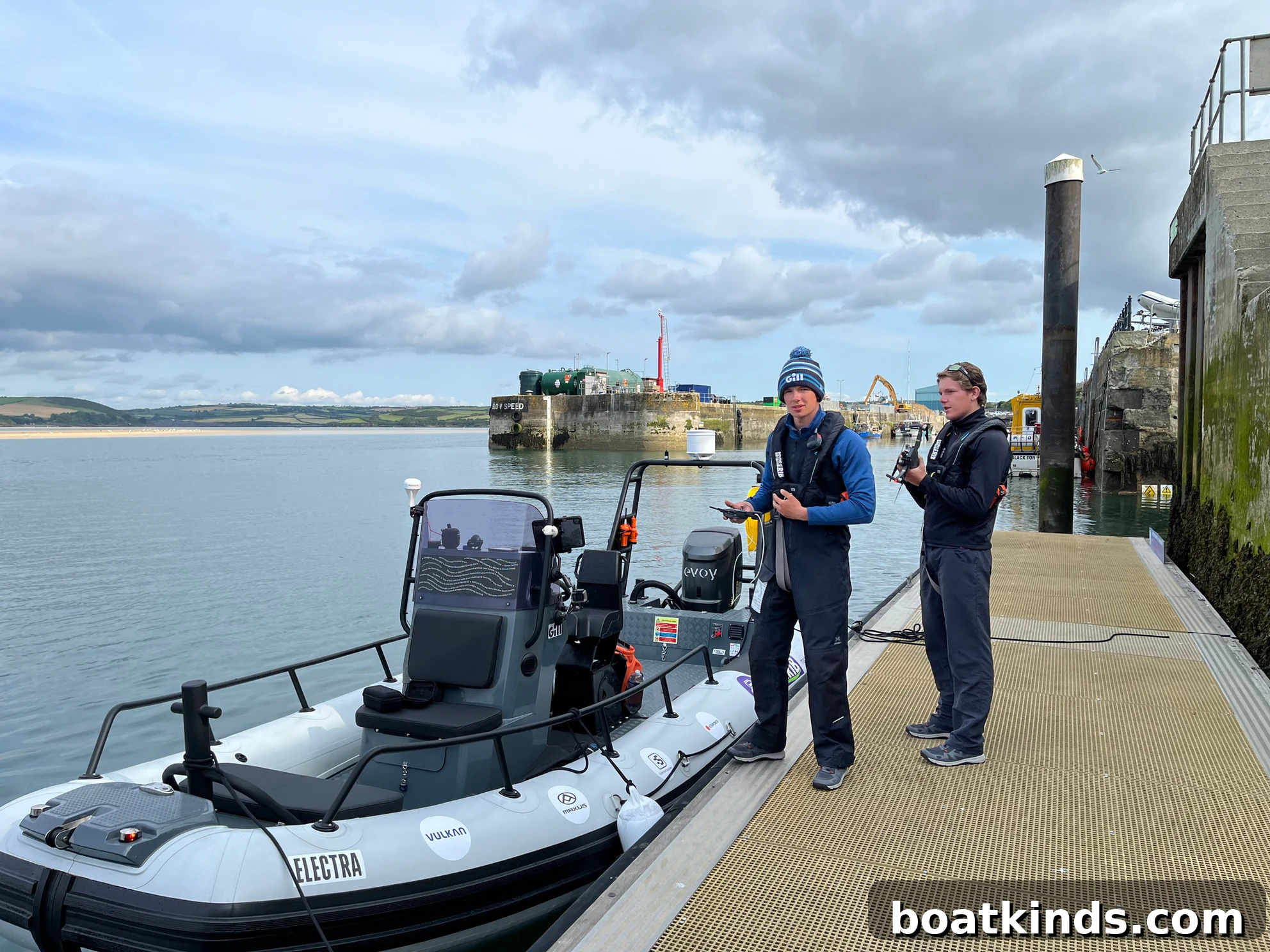
At 18 years old, British sailor Harry Besley has embarked on an ambitious voyage to become the first person to circumnavigate Great Britain in a fully electric boat. He set off from Lyme Regis in Dorset on July 13, piloting a 21-foot aluminum-hulled RIB built by Galaxy in Ukraine. The vessel is propelled by a 90 kW (120 hp) Evoy electric outboard motor and draws energy from twin 63 kWh Kreisel batteries installed beneath a slightly raised deck.
Route and Progress
Besley’s route takes him clockwise around the island, including passage through the Caledonian Canal to cross Scotland. By August 13 he had navigated the stretch between the Isle of Wight and the mainland and was reported to be only a day or two away from completing the circuit, meaning the voyage had taken a little over a month to that point. His mother and project manager, Jaqui Besley, had earlier estimated the journey could last anywhere from four to eight weeks.
Purpose and Wider Significance
The expedition aims to showcase the marine sector’s shift toward zero-emissions propulsion and to demonstrate the practical capabilities of electric propulsion for coastal and long-distance passages. Rather than using a fossil-fueled support boat, Besley is accompanied on land by a support team traveling in electric vehicles, underlining the challenge’s commitment to emissions-free logistics wherever possible.
Boat Performance and Energy Management
Although the RIB is capable of reaching speeds up to 35 knots, Besley has adopted a practical energy-management strategy for the circumnavigation. When planing, he has typically run at around 17 knots, a compromise that offers progress without excessive energy consumption. For long-distance transits where range is the priority, he has cruised at displacement speeds of roughly 5 knots, a much more efficient mode that extends the effective reach of the battery system.
Battery recharging has been handled pragmatically along the route. Overnight trickle charging from standard shore-power outlets has been used where available, and where marinas provide DC fast-charging facilities the batteries have been replenished more quickly. This combination of charging approaches has allowed Besley to maintain forward momentum while relying exclusively on electric power.
Logistics and Support
Aside from the boat itself and the shore-based support team in electric vehicles, Besley has relied on careful planning to manage daily ranges and charging opportunities. The raised-battery installation under the deck keeps the center of gravity low while preserving usable deck space, and the choice of a lightweight aluminum RIB hull contributes to favorable performance characteristics for an electric driveline.
Why This Matters
Small, real-world projects like Besley’s voyage help illustrate how electric propulsion systems and battery technology are being integrated into practical maritime use. The journey highlights key considerations for wider adoption—matching speed and power demand to battery capacity, identifying and using shore charging infrastructure, and planning routes to minimize risk while maximizing efficiency. Demonstrations of this kind give shipbuilders, boat owners, marina operators, and policymakers tangible examples of how zero-emissions boating can work in practice.
Follow the Journey
For those interested in tracking the route and progress, the project has maintained an online route tracker under the name roundbritain-erib.org.
As Besley continues toward the finish of his circumnavigation, the voyage offers a timely, real-world case study in how electric propulsion can be applied to serious offshore and coastal challenges while reducing emissions.