
The Pilgrim: Dana Point’s Beloved Tall Ship Sinks at Its Berth
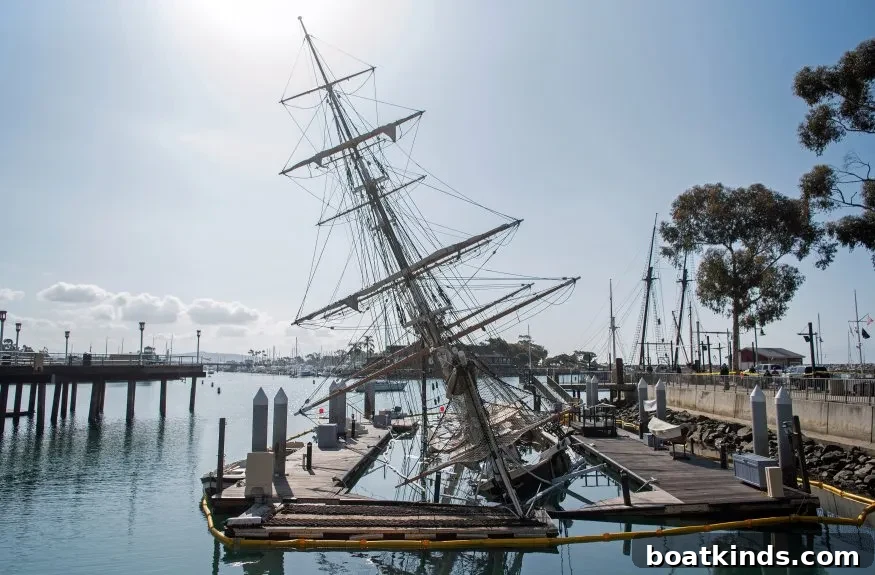
The Pilgrim, the full-scale replica of the brig made famous in Richard Henry Dana’s maritime memoir Two Years Before the Mast, sank at its berth in Dana Point Harbor after listing to starboard over the weekend. The vessel has been an iconic presence at the Ocean Institute in California and a classroom afloat for generations of students since it arrived in the state in 1981.
The exact cause of the sinking remains under investigation. Institute staff had been combating a persistent, slow leak using a pump, but the list developed and the ship ultimately settled beneath the water at its mooring. Prior to the incident, the vessel was scheduled to be hauled out of the harbor for more extensive maintenance and repairs in January; however, that work was postponed because the shipyard was overloaded and could not accommodate the ship on the planned timeline.
Built in Denmark in 1945 as a three-masted schooner and later rerigged in Portugal as a brig in 1975, The Pilgrim has a long and varied history. Since arriving in California, the replica served the Ocean Institute as a floating field-trip classroom, introducing hundreds of thousands of students to seamanship, maritime history, and the natural science of the ocean environment. Its role as a hands-on educational platform made it not just a local landmark but also a well-known resource for educators and families in the region.
The vessel is estimated to be worth $6 million, and efforts to salvage her are now underway. Salvage teams and harbor authorities have begun assessing the damage and developing a plan to recover the hull and rigging. While initial efforts are focused on securing the site and minimizing any further damage, some observers and maritime professionals have expressed concern that the ship may be beyond economical repair. The extent of structural damage, water intrusion, and deterioration will determine whether restoration is technically feasible and financially practical.
Beyond the financial and restoration questions, the sinking raises practical and emotional concerns for the community. For many in Dana Point and for students who sailed aboard her, The Pilgrim represented an irreplaceable educational asset and a tangible connection to maritime heritage. The Ocean Institute has relied on the vessel for immersive programs that bring textbook history and marine science to life, and the loss of the ship, even temporarily, disrupts those offerings until alternatives can be arranged.
Salvage operations for historic or large pleasure craft typically involve a careful sequence of tasks: securing the wreck to prevent drift or further sinking, pumping and dewatering compartments where possible, patching holes, and, if feasible, lifting or refloating the hull to transport it to a shipyard. Environmental precautions are also a priority to prevent fuel, oil, or other contaminants from spreading within the harbor. Local authorities and marine contractors coordinating the response will balance speed with safety and regulatory requirements.
For maritime historians and preservationists, the situation also prompts reflection on the challenges of maintaining older or replica vessels. Historic ships require ongoing maintenance, dry-docking, and periodic refits to remain safe and seaworthy. Delays in planned maintenance — as occurred here due to shipyard capacity issues — can increase the risk of failures that lead to incidents like the recent sinking.
The Ocean Institute and local officials are expected to provide updates as salvage efforts progress and as assessments of the vessel’s condition are completed. Community members who have experienced educational programs aboard The Pilgrim may follow announcements from the Institute for information about alternate programming, potential restoration plans, and opportunities to support maritime education in the wake of this loss.
For background coverage and early reporting on the incident, see the Orange County Register’s initial article on the sinking.