
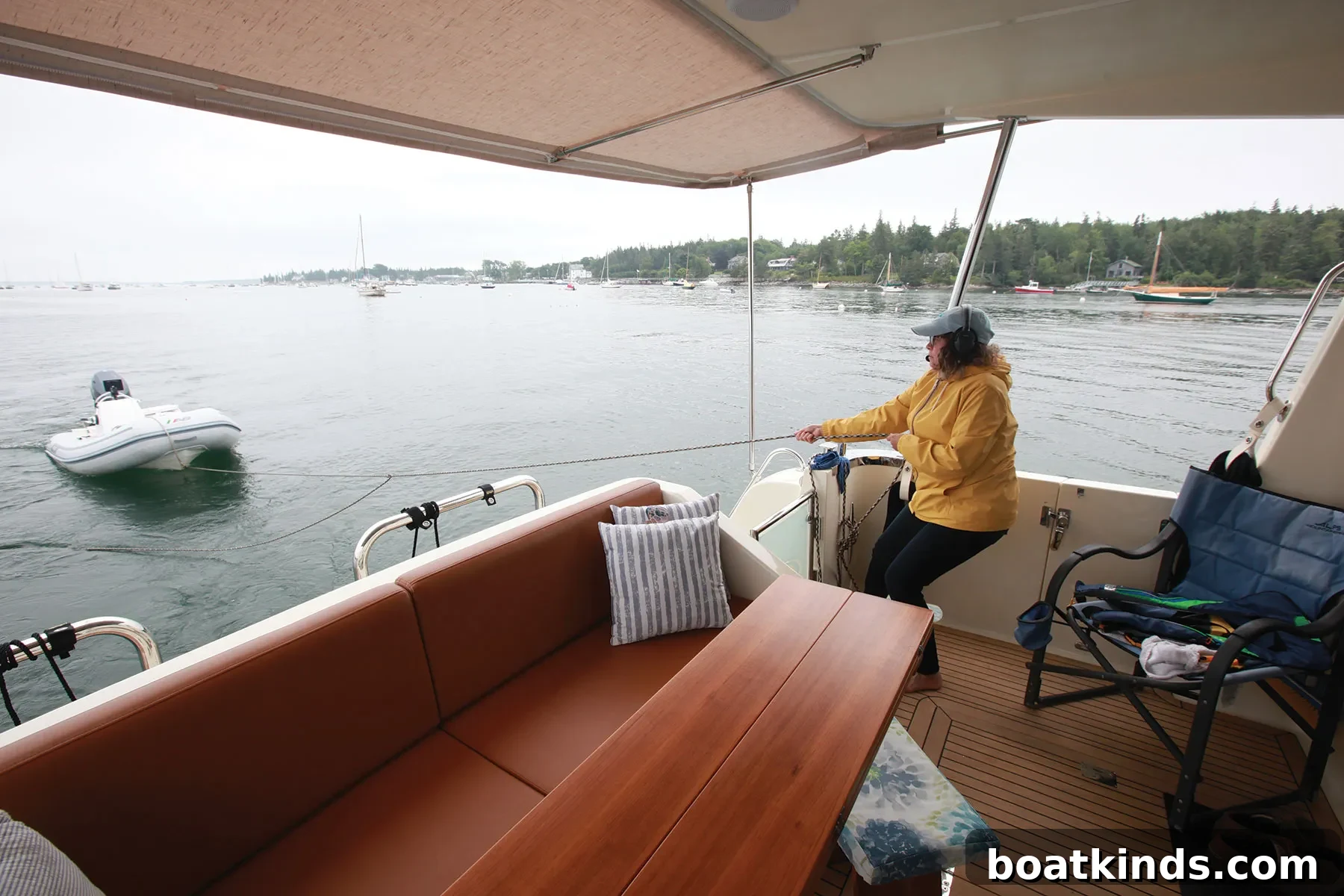
Managing a dinghy or tender can be one of the more frustrating aspects of boat ownership. I learned that the hard way crossing the Gulf of Maine on a friend’s boat. The sea was calm and weather fine, but our new console RIB was too large to stow on deck, so we towed it. Midway through the trip one of the kids shouted, “Where’s the dinghy?” Thankfully, after retracing our track and conducting an exact search pattern for three hours with everyone scanning the horizon, we eventually found it. Not everyone is so lucky; over the years many small boats have been reported drifting offshore.
Towing a dinghy increases the chances of problems: flipping, slamming the transom, surfing past the mother ship, shifting while stowed, or simply getting lost. Bailing a swamped open boat in a seaway is one of those experiences that quickly turns a boater into a believer in proper dinghy stowage. Although towing can be convenient, it comes with real risk and requires careful technique to do safely.
Early in our marriage my husband and I once towed our dinghy around two nearby headlands, thinking a short trip didn’t justify the extra work of hauling it aboard. Conditions worsened and the dinghy surfed past us, landing squarely on the foredeck—miraculously without damage. It was a stark lesson: calm seas don’t make a good seaman, and what looks like a harmless tow can quickly become dangerous.
If you must tow, use the correct towline, trusted knots, and redundant attachments. I prefer a bridle formed from two lines led to each quarter; that way if one chafes through the other remains. Floating line helps keep the tow clear of the propeller. Avoid placing feet in the bight while paying out lines, be mindful of surges between vessels when establishing the tow, and communicate clearly between the helm and the crew tending lines. Use a gentle throttle and aim to keep the dinghy inside the vee of your wake and ahead of the stern wave—this distance changes with boat type and speed. Longer towlines, often around two boat lengths, reduce the tendency of the tender to surf your wake, but you’ll likely need to experiment to find the best length. In confined waters or when maneuvering, shorten the lines.
Stowing the dinghy on deck or below is usually the safer option. Choices depend on the size of your mothership, the type of tender, and budget. You can muscle an inflatable aboard and lash it down, partially deflate and stow it below, or invest in davits, hoists, or a hydraulic lift. Each approach has trade-offs in cost, convenience, and required effort. Whatever method you choose, prevent chafe and secure the tender so it won’t shift or obstruct access or sightlines.
Powerboats commonly offer dedicated dinghy davits, cranes, deck chocks, swim-platform cradles, or even garage spaces. Some sailboats have davits; others require creativity and manpower to get a tender up on deck. Inflatable tenders can be rolled and stored in a locker or below when space is tight. On short passages, keeping a light inflatable on the foredeck or in the cockpit is acceptable, but be sure it does not block navigation lights or interfere with lookout duties. Pad hard points, and lash the tender securely to avoid repetitive chafe when beating to windward.
Davits are a time-honored solution, but check load ratings carefully—many older or undersized systems won’t handle heavier RIBs or large outboards. Remove the outboard when necessary, and after lifting the tender out of the water pull the drain plug so water won’t accumulate. Secure the dinghy to prevent movement in a seaway. Swim-platform snap-and-lift davits make launching and retrieving easy, though an upright stowed tender may obscure the stern light or the boat’s name and require minor modifications.
Hydraulic swim platforms provide especially convenient storage: match the tender’s weight and dimensions to the platform rating, float the dinghy into the cradle, and lift. Larger vessels sometimes stow tenders on bow or cabin tops using a deck crane and harness, while some trawlers employ a mast-and-boom or winch-powered block and tackle to lift inflatables.
A dinghy is essential gear for cruising and gunkholing, allowing access to shallow waters and shore landings where launch service isn’t available. Efficient launching, retrieval, and stowage are part of good seamanship and become increasingly important as you gain experience or as crew ages. Whether you choose towing, davits, a hydraulic platform, or below-deck storage, make a plan that fits your boat and practice it until you can execute it safely and confidently.
This article was originally published in the April 2022 issue.