
Installing a Gas Spring on a Pathfinder 2700 Open Hatch: A Practical Guide

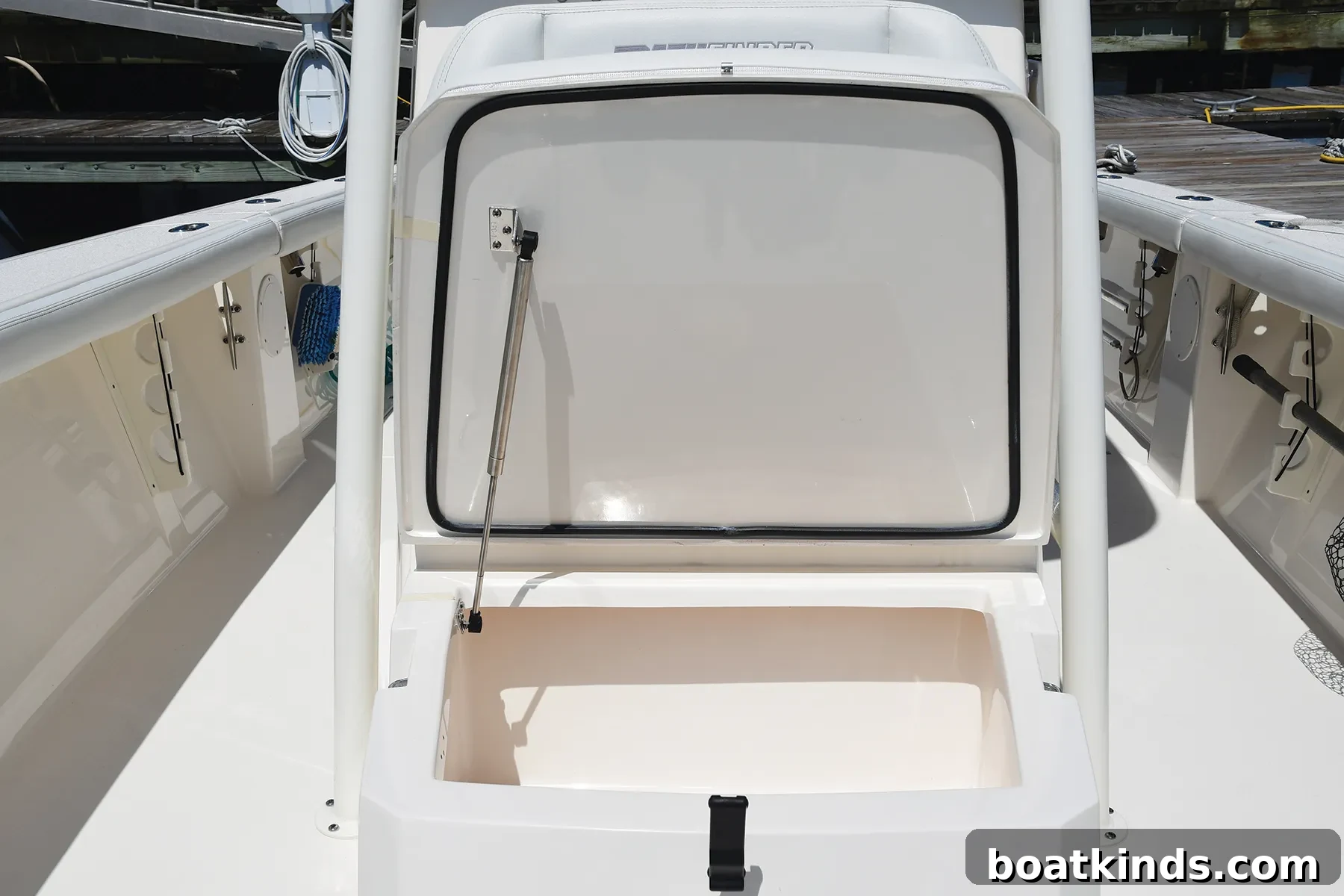
What looked like a simple upgrade on my Pathfinder 2700 Open hatch turned into a lesson in measurement, selection, and installation. The large cooler hatch forward of the console was mounted on friction hinges that gradually failed to hold the lid open. Because the cooler doubles as seating when the cushion is in place, a failing hinge created a real safety hazard: the hatch could slam shut on someone’s fingers. Rather than replace the worn hinges, I chose to install a gas spring to control the lift and hold the hatch open securely.
Gas springs are self-contained units filled with nitrogen that apply a steady lifting force to a hinged lid or hatch, reducing the effort required to open and keeping it from slamming shut. They’re available in a wide range of lengths and force ratings to match different hatches and mounting geometries. While replacing an existing gas spring is often straightforward—measure the old part, match the force rating and length, and swap it in—adding a gas spring where one never existed requires careful planning. Length, compressed and extended dimensions, force rating, and exact mount locations all matter.
To get the installation right, I consulted Richard Blum, a consultant for LaVanture Products with decades of experience designing and applying gas springs for boats, RVs, buses and aircraft. He warned that selecting the correct spring for a one-off project is not a typical DIY shortcut; without careful measurement and calculation there’s room for error. Still, he guided me on which measurements are critical and how to translate them into a practical installation on a horizontal hatch.
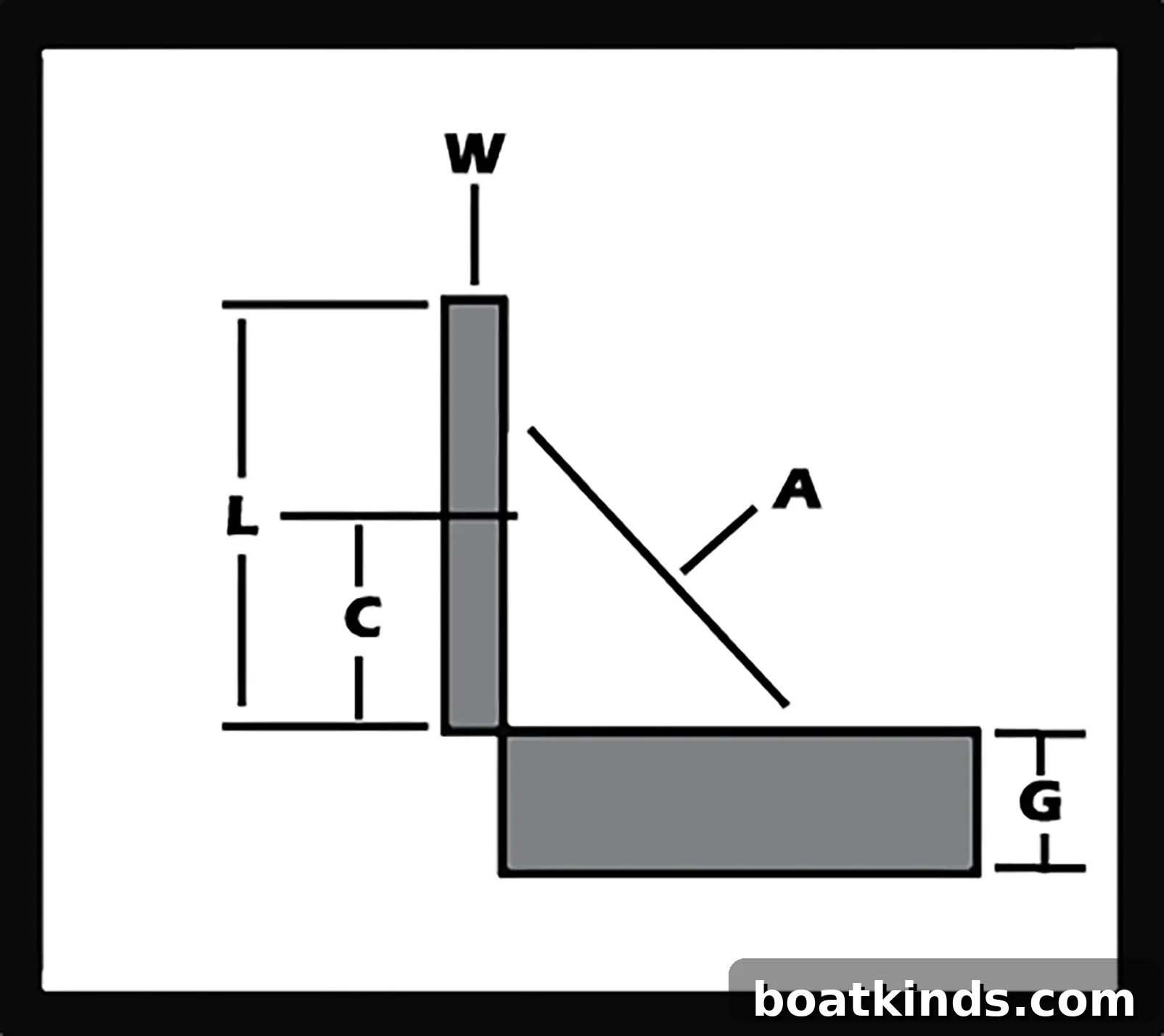
Following his advice, I measured the hatch lid weight (W), the opening angle (A), the distance from the hinge pivot to the lid’s top edge (L), the distance from the hinge pivot to the lid’s center of gravity (C), and the approximate depth where the fixed mount would sit below the lip of the cooler box (G). Those points are the primary inputs an engineer would use in a formula to determine force and mounting geometry. Lacking formal engineering tools, I used common-sense placement based on similar marine installations and Blum’s guidance.
My plan placed the fixed lower mount about 3 inches forward and 3 inches below the hinge pivot within the thick fiberglass lip inside the cooler box. For the upper ball socket on the lid, I aimed for roughly halfway between the lid’s center of gravity and its top edge when the hatch is open. That provided good leverage without forcing the spring to carry excessive load. From those placements I estimated an extended spring length of around 20 inches and chose a 60-pound force rating based on a comparable hatch on the boat’s casting deck.
When selecting a gas spring, verify both extended and compressed center-to-center lengths and the force rating (usually given in pounds). The unit I chose had a 20-inch extended length and a 12-inch compressed length. I marked the planned fixed mount location inside the cooler with masking tape and penciled the ball-center location. With the hatch opened to 90 degrees I measured 20 inches up from the fixed mark and added a matching tape mark for the top ball center. Closing the hatch and measuring the distance between those marks gave me just under 13 inches—enough clearance so the spring wouldn’t bottom out when closed, while still fitting within the compressed length.
Ordering the spring and stainless hardware was the next step. Mounting required only a fixed mount, an upper ball socket, six #10 stainless steel panhead self-tapping screws, an electric drill, the right bits and a Phillips screwdriver. The actual installation was straightforward: pilot and install the fixed mount in the reinforced fiberglass lip, attach the upper socket to the lid at the marked position, then snap the spring’s ball ends onto the mounts. Including careful measuring and double-checking placements, the job took about 20 minutes.
The result is an effective, quiet lift mechanism. The hatch now rises gently when unlatched—even with the seat cushion in place—and remains open securely until I push it closed with minimal effort. A few tips: always install the spring with the nitrogen-filled cylinder oriented upward when the hatch is open, and confirm the spring’s compressed and extended lengths before finalizing mount positions to avoid interference. Consulting an experienced supplier or engineer for unusual hatch geometries is also wise.
This installation turned what felt like a simple repair into a small engineering exercise, but with the right measurements and parts it was easy to complete and greatly improved the hatch’s safety and usability. Thanks to the guidance I received and a bit of practical problem-solving, the cooler hatch now operates smoothly and reliably.
This article was originally published in the January 2024 issue.