
It was overcast, pitch black and drizzling — the kind of night when search-and-rescue becomes painfully difficult. We were in a helicopter, combing a 16-square-mile bayou near Delacroix, Louisiana, and everyone on board had the same thought: a 10-year-old boy in an open skiff must be freezing. Rescue crews take every missing-person call seriously, but children naturally sharpen our focus. When the weather, darkness and open water work against you, visual contact is everything.
We had solid leads: the father and son were reported overdue, the coordination center knew where they’d launched, and local deputies had located the father’s car and trailer. Still, hours of searching turned up nothing. Low on fuel and ready to head back, we finally saw a flicker on my night-vision goggles.
“Contact right,” I said. “One-thousand yards. Four o’clock.”
The helicopter banked, the light rose in the window, and the pilot eased the aircraft toward it. “Where?” he asked over the intercom.
“Waving flashlight. Dead ahead now, 700 yards,” I replied, scrambling to keep my eyes on the signal.
We closed and found them: the father and his son. Out of VHF range and without a working cell signal, the father had exhausted his flares and even tried signaling other boats. The signal that finally caught our attention was something desperate and dangerous — a life jacket set on fire and held aloft. He’d burned his hand badly before dropping it into the water. It was a stark reminder that, ultimately, every successful search comes down to one simple fact: someone has to look at you.
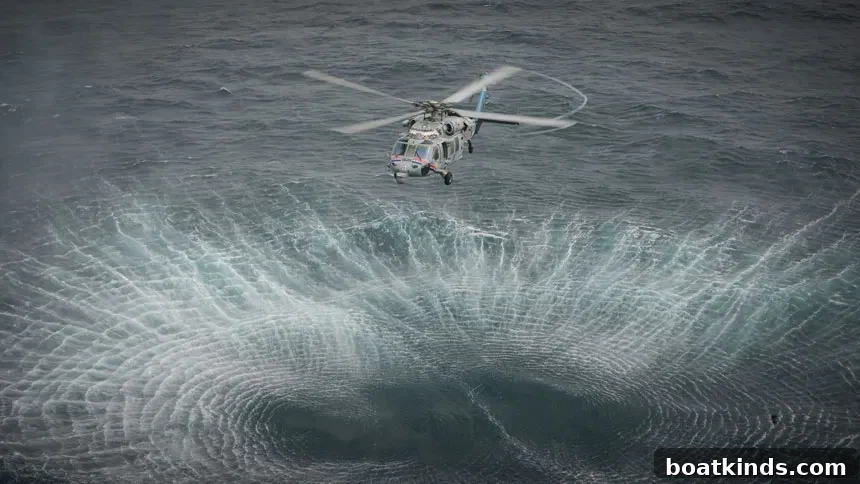
Being found at sea depends on visibility. You can transmit an EPIRB or call on a VHF radio, but until a searcher actually sees you, you remain effectively lost. The ocean is enormous; a human or a small boat is tiny by comparison. To improve your chances you need to make yourself both bigger and brighter using a mix of active and passive signals.
Active signals require your participation: firing distress flares, waving a flashlight, using a signal mirror, or deploying sea dye. Passive signals are those that work after you set them in place — think of a mounted strobe or an activated EPIRB. Some devices are a hybrid: you must turn them on, but then they operate autonomously. When people are searching for you, these active-passive tools are invaluable because they continue to work while you attend to other survival tasks.
If you’re on a floating vessel, enlarge your visual footprint. Use spare line to create a trailing string of floating items — life jackets, coolers, seat cushions or life rings — and let it drift down-current a short distance behind you. A 20-yard chain of bright debris is far more visible from the air than a lone hull. Mount and activate strobe lights and, if you’ve called for help, turn on your EPIRB. Don’t worry about conserving batteries if rescuers are already searching; an EPIRB gives aircraft a precise, continuous position and a needle to follow when conditions or positioning change rapidly.
If you’re in the water, the urgency increases. Make yourself as large and as visible as possible. Bring everything that floats with you: spare life jackets, cushions and anything buoyant you can cling to. Stay with others if you can, and tie yourselves together to form a single, larger target. Using multiple floats and linking up reduces the chance that someone will be missed by a search pattern and makes it easier for responders to pick you out against a dark sea.
Activate electronic signals early. Strobe lights often run for 18 hours or more, and many LED strobes last significantly longer; turn them on even in daylight. You may not have working hands or functional equipment after nightfall, so set your electronics as soon as you can. When you see search aircraft or vessels, that’s the time to use expendable visual signals like flares or smoke. Save some flares for aircraft, which are likely to see you last — and note that pilots and flight crews often aren’t looking directly backward. Aim to signal when a search platform is somewhere between your eight and four o’clock positions so they’re likely to see the flare or flashlight sweep.
Waving a flashlight can be the most effective immediate tool; a few deliberate sweeps timed to the approach of a helicopter or plane can draw attention. If you’re in the water, splash nearby to create white water that increases contrast against a dark surface. Simple actions like this often make the difference between being overlooked and being spotted.
Never underestimate how small you appear from altitude or distance. A bright-white 26-foot center-console blends into the ocean’s texture at a mile away; a long rolling whitecap can look identical. Increase your size and increase your brightness when it matters most: deploy floats, start strobes, activate EPIRBs, and use flares and flashlights judiciously when you know searchers are watching.
Every outing carries risk, and no one understands that better than Mario Vittone, a retired Coast Guard rescue swimmer who now teaches boaters how to prevent and respond to emergencies at sea. His instructional course, Safety & Rescue at Sea (priced at $250), outlines practical tips for signaling, survival and avoiding common mistakes. To learn more or to register, contact Boaters University for course details.
This article originally appeared in the November 2018 issue.