
Four men on a capsized hull
Point Pleasant, N.J.
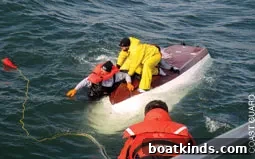
Four men were rescued after their 17-foot pleasure craft capsized about one nautical mile from Point Pleasant, N.J. Coast Guard Station Manasquan Inlet received a distress call on a hand-held marine-band radio at 11:30 a.m., reporting the overturned vessel and the men in the water. A 47-foot motor lifeboat launched from the station and arrived on scene at 11:44 a.m.
The small-boat crew employed heaving lines to reach the stranded men and pull them to safety. All four were wearing life jackets when they were recovered and were transported to the Coast Guard station. Local emergency medical technicians evaluated the men for signs of hypothermia and other injuries and ultimately released them with no reported injuries. The Coast Guard reiterated the importance of carrying a working marine-band radio and wearing personal flotation devices whenever on the water. (Nov. 6)
C.G. medevacs angler
Cape May, N.J.
In a separate incident, Coast Guard aircrews medevaced a 40-year-old man approximately 70 miles off the coast of Cape May, N.J. At 11:55 a.m., a crewmember aboard the commercial fishing vessel Star Bright contacted authorities to report that the man aboard the 87-foot fishing boat was experiencing a seizure. An MH-65C Dolphin rescue helicopter from Coast Guard Air Station Atlantic City responded and hoisted the patient aboard the aircraft.
The man, identified in reports as Martin, was flown to AtlantiCare Regional Medical Center in Atlantic City for urgent medical care and was reported to be in stable condition upon arrival. Medevac operations at sea require coordination between ship crews and helicopter teams; in this case, prompt reporting and rapid response allowed the patient to be transported to advanced medical care. (Nov. 1)
Coast Guard rescues two aground
Baltimore
The Coast Guard also assisted two Virginia men whose 27-foot sailboat became disabled and grounded in the Yeocomico River near Kinsale, Va. Later that night, at 11:31 p.m., one of the men’s wives contacted watchstanders at Coast Guard Sector Baltimore to report that the pair had not returned from their outing before sunset as planned. Given the late hour and the potential for reduced visibility, the report prompted an immediate response.
A 25-foot response boat (RB-S) from Coast Guard Station St. Inigoes, Md., was diverted to investigate, and a rescue crew from Smith Point Sea Rescue also responded. The response boat arrived on scene, transferred the two men from the aground vessel, and transported them to a nearby dock in Wilkins Creek, Va. There were no injuries reported. The coordinated effort between Coast Guard units and local rescue organizations highlights the value of quick reporting and shared resources in protecting mariners. (Oct. 29)
Safety and preparedness notes
These incidents underscore several practical safety measures for recreational and commercial boaters. Carrying a functioning marine-band (VHF) radio and knowing how to use it can dramatically reduce response time in an emergency. Wearing an appropriate life jacket at all times and filing a float plan with shore contacts helps responders find you more quickly if you get into trouble. Check weather and sea conditions before departing, avoid sailing after dark unless properly equipped and experienced, and dress for the possibility of cold water exposure. If you have an emergency beacon or other distress signaling devices, ensure they are maintained and accessible.
This article originally appeared in the Mid-Atlantic Home Waters section of the January 2011 issue.