
Coast Guard 36-footer rebuilt over 14 years now serves as a charter boat
Marlin Spike “Spike” Peabody, a 14-year-old English Labrador retriever, has spent most of his life aboard boats and at shore stations alongside his owner, Capt. Ron Peabody. After two decades of service in the Coast Guard, including time as a coxswain and bosun’s mate, Capt. Peabody has finished a long restoration of a historic 36-foot U.S. Coast Guard motor lifeboat and now operates it as a charter vessel on Maine’s mid-coast.
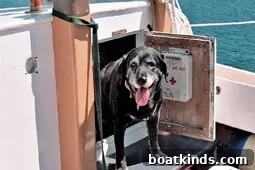
Spike has been a steady companion through Capt. Peabody’s Coast Guard career, which took him to lighthouses, search-and-rescue stations and various postings from Canada to Virginia. Now gray-muzzled and content, he enjoys retirement aboard the restored lifeboat, lounging in a custom doghouse in the lazarette that even carries a brass name plaque — a fitting perch for an old sea dog.

Capt. Peabody, a native of Beal’s Island, Maine, holds an 18-ton license and purchased both Spike and the surf boat in the mid-1990s. The boat, officially U.S. Coast Guard vessel No. 36460 and built in Curtis Bay, Maryland, received 14 years of careful, intermittent restoration. With that work complete, Peabody now runs custom day charters from Bristol and the Boothbay region aboard the motor lifeboat he calls MLB Surf Runner.
Operating as Capt. Ron’s Cruises, his company specializes in private pleasure cruises that let guests choose the itinerary and pickup location. Popular options include lighthouse tours, seal and puffin watches, island and beach stops, harbor excursions, and scenic sunset or fall foliage trips. Many clients request a waterfront restaurant stop — from upscale dining to casual lobster shacks — making relaxed, food-centered outings a recurring favorite.
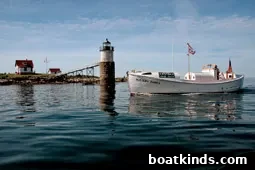
The 36-foot motor lifeboat was a workhorse for the Coast Guard in the mid-20th century, designed for surf and bar rescues in the toughest conditions. Built heavily of wood, these boats are self-righting and self-bailing and were rated to carry up to 20 survivors in extreme weather. The restored Surf Runner retains those rugged design characteristics while providing modern comfort for day-charter passengers.
The boat features a forward “survivor’s cabin” with V-berth seating where guests can find shelter from wind and spray if needed. Powered by a single 103-horsepower Detroit diesel (a 1954 vintage) that Capt. Peabody rebuilt from the block up, the lifeboat cruises comfortably at about 8 knots, turning roughly 1,500 RPM. The engine has been renewed and has low hours since the overhaul.
Peabody emphasizes a relaxed cruising experience: “If you want speed, there are other boats to charter. If your goal is to be out on the water, see wildlife, visit lighthouses and enjoy a quiet, easy pace, this is the boat for you.” He also incorporates Coast Guard history and personal anecdotes into his charters, giving passengers context about lifesaving efforts and the role these boats played. Guests can visit a former lifeboat station that is now privately owned and hear firsthand stories from his time at the National Small Lifeboat School and on the Columbia River bar during training.
Marine life and local scenery are frequent highlights. Trips can include stops at secluded coves, island landings, and chances to spot seals and seabirds. For photographers, lighthouse buffs and families alike, the combination of a historic vessel and guided local knowledge makes for a memorable harbor or coastal cruise.
Capt. Peabody’s ties to Maine run deep. Raised around lobster and fishing boats, his first craft was an 11-foot Maine-built skiff powered by a small outboard. The Peabody family comes from Beal’s Island and Jonesport, communities with long traditions in fishing and boatbuilding. His great-great-grandfather skippered the lobster smack Sylvina W. Beal, underscoring a multi-generational maritime heritage that inspired him to preserve a piece of Coast Guard history.
Peabody was motivated to buy and restore a 36-foot lifeboat after learning about the Pendleton rescue off Cape Cod, in which this class of vessel played a dramatic lifesaving role. In 1995 he found a candidate in East Boston and purchased it for $8,000, then set about stripping the boat down to bare wood, rebuilding the engine and transmission, rewiring, and refurbishing deck hardware and interior surfaces. The project required substantial investment and effort, including selling personal possessions to cover mechanical work. To finance the restoration, he developed the idea of offering charters along the mid-coast of Maine.
Today, walking down the dock offers Capt. Peabody a deep sense of satisfaction. “I’ve restored a piece of Coast Guard history and am offering people the chance to get out on the water and experience what it was like aboard these boats,” he says. Spike, positioned just abaft the helm, enjoys the view and the company of guests — a quiet retirement after a lifetime of salt spray and service.
For more information, visit www.captronscruises.com
This article originally appeared in the New England Home Waters section of the September 2009 issue.