
Kruger’s Journey: Standup Paddling, the Arctic, and Life Aboard Raven
“After I did the Race to Alaska, people would often throw that word at me,” Kruger says. “They’d say, ‘Did you always know that you’d be doing extreme stuff like this?’ It took me a long time to find the words to explain why that pissed me off so much.”
Racing the Inside Passage on a SUP
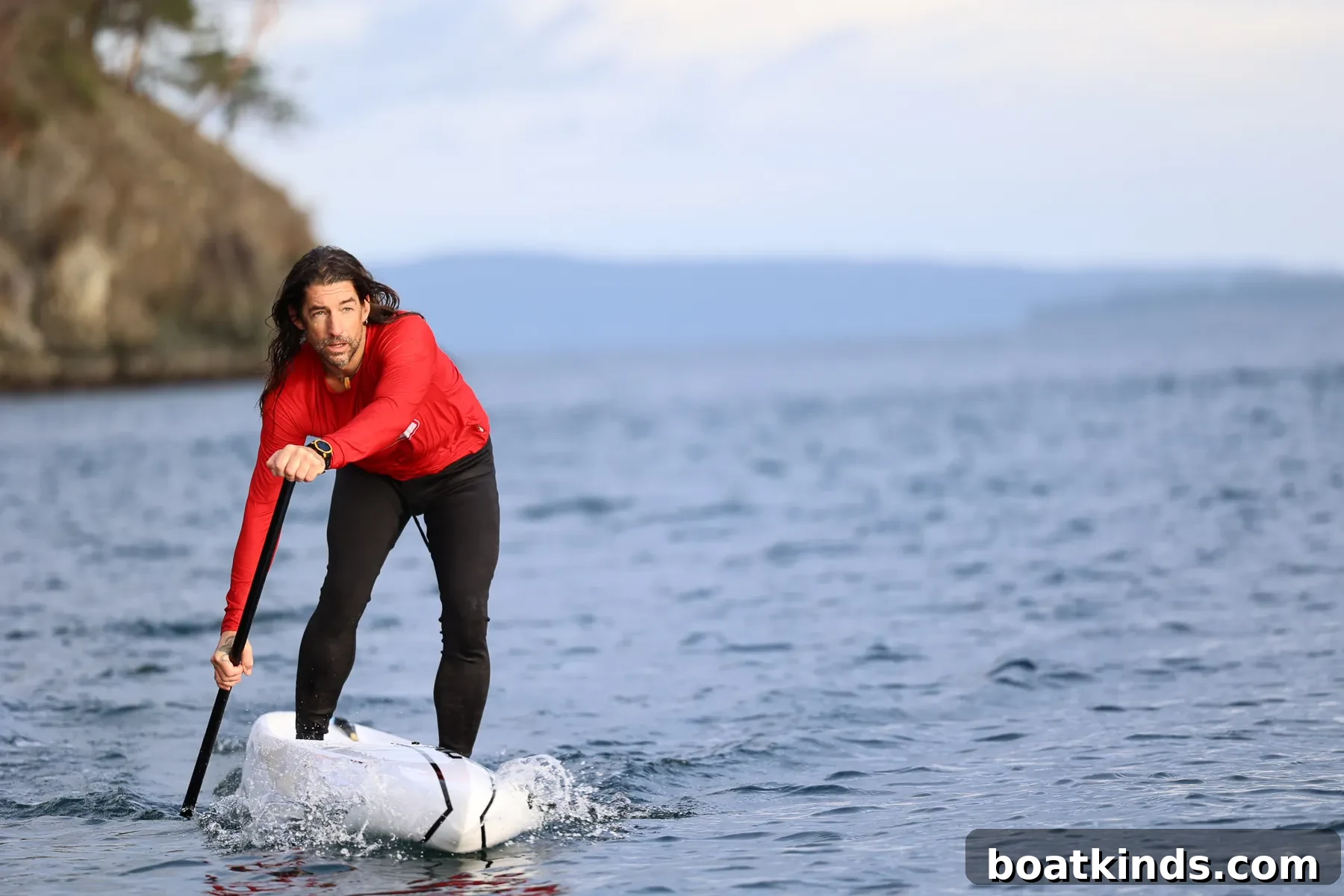
Whether labeled extreme or not, Kruger is firmly established at the top of the standup paddleboarding (SUP) world. He drew international attention in 2017 when he became the first—and so far the only—person to complete the entire Race to Alaska (R2AK) on a SUP. For readers unfamiliar with the event, R2AK is a grueling, roughly 750-mile course from Port Townsend, Washington, to Ketchikan, Alaska, mostly through British Columbia’s Inside Passage. The race enforces just a few simple rules: no engines, no privately arranged support, and two mandatory waypoints.
Finishing R2AK is a significant achievement even for seasoned sailors in high-performance race boats—about a third of teams withdraw because of log strikes, gear failures, or the stress of constant, high-stakes decision-making. Attempting the race on a SUP is, in many ways, a different order of challenge. Kruger not only finished but placed 17th out of 27 teams, an outcome that surprised many and helped shift perceptions about what endurance paddling can be.
Flow State, Breath, and Presence
For Kruger, long-distance paddling is less about spectacle and more about communion with the natural world. He rejects the notion that these efforts are solely about extreme achievement or heroism. “For the R2AK, I just went out with a carbon fiber sled, good training and a GPS. There is nothing extreme about that. It was just dipping into a little corner of my humanity,” he explains.
Preparation was essential, but so was the ability to enter a flow state. “I talk about flow state a lot,” Kruger says. “Paddling is based on breath. It’s yoga. It’s meditation. It’s qigong and tai chi. It’s what all those traditions and disciplines are trying to get at. I can think back and tell you something about every mile of that paddle. It was like this dual state of being switched on—you’re not missing anything and you’re everywhere at once. You’re a radio tower for information. The floodgates are open, and it just comes pouring in. So much data. It’s amazing.”
The Arctic Project: Silence, Discovery, and Humility
Five years after R2AK, Kruger took on an even more remote challenge: the Arctic Project, a multiseason, unsupported SUP expedition aiming to traverse parts of the Northwest Passage. In the summer of 2022 he paddled 420 miles from Tuktoyaktuk to Paulatuk in Canada’s Northwest Territories. Weeks passed where he did not see another human being. He returned in 2023, staging a second leg from Paulatuk to Kugluktuk in Nunavut, logging 487 miles.
Those Arctic summers brought unexpected shifts in perspective. The competitiveness that once drove Kruger began to fall away. “Post R2AK, I got up there and I realized that the only thing that mattered to me was learning about the place,” he says. “I didn’t want to go fast. I wanted to slow down. I wanted to spend more time. I wanted to dive into the place and sink my teeth into it.”
That slowing down produced another realization: a sense of humility and respect for the people who have long inhabited the region. “Then came the shame of going up there, gunning after a title,” Kruger admits. “There’s no honor in going into someone’s backyard claiming to be the first to do something. When you go up there you see all the signs of all the people who have lived there for millennia—the old camps, the tools, and the people who still live there. You hit the beach up in the Arctic and it’s all bones.”
Raven: Home, Platform, and Project Ship
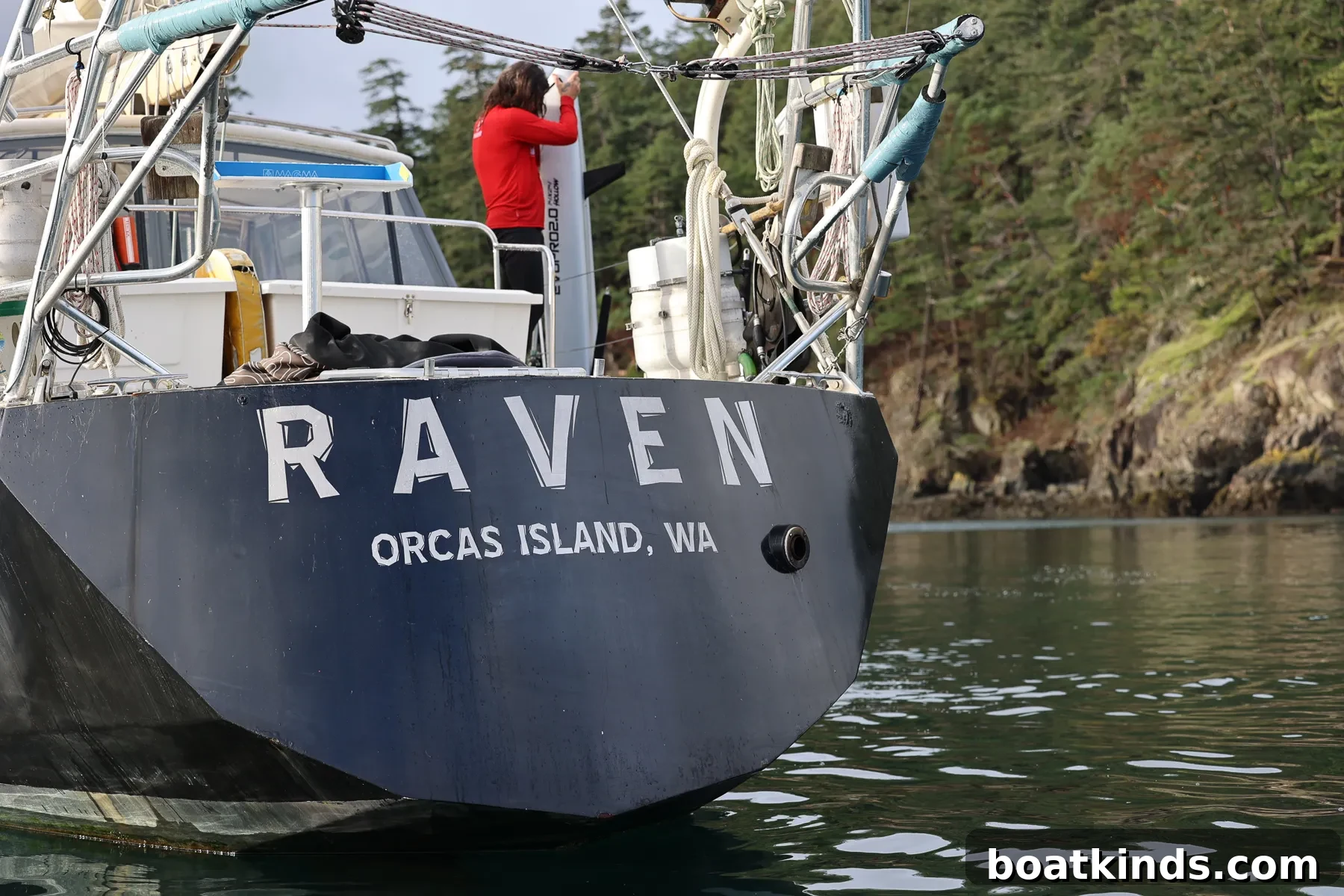
These revelations influenced Kruger’s plans for life aboard Raven, a 68-foot Bruce Roberts design built in Havre de Grace, Maryland. He acquired the steel vessel shortly after his historic R2AK paddle and now uses her as both home and project platform. With the help of his fiancé, Elyn Oliver, Kruger runs artist-in-residence weekends aboard Raven, inviting creatives to join and translate the experiences he gathers at sea into stories, art, and film.
One of Kruger’s long-term ambitions is to complete a Figure 8 route—the combined loop around the Americas via the Northwest Passage and Cape Horn, plus an Antarctic circumnavigation. The idea is not only to sail remarkable waters, but to tell the stories of communities and ecosystems affected by climate change: sixth-generation fishing families in Craig, Alaska; a young hunter learning traditional seal hunting techniques in Paulatuk; and fish species appearing in Arctic waters where they never lived before.
Filling Raven with artists, writers, and storytellers is a strategic choice. “Then we’ll be reaching that many more people,” Kruger says. “At the very least, we can touch ’em in the feels. I think a lot of people have forgotten the fact that we live on Earth.” He recalls the influence of Cousteau and similar programs that shaped his own interest in the sea—work he believes is even more necessary today.
Preparing for the Next Legs
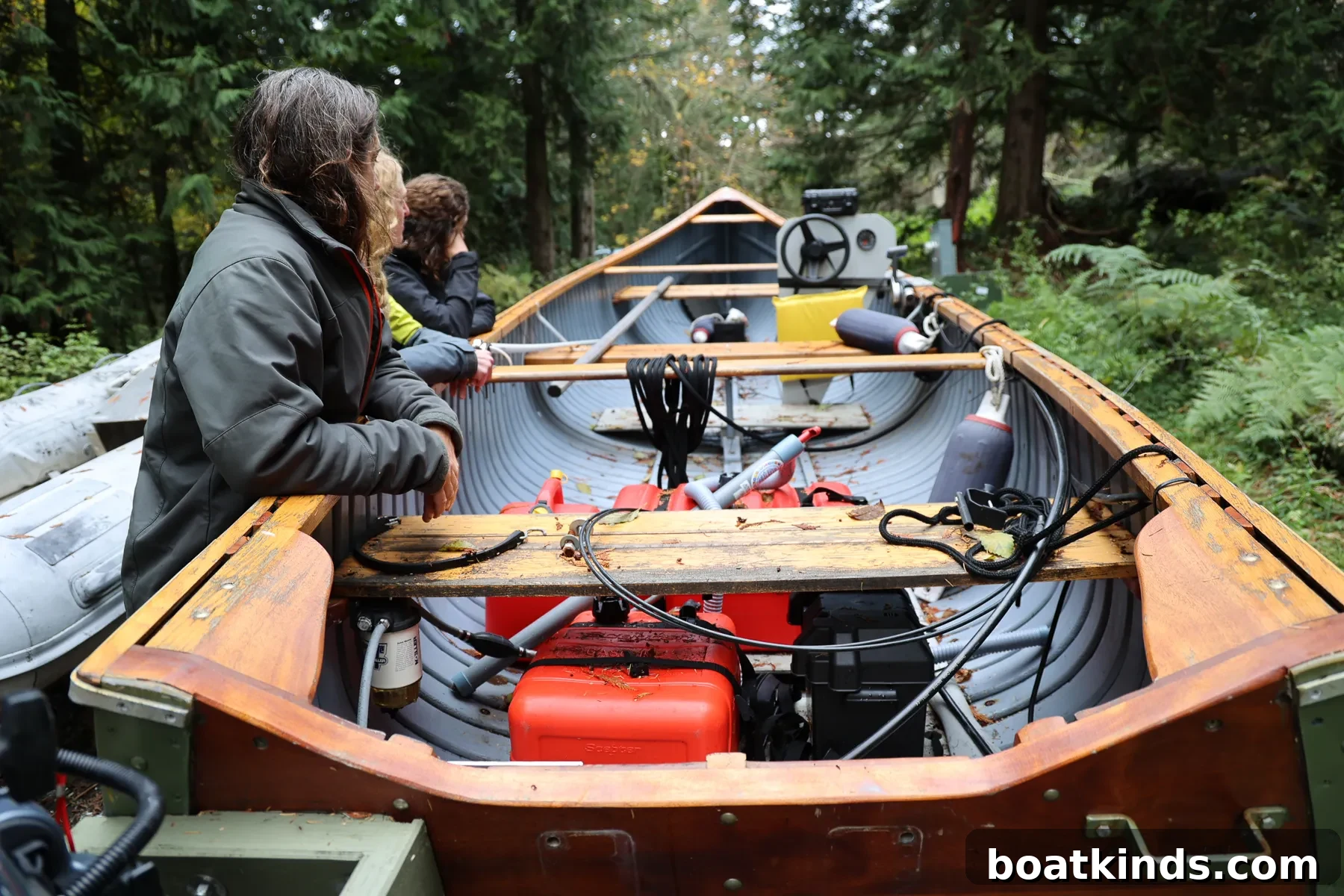
Financial support and logistical planning remain essential if Kruger is to realize the Figure 8. Those needs were part of the reason he paused the Arctic Project in summer 2024. He plans to return in 2025 to paddle another 1,000 miles to Pond Inlet, but with a new approach: this leg will include a 24-foot freighter canoe and a support crew. “I’ve been alone and unsupported for 900 miles. For the final 1,000, I’m using an Inuit freighter canoe, a design that’s been in use up there for 100 years,” he says. Some crossings and ice conditions make solo attempts more risky, and the added support addresses water availability, large mammals, and complex crossings.
In the off-season Kruger continues intense preparation. He trains with Orcas Island mixed martial artist Chuck Silva, spends hours storm-watching, and deliberately paddles in foul weather to build cardio, strength, and balance. He also develops the artist-in-residence program, which offers both creative collaboration and valuable perspective for the Figure 8 Project.
Life Aboard and Community
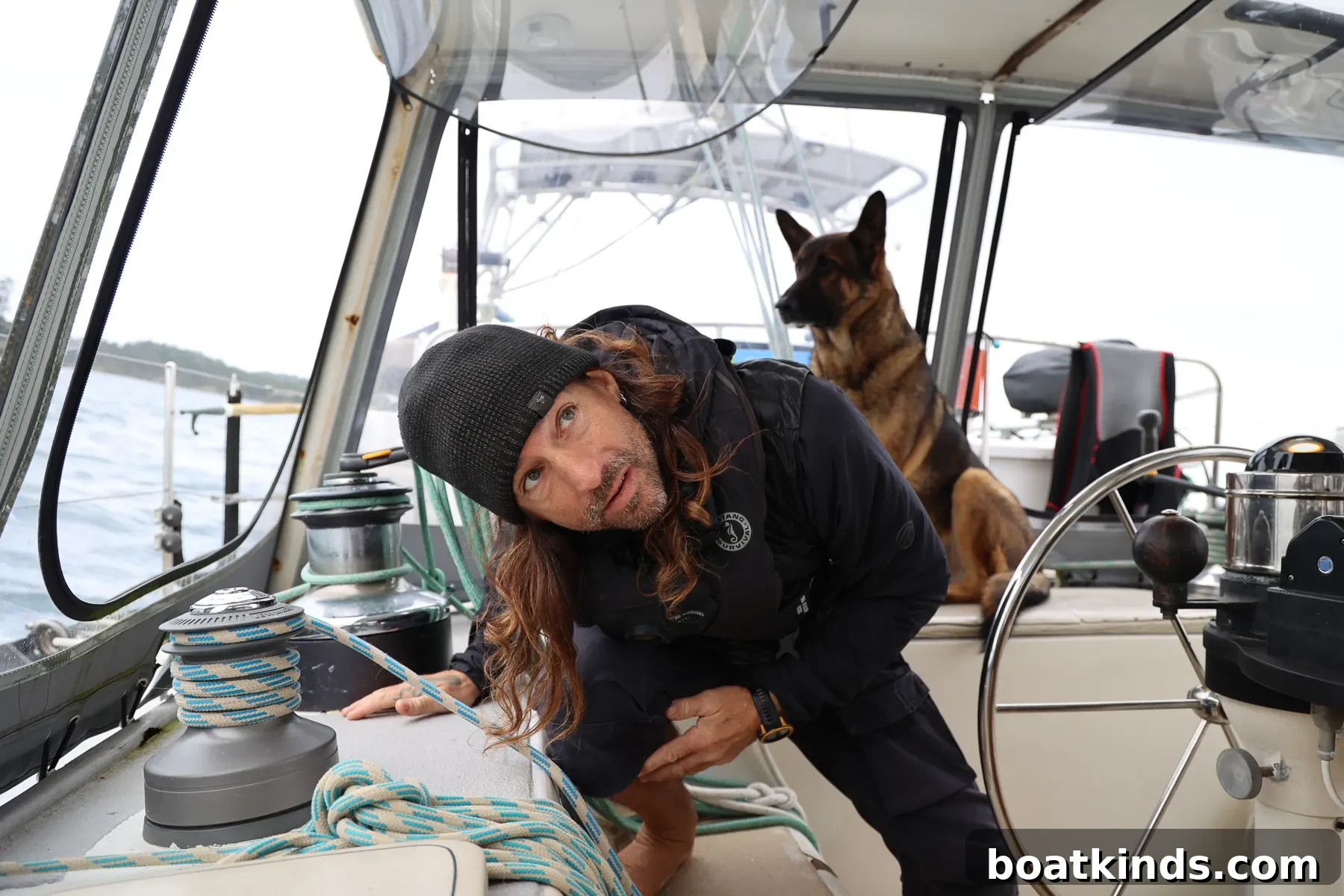
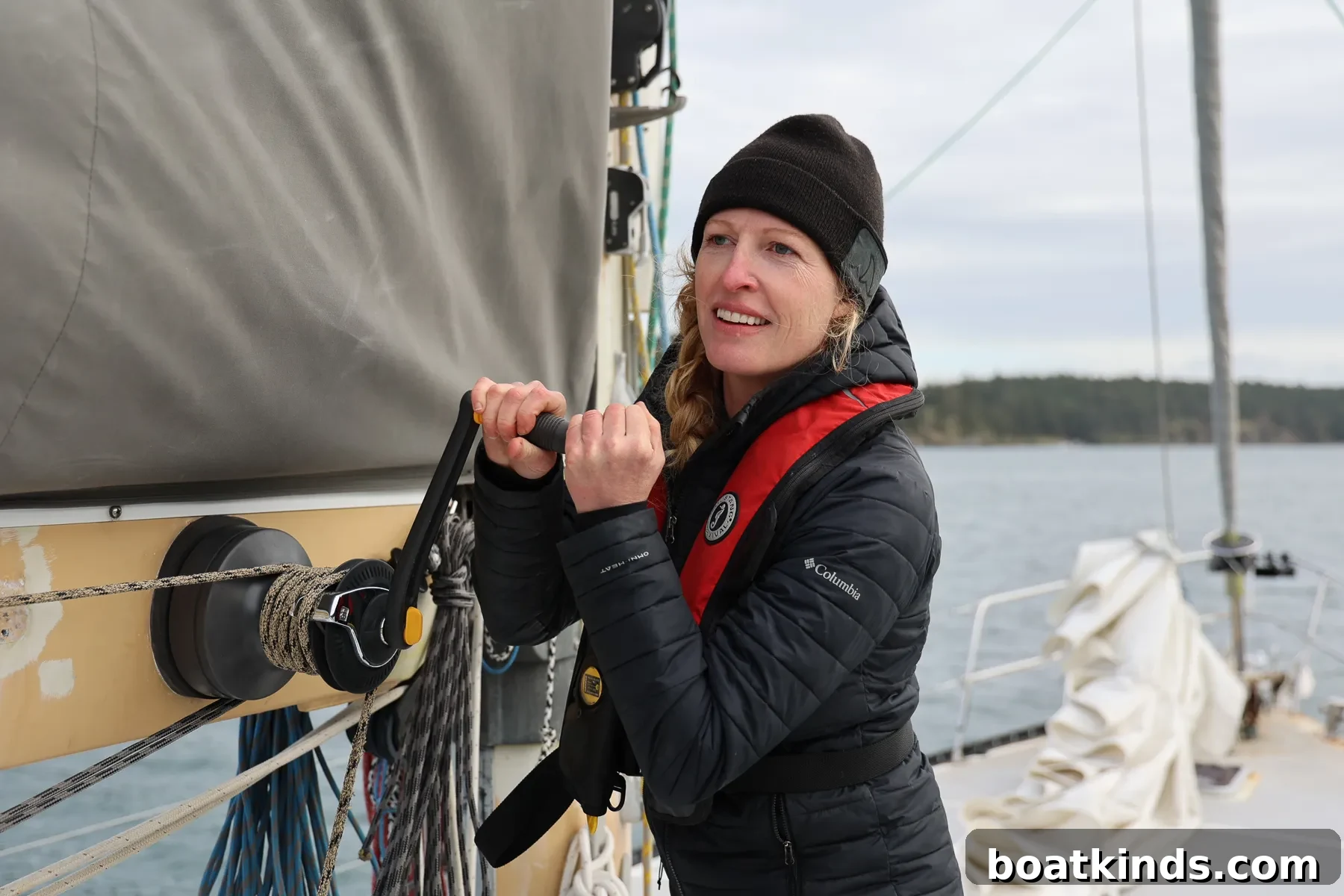
During my visit with Kruger and Oliver, a local painter and a surfer-poet joined a weekend residency in the San Juan Islands. The cruise included a west-end run through Harney Channel, a passage through Pole Pass, and a stop in Deer Harbor. After anchoring at Stuart Island, the group walked winding trails and gravel roads, shared charcuterie and venison stew, and traded stories late into the night. The next day they sailed past Gossip Island and on to Jones Island, where winds gusted to 30 knots and Kruger carefully trimmed Raven while keeping the crew comfortable. The steel hull provides a steady, reassuring ride—built for long, serious voyages more than regattas.
On land, the group hiked among Madrone trees and lichen beds, and the night ended with a polar plunge. Sitting in Raven’s warm salon, it was easy to talk through questions about the Arctic trials and the Figure 8 Project. The conversations circled back to a simple idea: these voyages aren’t about extremes but about reconnecting with the world—dipping a paddle, listening, and spending time in places that demand attention and respect. That, Kruger believes, is worth sharing.
January 2025