
TU Delft Hydro Motion to Attempt 248.5-Mile North Sea Crossing in Hydrogen-Powered Foiling Boat
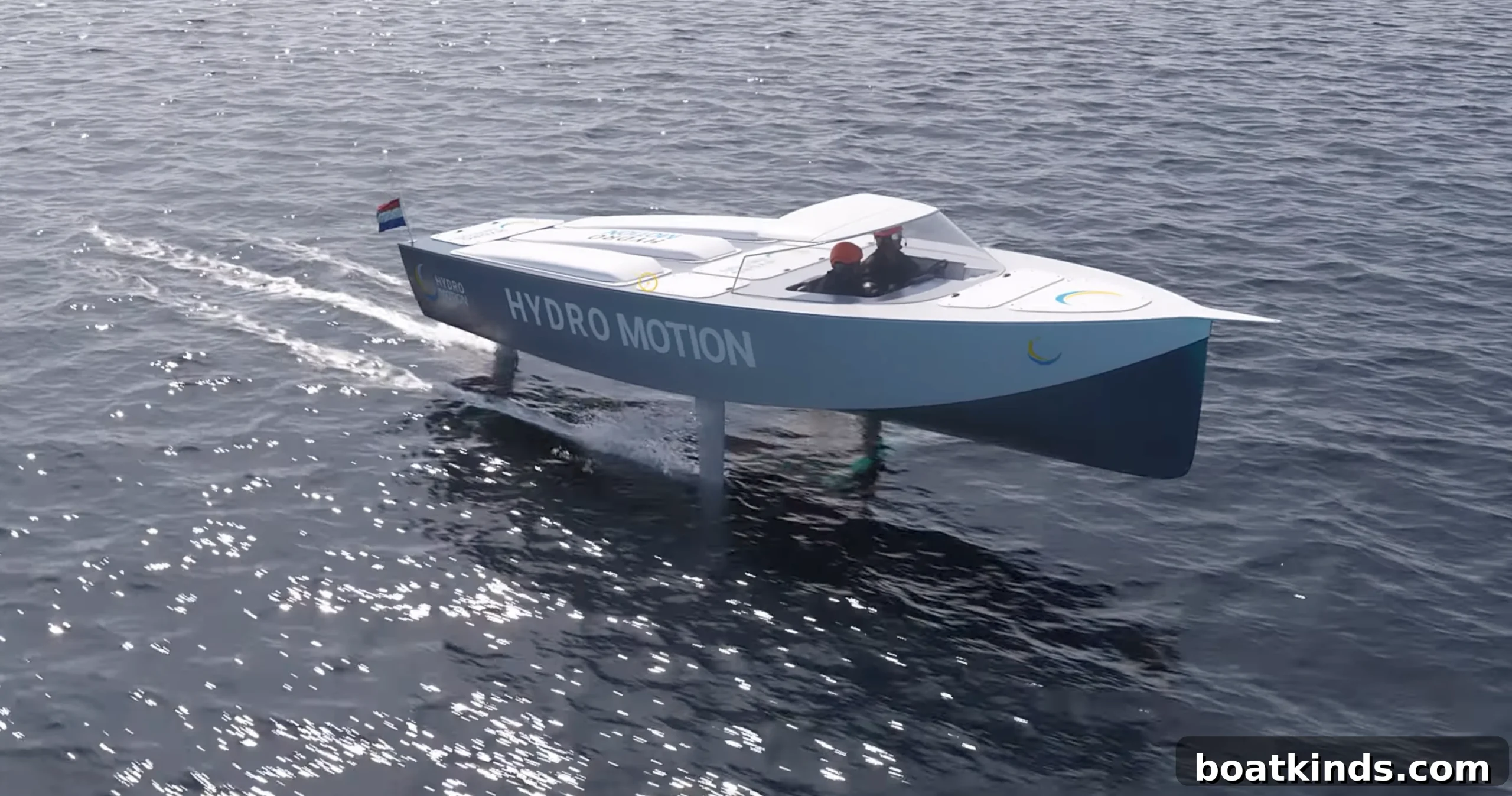
Students from Delft University of Technology (TU Delft) in the Netherlands, organized as the Hydro Motion team, plan to attempt a 248.5-mile crossing of the North Sea in a hydrogen-powered, foiling monohull they designed and built. The crossing is an ambitious test of sustainable marine propulsion and foiling technology, aiming to demonstrate how hydrogen and modern control systems can extend the range and speed of low-emission vessels.
Boat design and performance
The Hydro Motion vessel is a 26-foot monohull equipped with foils that lift the hull out of the water at speed, reducing drag and improving efficiency. The team reports a cruising speed of around 25 knots and hopes to complete the roughly 248.5-mile crossing within a single day. Foiling technology combined with hydrogen propulsion represents a modern approach to achieving higher speeds with lower energy consumption than conventional displacement hulls.
Steering and systems: Dometic EA 3300
Corporate partner Dometic is supplying the boat’s EA 3300 electronic steering system. The electronic steering replaces traditional hydraulic components—eliminating hydraulic fluids, cylinders, pumps and hoses—and is designed for greater efficiency and reduced weight. According to the supplier, the electronic steering conserves 85 percent of electrical power compared with an equivalent hydraulic steering system and reduces system mass by about 55 percent. These improvements can be especially valuable in energy-constrained applications such as long-range hydrogen-powered craft.
“We are delighted to play a role in helping to drive the marine industry towards a more sustainable future,” said Eric Fetchko, president of Dometic’s marine segment. “We pride ourselves in making innovative, durable and low-carbon products, which significantly reduce environmental impact across product life cycles. We have been very impressed by the ingenuity and forward-thinking mindset of the TU Delft Hydro Motion Team and can’t wait to watch them in their record-breaking attempt.”
Team mission and advocacy
Beyond the technical challenge, the Hydro Motion team aims to influence policy and industry practice. Team members say they want to encourage companies and governments to adopt regulations that support hydrogen-powered vessels and the associated refueling and maintenance infrastructure required for a broader green energy transition. The team views this crossing as both a technological demonstration and a platform for advocacy on sustainable maritime solutions.
“We are determined to compel companies and governments around the world to amend their legislation, mandating the inclusion of hydrogen-powered vessels and the development of additional infrastructure crucial for the green energy transition,” said Mick Polack, driveline and steering engineer for the Hydro Motion Team.
Context and potential benefits
Hydrogen propulsion, when paired with renewable hydrogen production, can substantially reduce direct carbon dioxide emissions from vessels compared with fossil-fuel alternatives. Foiling hulls can improve energy efficiency by reducing wetted surface area and hydrodynamic drag at speed. Together, these technologies have the potential to increase range and speed while lowering lifecycle emissions, provided refueling infrastructure and safety protocols are in place.
At the same time, widespread adoption of hydrogen at sea faces practical challenges: establishing refueling networks, ensuring safe storage and handling of hydrogen, and designing systems that are reliable and maintainable in harsh maritime environments. Demonstration projects such as the Hydro Motion crossing help highlight both the opportunities and the operational considerations that policymakers and industry stakeholders must address.
Track record and next steps
The Hydro Motion team brings competitive experience to the project. In 2023, TU Delft’s team won the Open Sea Class at the Monaco Energy Boat Challenge, an event that showcases energy-efficient and alternative-fuel marine craft. That prior success underscores the team’s capability in designing compact, efficient vessels for open-water conditions.
The upcoming North Sea attempt will test the integration of hydrogen propulsion, foiling dynamics and advanced electronic steering over a sustained coastal crossing. The team intends to use the event to collect performance and safety data, demonstrate real-world feasibility, and further public understanding of hydrogen’s role in sustainable maritime transport.
Observers interested in the progress of this hydrogen-powered foiling boat should follow official TU Delft and Hydro Motion channels for announcements, technical updates and outcomes from the crossing attempt. The project highlights how student-led innovation, industry partnerships and advocacy can together advance low-emission technology for the marine sector.