
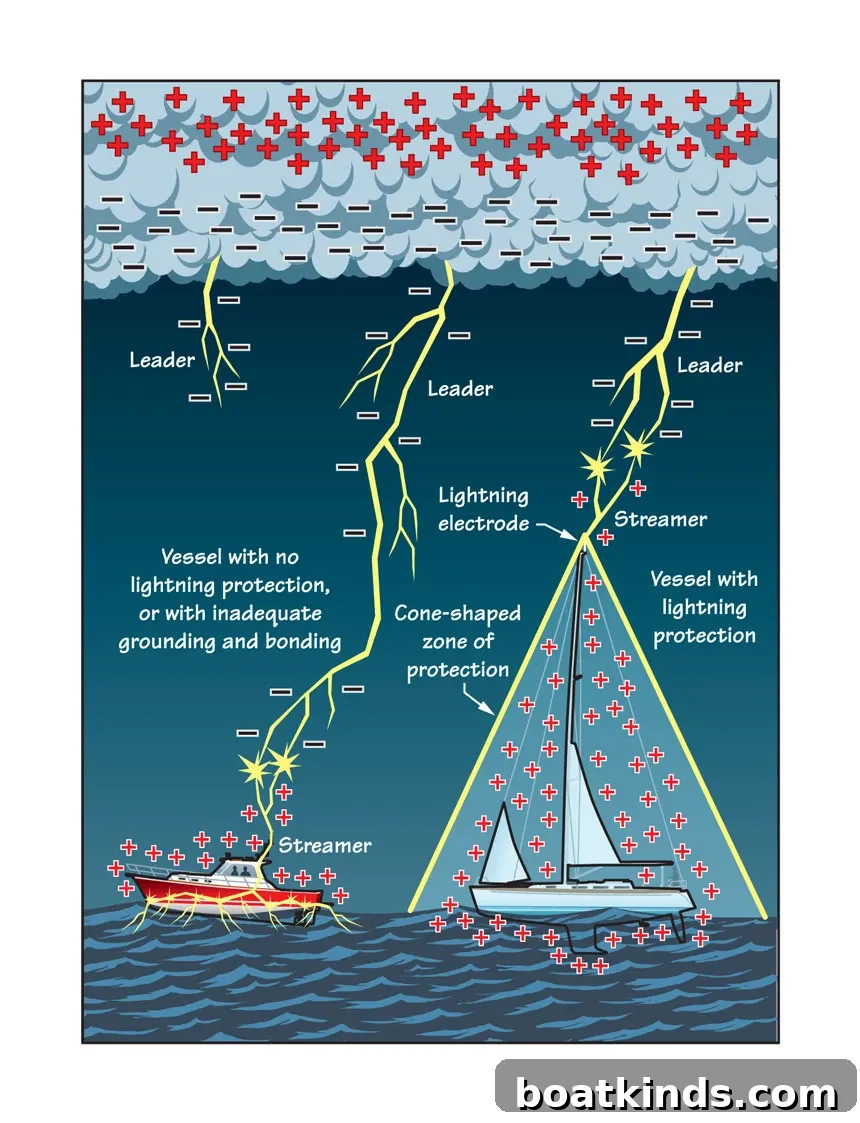
Lightning Protection for Boats: What Owners and Captains Should Know
Lightning risk varies greatly by region and season. For example, marine surveyors and boat owners in Florida see far more lightning-related incidents than those in the Northeast because thunderstorms are much more frequent in the South. While science and engineering can never eliminate the risk entirely, modern lightning protection methods reduce damage to vessels and lower the danger to people on board.
As boatbuilding materials and technologies evolve, lightning-protection practices must adapt. Carbon-fiber masts and hulls, for instance, behave differently as electrical conductors compared with aluminum or wood. Any part of a boat that rises above the deck—masts, outriggers, antennas, radar arches—can become part of the lightning path. The overall goal of a protection system is straightforward: provide a controlled, low-resistance route for a strike to reach the water without creating dangerous side flashes or allowing the current to travel through the interior of the boat.
Air Terminals and Down Conductors
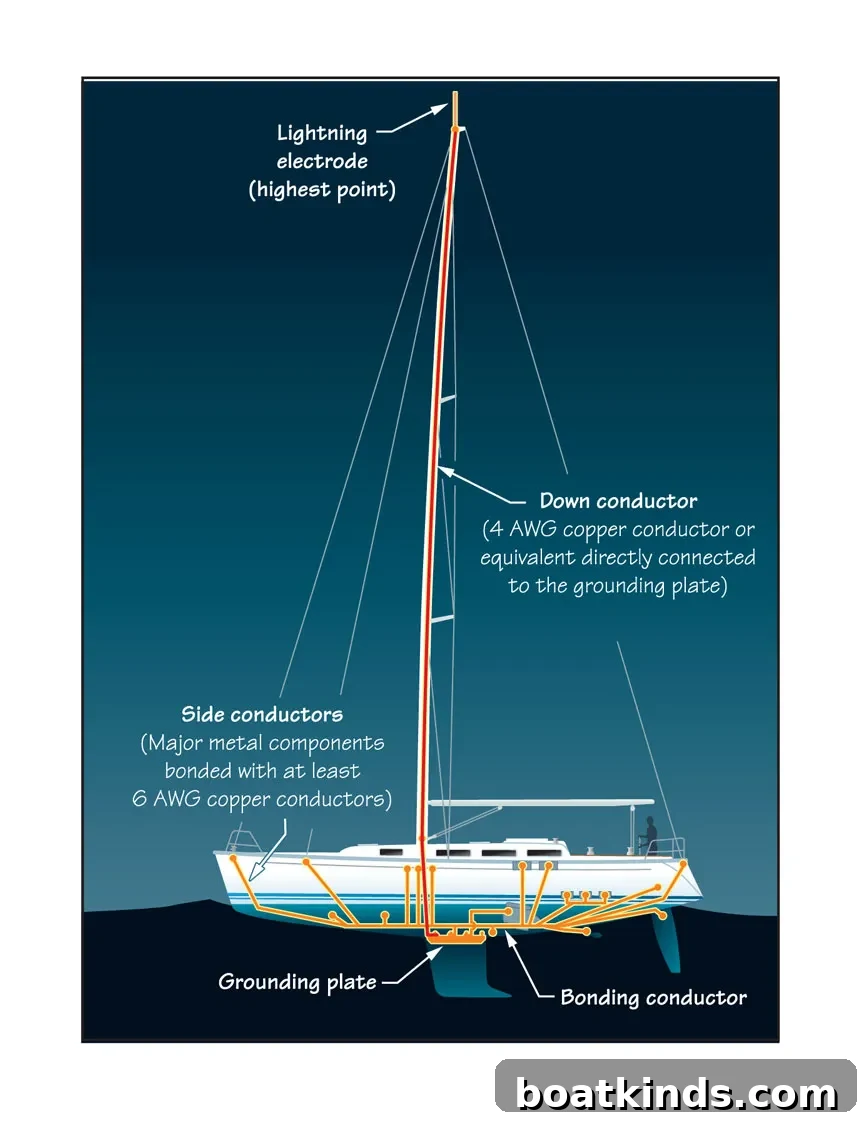
Protection typically begins with an air terminal at the highest point of the vessel to intercept a strike. Historically these terminals were sharp points, but modern designs often use rounded tips; durable materials like chrome-plated bronze or aluminum are common. The air terminal must be connected as directly and robustly as possible to one or more heavy conductors that run down the structure of the boat to a designated ground contact.
When installed and routed properly, a continuous conductor from the air terminal to the ground plate helps the strike dissipate into the surrounding water and greatly reduces the likelihood of unpredictable side flashes that can damage equipment or injure people.
Recommended Conductor Sizes and Ground Contacts
Material choices matter for conductor sizing. An aluminum mast itself is an excellent conductor and can serve as part of the lightning path. For wooden or carbon-fiber masts—materials that are not as conductive—install a dedicated down conductor of at least 4 AWG (American Wire Gauge). That conductor must lead directly to a ground contact on the hull that provides sufficient surface area to dissipate the current into the water.
Industry practice calls for a minimum ground plate of one square foot of copper for saltwater service. Freshwater offers higher electrical resistance, so designers typically use two or more copper strips or plates to increase edge contact and overall dissipation area. Because resistance and waterfront conditions vary, consult a qualified marine electrician or surveyor for specific installation details for your boat and operating waters.
Bonding, Side Conductors, and Potential Equalization
Inside the boat, bond as many large metal fittings and through-deck penetrations as practical. Chainplates, stanchions, handrails and other large conductors should have side conductors of at least 6 AWG that route as directly as possible to the main ground contact. Increasing the bonding conductors from 8 AWG to 6 AWG is a common measure to help equalize potential across metal fittings and to minimize dangerous voltage differences that can cause side flashes during a strike.
Proper bonding reduces the chance that a current will take an unintended path through sensitive electronics, plumbing, or structural components. It also helps protect crew by keeping metal surfaces at similar electrical potential during a strike event.
Onboard Safety During Thunderstorms
Even with a robust lightning protection system, the safest course during a storm is to minimize exposure. Keep everyone as low and centered in the boat as practical, and avoid handling or touching metal fittings, railings, winches, or other conductive objects. Because the current from a strike will seek any path to the water, contact with metal can make a person part of that path.
Plan ahead: regular inspections of terminals, conductors, bonding connections, and ground plates are essential. Corrosion, loose fasteners, chafed wiring or interrupted bonds can greatly reduce the effectiveness of a protection system. If you operate in regions with frequent thunderstorms, discuss specialized solutions with a qualified marine electrician or surveyor who understands your vessel’s construction and operating environment.
Summary
Lightning protection for boats is about interception, controlled conduction, and safe dissipation. Use a properly installed air terminal and direct, heavy-gauge down conductor to a suitably sized ground plate; bond major metal fittings with adequate side conductors; and keep people low and away from metal during storms. As materials like carbon fiber become more common, protection systems and best practices will keep evolving—periodic professional inspection and thoughtful installation remain the best ways to protect both vessel and crew.
This article originally appeared in the January 2017 issue.