
Boat Restoration Projects: Two Different Refit Stories
Boat restoration projects differ widely. Some vessels need only updated systems, fresh paint, or rewiring, while others require a complete rebuild from a bare hull. Two examples—the 1994 Marlin 350-SF and a 1970 Formula 233—illustrate how refits can vary in scope, time, and complexity.
The Marlin 350-SF that Tommy Solomon acquired in 2009 was structurally sound but in need of a cosmetic and systems refresh. Solomon, owner of Tommy Solomon Yacht Repair & Restoration in Edgewater, Maryland, was surprised at how well the hull had held up despite years of tournament fishing. Rather than extensive structural repairs, the project focused on updating the helm, electronics, plumbing, and finishes to make the boat safe, reliable, and enjoyable to use.
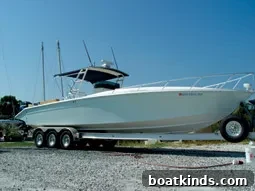
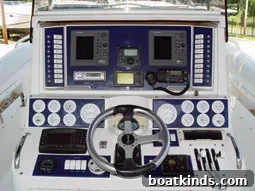
Because the Marlin became Solomon’s personal boat, he was selective about the upgrades. He collaborated with a local marine electrical shop to rewire the helm and install modern electronics, and he redesigned the instrument panel to better accommodate contemporary displays and switches. Existing holes and old component cutouts were filled with fiberglass, then redrilled and reshaped to match the new layout.
To provide a sturdy backing for the new instrumentation, Solomon used wood panels encapsulated in fiberglass and vinylester resin. He also rebedded the bow rail, cleaned and inspected the 250-gallon fuel tank, replaced all fuel lines, reinforced the transom with additional fiberglass, and refinished the hull, deck, console, and leaning post with Awlgrip Awlcraft paint.
Power and performance were upgraded as well. The Marlin received twin 300-hp Evinrude E-TEC two-stroke outboards and new Lenco trim tabs. After the refit, the boat cruises comfortably at about 36 knots with a top speed near 45 knots—capable and confident in sea conditions that challenge lesser center consoles. Solomon continued to refine the boat after the main work was complete, fabricating aluminum bezels for LED lighting and making other small improvements. The major portion of the refit took roughly five months, from November 2009 to April 2010.
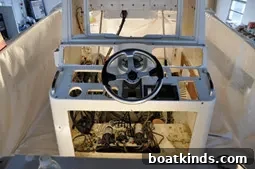
By contrast, the Formula 233 that Dan Patten restored was essentially a basket-case shell when it arrived. Bought by its owner for a nominal amount, the 1970 Formula required a full-scale rebuild: the original layout had been altered, the upper transom wood core was rotten, and the deck and structural elements needed extensive rework. What began as a neglected fiberglass hull evolved into a thorough restoration that rebuilt the boat from the inside out.
Patten, owner of Dan’s Marine Fiberglass in Westbrook, Connecticut, tackled the Formula with methodical craftsmanship. Using a plywood template supplied by the owner, he reconstructed the deck cap for the transom, hull sides, and bow. He joined the two-part composite deck sections, glassed in fore and aft bulkheads, and bonded the deck cap to the hull to create a seamless, structurally sound joint.
One of the more challenging details was reproducing a rubrail to suit the new seamless hull-to-deck connection. Most off-the-shelf rubrails are designed to cover an overlap between hull and deck; finding and customizing a profile that worked without that overlap proved unexpectedly difficult. Patten also reinforced and refinished the hull, deck, and liner with Awlcraft paint and installed a new rubrail to match the boat’s renewed lines.
The owner sourced additional components, including a leaning post bought online and a console from a builder. Patten assisted with installation, and the owner later added a T-top, an Armstrong engine bracket, and repowered the boat with a pair of used 150-hp Yamaha two-strokes. The Formula project demanded intensive labor; Patten estimates about 350 hours of work, with a steady stream of challenges that made the job uniquely custom.
Patten has restored a wide variety of vessels over the years—from small dinghies to classic sailboats—and he counts the Formula 233 among his most dramatic and satisfying transformations. “Out of all the boats I’ve worked on, the changes that occurred in the renovation of the 1970 Formula 233 were the most dramatic,” he says. “At the end, I looked at it and said, ‘Wow, I did that?’”
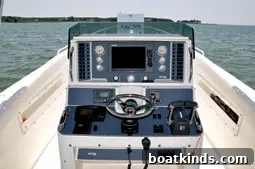
These two refits underline the range of restoration projects: some focus on systems, electronics, and cosmetic renewal when the underlying structure is solid; others require rebuilding core components, rejoining deck and hull, and solving unique structural and fit challenges. Whether the job takes a few months or hundreds of hours, attention to materials, structural integrity, and careful planning makes the difference between a temporary fix and a lasting restoration.
See related articles:
– Ready for a refit?
– “Sustainable passion” is a key ingredient
– DIYers: You’re going to need some epoxy
This article originally appeared in the April 2012 issue.