
Maximizing Your Chances of Nighttime Rescue: Lessons from a Coast Guard Operation
A Coast Guard aircraft commander explains how to increase your odds of being found and rescued during a nighttime maritime emergency.
Shortly after midnight on April 17, five crewmembers aboard the 58-foot commercial fishing vessel Seafarer were forced to abandon ship. They transferred into an 18-foot skiff and made a series of decisions that helped ensure a successful rescue. The actions they took—wearing survival suits, activating a registered EPIRB, making a clear mayday call, and using a simple hand-held light—are practical, proven measures that any mariner can take to improve the odds of being located at night.
Critical personal gear: survival suits and EPIRBs
All five crewmembers were wearing survival suits when they left the Seafarer. Survival suits provide thermal protection in cold water and significantly extend the time a person can survive in immersion conditions; in this case, the water temperature was in the low 40s. The crew also activated a properly registered Emergency Position Indicating Radio Beacon (EPIRB). A registered EPIRB transmits identifying information and coordinates to search-and-rescue authorities, accelerating response and helping rescuers confirm who is in distress and where.
Simple light, big difference
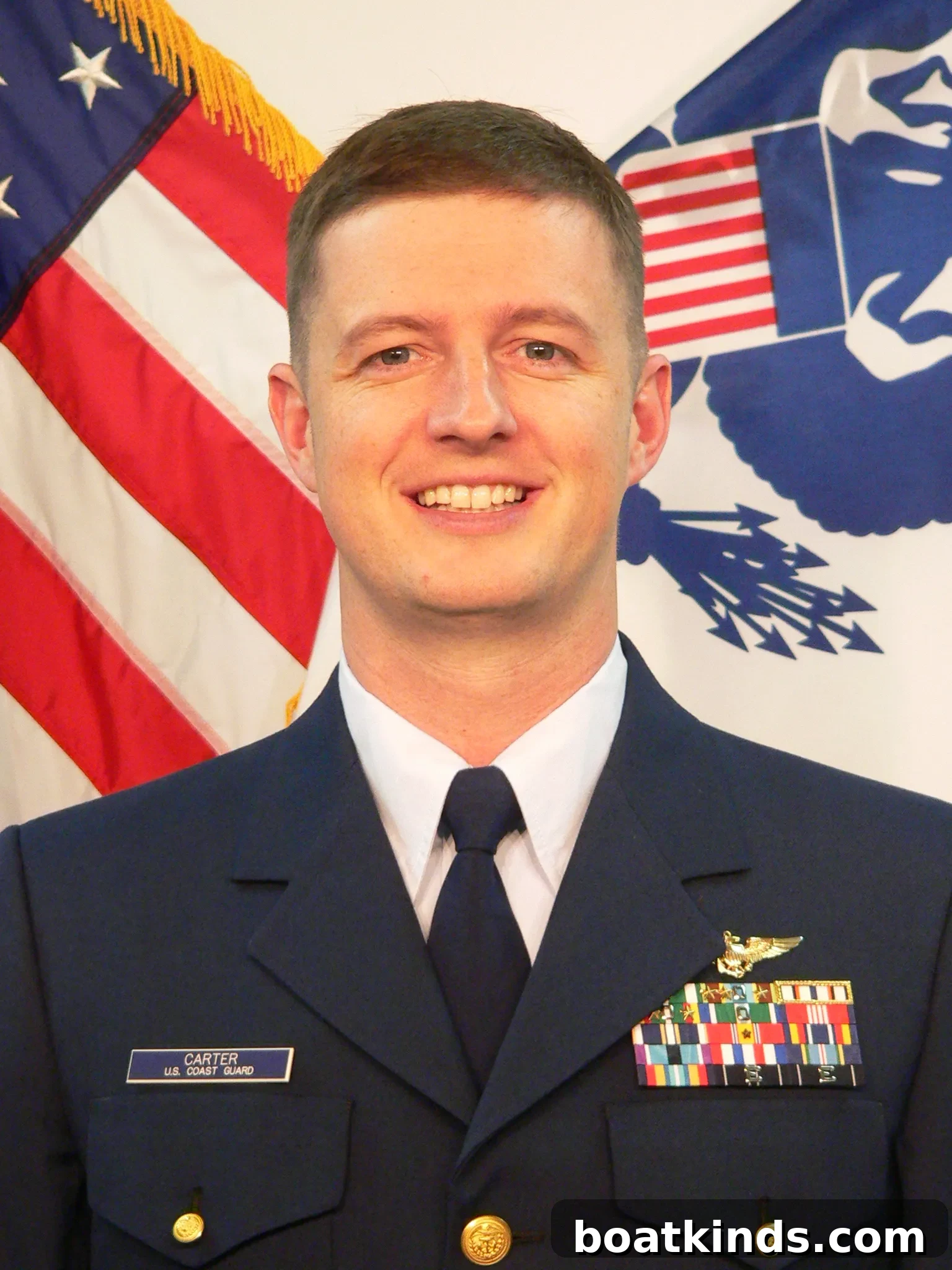
Beyond high-tech gear, the crew had a low-technology but highly effective tool: a hand-held light. Lt. Cmdr. Eric Carter, the aircraft commander on the mission, said the light—either a vessel position light or a flashlight—allowed the helicopter crew to spot the skiff from approximately seven to eight miles away. At night, a small, consistent light source can be more visible than you might expect, especially when search aircraft reduce altitude and use night-vision equipment. Carry multiple waterproof lights, keep spare batteries, and use lights in a disciplined way to signal rescuers without creating confusing or intermittent flashes.
How search aircraft operate at night
The Coast Guard response that night came from an MH-60 Jayhawk helicopter based in Sitka, Alaska. Crews faced 45-knot headwinds and heavy rain on the flight to the scene, located about seven miles north of Thorne Bay. Reduced visibility forced the helicopter to operate at roughly 300 feet above the water, but as the crew neared the skiff the sky cleared enough to allow some ambient light from the moon and stars. That ambient light, combined with night-vision goggles (NVGs), improved the aircrew’s situational awareness and helped them pick out the small light from the skiff.
Night-vision goggles greatly enhance what can be seen in low-light conditions, revealing patterns and contrasts that are otherwise nearly invisible. Crews that train for both day and night operations develop procedures and muscle memory to safely conduct hoists and transfers after dark. According to Carter, because of this training, the increased risk of a nighttime maritime hoist is mitigated and can be comparable to daytime operations when conditions permit.
Rescue coordination and medical considerations
When the Coast Guard arrived, the five crewmembers were initially transferred from the skiff to a 47-foot Motor Lifeboat (MLB) that had been dispatched to the scene. One crewmember experienced back pain and vomiting, prompting medical concerns and the decision to hoist that individual from the deck of the MLB into the Jayhawk for expedited transport and care. This sequence demonstrates the importance of multi-platform coordination—helicopters and motor lifeboats working together—to provide both rapid casualty evacuation and safe initial recovery from the water.
Clear communications and preparation matter
Carter emphasized that the Seafarer crew’s preparation and clear communication were key to the positive outcome. They issued an initial mayday that clearly stated who they were, where they were, and what was happening aboard. They also had essential survival equipment on hand. These straightforward steps—proper emergency calls, wearing immersion protection, activating a registered EPIRB, and using lights to aid visual detection—are among the most effective measures to improve survivability and speed rescue in nighttime maritime emergencies.
Nighttime operations present real challenges: low visibility, rough weather, and cold water all increase risk. Yet this case illustrates that sensible preparation, basic safety gear, and calm, clear communication can make the difference between a delayed response and a timely rescue. Training, reliable equipment, and simple tools like hand-held lights remain indispensable to search-and-rescue success.
— Lisa Cook. Report includes observations from Lt. Cmdr. Eric Carter, aircraft commander.