
Crossing to Antigua: My Salty Dawg Caribbean Rally Experience
My wife was mildly skeptical about my plan. Less than a year earlier we’d bought our first boat, a twenty-year-old Hallberg-Rassy 43, with the intention of exploring the Chesapeake Bay and, after a season or two and retirement, taking on longer passages. When the 2024 Salty Dawg Caribbean Rally from the Chesapeake to Antigua was announced, I decided it was time to aim farther than the local harbors. “Have fun,” she said as I joined a four-person crew on a 48-foot Leopard catamaran for the roughly 1,700-nautical-mile passage.
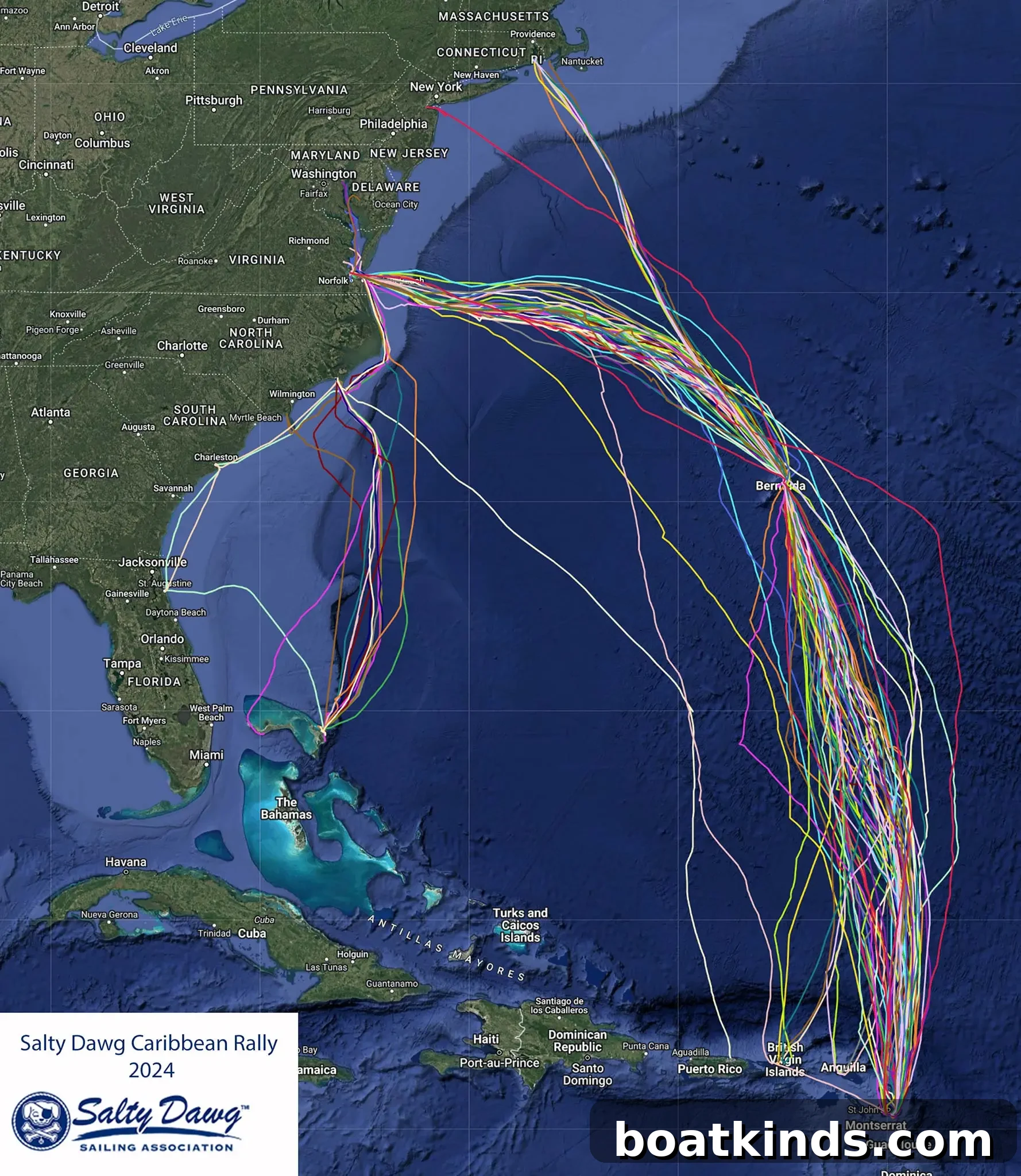
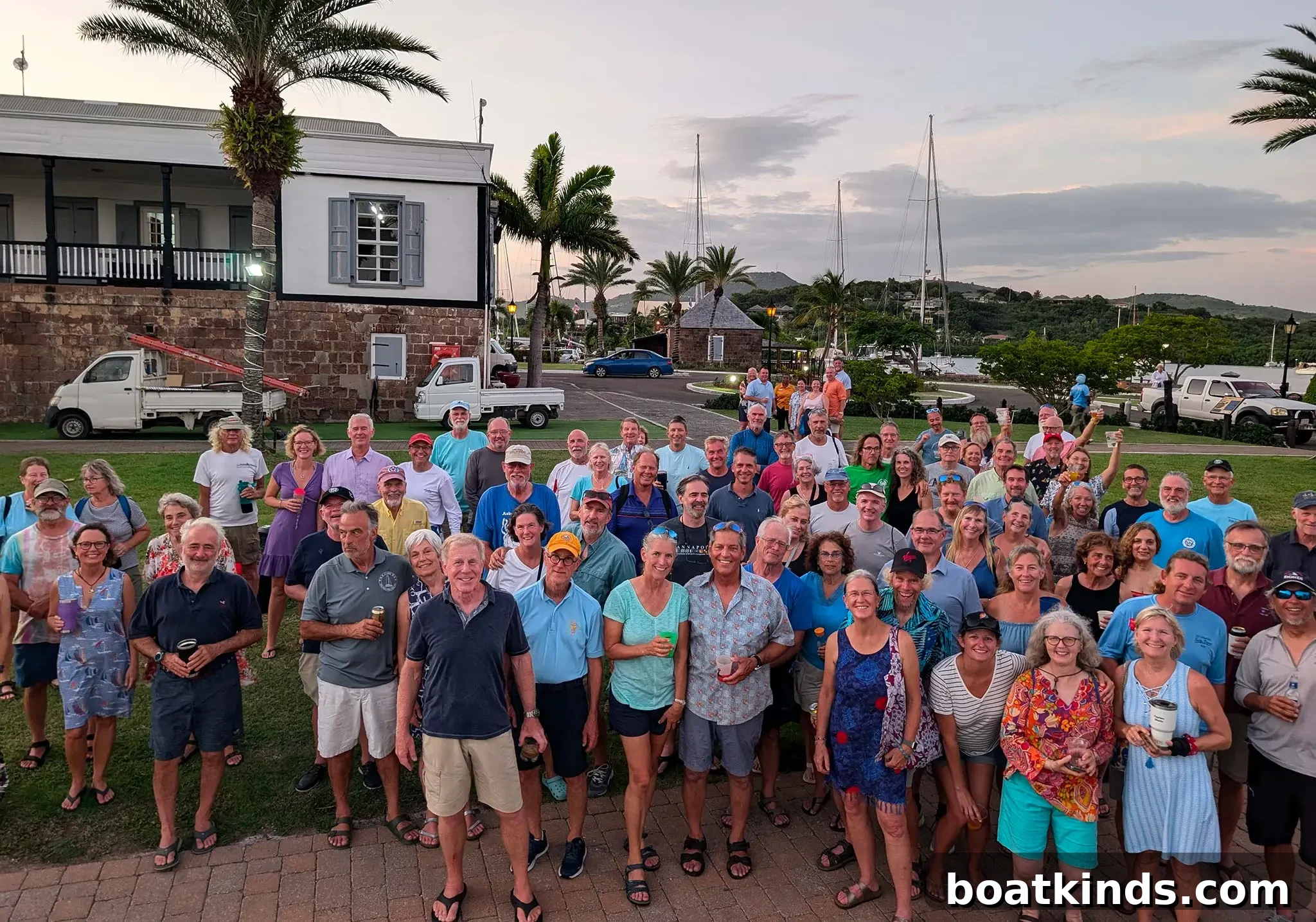
The Salty Dawg Caribbean Rally is a well-known organized flotilla departing the U.S. East Coast each fall. Hosted by the Salty Dawg Sailing Association (SDSA), the rally guides cruisers down to the Caribbean, with most boats bound for Antigua and some opting for the Bahamas. It’s widely regarded as one of the friendliest and most popular rallies for making that ocean transit.
We didn’t set out to race, but, as it turned out, our crew finished first among more than 100 participating boats.
How did I end up on that crew? I submitted a resume through the Salty Dawg website. My sailing background included time as a midshipman—my longest offshore passage was in 1979 when I raced in the Transatlantic and Fastnet aboard the U.S. Naval Academy’s 54-foot sloop Alliance. Over the next four decades, a U.S. Navy career gave me thousands of miles of navigation and command experience at sea, mainly on submarines. After retiring I coached with the Naval Academy’s Offshore Sail Training Squadron, skippering Navy 44s from Annapolis to New England, and I’d chartered boats for family cruises in the Bahamas, Caribbean and San Juan Islands.
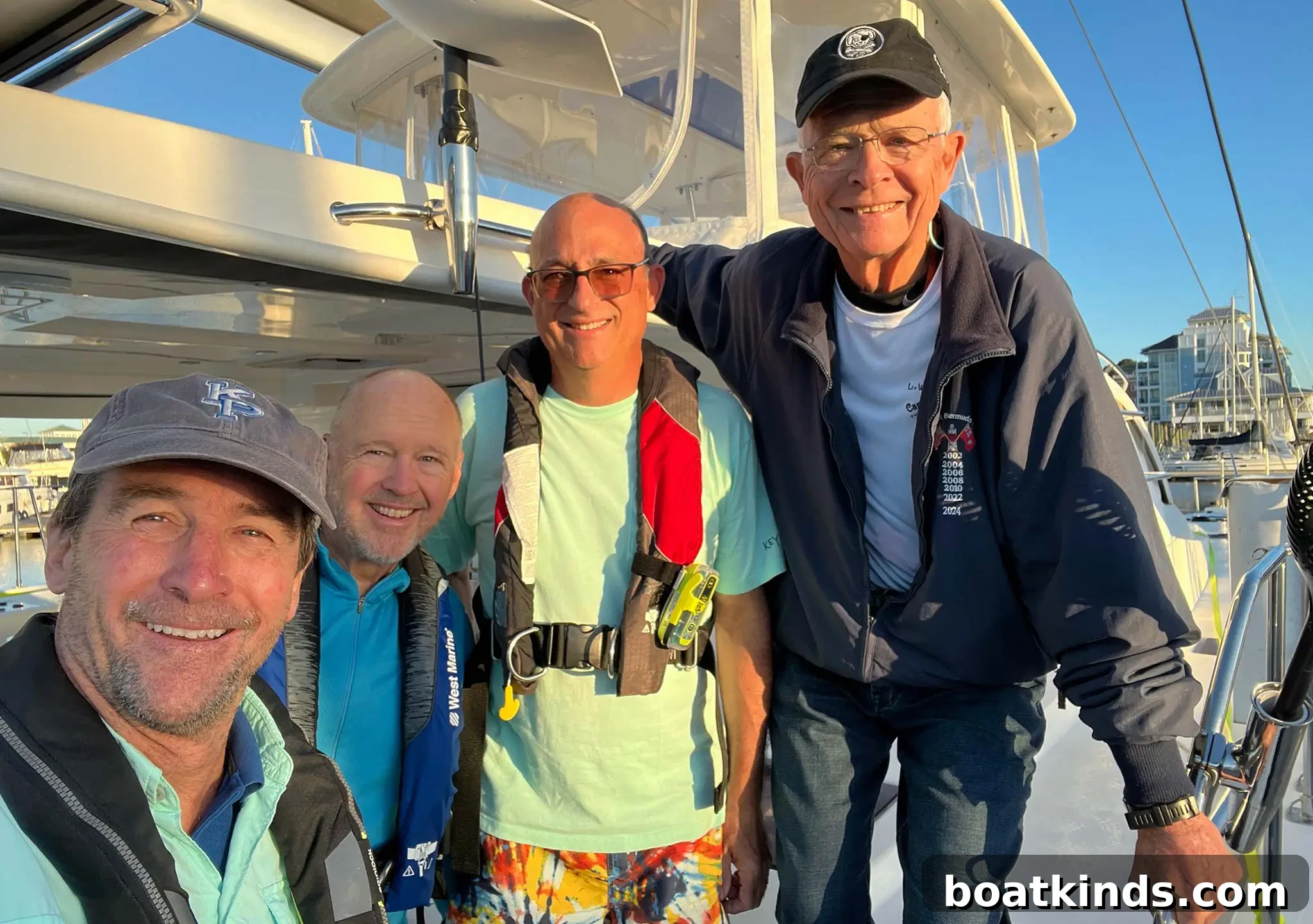
For the rally I arrived at Safe Harbor Bluewater in Hampton, Virginia, a few days before our November 1 departure to meet the rest of the team. The crew included a retired lawyer with a lifetime of sailing stories, an entrepreneur who solved gear and systems challenges with ingenuity, and a skipper who organized three-hour watches and led safety briefings, weather reviews and provisioning.
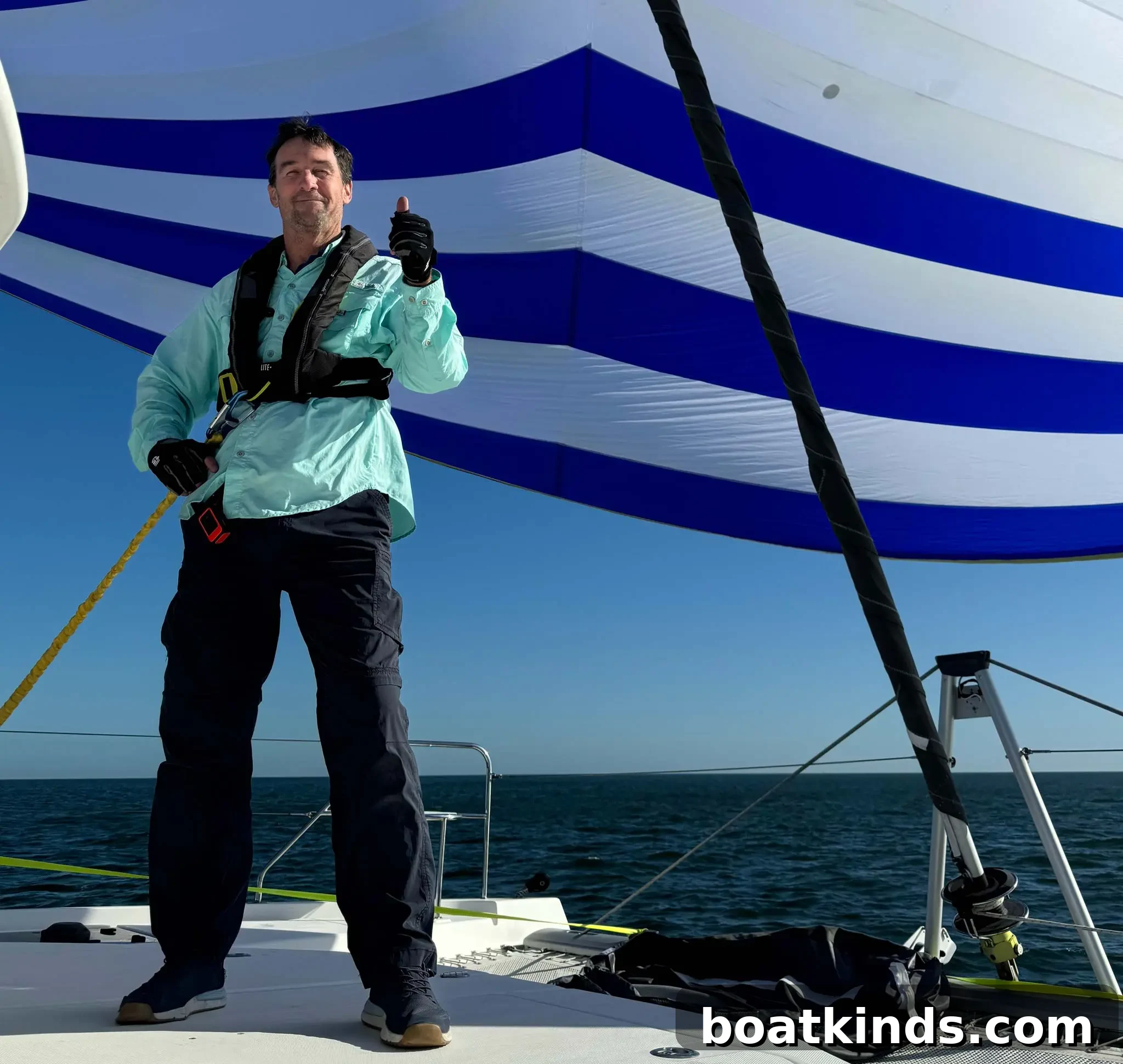
Following advice from Marine Weather Center founder Chris Parker, we left a day early and steered east of Bermuda to avoid a developing low-pressure system in the Caribbean and to take advantage of the easterly trade winds farther south. Conditions at the dock were comfortable—about 60 degrees, a light southwesterly breeze and benign clouds. We motored out past the Chesapeake Bay Bridge-Tunnel, then flew an asymmetrical spinnaker on a broad reach, heading past Cape Henry into the open Atlantic.
In a stretch of wind and sail changes we averaged over 7 knots before hitting the Gulf Stream—encouraging speed for what our owner liked to call his “condo-maran.” During the first 24 hours we covered 179 nautical miles, a strong opening, but conditions grew sporty as we pressed offshore. Winds built into the 20–25 knot range with 6–10 foot seas. The nights were demanding: waves slammed the bridgedeck, the generator stalled, and navigation sidelights became intermittent. For a while we sailed using the anchor light at night until seas calmed enough to allow repairs.
According to the Salty Dawg tracker, we found ourselves on the trailing edge of the rally’s lead group. We kept things steady and tweaked sail controls where it mattered. Around 500 miles east of Cape Henry and roughly 100 miles northwest of Bermuda, we tucked in, found a comfortable trim and held 8 knots in sustained mid-20s winds. One seasoned sailor looked up from his Starlink-connected iPhone and observed, “Every other boat is either in Bermuda or heading to Bermuda.”
We could have diverted to St. George’s, but instead we pressed east, adding second reefs in the main and genoa for the night. Gusts topped 30 knots, seas grew confused, and we double-reefed both sails to control speed while snugging the preventer to reduce boom movement across 10-foot swells. It was my first truly rough night on a catamaran—less dramatic than the Force 10 conditions Alliance faced in 1979—but the twin hulls pitched asynchronously and sleeping was a challenge. I caught what rest I could in the salon settee.
By day five we were about 150 nautical miles east of Bermuda. Parker advised patience, and we interpreted that as maintaining controlled boatspeed—so the two reefs stayed in place both night and day. At dawn on day seven we realized we might arrive too early and face stronger conditions, so we adjusted course and timing. We found favorable conditions on a rhumb line toward Antigua, putting us roughly 30 miles ahead of the next boats and about 50 miles east of the rally’s main pack. Most boats had paused in Bermuda, and some had design advantages—waterline length and sail plans—that could help them close the gap, but we reminded ourselves again that the rally is not a race, even as the prospect of leading tempted us.
During my last midwatch a squall developed quickly. We were running under full main and genoa when the breeze surged—19 knots to high 20s, with gusts to 34—and heavy rain hammered the helm roof. I furled the genoa down to what I thought was a storm jib, though it was too dark to verify on the foredeck. The boat handled the squall and it passed fast. Later we realized the radar gain had been reduced earlier in the day, which dulled our ability to detect these rain cells. It was a hard-learned lesson in vigilance and systems checks.
That ended up being our last significant squall. With about 1,300 miles behind us the seas moderated as we close-reached toward English Harbour on Antigua’s southern coast. We held about a 30-mile lead on a semi-custom Balance 526 catamaran that had been closing the gap since Bermuda by sailing efficiently in lighter true winds. We continued trimming for speed.
Dawn on the final day brought dolphins playing in our bow off Barbuda, a joyful reminder of why sailors cross oceans. By noon Antigua’s peaks were visible—the first land we’d seen in ten days, after passing within fifteen miles of low-lying Barbuda without sighting it. The sight of land renewed our energy.
In the last hours the breeze eased from 12 knots to as little as 3. We fired up the engines and motored along Antigua’s east coast as a fast-closing Balance 526 pushed hard under power. Near Half Moon Bay we tried one last spinnaker set, but variable light winds forced us to douse and stow it. Passing below Shirley Heights and rounding Charlotte Point, we entered the calm protection of English Harbour. Fort Berkeley watched over the approach, and we selected a spot near Nelson’s Dockyard.
A small Salty Dawg team met us at the dock and took our mooring line. We had arrived after 10 days, eight hours and 1,749 nautical miles from Little Creek, Virginia. With modest ceremony the rally director handed out a tot of rum and acknowledged us as “first to finish,” quickly adding the rally’s familiar refrain: “Remember, it’s not a race.”
We agreed—and toasted anyway.
March 2025