
Recent Responses from Florida: Coast Guard Search and Rescue Operations
Maintaining an edge
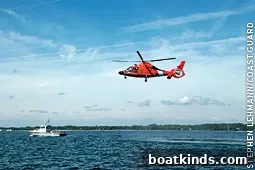
Coast Guard crews in Florida continue regular training and real-world operations to maintain readiness for maritime emergencies. During a search-and-rescue exercise on Oct. 17 at the Panama City Marina, an HH-65 Dolphin rescue helicopter crew from Aviation Training Center Mobile practiced a medevac transfer from a Coast Guard 41-foot response boat. Exercises like this keep air and surface crews coordinated and prepared to respond quickly when lives are at stake.
Pleasure vessel collides with commercial fishing boat — medevac follows
Air Station Clearwater responded Oct. 5 after a 44-foot catamaran and a 40-foot commercial fishing boat collided about 10 miles southwest of Cedar Key, Fla. A 75-year-old man aboard the catamaran suffered lacerations to his arms and required urgent medical attention. His wife reported the incident to the Coast Guard, and an HH-60 Jayhawk rescue helicopter from Air Station Clearwater was dispatched to perform a medical evacuation.
The injured mariner was flown to Air Station Clearwater where EMS personnel met the helicopter and transported him by ambulance to Blake Memorial Hospital in Sarasota, Fla.; he was reported in stable condition. The fishing vessel, which had three people aboard, began taking on water after the collision. The crew managed to control the flooding and navigate the boat back to its home port. The Coast Guard launched an investigation into the cause of the collision.
Two rescued from water near partially submerged vessel
On Oct. 12, Coast Guard Sector Miami watchstanders received notification from Sea Tow that a boat in Biscayne Bay was taking on water with two people aboard, approximately two miles east of Black Point Marina in Key Biscayne, Fla. In response, an HH-65C helicopter crew from Coast Guard Air Station Miami and a Coast Guard Auxiliary small boat crew were launched to search the area.
The helicopter crew located a man and a woman in the water; both were wearing life jackets. The crew relayed their position to the Coast Guard Auxiliary, and Auxiliary crewmembers arrived on scene to bring the two people safely aboard their small boat. Both individuals were reported in good condition while awaiting transfer to a commercial salvage vessel. This incident highlights the value of prompt notification systems and strong coordination between the Coast Guard and local marine services.
Overturned small boat: three men rescued after capsizing
Coast Guard Station St. Petersburg and Air Station Clearwater crews responded Oct. 15 after a 17-foot boat capsized near Egmont Key in the Tierra Verde area. Watchstanders at Coast Guard Station Sand Key received a brief cell phone call from one of the men aboard reporting the boat was capsizing near Fort De Soto Park, Fla.; the call dropped before additional details could be obtained.
Sector St. Petersburg immediately launched a 25-foot response boat from Station St. Petersburg and diverted an HH-60 Jayhawk helicopter from Air Station Clearwater. The helicopter crew located the overturned vessel and found three men clinging to a nearby range tower about a half-mile north of Egmont Key. To verify the situation and provide reassurance, the helicopter crew lowered a VHF marine radio to the men and confirmed they had placed the original distress call. The teams maintained radio contact until the Station St. Petersburg response crew arrived and took the men aboard.
The rescued mariners were transferred to awaiting EMS at the Fort De Soto boat ramp. Marine units from the Pinellas County Sheriff’s Office, Eckerd SAR, and Fort De Soto Park Rangers also assisted. Conditions at the time included an 85-degree water temperature, 2- to 4-foot seas, and winds around 25 knots—factors that can increase risk for small-boat operators.
Lessons and emphasis on preparedness
These recent Florida responses demonstrate the Coast Guard’s layered approach to maritime safety: training and exercises to keep crews sharp, rapid coordination between air and surface assets, and cooperation with auxiliary and local partners during real incidents. Wearing life jackets, maintaining reliable communications, and responding quickly to reports of distress remain key components of reducing risk on the water. Investigations following collisions and serious incidents also help identify lessons that can prevent future emergencies.
This story originally appeared in the January 2009 issue.