
Brian Larkin acknowledges there is a lingering stigma around cold-molded boats. While he believes much of it is misplaced, he knows the perception persists among some buyers.
Larkin, president of Brooklin Boat Yard in Maine, says many potential owners hear the word “wood” and immediately worry about maintenance, rot, and extra work. In his experience, those concerns stem from memories of traditional wooden boats, not from modern cold-molded construction. “Cold-molded boats require the same level of upkeep as fiberglass boats,” he explains. “They have the look and feel of wood but don’t demand more maintenance than a comparable fiberglass hull.”
Cold molding is a technique that laminates multiple layers of wood veneers or plywood over a mold or jig to form a light, strong hull. Builders typically bond the layers with epoxy and often add an outer layer of fiberglass for abrasion resistance. Sometimes carbon fiber or Kevlar is integrated for extra strength and weight savings. The name comes from the fact that the epoxy cures at room temperature rather than needing heat.
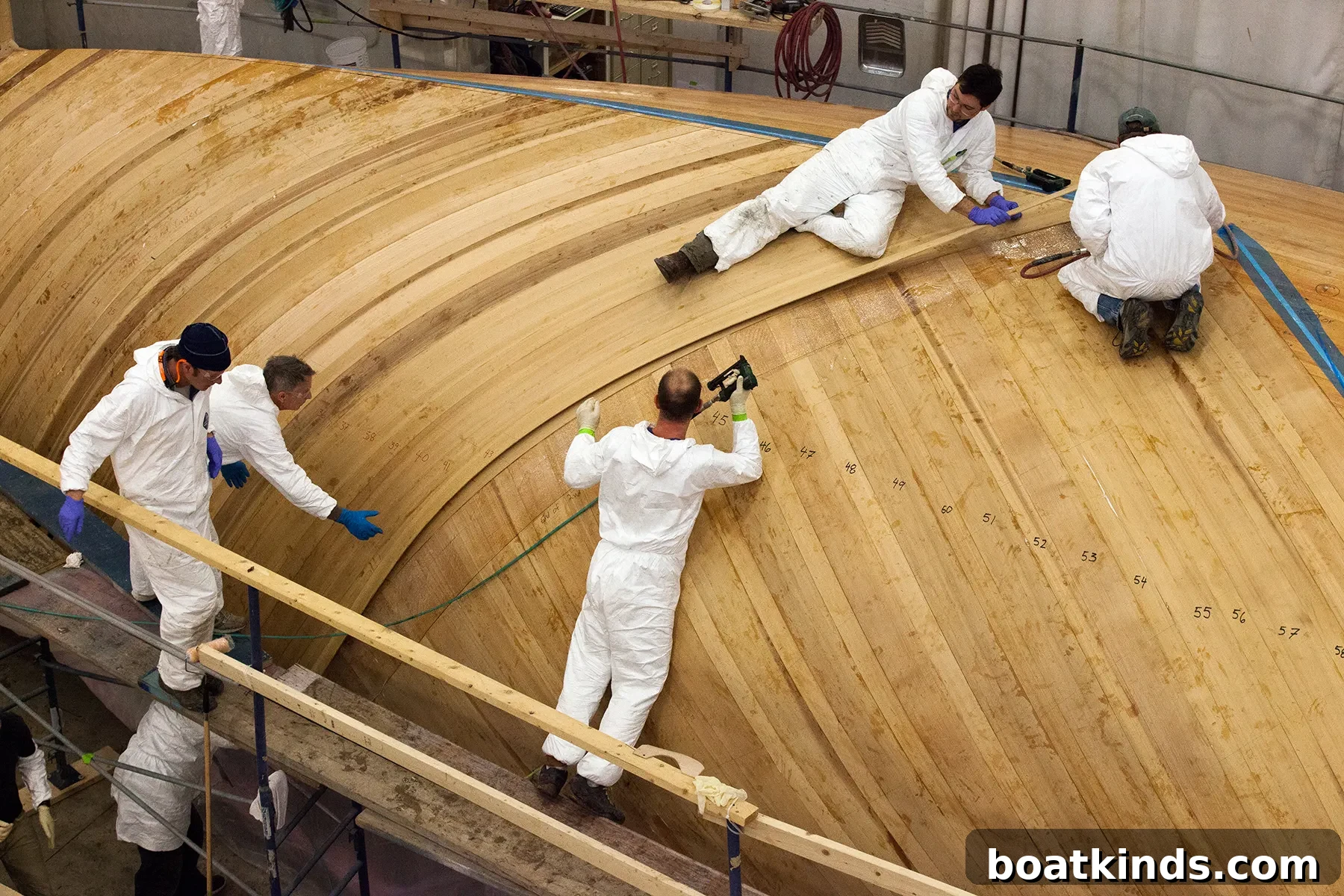
Brooklin Boat Yard has produced cold-molded vessels since 1990. Larkin points to the yard’s first 55-footer—built for then-president Steve White—as proof of the method’s longevity: the boat is still racing and performing well decades later. “We’ve built 112 boats total,” he says. “Sixty were cold molded, and all of them are still afloat after 33 years.”
Many boaters confuse plank-on-frame wooden construction with cold molding. Larkin stresses that a cold-molded hull behaves more like fiberglass than like a traditional timber-built hull. Cold molding yields a lighter hull than comparable solid-glass boats, reduces onboard noise, improves insulation, and retains the aesthetic appeal of wood. Those benefits, combined with epoxy’s moisture resistance, make cold-molded boats durable and practical.
“Fiberglass marketed itself as low-maintenance and that narrative stuck,” Larkin says. “But traditional wooden boats couldn’t withstand long periods of neglect. Cold-molded boats, however, tolerate typical use and maintenance cycles much like glass boats.”
Sam Temple, owner of Rockport Marine in Maine, hears the same objections. Rockport has been building cold-molded boats since 1995, and Temple often fields clients who shy away at the mention of wood. “People remember horror stories about mishandled plank-on-frame boats,” he says. “That fear too often transfers to cold molding, even though the materials and methods are very different.”
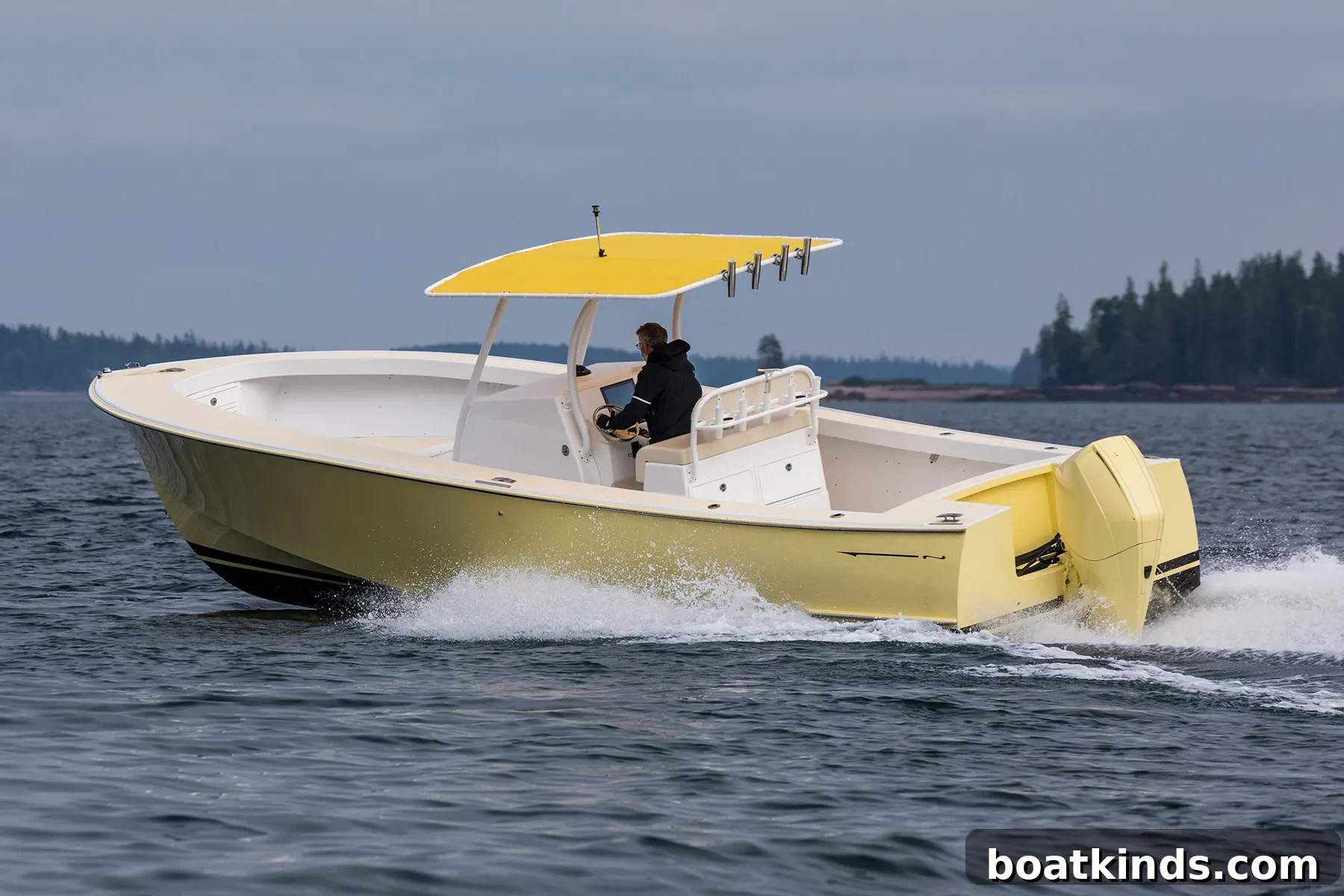
Both Brooklin and Rockport began as traditional plank-on-frame builders in the 1960s. Brooklin stopped building plank-on-frame boats over 30 years ago; Rockport now produces mostly cold-molded vessels. Other Maine yards, such as Lyman-Morse, also employ cold molding for modern cruisers and performance sailboats, demonstrating the method’s versatility for one-off and small-series construction.
Cold molding is also used by many respected builders along the Carolina coast, where sportfishing boats demand high strength-to-weight ratios. Compared with solid-glass or many cored fiberglass hulls, cold-molded hulls can deliver significant weight savings without sacrificing durability.
The technique traces back to the 1950s and rose in popularity during the 1970s after epoxy systems became easier to use. Michigan’s Gougeon Brothers refined the West System epoxy and simplified accurate mixing and dispensing in the 1960s, enabling safer, more reliable bonding. Epoxy’s superior adhesion and moisture resistance transformed laminated wood construction and opened new possibilities for lightweight, high-performance wooden boats.
The Gougeons’ experiments eventually produced high-performing wooden multihulls and the notable 35-foot trimaran Adagio, launched in 1970 as one of the first large, all-epoxy bonded wooden boats without fasteners. Adagio’s continued success in racing helped popularize wood-and-epoxy construction among custom builders and hobbyists, even as fiberglass continued to dominate production boatbuilding.
Temple often fields questions about repairability and longevity. He points to older cold-molded boats still in service and notes that properly constructed cold-molded hulls are straightforward to repair. “You step the repair back and scarf it in, much like you would repair fiberglass,” he says. Larkin concurs: “Repairs are straightforward—grind back and replace, then fair and paint.”
Deck construction has evolved as well. Traditional deck builds with beams, plywood and fiberglass remain an option, but foam-cored sandwich decks—built on their own molds with plywood, foam blocks for hardware, and outer wood or teak—are increasingly common. Hardware is bedded and installed using standard marine techniques.
Cold molding also offers economic advantages for custom and limited-production builds. Fiberglass requires large, costly molds, making it impractical for one-offs. Cold-molded hulls are built on stations or jigs—now often CNC-cut for precision—assembled upside down on a level floor. Stations can be temporary or permanent, and structural elements like bulkheads, transoms, stems, and engine beds can be integrated directly into the hull for improved strength and accuracy.
Regional preferences influence material choices: Carolina builders often use plywood, while Maine yards typically prefer straight-grained planks or veneers. Rockport frequently uses laminated frames of Douglas fir or African mahogany and attaches an inner skin of Alaskan cedar or Douglas fir tongue-and-groove planks. Subsequent layers—commonly Western red cedar or alternatives like Paulownia due to supply issues—are added diagonally and longitudinally, vacuum-bagged and glued with epoxy to create an omnidirectional, reinforced hull. Plastic staples used during assembly simplify repairs and don’t telegraph through paint like metal fasteners.
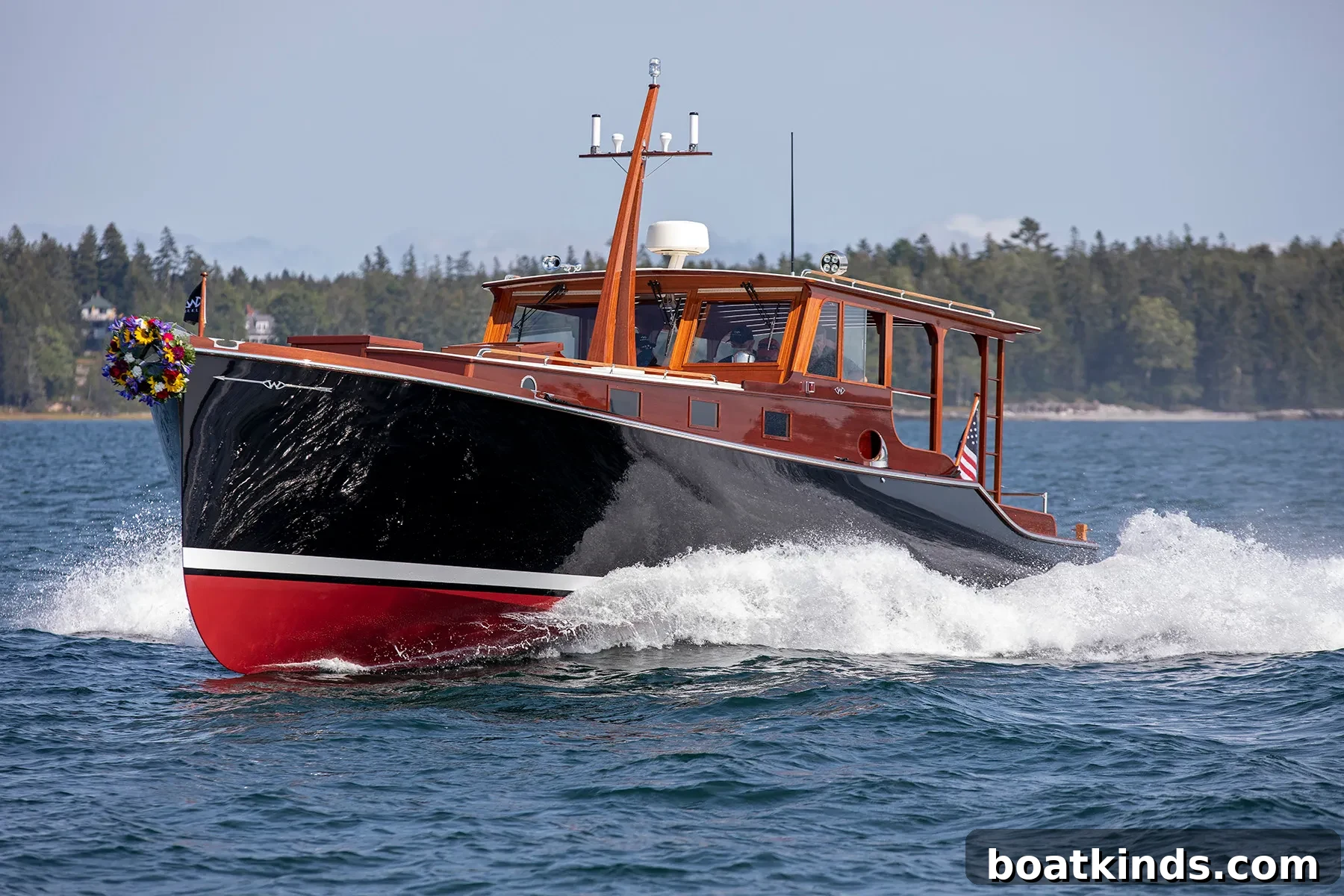
For Rockport’s recent R37 lobsterboat, Temple describes a typical layup: a 1/2-inch first layer, two 3/16-inch diagonal plies, and a 3/8-inch African mahogany outer layer, followed by two layers of 1208 fiberglass vacuum-infused with West System epoxy. Brooklin sometimes uses five-layer systems, alternating directions to maximize strength.
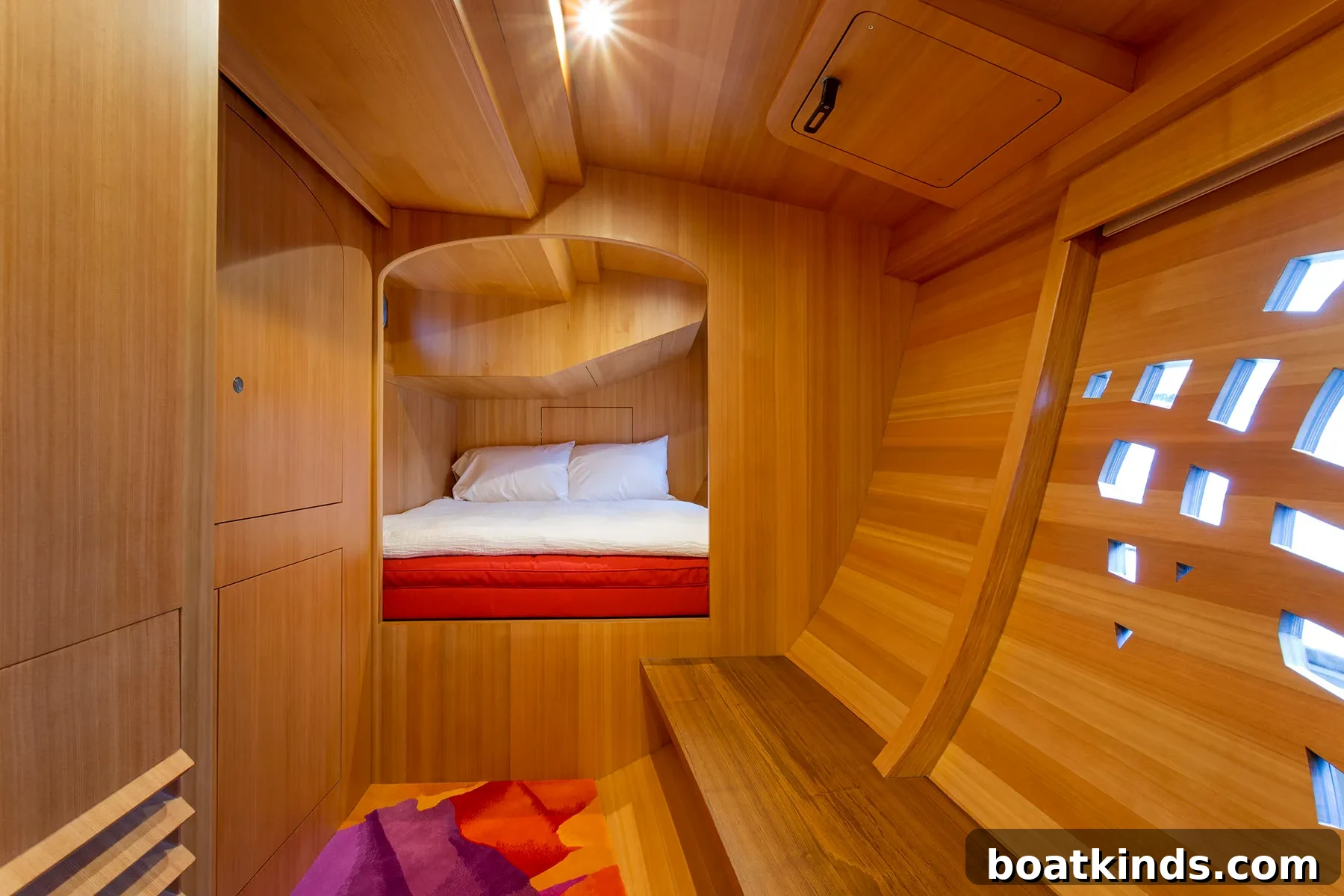
Although cold molding is not cheap, it is cost-effective for custom work because it minimizes expensive tooling. Builders can leave permanent structure in place with the skin glued and screwed directly to it, reducing temporary tooling and labor compared with fiberglass molds.
Some buyers still associate wood with past core failures in fiberglass boats—when balsa or plywood cores delaminated under polyester resin—but modern cold-molded hulls use epoxy, which bonds well to wood, foam, metal, fiberglass and carbon and provides a reliable moisture barrier.
High-tech materials are helping change perceptions. Brooklin’s Eggemoggin 47 uses a single wood layer with carbon fiber on both the inside and outside, producing a half-inch-thick, very light and stiff hull. “When people hear carbon, they get excited,” Larkin says. Temple agrees that integrating carbon fiber between wood layers delivers high-performance results, as demonstrated on recent projects like the Bill Tripp–designed Mist.
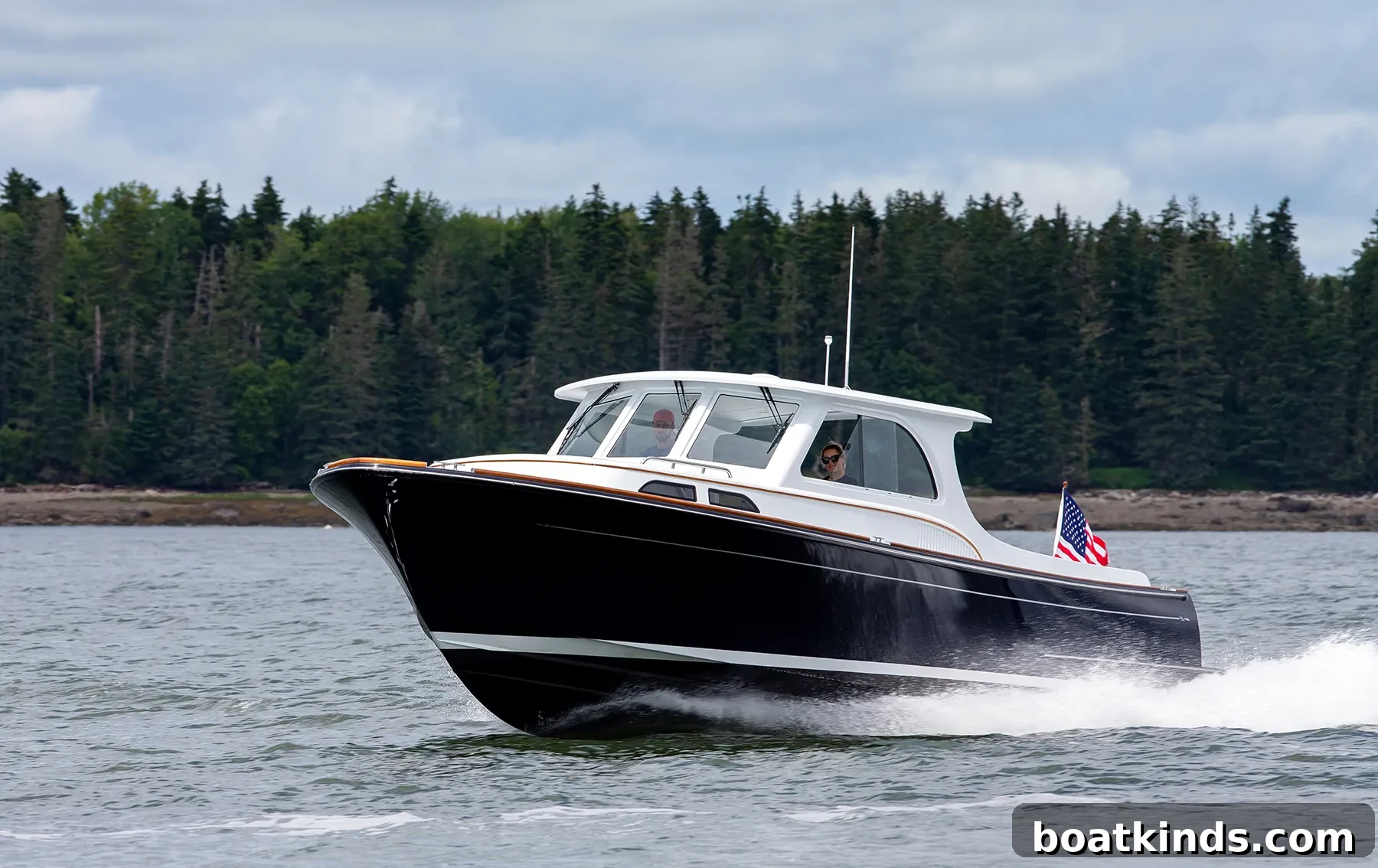
Both yards are building more powerboats in addition to traditional sail projects. Brooklin has completed replicas and jetboats and is working on center consoles and larger cold-molded power designs. Rockport’s R37 lobsterboat was commissioned by a repeat client who appreciates the performance and durability of cold-molded construction.
Temple believes attitudes are shifting: prospective owners increasingly realize Maine builders combine traditional craftsmanship with modern materials and engineering. “We’re not stuck in the past,” he says. “We can deliver the performance buyers want without romanticizing old methods.”
This article was originally published in the November 2023 issue.